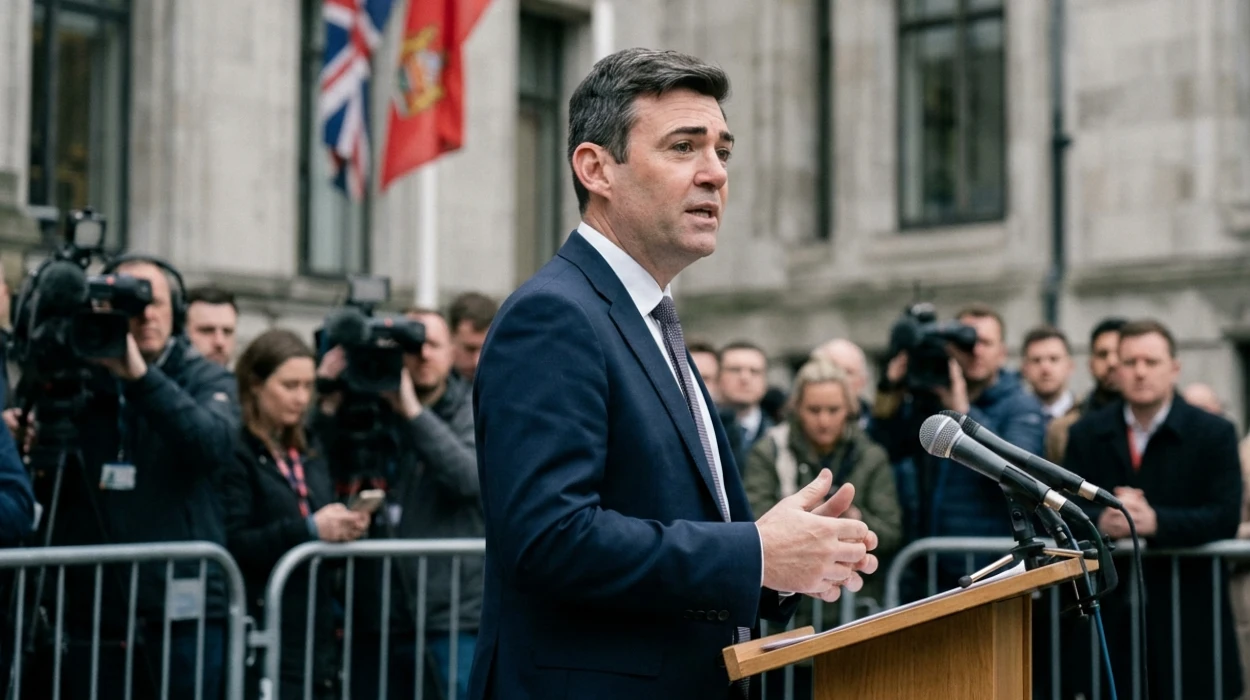
Extra London News provides in-depth coverage of political developments impacting London and the UK. This article examines Andy Burnham’s strategy to re-enter Parliament amid Labour Party tensions.
- Who is Andy Burnham?
- What is Andy Burnham’s Westminster return plan?
- Why does Andy Burnham want to return to Westminster?
- What blocked Andy Burnham’s earlier parliamentary bid?
- Which constituencies are targeted for Burnham’s return?
- Who will replace Andy Burnham as Greater Manchester mayor?
- What policies does Burnham plan to promote?
- How does Burnham’s plan impact Keir Starmer’s leadership?
- What is the timeline for Burnham’s return?
- What are the broader implications for UK politics?
Who is Andy Burnham?
Andy Burnham serves as the Labour Mayor of Greater Manchester since 2017. He previously represented Leigh as a Labour MP from 2001 to 2017 and held cabinet roles, including Health Secretary from 2009 to 2010 under Gordon Brown. Born in 1970 in Liverpool, he studied at Cambridge University and entered politics after working as a researcher for Tessa Jowell.
Andy Burnham defines his political career through roles in Westminster and local government. He first won the Leigh seat in 2001, securing 55.1% of the vote in his debut election. As Health Secretary, he oversaw the NHS National Programme for IT, a £12.4 billion project launched in 2009. Labour lost the 2010 general election, ending his cabinet tenure.
Burnham contested Labour leadership in 2010 and 2015, placing third both times with 11.7% and 19.5% of votes respectively. He resigned as an MP in 2017 to run for Greater Manchester mayor, winning 63.3% in the first round. His mayoralty focuses on devolution, housing, and transport, including the £1.2 billion Bee Network public transport system rollout by 2028.
This background positions him as a prominent Labour figure outside Parliament. His Westminster experience includes 16 years as an MP and shadow roles like Shadow Health Secretary from 2011 to 2015. Supporters view him as a bridge between northern regions and national politics.
What is Andy Burnham’s Westminster return plan?
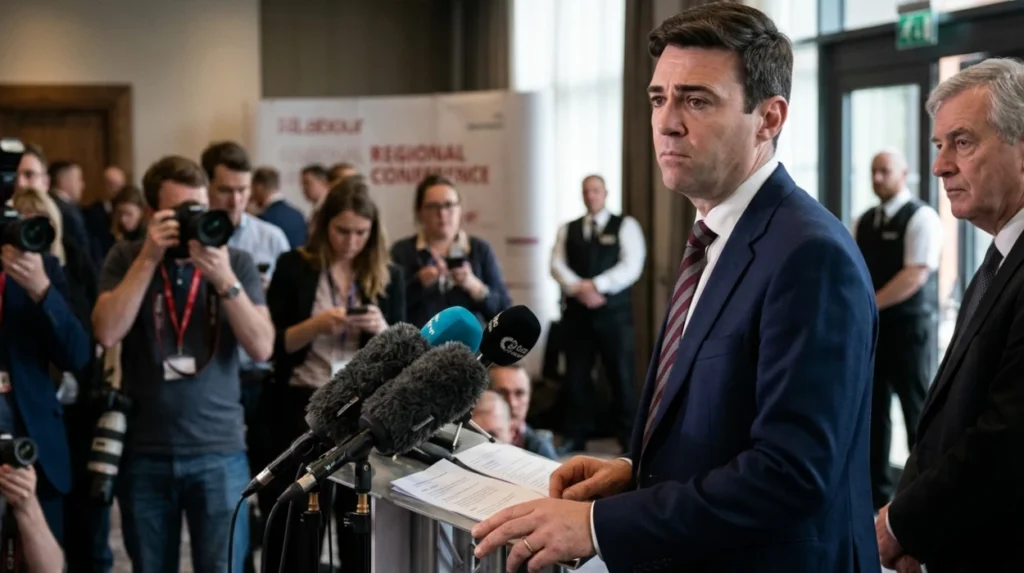
Andy Burnham plans to return to Parliament within weeks by identifying Labour-held seats where MPs agree to resign, triggering by-elections. This strategy avoids direct leadership challenges to Keir Starmer and leverages anticipated poor Labour results in the May 7, 2026, elections. Allies have lined up a successor for his mayoral role.
The plan emerged in early May 2026 reports from The Guardian and others. Burnham targets multiple constituencies, including areas across Merseyside and Manchester. Incumbent MPs in these seats commit to stepping aside, creating vacancies for by-elections. This process requires Labour National Executive Committee (NEC) approval for candidate selection.
Burnham’s team prepared a non-MP candidate to run for Greater Manchester mayor, addressing NEC concerns over dual elections’ costs, estimated at £500,000 per by-election. The strategy follows Labour’s NEC blocking Burnham from the February 2026 Gorton and Denton by-election after MP Andrew Gwynne’s resignation for health reasons. NEC cited expense risks and potential Reform UK gains in the mayoralty.
Implementation involves coordination with sympathetic MPs. Allies state possibilities exist within weeks, months, or by summer 2026. Burnham uses the by-election campaign to outline policies like proportional representation and a 10-year local services plan. This positions him inside Parliament without immediate leadership contest. Starmer’s team views the move as a threat, given strained relations.
Why does Andy Burnham want to return to Westminster?
Andy Burnham seeks Westminster re-entry to challenge Keir Starmer’s leadership indirectly after May 7, 2026, elections. He aims to propose radical state restructuring, including electoral reform and growth strategies, addressing Labour’s policy gaps on devolution and regional inequality. His return enables national influence from a parliamentary base.
Burnham’s motivation stems from Labour’s internal divides. As mayor, he championed “politics of place,” criticising Whitehall centralisation. In January 2026, his blocked parliamentary bid highlighted tensions over housing devolution and power distribution. Westminster access allows him to push nationwide reforms he tested locally, like Manchester’s £500 million housing investment since 2017.
Post-2026 election losses could pressure Starmer to step aside. Burnham’s allies anticipate this, avoiding formal challenges that require 20% of MPs’ support, or 79 signatures. His plan exploits by-elections for visibility. Historical bids in 2010 and 2015 show leadership ambitions; 19.5% in 2015 trailed only Corbyn.
Implications include reshaping Labour’s NEC dynamics. NEC elections occur in 2026, with Momentum backing slates against Starmer allies. Burnham’s return bolsters anti-centralist factions. For London readers, his devolution push parallels Sadiq Khan’s role, potentially influencing capital funding models.
What blocked Andy Burnham’s earlier parliamentary bid?
Labour’s NEC blocked Andy Burnham from the February 2026 Gorton and Denton by-election. The committee cited the costs of simultaneous Manchester mayoral and parliamentary elections, plus the risks of Reform UK winning the mayoralty. Starmer loyalists on the NEC officers’ group, 10 key members, enforced the decision.
The Gorton and Denton vacancy arose when MP Andrew Gwynne resigned for health reasons in late 2025. Burnham sought NEC approval for a “dual candidacy,” but the committee rejected it on January 25, 2026. NEC officers hold power between full meetings, controlling candidate approvals.
Costs factored heavily: parliamentary by-elections average £1.5 million nationally, plus mayoral polls at £2-3 million. Reform UK’s rise, polling 15% in northern seats, threatened the mayor’s role. Starmer maintained NEC majority ahead of 2026 elections, where candidate submissions closed March 27.
This precedent shapes the current plan. Burnham now secures voluntary MP resignations elsewhere, bypassing direct NEC veto on his candidacy. The block exposed Labour factions: Centre Left Grassroots Alliance challenged Starmer’s control. London parallels include NEC oversight of mayoral selections.
Which constituencies are targeted for Burnham’s return?
Burnham identified Labour seats across Merseyside and Manchester where MPs have agreed to resign. Specifics remain undisclosed, but Bootle MP Peter Dowd denied readiness to step aside. Other northern England constituencies factor in, enabling by-elections within weeks.
Merseyside includes Liverpool-adjacent areas with Labour majorities over 15,000 votes, safe for retention. Manchester seats like Gorton (now reformed) hold 60% Labour shares. MPs coordinate privately; reports note “several” options. By-elections follow 21-27 day timelines post-resignation.
Examples include unnamed Merseyside and Manchester North West seats. Bootle, with Dowd’s 24,000 majority, drew speculation, but he refuted it in a BBC interview. Burnham’s Leigh roots aid northern appeal. NEC must approve shortlists, but voluntary moves ease approval.
London implications: similar pacts occur in capital seats, like Croydon or Ealing, where Labour holds 68% averages. Burnham’s success could inspire cross-regional strategies.
Who will replace Andy Burnham as Greater Manchester mayor?
Burnham prepared an “impressive” non-MP candidate to succeed him. This individual competes in a mayoral by-election triggered by Burnham’s parliamentary win. The successor aligns with his devolution agenda, ensuring continuity on projects like the Bee Network.
Preparation addressed prior NEC concerns over election costs and opposition gains. The candidate, identity undisclosed as of May 2026, hails from local Labour circles. Mayoral terms last four years; a by-election follows parliamentary confirmation.
Past successors in similar roles include experienced councillors. Burnham’s team vetted for electoral strength against Reform UK, polling 14% regionally. Continuity covers £4.5 billion devolved budget, including 15,000 affordable homes pledged by 2028.
For Extra London News readers, this mirrors Sadiq Khan’s 2024 re-election with 43.8%, highlighting mayor stability amid national shifts.
What policies does Burnham plan to promote?
Burnham commits to proportional representation nationwide, a 10-year local services strategy, and inheritance tax reform to fund social care. These form a “radical restructuring” of the state, emphasising devolution and growth over 10 years.
Proportional representation (PR) replaces first-past-the-post, used in UK general elections since 1918. PR allocates seats by vote share; Burnham eyes nationwide rollout, building on his 2015 leadership push. The 10-year strategy coordinates health, housing, and transport locally.
Inheritance tax reform redirects revenue, currently 40% over £325,000 thresholds, yielding £7.5 billion yearly, to social care costing £15 billion annually. Examples: Manchester’s £1 billion adult care investment since 2017.
Implications challenge Starmer’s cautious approach. Burnham’s agenda revives 2015 pledges, gaining 19.5% support then. London benefits via shared devolution models, like £1.7 billion capital powers.
How does Burnham’s plan impact Keir Starmer’s leadership?
Burnham’s return threatens Starmer’s post-May 7, 2026, elections with expected losses. It initiates pressure for Starmer to resign without a formal challenge, exploiting NEC shifts and regional discontent. Strained relations ensure no leadership aid.
Starmer has led Labour since 2020, winning in 2024 with 33.7% vote share. 2026 locals test his 16.4% majority government. Burnham avoids 79-MP nomination threshold, using by-elections for momentum.
NEC elections by June 26, 2026, could erode Starmer’s control; Momentum fields slates. Burnham’s northern base counters Starmer’s southern focus. Historical parallels: 2015 leadership saw Burnham at 19.5%.
London angle: Starmer’s capital strength (65 Labour seats) faces Burnham-inspired regional revolts, impacting policy like housing devolution.
What is the timeline for Burnham’s return?
By-elections are triggered within 3 weeks of MP resignations, with campaigns lasting 21-27 days. Burnham targets completion within weeks or by summer 2026. Mayoral successor election follows parliamentary win confirmation.
The process starts with resignations post-May 7 elections. NEC approves candidates within 7 days; polls set 25 days later. Burnham campaigns during the Mayoral by-election overlap.
Historical by-elections: 2023 Uxbridge took 6 weeks total. Burnham’s team eyes June 2026 seating. Delays possible if NEC resists.
For London, timelines match 2024 mayoral cycles, informing cross-party strategies.
What are the broader implications for UK politics?
Burnham’s plan highlights Labour divides on devolution versus centralism, influencing 2029 elections. It boosts regional voices, pressures Starmer on reform, and sets precedents for mayor-to-MP transitions. Northern gains could reshape the NEC by June 2026.
Devolution expanded under Labour 1997-2010 with 10 combined authorities. Burnham’s model pushes further, mirroring Scotland’s 1999 parliament. Stats: Greater Manchester’s £6.5 billion budget rivals small nations.
Examples: Liverpool City Region’s £1.8 billion devolved powers. Implications include Reform UK exploiting gaps, polling 17% nationally. London sees parallels in Khan’s transport control.
Future relevance persists through 2029; PR adoption polls at 52% public support (2024 YouGov).
Who is Andy Burnham?
Andy Burnham has served as Mayor of Greater Manchester since 2017 and was previously MP for Leigh from 2001 to 2017. He held senior cabinet roles, including Health Secretary under Gordon Brown.
He also ran for Labour leadership twice (2010 and 2015), finishing third both times. Since becoming mayor, he has focused on regional devolution, housing, and transport—most notably the Bee Network.