Key Points
- The Discovery: A hidden electronic recording device was discovered concealed within a ceiling panel inside a major government building in Westminster.
- Location of Device: The camera was found in a communal, shared area of the 2 Marsham Street complex, rather than inside sensitive ministerial offices.
- Department Profile: The targeted building serves as the joint headquarters for the Home Office—which oversees national security and policing—and the Ministry of Housing, Communities and Local Government (MHCLG).
- Geopolitical Context: The MHCLG recently held decision-making authority regarding the controversial planning permission for a massive new Chinese embassy complex in London.
- Timeline and Escalation: The device was uncovered within the past two months, prompting an immediate escalation to British intelligence and security services.
- Attribution: The security breach was first brought to light through an exclusive investigative report published by The i Paper.
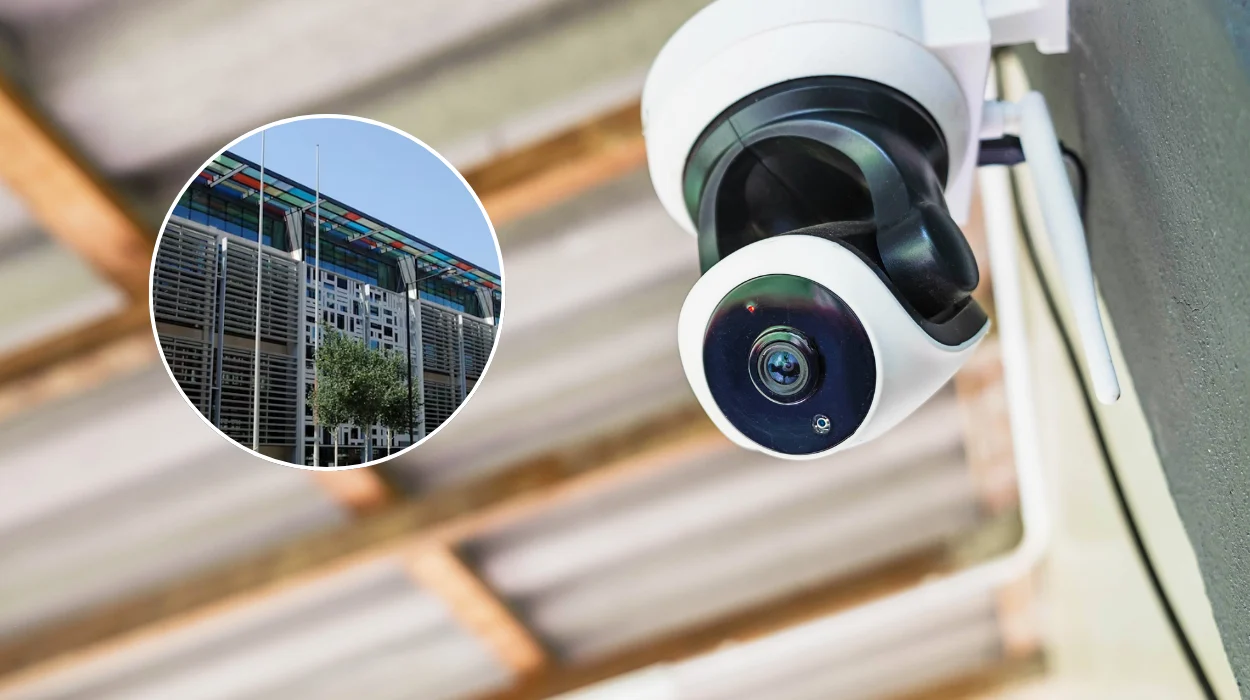
London (Extra London News) June 9, 2026 – A counter-espionage investigation has been launched by British security services following the unsettling discovery of a hidden camera concealed inside a ceiling panel within a major Whitehall government complex. The covert electronic recording device was uncovered inside 2 Marsham Street, a heavily fortified Westminster site that serves as the joint headquarters for both the Home Office and the Ministry of Housing, Communities and Local Government (MHCLG). Because the Home Office maintains direct responsibility for domestic policing, counter-terrorism, and national security, the physical breach of its headquarters has triggered severe anxiety across the civil service and intelligence communities.
- Key Points
- What Do We Know About the Hidden Camera Discovery?
- Who Discovered the Device and When Was It Found?
- Why Is the Marsham Street Complex a High-Value Security Target?
- What Is the Connection to the New Chinese Embassy Dispute?
- How Have Government Officials and Media Sources Responded?
- What Are the Potential Penalties and Legal Consequences of This Breach?
According to initial disclosures, the device was not positioned inside the private offices of cabinet ministers or high-ranking officials, but was instead recovered from a communal area utilized by staff moving through the shared facility. Despite the non-ministerial location, the security implications are profound. The MHCLG, which shares the building, has recently been the central battleground for highly sensitive geopolitical decisions, specifically concerning the contentious, multi-million-pound planning application for a massive new Chinese embassy compound in East London. The proximity of national security planners and high-stakes diplomatic real estate decisions under one roof has heightened fears that the building was targeted by a sophisticated state-sponsored or hostile actor.
The physical device was reportedly uncovered within the past two months during a routine or targeted sweep of the facility. Immediately upon its retrieval, senior departmental security officers escalated the matter, handing the hardware over to intelligence specialists to undergo forensic analysis. Government technicians are currently working to determine how long the camera was operational, whether it transmitted data wirelessly or stored footage locally, and who possessed the physical access required to plant a device inside a facility protected by round-the-clock armed guards, biometric checkpoints, and rigorous visitor screening protocols.
What Do We Know About the Hidden Camera Discovery?
As initially revealed in an exclusive report by investigative journalists at The i Paper, the apparatus was hidden expertly within the structural framework of the ceiling. Writing for The i Paper, security correspondents noted that the device was explicitly electronic in nature and positioned to capture movement within a high-traffic area. While officials have tried to downplay the immediate threat by emphasizing that the camera was found in a shared, communal zone rather than an executive suite, security experts point out that communal areas are often ideal for intelligence gathering, allowing perpetrators to monitor who meets with whom and track the daily movements of key personnel.
The cabinet departments housed at 2 Marsham Street represent some of the most sensitive apparatuses of the British state. The Home Office holds the blueprints for the UK’s internal security, counter-terrorism strategies, and immigration networks. Concurrently, the MHCLG handles critical national infrastructure and domestic local governance. The intersection of these two departments within a single physical footprint means that any compromise of the building’s perimeter security constitutes a critical failure in the protective state symbolised by Whitehall.
Who Discovered the Device and When Was It Found?
Reporting by The i Paper indicates that the discovery was made quietly within the last eight weeks. It remains unclear whether the camera was spotted by an eagle-eyed civil servant noticing a misaligned ceiling tile or during a technical surveillance counter-measures (TSCM) sweep, commonly referred to as a “bug sweep,” which security services conduct periodically in government buildings.
Once the device was extracted, departmental protocol dictated an immediate blackout on public information while the UK’s domestic security service was brought in. Security officials have since launched an extensive internal review, which includes auditing months of internal CCTV footage, cross-referencing staff pass-log data, and reviewing visitor sign-in sheets to pinpoint anyone who may have had unescorted access to that specific communal zone.
Explore more Westminster News:
Westminster Urges Airbnb to Curb Illegal West End Renting: London 2026
Sadiq Khan Oxford Street Pedestrianisation Faces Westminster Council Fight: London 2026
Why Is the Marsham Street Complex a High-Value Security Target?
To understand the gravity of the breach, one must look at the immense strategic value of the operations conducted within 2 Marsham Street. As observed by political reporters across the Westminster press corps, the building is a nerve centre for policies that directly impact both domestic stability and international relations.
The building’s dual occupancy is highly significant:
- The Home Office: Manages national security, MI5 oversight liaison, border enforcement, and counter-terror operations.
- The Ministry of Housing, Communities and Local Government (MHCLG): Oversees sensitive planning laws, structural decisions, and local governance frameworks.
The combination of these powers means that intelligence flowing through the corridors of Marsham Street is of premium value to foreign intelligence agencies, corporate espionage rings, and domestic political actors alike.
What Is the Connection to the New Chinese Embassy Dispute?
The discovery of the surveillance device has intensified scrutiny on the Ministry of Housing, Communities and Local Government due to its role in an ongoing diplomatic row. As detailed by The i Paper, the MHCLG was the central authority tasked with reviewing and issuing decisions relating to the planning permission for a massive new Chinese embassy complex in London.
The People’s Republic of China has been seeking to construct its largest embassy in Europe on the site of the former Royal Mint near the Tower of London. The local council initially rejected the proposal due to intense opposition from residents and human rights activists, who raised concerns over security, surveillance, and community safety. However, because of the international scale of the project, the decision was kicked upstairs to the central government, putting MHCLG ministers and civil servants under intense diplomatic pressure. Investigators are now looking into whether the hidden camera was planted to spy on officials drafting the government’s response to Beijing’s diplomatic property ambitions.
How Have Government Officials and Media Sources Responded?
In line with standard protocols regarding ongoing security investigations, the British government has maintained a highly guarded stance. When pressed for confirmation regarding the breach, government spokespeople have largely declined to comment on the specifics of the hardware or the trajectory of the investigation.
The lack of public denial, however, has spoken volumes to seasoned Whitehall observers. Commenting on the culture of secrecy surrounding such events, security analysts writing for various media titles have noted that when physical espionage devices are discovered, the absolute priority of the security services is to preserve operational security. They must avoid alerting the perpetrator, or “handler,” that the device has been compromised, in hopes of tracking the data stream or catching the individual returning to service or retrieve the equipment.
What Are the Potential Penalties and Legal Consequences of This Breach?
The unauthorized installation of a recording device inside a secure government facility violates multiple tranches of British law, most notably the Official Secrets Act. If the investigation reveals that the device was planted by a British national or a civil servant acting on behalf of a foreign power, the individual could face prosecution for espionage, carrying maximum prison sentences of up to life imprisonment under modernized national security legislation.
Furthermore, if a foreign intelligence agency is definitively linked to the device, it will trigger a profound diplomatic crisis. Such a finding would likely result in the expulsion of undeclared intelligence officers operating under diplomatic cover in London, formal diplomatic protests, and a further chilling of relations between the UK and the state actor responsible. For now, the hardware remains under forensic examination in government laboratories, as security services race to patch the physical vulnerabilities of Whitehall’s corridors.