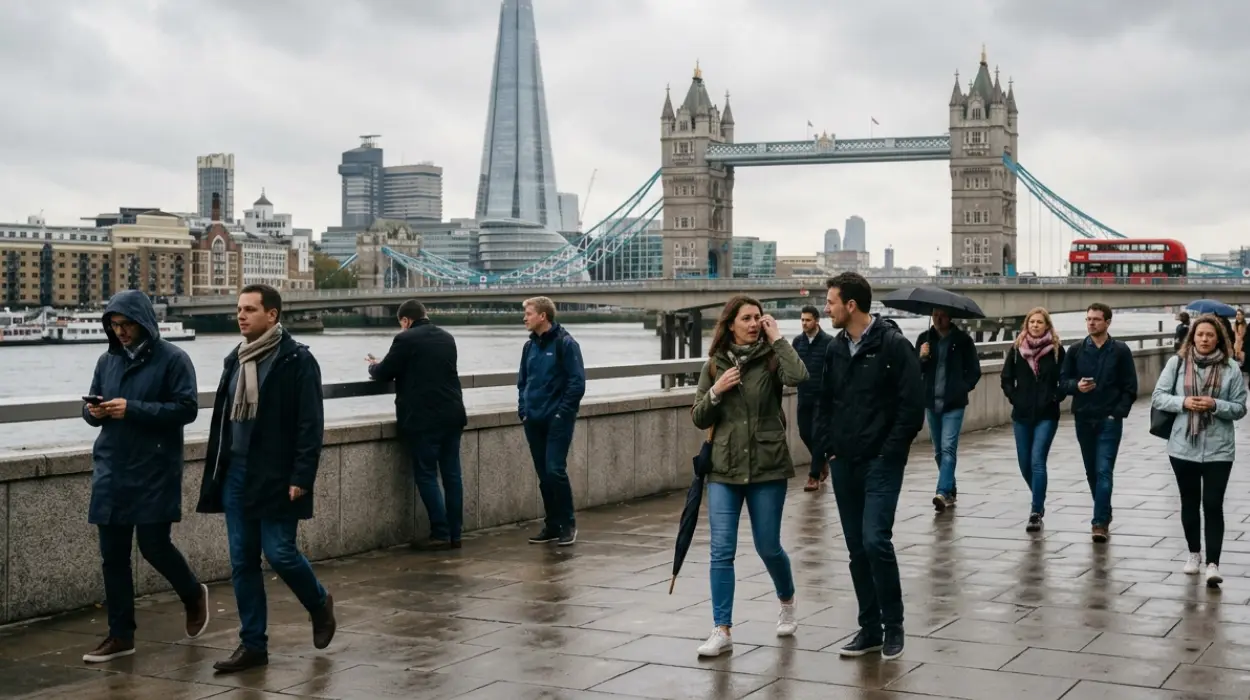
London features a temperate oceanic climate (Cfb), characterized by moderate temperatures, relatively consistent rainfall throughout the year, and high cloud cover. The city experiences cool, damp winters and warm, pleasant summers influenced by its proximity to the Atlantic Ocean.
- What are the primary meteorological influences on London’s weather?
- What is the typical annual temperature range in London?
- How does the Urban Heat Island (UHI) effect change London’s climate?
- How much rainfall does London receive annually?
- How do London’s weather patterns impact seasonal activities?
- What are the long-term implications of climate change for London?
As a global hub, London’s atmospheric conditions are shaped by its latitude and its position on the edge of the Atlantic. This meteorological environment is defined by the Köppen climate classification system as temperate oceanic. This classification denotes a maritime influence that moderates the city’s temperature extremes compared to continental interiors at similar latitudes. Meteorological records in London are among the longest in the world, with continuous temperature data for Greenwich dating back to 1841. These observations provide a detailed baseline for understanding how the capital’s weather patterns behave over long cycles.
What are the primary meteorological influences on London’s weather?
London’s weather is primarily governed by its position in the mid-latitudes, where it sits at the convergence of diverse air masses. The North Atlantic Drift, an extension of the Gulf Stream, transports warm, moist air that significantly prevents extreme cold.
The movement of weather systems across the UK is largely driven by prevailing south-westerly winds. These winds pull relatively mild air from the Atlantic, which moderates the climate throughout the year. Because the UK is an island nation, the surrounding sea acts as a thermal buffer, absorbing heat during the summer and releasing it during the winter. This maritime influence prevents the temperature from plummeting to the levels often seen in Eastern Europe or Russia.
Beyond global currents, regional topography also plays a critical role. While London itself is relatively flat, its location in the southeast of England shields it from some of the more intense rainfall and wind speeds that strike the mountainous regions of the west coast. This “rain shadow” effect occurs because the moisture-laden winds from the west lose much of their precipitation as they rise over the hills of Wales and the Pennines, leaving drier air to reach the Thames basin.
What is the typical annual temperature range in London?
London experiences mild annual temperature variations, with average daily highs ranging from approximately 8°C (46°F) in winter to 23°C (73°F) in summer. Absolute extremes are rare, though the city occasionally records temperatures above 30°C or below freezing.
Seasonal transitions in London are gradual rather than abrupt. During the winter months of December through February, temperatures rarely remain below freezing for extended periods. January and February are statistically the coldest months, with average daily minimums hovering around 2°C to 3°C (36°F to 37°F). Frost is common, but sustained deep snow is infrequent.
In the summer months of June, July, and August, the city enjoys its warmest period. July typically marks the annual peak, with average daily highs reaching 23°C (73°F). However, heatwaves are becoming more frequent. For instance, London set a record high of 40.2°C (104.4°F) in July 2022 at Heathrow Airport, highlighting the city’s vulnerability to shifting climate patterns. The shoulder seasons—spring and autumn—offer highly variable conditions, often characterized by a mix of sunshine, intermittent showers, and moderate breezes.
How does the Urban Heat Island (UHI) effect change London’s climate?
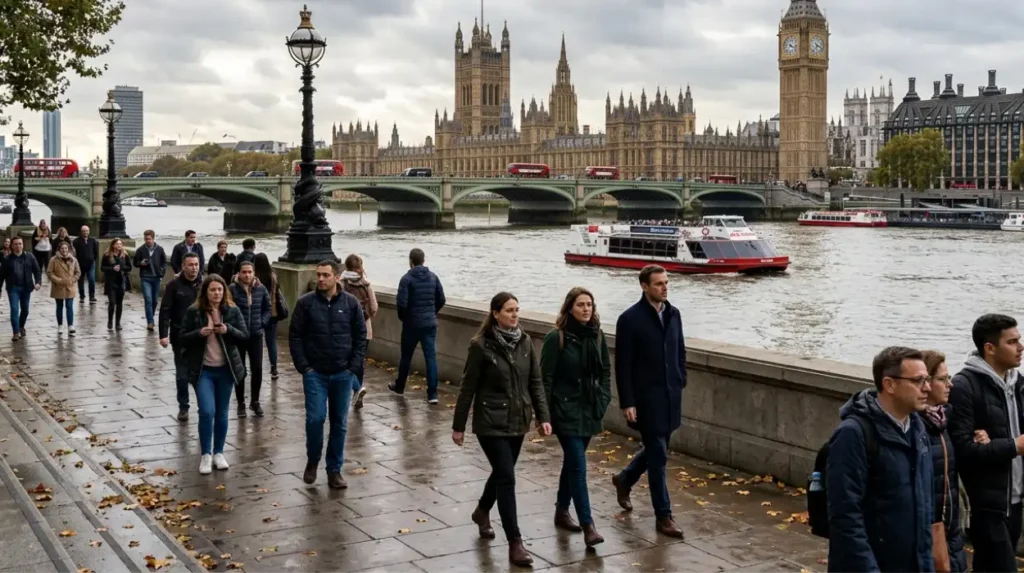
The Urban Heat Island (UHI) effect causes London’s city center to remain significantly warmer than the surrounding rural areas, often by 5°C to 10°C at night. This phenomenon is driven by heat-trapping materials like concrete, asphalt, and reduced vegetation.
London’s built environment functions as a massive thermal battery. Surfaces such as roads, buildings, and pavements possess a high thermal mass, allowing them to absorb solar radiation throughout the day and release that heat slowly after sunset. This process prevents the city from cooling down at night in the same way that open fields or forests do.
The UHI effect has several measurable implications for the city:
- Nighttime Temperature Elevation: During calm, clear summer nights, the temperature differential between the urban core and the countryside can exceed 5°C.
- Reduced Evaporative Cooling: The lack of green spaces and water bodies limits natural cooling, forcing the city to rely more heavily on mechanical ventilation and air conditioning.
- Energy Demand: Increased temperatures in the summer lead to higher electrical loads for cooling systems, which can strain local power grids.
- Air Quality: Warmer urban air can accelerate the formation of ground-level ozone and trap pollutants near the surface, particularly during stagnant atmospheric conditions.
How much rainfall does London receive annually?
London receives an average of approximately 600mm of rainfall per year, which is significantly less than many other global cities. Precipitation is distributed fairly evenly throughout the year, with no distinct “wet” or “dry” season defined by extreme fluctuations.
A common misconception is that London is one of the rainiest cities in the world. In reality, the average annual rainfall at Greenwich Observatory is roughly 562mm. For comparison, this is considerably lower than the annual rainfall of major cities like New York (1,059mm) or Sydney (1,222mm).
The nature of London’s rain is typically characterized by light, frequent showers rather than intense, short-lived tropical downpours. These showers result from the passage of small-scale weather fronts associated with Atlantic depressions. While the total volume is relatively low, the frequency of “rain days”—defined as days with at least 1mm of precipitation—remains notable, often exceeding 100 days per year. Residents of Extra London News often observe that while the rain is persistent, it rarely interferes with outdoor activities for more than a few hours at a time.
How do London’s weather patterns impact seasonal activities?
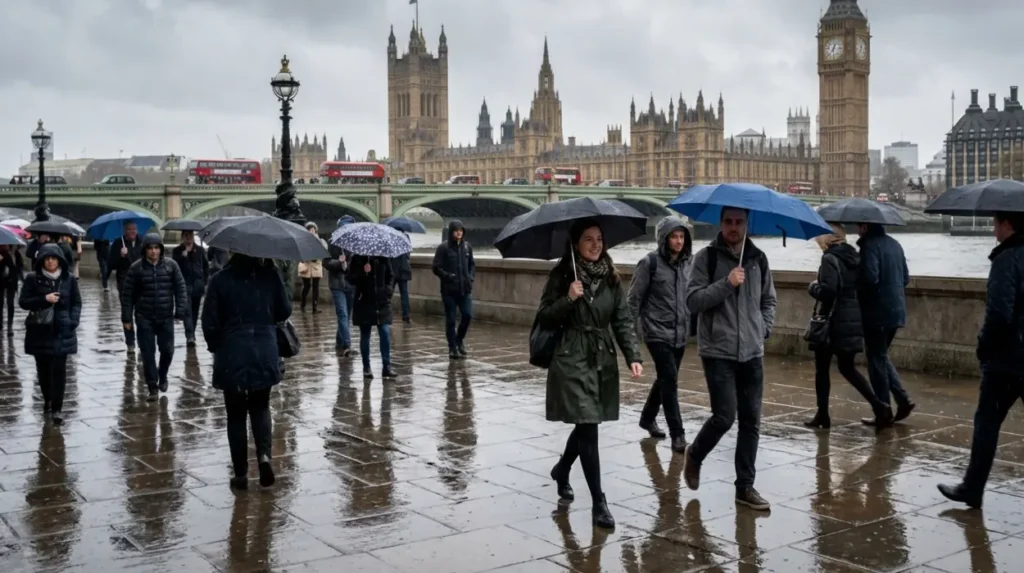
London’s four distinct seasons dictate the rhythm of local life, influencing everything from infrastructure maintenance to major public events. Spring is favored for floral displays, summer for outdoor gatherings, and winter for indoor cultural and social festivities.
The seasonal cycle in London creates predictable shifts in lifestyle and urban activity. Each season offers specific meteorological conditions that influence how the city functions:
Spring (March – May)
Spring is characterized by rising temperatures and lengthening daylight hours. The weather is notoriously fickle, often shifting from bright, clear skies to brief, chilly showers within minutes. This variability requires flexible layering. This season is essential for the city’s horticultural sector, with iconic events like the Chelsea Flower Show taking advantage of the mild growth conditions.
Summer (June – August)
Summer represents the peak of outdoor activity in the capital. The long days provide ample time for visiting London’s many public parks, such as Hyde Park or Richmond Park. While the weather is generally pleasant, the UHI effect makes the central districts uncomfortable during heatwaves. Tourists and locals alike prioritize shaded areas and water features to manage the heat.
Autumn (September – November)
Autumn in London sees a transition back to cooler, cloudier conditions. The foliage in the city’s parks changes, and the wind speeds begin to increase as the Atlantic air masses become more active. November is statistically one of the cloudier and wetter months, signaling the start of the indoor season for museums, theaters, and shopping districts.
Winter (December – February)
Winter weather is defined by grey skies and damp conditions rather than extreme cold. Snowfall occurs on an average of 16 days per year, but accumulation is usually light and short-lived. The primary impact of winter weather is the early sunset, which shapes the city’s evening economy and light-based festivals. Public transport, while resilient, can occasionally face delays due to ice or high winds during extreme storm events.
What are the long-term implications of climate change for London?
Climate change projections for London indicate a trend toward hotter, drier summers and milder, wetter winters. Hydrological models suggest that the city faces an increased risk of drought conditions by 2050, alongside higher instances of extreme temperature events.
The scientific consensus provided by the Met Office and various climate research institutions points toward a changing meteorological landscape for the UK. London’s infrastructure, originally designed for a cooler, more stable climate, is currently undergoing significant adaptation.
Key future challenges include:
- Water Scarcity: As the population grows, the demand for water is expected to outpace current supply capabilities, especially during drier summer months.
- Flash Flooding: Increased intensity of individual rain events can overwhelm existing drainage and sewage systems, leading to localized flooding in low-lying areas of the city.
- Heat-Related Health Risks: The rising frequency of heatwaves poses a direct threat to public health, particularly for the elderly and those residing in densely built, heat-retaining parts of the city.
- Biodiversity Shifts: Changing seasonal timings (phenology) affect local plant and animal life, potentially shifting the arrival times of migratory species and the blossoming periods of native flora.
Extra London News continues to monitor these trends, as they represent the most significant environmental shifts the city has faced in modern history. Understanding these long-term changes is vital for residents and policymakers to ensure the city remains resilient and sustainable in the decades to come.
What type of climate does London have?
London has a temperate oceanic climate (Köppen Cfb), characterised by mild winters, warm summers, moderate rainfall throughout the year, and relatively small seasonal temperature extremes due to the influence of the Atlantic Ocean.