Key Points
- Legal Challenge Dropped: Westminster City Council’s newly appointed Conservative administration has abandoned plans to seek a judicial review against the Mayor of London’s Oxford Street pedestrianisation project.
- Missed Deadline and Lack of Grounds: Independent legal counsel confirmed that the three-month statutory window to file a judicial review expired on 26 May 2026, and that any late application would face immediate rejection by the High Court due to a lack of credible grounds.
- Political Blame Game: The incoming Conservative leadership has accused the outgoing Labour administration of “collusion and capitulation” with City Hall, while Labour counter-claimed that the Tories misled voters with “spurious promises” of a legal challenge they knew was unviable.
- The Inverted Pyramid Approach: The council is shifting its strategy from a high-stakes court battle to exploiting statutory mechanisms, specifically targeting upcoming Traffic Management Order (TMO) consultations to protect accessibility, vulnerable residents, and local bus routes.
- MDC Integration Moving Forward: Despite the political friction, the transition of Oxford Street into a Mayoral Development Corporation (MDC) continues, with Westminster securing three board seats, developer funding retention, and traffic guarantees for the eastern end of the high street.
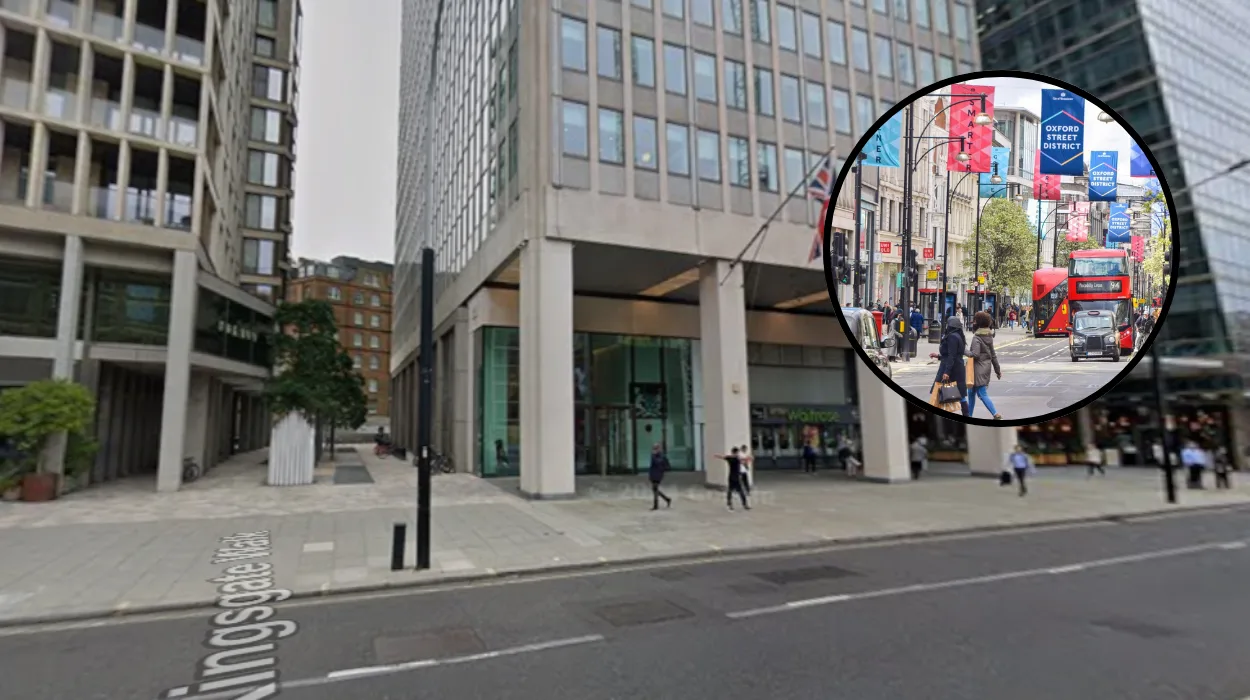
London (Extra London News) June 1, 2026 – Westminster City Council has officially withdrawn its threats of legal action against the Mayor of London’s flagship plan to pedestrianise Oxford Street, conceding that the statutory window for a High Court challenge has expired. The newly elected Conservative administration, which took control of the local authority following the local elections on 7 May, had campaigned fiercely on a promise to launch a “legal fighting fund” to block the multi-million-pound traffic-free zone. However, formal independent legal advice delivered by King’s Counsel established that a judicial review was highly unlikely to succeed and that the strict three-month legal deadline to challenge the Mayor’s original February decision had already lapsed. The decision marks a dramatic shift in policy for the borough, forcing the local authority to pivot from courtroom litigation to administrative negotiations just weeks before the iconic shopping thoroughfare is scheduled to go traffic-free by the end of the summer.
- Key Points
- Why Did Westminster Council Abandon Its Judicial Review?
- What Are the Accusations of Political “Collusion and Capitulation”?
- How Has Westminster Labour Responded to the U-Turn?
- What Concessions Were Secured Before the Legal Collapse?
- How Will the Council Challenge the Scheme Moving Forward?
- What Are the Remaining Concerns for Vulnerable Residents and Businesses?
Why Did Westminster Council Abandon Its Judicial Review?
The decision to drop the legal challenge follows direct instructions from the council’s new leadership to review the authority’s legal options. As reported by Dave Hill of On London, immediately after the Conservatives gained control of Westminster Council from Labour, their leader, Cllr Paul Swaddle OBE, instructed the council’s chief executive on 18 May to seek formal legal advice regarding the lawfulness of London Mayor Sadiq Khan and Transport for London’s (TfL) decisions.
According to an official statement issued by the Westminster Conservative Group, the formal advice from King’s Counsel was received on 26 May. The legal findings concluded that the only viable mechanism to challenge the scheme was a judicial review, but that the Civil Procedure Rules required such claims to be filed promptly within three months of the Mayor’s initial sign-off on 26 February 2026. Because that deadline expired on the exact day the advice was delivered, King’s Counsel warned that permission to file a late claim would be flatly refused for lack of promptness, noting that a recent change in council administration would not be accepted by the court as a valid justification for delay.
A spokesperson for Westminster City Council confirmed the legal realities in a public statement issued on Friday 29 May, stating that the advice made it clear a judicial review “would be unlikely to succeed and that submitting a late claim for judicial review would result in refusal.”
What Are the Accusations of Political “Collusion and Capitulation”?
The collapse of the legal challenge has ignited a fierce political dispute within the local authority, with the new administration laying the blame entirely at the feet of their political predecessors. Writing in an official communication for the Cities of London & Westminster Conservative Association, Cllr Paul Swaddle OBE declared:
“Westminster Labour failed local people at every turn on Oxford Street. They surrendered Oxford Street to Sadiq Khan. They voted down our fighting fund to challenge the Mayor’s vanity project. Their collusion and capitulation has left it too late to legally challenge Sadiq Khan’s ill-conceived scheme via Judicial Review.”
Cllr Swaddle added that the situation represented “a Labour Government, a Labour Mayor and a Labour Council, all working hand in glove against the city they were meant to serve.”
The Conservative group maintained that while they were in opposition, they repeatedly demanded robust legal action and requested the creation of a dedicated council fund to fight the mayoral intervention, proposals they claim were systematically blocked by the then-Labour majority.
How Has Westminster Labour Responded to the U-Turn?
Westminster Labour has forcefully rejected the allegations, characterising the Conservative legal threats as a calculated piece of political theatre designed to deceive the electorate ahead of the May local elections.
In a press release published on the official Westminster Labour platform, the party described the development as the “first U-turn of the new administration,” pointing out that the Conservatives abandoned their promised court challenge just two weeks after taking office.
As reported by Adam Carey of Local Government Lawyer, Cllr Geoff Barraclough, the Labour spokesperson for Economic Development, launched a direct counter-attack on the integrity of the Tory campaign, stating:
“The Conservatives misled voters with their spurious promise of a legal challenge. This was never a realistic prospect, and they knew it. The new leadership of Westminster City Council now needs to stop grandstanding and start working constructively with all parties. Oxford Street goes traffic-free this summer and all parts of the public sector should be focused on making it a success for residents, businesses and visitors – not fighting each other to score political points.”
The Labour group emphasized that they had known from the beginning that a judicial review had no realistic prospect of success, which is why the previous cabinet chose to focus on robust negotiations with City Hall to extract concessions rather than wasting taxpayer resources on futile litigation.
Explore More Westminster News
Mayor’s Oxford Street Temu Plan Slammed by Westminster: London 2026
Sadiq Khan Oxford Street Pedestrianisation Faces Westminster Council Fight: London 2026
What Concessions Were Secured Before the Legal Collapse?
Prior to the political shift in the council, the previous local authority leadership had engaged in intense discussions with the Greater London Authority (GLA) and TfL regarding the establishment of a Mayoral Development Corporation (MDC) to oversee the area. In an official briefing detailing the latest developments on Oxford Street, the former Leader of Westminster Council, Cllr Adam Hug, had outlined significant concessions designed to protect local interests.
As part of those negotiated terms, the GLA agreed to significantly reduce the geographic boundary of the MDC to just one block on either side of Oxford Street, ensuring the council retained full service control over the surrounding residential neighbourhoods. Furthermore, the Mayor committed upfront investment to fast-track a high-quality scheme for the eastern section of the street—from Oxford Circus to Tottenham Court Road—incorporating existing plans drawn up under the council’s own Oxford Street Programme to maintain free-flowing traffic.
Crucially, Cllr Hug secured an agreement in principle allowing Westminster City Council to retain strategic development funds collected within the area, including Community Infrastructure Levy (CIL) and Section 106 contributions related to affordable housing, carbon offsetting, and employment skills, alongside securing three seats on the incoming MDC board.
How Will the Council Challenge the Scheme Moving Forward?
Despite dropping the High Court challenge, the current Conservative leadership maintains that the abandonment of the judicial review does not signal unconditional surrender. A spokesperson for Westminster City Council noted in their 29 May brief that “this is not the end of the road and the council is considering all other legal and procedural options.”
The council plans to leverage its position as a statutory consultee to influence the essential administrative orders required to implement the pedestrianisation. For the pedestrian zone to legally operate, TfL must successfully execute a Traffic Management Order (TMO) under Section 6 of the Road Traffic Regulation Act 1984, alongside varying local bus services under Section 183 of the Greater London Authority Act.
The council’s response to these impending consultations will be overseen directly by Cllr Tim Barnes, the Cabinet Member for Growth. The administration has explicitly committed to using these statutory consultation windows to vigorously challenge the mechanics of the scheme on the grounds of accessibility, traffic displacement, noise pollution, and air quality impacts on neighboring residential quarters.
What Are the Remaining Concerns for Vulnerable Residents and Businesses?
The core of the local opposition continues to centre around the displacement of vehicular traffic and its direct consequences on less mobile Londoners. In statements compiled across local reporting, Cllr Paul Swaddle stressed that the council will continue to fight for the disabled and elderly residents who rely entirely on direct bus routes to access the commercial heartland of the West End.
The administration argues that removing buses from the main thoroughfare without guaranteeing step-free access at major hubs like Oxford Circus creates an insurmountable barrier for vulnerable visitors. Local amenity groups and businesses have also voiced anxieties regarding the potential for heavy traffic and associated air pollution to be pushed into narrower, historically residential side roads.
To address these friction points, Cllr Swaddle confirmed he has formally written to the Mayor of London requesting an urgent summit. In his public appeal to City Hall, Cllr Swaddle stated:
“We will fight for the businesses and workers who make this street one of the great commercial heartlands of London. And we will fight for the residents who were shut out of decisions about their own high street. My offer to the Mayor stands. Sit down with me. Let us find a plan that actually delivers for Oxford Street. The door is open, but Westminster will not be ignored.”
With the Mayor determined to have the traffic-free zone operating between Great Portland Street and Orchard Street by the end of the summer, the timeline leaves minimal room for further delays, ensuring that the administrative battle over the design of London’s premier shopping street will continue right up to its opening date.