London’s bridges are among the city’s most recognisable historic structures, connecting communities across the River Thames while representing centuries of engineering, architecture, commerce, and urban development. From medieval crossings to modern pedestrian landmarks, these bridges provide outstanding panoramic views, important heritage value, and some of the finest photography locations in Britain. Their architectural diversity reflects London’s evolution from a Roman settlement into one of the world’s leading global cities.
- Why are London’s scenic bridges historically and culturally important?
- Which London bridges offer the best river views for photography?
- How did London’s bridges develop throughout history?
- Roman London
- Medieval London
- Georgian Expansion
- Victorian Engineering
- Twentieth and Twenty-First Centuries
- What makes Tower Bridge one of the world’s greatest engineering landmarks?
- Why is Westminster Bridge one of London’s most photographed viewpoints?
- Which historic bridges combine architecture with heritage preservation?
- How do London’s bridges reflect architectural evolution?
- How has the River Thames influenced bridge construction?
- How are London’s historic bridges preserved for future generations?
- What lasting legacy do London’s scenic bridges leave?
Why are London’s scenic bridges historically and culturally important?
London’s scenic bridges represent more than transportation infrastructure. They document nearly 2,000 years of urban development, engineering innovation, architectural styles, commercial expansion, and cultural identity while providing exceptional viewpoints that attract millions of photographers, historians, commuters, and visitors every year.
The River Thames has shaped London’s history since Roman Britain. Crossing the river has always been essential for trade, defence, government, and population growth. Every major bridge reflects the engineering knowledge, political priorities, and architectural preferences of its period.
Today, more than 35 bridges cross the tidal section of the Thames within Greater London. Examples include Tower Bridge, Westminster Bridge, Millennium Bridge, Blackfriars Bridge, and Chelsea Bridge. Together they connect the city’s historic districts, financial centres, cultural attractions, and residential neighbourhoods.
Many bridges are protected through statutory heritage designations. Examples include Grade I-listed Tower Bridge and Grade II-listed Albert Bridge. Historic England oversees the protection of nationally significant structures, ensuring their preservation for future generations.
The bridges also function as public viewing platforms. They provide uninterrupted perspectives of landmarks including the Palace of Westminster, St Paul’s Cathedral, the Tower of London, Canary Wharf, and the modern skyline of the City of London.
To experience these historic landmarks in person today, consult our comprehensive [How London’s Famous Bridges Were Built and Changed the City’s Landscape Forever] for itineraries and visiting parameters.
Which London bridges offer the best river views for photography?
Several London bridges combine outstanding architecture with panoramic city views. Tower Bridge, Westminster Bridge, Millennium Bridge, Waterloo Bridge, Blackfriars Bridge, and Albert Bridge provide excellent sightlines across the Thames throughout the year and during both daylight and evening photography sessions.
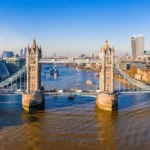
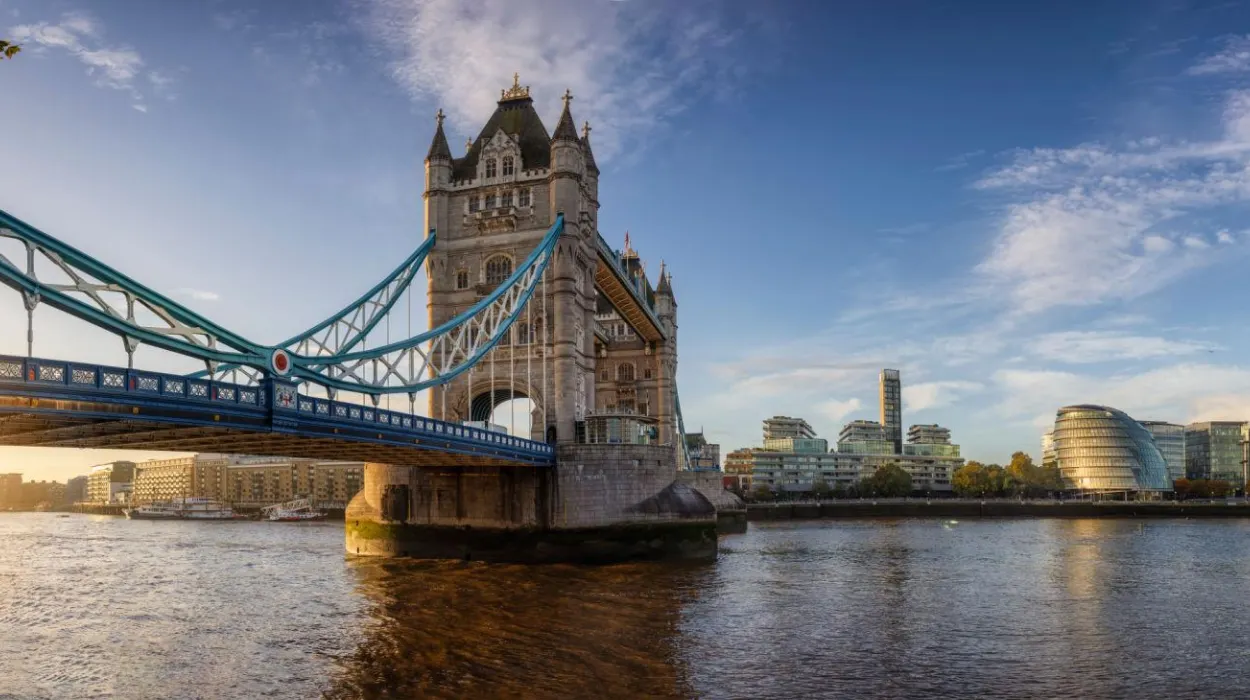
Completed in 1894, Tower Bridge remains London’s most famous bridge. It was designed by Sir Horace Jones and engineer Sir John Wolfe Barry.
Its combined bascule and suspension design solved a major Victorian engineering challenge by allowing tall ships to continue accessing the Pool of London while maintaining road traffic.
Photographers value Tower Bridge because nearly every angle produces historically significant compositions. Looking west reveals the Tower of London and London’s financial district. Looking east captures the evolving Docklands skyline.
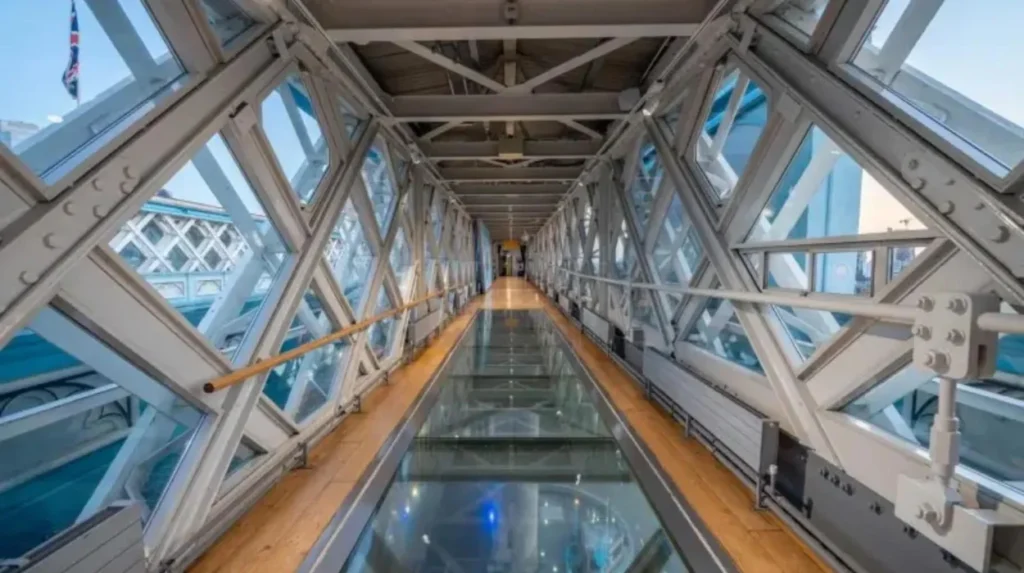
The bridge’s elevated glass walkways stand approximately 42 metres above the Thames, providing panoramic views across central London.
Westminster Bridge links Westminster with Lambeth.
The current bridge opened in 1862 after replacing an earlier eighteenth-century crossing. Designed by Thomas Page, it features seven elegant cast-iron arches painted green to complement the seating inside the House of Commons.
From Westminster Bridge, photographers capture several iconic landmarks within one frame, including Big Ben, the Palace of Westminster, Westminster Abbey, the London Eye, and the River Thames.
Morning light often illuminates the parliamentary buildings, while sunset creates dramatic reflections across the river.
Millennium Bridge
Completed in 2000, Millennium Bridge is London’s first new pedestrian bridge across the Thames for more than a century.
Designed by Foster + Partners, Sir Anthony Caro, and Arup engineers, the bridge connects St Paul’s Cathedral with Tate Modern and Shakespeare’s Globe.
Its symmetrical alignment creates one of London’s strongest photographic compositions. Looking north, visitors enjoy an uninterrupted view of St Paul’s Cathedral framed by the bridge’s modern steel design.
Waterloo Bridge
Often called London’s finest viewing bridge, Waterloo Bridge provides exceptional panoramic perspectives in both directions.
Opened in 1945, the bridge replaced an earlier nineteenth-century crossing and was largely constructed by women during the Second World War, earning the informal title “The Ladies’ Bridge.”
Its elevated position offers broad views of the City of London, Somerset House, the National Theatre, and Canary Wharf.
How did London’s bridges develop throughout history?
London’s bridges evolved through Roman engineering, medieval timber construction, Georgian stone architecture, Victorian industrial innovation, and modern steel engineering. Each period introduced new construction techniques that reflected changing transportation needs, economic growth, and technological progress across the capital.
Roman London
The Romans established Londinium around AD 47.
Archaeological evidence indicates the first bridge crossed the Thames near today’s London Bridge. This crossing supported military movement, trade, taxation, and communication across Roman Britain.
Medieval London
For over six centuries, medieval London Bridge served as the city’s only permanent river crossing.
Completed in the early thirteenth century, it supported houses, shops, chapels, and defensive gates. Thousands of people crossed it daily, making it one of medieval Europe’s busiest streets.
Georgian Expansion
The eighteenth century witnessed growing demand for additional crossings as London’s population expanded rapidly.
Examples include Westminster Bridge and Blackfriars Bridge. These reduced congestion while encouraging residential development south of the Thames.
Victorian Engineering
Industrial Britain transformed bridge construction.
Engineers introduced wrought iron, steel, hydraulic machinery, and improved foundations. Examples include Tower Bridge, Albert Bridge, and Chelsea Bridge.
Victorian bridges balanced engineering performance with decorative architecture, reflecting Britain’s industrial confidence.
Twentieth and Twenty-First Centuries
Modern bridges prioritise pedestrians, cyclists, public transport integration, and sustainable urban planning.
Examples include Millennium Bridge, Golden Jubilee Bridges, and the restored Blackfriars Railway Bridge with integrated solar panels.
What makes Tower Bridge one of the world’s greatest engineering landmarks?
Tower Bridge combines Victorian engineering, Gothic Revival architecture, hydraulic lifting technology, and enduring cultural significance. Its operational bascules continue allowing river navigation while preserving one of London’s most internationally recognised historic landmarks and photographic attractions.
The bridge stretches approximately 244 metres across the Thames. Its twin towers rise about 65 metres above the river.
Originally, steam-powered hydraulic engines raised the bascules using pressurised water systems. These were modernised with electro-hydraulic machinery during the 1970s while preserving the historic mechanisms for public exhibition.
Tower Bridge opens hundreds of times annually for authorised river traffic, maintaining its original transportation function.
Its Gothic Revival towers were intentionally designed to complement the nearby Tower of London despite employing advanced Victorian steel framing internally.
Why is Westminster Bridge one of London’s most photographed viewpoints?
Westminster Bridge provides direct visual access to Britain’s constitutional and ceremonial landscape. Its strategic location delivers uninterrupted views of Parliament, Big Ben, Westminster Abbey, the London Eye, and the River Thames from multiple photographic perspectives throughout every season.
The bridge occupies one of London’s most historically significant locations.
To the north stands the Palace of Westminster, home of the United Kingdom Parliament.
The Elizabeth Tower, housing the Great Bell commonly called Big Ben, dominates the skyline.
Across the river stands the London Eye, opened in 2000 as part of millennium celebrations.
Photographers frequently use Westminster Bridge because the spacing between landmarks creates balanced compositions suitable for landscape, architectural, travel, and documentary photography.
Evening illuminations produce reflections across the Thames that enhance long-exposure photography.
Which historic bridges combine architecture with heritage preservation?
Several London bridges demonstrate successful heritage preservation while continuing everyday transport functions. Tower Bridge, Albert Bridge, Blackfriars Bridge, Richmond Bridge, and Hammersmith Bridge illustrate different periods of engineering, conservation practice, and architectural development across the capital.
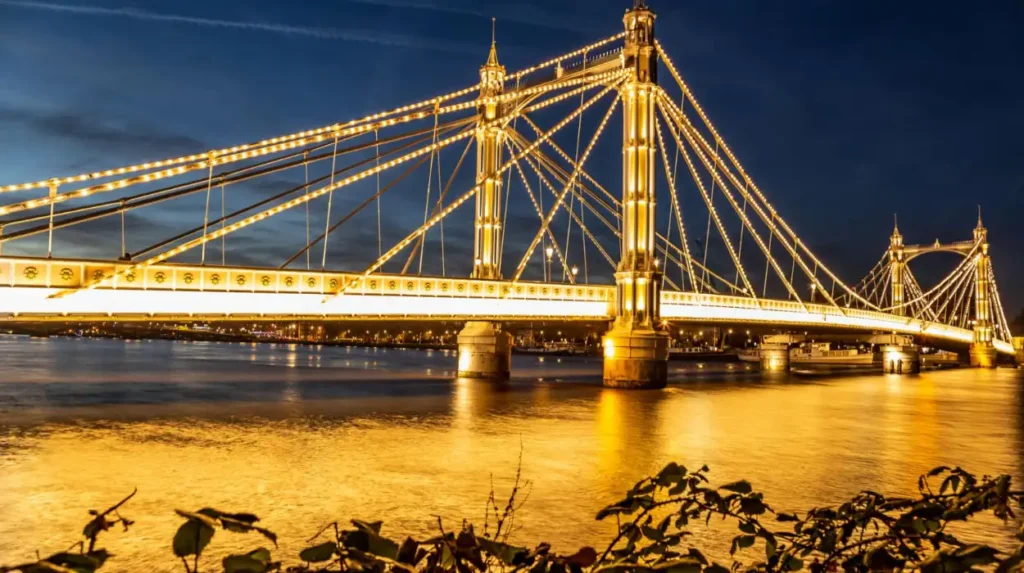
Its suspension design incorporates decorative lighting that creates one of London’s most distinctive evening landmarks.
Because of structural sensitivity, military troops historically broke step while crossing to reduce resonance.
The bridge remains Grade II* listed.
Blackfriars Bridge
The present bridge opened in 1869.
It occupies a location closely associated with medieval Dominican friars, from whom Blackfriars takes its name.
Today it provides excellent skyline views toward St Paul’s Cathedral and the City of London.
Richmond Bridge
Opened in 1777, Richmond Bridge is London’s oldest surviving Thames bridge still carrying road traffic.
Constructed from Portland stone, it represents Georgian bridge engineering and complements the surrounding historic riverside landscape.
Hammersmith Bridge
Completed in 1887, Hammersmith Bridge is an important Victorian suspension bridge.
Its ongoing conservation programme demonstrates the challenges of preserving historic infrastructure while meeting modern safety standards.
How do London’s bridges reflect architectural evolution?
London’s bridges demonstrate continuous architectural development from Roman timber construction through medieval masonry, Georgian classicism, Victorian Gothic Revival, twentieth-century steel engineering, and contemporary minimalist design, creating a visual timeline of Britain’s engineering history across the Thames.
Bridge architecture reflects advances in engineering materials.
Roman builders primarily used timber.
Medieval engineers introduced durable stone arches.
Georgian architects favoured classical symmetry and restrained decoration.
Victorian engineers embraced iron, steel, and ornamental detailing.
Contemporary designers prioritise lightweight materials, sustainability, accessibility, and unobstructed sightlines.
These changes mirror wider developments in British architecture, transportation planning, and construction technology.
How has the River Thames influenced bridge construction?
The River Thames determined London’s bridge locations, engineering methods, commercial expansion, defensive planning, and urban growth. Its tidal conditions, navigation requirements, and economic importance shaped every major bridge constructed across the capital over nearly two millennia.
The Thames extends approximately 346 kilometres from Gloucestershire to the North Sea.
Within London, tidal movement creates engineering challenges involving foundations, river traffic, flood resilience, and navigation clearances.
Bridge designers have consistently balanced three priorities:
Supporting increasing road and pedestrian traffic.
Maintaining river navigation.
Protecting historic waterfront environments.
Modern engineering incorporates stronger foundations, corrosion-resistant materials, improved drainage, and continuous structural monitoring.
These innovations extend bridge lifespans while reducing maintenance costs.
How are London’s historic bridges preserved for future generations?
Historic bridges receive legal protection through heritage legislation, engineering inspections, conservation programmes, specialised restoration, and continuous monitoring. Preservation ensures architectural authenticity while maintaining structural safety for millions of annual users across Greater London.
Historic England lists nationally important bridges based on architectural and historic significance.
Transport for London and individual borough authorities oversee maintenance responsibilities depending on ownership.
Conservation work typically includes stone cleaning, metal restoration, repainting, waterproofing, structural strengthening, and replacement of deteriorated materials using historically appropriate techniques.
Modern digital monitoring systems detect movement, corrosion, and structural stress before significant deterioration occurs.
Climate resilience planning increasingly considers heavier rainfall, changing river conditions, and increased pedestrian use.
These preservation efforts ensure London’s bridges continue serving both transport and heritage purposes.
What lasting legacy do London’s scenic bridges leave?
London’s scenic bridges remain essential historic assets, engineering achievements, cultural landmarks, and public spaces. Their combination of architectural excellence, historical continuity, and exceptional river views ensures lasting relevance for education, tourism, heritage conservation, and urban identity throughout the twenty-first century.
Few world cities possess such a diverse collection of historic river crossings within a relatively compact urban landscape.
London’s bridges collectively illustrate nearly two thousand years of engineering development. Examples include Roman timber crossings, medieval stone bridges, Victorian bascule bridges, and contemporary pedestrian structures. They also demonstrate how infrastructure can become enduring cultural symbols rather than simply transportation routes.
Millions of residents and visitors cross these bridges annually for commuting, sightseeing, recreation, and photography. Their vantage points reveal the relationship between London’s historic core, modern skyline, royal landmarks, commercial districts, and evolving riverside developments.
Ongoing conservation programmes ensure that these structures remain operational while preserving their historic character.
As London continues to grow, its bridges will remain central to understanding the city’s architectural history, engineering innovation, and cultural heritage, making them indispensable destinations for historians, educators, photographers, and travellers seeking the finest river views in the British capital.
Which is the most scenic bridge in London?
Tower Bridge is widely regarded as London’s most scenic bridge due to its Victorian Gothic architecture, panoramic River Thames views, and iconic skyline featuring the Tower of London and the City of London.