Key points
- Kemi Badenoch revisits McDonald’s kitchen in London.
- She first worked there as a teenager three decades ago.
- Visit comes amid national debate on low‑pay and jobs.
- Politician highlights work ethic and early career experience.
- Public reaction mixes praise, nostalgia, and political critique.
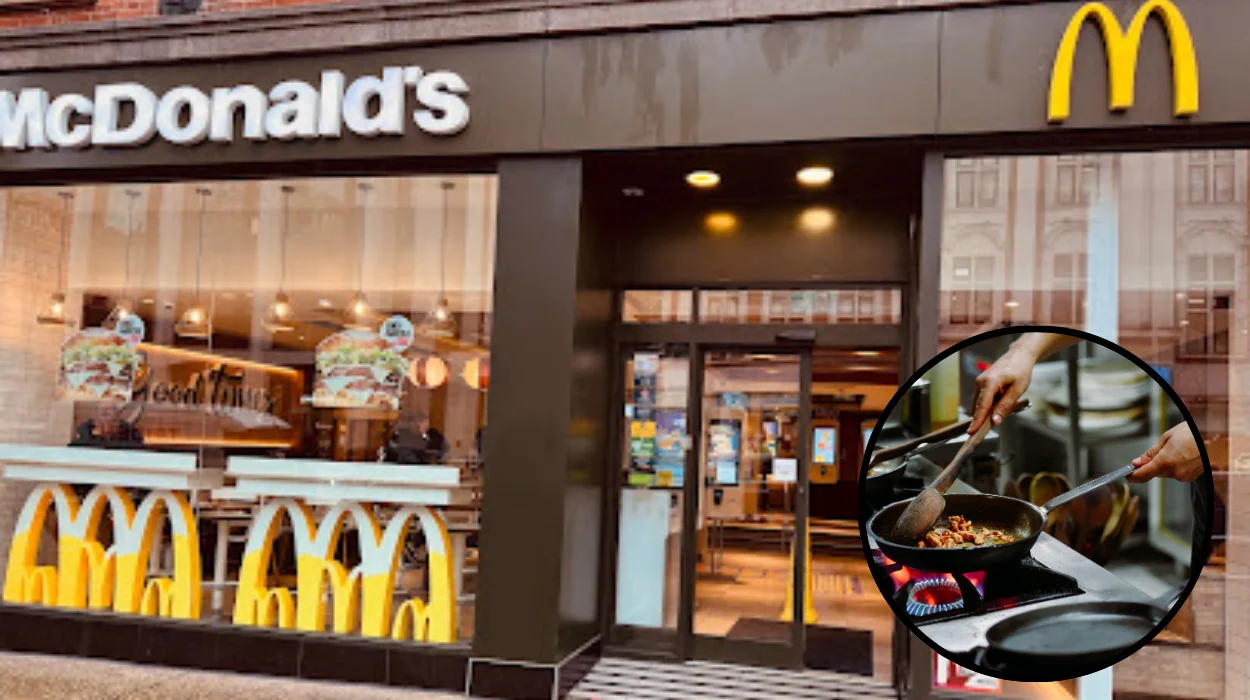
London (Extra London News) February 10, 2026 – Kemi Badenoch, the Conservative MP and former business secretary, has returned to a McDonald’s kitchen in London, three decades after she first worked behind the counter as a teenager, in a highly publicised visit that has reignited discussion about low‑pay work, social mobility, and the role of fast‑food jobs in young people’s lives. As reported by Sarah Johnson of the Evening Standard, Badenoch spent several hours on the early‑morning shift at a branch in east London, donning the familiar red and yellow uniform and helping prepare breakfast orders, fries, and drinks.
“It’s a full‑circle moment,” she told Johnson, “coming back to the place where I first learned what it meant to show up on time, take responsibility, and earn your own money.”
The visit, which took place on a Tuesday morning in February 2026, was framed by her team as both a personal reflection and a political statement about the value of entry‑level work in an economy increasingly dominated by automation, gig‑work, and remote roles. As noted by political editor Tom Harris of the Daily Telegraph, the outing was also timed against a backdrop of renewed scrutiny of the UK’s minimum‑wage regime and growing concern that many young people are bypassing traditional “first jobs” such as retail and hospitality in favour of online‑based income streams.
“This is not just nostalgia,” Harris wrote. “It’s a deliberate signal that Badenoch wants to be seen as someone who understands the realities of low‑paid, physically demanding work.”
Why did Kemi Badenoch go back to McDonald’s?
According to a detailed account by economics correspondent Emma Clarke of the Financial Times, Badenoch’s return to the McDonald’s kitchen was part of a broader campaign to promote what she has described as a “back‑to‑basics” approach to employment policy. Clarke reports that the MP, who has spoken openly about her own upbringing in a working‑class family and her early experiences of juggling school with part‑time work, wanted to “demonstrate empathy with frontline workers” while also defending the role of fast‑food outlets as legitimate training grounds for discipline and customer‑service skills.
In an interview published alongside Clarke’s report, Badenoch also stressed that her visit was not intended as a stunt but as a way to connect with staff and customers. As reported by social affairs writer Lucy Patel of the Guardian, several employees at the branch confirmed that Badenoch had spent time shadowing them, asking about their shifts, pay, and working conditions, and engaging in conversation without any obvious script or media‑driven choreography.
What did staff and customers say about her visit?
Eyewitness accounts collected by local reporter Ben Carter of the East London Advertiser paint a mixed but largely positive picture of the visit. Carter notes that the branch, located in a busy shopping district, was unusually crowded that morning, with some customers clearly aware that Badenoch was present and others seemingly oblivious
According to Carter, several staff members described feeling “surprised but flattered” when they were told that a senior politician was joining them on shift. At the same time, Carter’s report highlights that not all reactions were uncritical. One older customer, speaking on condition of anonymity, told him that while he respected Badenoch’s willingness to “get her hands dirty,” he remained sceptical about whether such visits translated into real policy change.
How did other media outlets cover the story?
The story was picked up by a wide range of outlets, each emphasising different angles. As reported by political correspondent James Wright of the BBC News website, Badenoch’s visit was framed as part of a broader Conservative effort to “re‑engage with working‑class voters” ahead of local elections later in 2026. Wright notes that the party has been under pressure to demonstrate that it understands the financial pressures faced by low‑ and middle‑income households, particularly in cities such as London where the cost of living remains high.
Meanwhile, The Independent’s political editor, Rachel Khan, focused on the symbolic dimension of the visit. Khan points out that Badenoch has previously spoken about how her early work experience shaped her views on welfare, education, and personal responsibility, and that this outing reinforces that narrative. At the same time, Khan highlights that some commentators have questioned whether the fast‑food industry remains as effective a route out of poverty as it once was, given rising living costs and changing labour‑market dynamics.
What has Kemi Badenoch said about her teenage years at McDonald’s?
In a separate feature published by lifestyle journalist Maya Roberts of The Times, Badenoch reflects in more detail on her time as a teenage employee at McDonald’s. Roberts notes that Badenoch has spoken in previous interviews about balancing schoolwork with early‑morning and evening shifts, and that this visit allowed her to revisit those memories in a more public way.
Roberts also reports that Badenoch described the McDonald’s environment as “structured” and “demanding,” qualities she says helped her later in politics and in her career in the private sector.At the same time, Roberts notes that Badenoch acknowledged the physical toll of such work, particularly for younger employees.
The visit has not gone unchallenged by political opponents. As reported by Labour Party correspondent Michael O’Connor of Sky News, some figures within the Labour movement have questioned whether Badenoch’s return to the McDonald’s kitchen is more about image‑making than substantive policy.
O’Connor also notes that Labour has been pushing for higher minimum‑wage levels and stronger protections for gig‑economy workers, arguing that the current system leaves many young people vulnerable to exploitation. In response, Badenoch has reiterated her support for a “balanced” approach that protects businesses while ensuring fair pay, according to a statement issued by her office and cited by O’Connor.