Key Points
- Urgent Investigation Called: The London Assembly has formally demanded a full and transparent investigation into high noise levels across the London Underground network.
- Targeted Areas: Labour Assembly Members have specifically highlighted five areas as particularly affected: Brent, Kennington, Islington, Camden, and South Wimbledon.
- Health and Quality of Life: The noise, often described as high-pitched screeching, can reach over 100 decibels—equivalent to a helicopter taking off—significantly impacting both commuters and residents living above “hotspot” areas.
- Systemic Issues: Critics argue that current TfL information is becoming less detailed and less responsive to residents’ lived experiences, masking the root causes related to maintenance and infrastructure investment.
- TfL’s Response: Transport for London (TfL) maintains that noise reduction is a priority, citing ongoing interventions such as rail grinding, the removal of redundant rail joints, and the installation of new track.
- Mayoral Commitment: The Mayor of London has pledged to ensure that TfL provides “far more detailed” information to Assembly Members regarding track noise and has secured a dedicated £9 million rail grinding budget for 2025-26.
London (Extra London News) July 18, 2026 – Transport for London (TfL) is facing mounting pressure to deliver a comprehensive, public-facing strategy to mitigate excessive noise levels on the Underground, following an urgent call from the London Assembly for a full-scale investigation into the issue.
- Key Points
- Why is the London Assembly demanding a ‘full investigation’ into Tube noise?
- What is the official stance of the Mayor and TfL regarding these noise levels?
- How has TfL attempted to combat the problem so far?
- Is there a specific issue with the ‘Kennington Loop’?
- What happens next for Londoners affected by Tube noise?
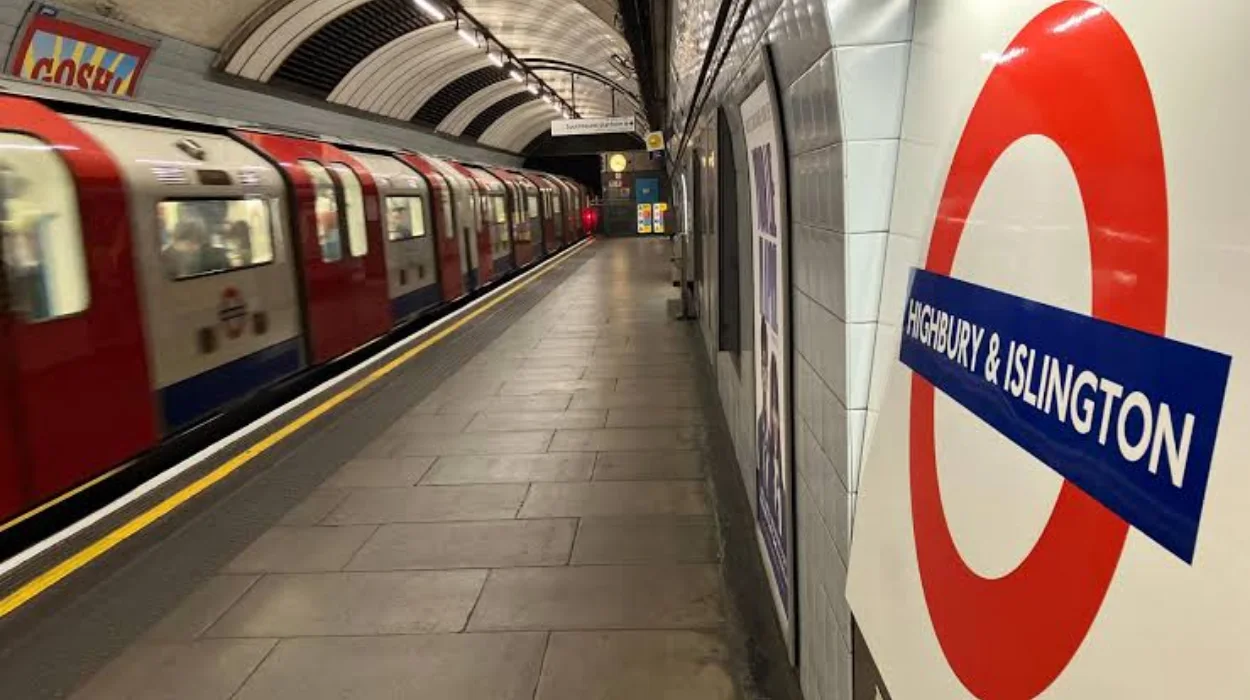
For many of the millions who rely on the network daily, the high-pitched screeching of metal wheels against curved tracks has become an inescapable reality of urban travel. However, the frustration extends far beyond the carriage; residents living in close proximity to subterranean “hotspots” have reported that the noise and vibration are severely impacting their quality of life. Labour Assembly Members are now spearheading a push to hold TfL accountable, specifically pointing to chronic issues in Brent, Kennington, Islington, Camden, and South Wimbledon.
Why is the London Assembly demanding a ‘full investigation’ into Tube noise?
The demand for a deeper probe stems from a growing perception among elected officials and the public that the current approach to noise mitigation is inadequate and lacking in transparency. As reported by the MyLondon journalist covering the transport beat, there is significant concern that “the information provided by TfL is becoming less, not more, detailed and less responsive to their lived experience.”
The frustration is not merely about the decibel levels, which can frequently exceed 100dB—a volume comparable to a low-flying helicopter. There is a broader anxiety that the “root causes of Tube noise—including the link between noise and long-term decisions about maintenance, renewals, and investment—are not being acknowledged.” This, according to those pushing for the investigation, is undermining public confidence in TfL’s ability to manage its infrastructure effectively.
What is the official stance of the Mayor and TfL regarding these noise levels?
The Mayor of London has publicly acknowledged the “misery” that excessive noise causes for both passengers and local residents. In statements provided to the London Assembly, the Mayor emphasized that he is “particularly sensitive” to the impact on residents living in close proximity to the tracks.
Addressing the Assembly, the Mayor confirmed that he has taken steps to ramp up resources, stating: “Given the negative impact this can have on users and residents, I’ve introduced a dedicated rail grinding budget, giving TfL access to £9 million in 2025-26.” He further committed to a more transparent data-sharing process, assuring Assembly Members that he would personally ensure that the information provided by the transport authority is “far, far, far more detailed” than what has been received to date.
A spokesperson for Transport for London reiterated the agency’s commitment to the issue. As reported by the Local Democracy Reporting Service (LDRS), the spokesperson stated: “We understand the importance of minimising noise levels on the Tube itself and in surrounding areas for our customers, staff and neighbours. This is a priority and we are determined to achieve this.”
Explore more Public Services News:
TfL Expands Lane Rental Scheme to Camden and Merton, London 2026
TfL Halts New Superloop Express Bus Route Through Enfield 2026
How has TfL attempted to combat the problem so far?
TfL officials have outlined several technical interventions aimed at curbing the noise, which they identify as being primarily caused by “corrugation”—where the track surface becomes uneven, causing the wheels to vibrate and screech.
According to TfL, efforts to date have included:
- Targeted Rail Grinding: A significant programme of grinding has been carried out to smooth the tracks, with additional work scheduled to continue through 2026.
- Infrastructure Maintenance: This includes the removal of insulated and redundant rail joints, which are known sources of noise, and the “re-ballasting” of track sections.
- Speed Restrictions: In specific challenging areas, such as the Kennington Loop, TfL has implemented 10mph speed restrictions to manage vibration and noise output.
- Data-Led Monitoring: The transport authority has begun trialling new rail grinding technology and monitoring noise variations to prioritize interventions where they are needed most.
Is there a specific issue with the ‘Kennington Loop’?
The Kennington Loop has frequently been cited in Assembly questions as a particularly problematic site. Because of the “dynamic turning of trains around a looped section of track,” the area presents unique engineering challenges. Residents have reported severe noise and vibration inside their homes.
In response to specific queries regarding the Loop, TfL has highlighted that since the opening of the Northern Line Extension, the number of trains utilizing this section has been reduced by approximately half. Post-work measurements taken after the most recent grinding sessions have reportedly shown a temporary noise reduction of between 5 and 9 decibels. Despite this, the area remains a primary focus for ongoing monitoring and future maintenance.
What happens next for Londoners affected by Tube noise?
The Assembly’s unanimous push for transparency suggests that the coming months will see a stricter scrutiny of TfL’s maintenance logs and capital investment strategies. While TfL maintains that it is taking a “data-led approach,” the political pressure to publish a clear, public schedule of works—detailing exactly where and when improvements will take place—is intensifying.
For residents in the five flagged boroughs and beyond, the expectation is that these words will translate into tangible, long-term reductions in noise pollution. As the debate continues at City Hall, the challenge for the Mayor and the TfL Commissioner will be to balance the operational necessity of a 24/7-style transit network with the fundamental right of Londoners to live in a city that is not only mobile but also habitable.