Key Points
- Highest Incident Rate: The London Borough of Camden has emerged as London’s premier hotspot for “cuckooing”—a predatory practice where criminal gangs illegally take over the homes of vulnerable people.
- Shocking Police Data: Data obtained from the Metropolitan Police via a Freedom of Information (FOI) request revealed that Camden had 34 flagged cuckooing victims between 2021 and 2025, and a staggering 161 cuckooing incidents tagged by police between 2023 and 2026.
- Gangs Exploiting Transit Hubs: Camden Council attributes its high incident rate to geographic vulnerabilities, specifically housing three of London’s main national transport hubs: Euston, King’s Cross, and St Pancras, which make it an attractive base for county lines drug trafficking networks.
- Vulnerable Communities Targeted: Homelessness charity St Mungo’s warned that individuals facing homelessness, trauma, substance abuse, and mental health challenges are highly susceptible to these aggressive home takeovers.
- Legislative Action: In response to the growing nationwide crisis, Parliament officially passed the Crime and Policing Bill on 29 April, rendering cuckooing a specific criminal offence.
- Localised Countermeasures: Camden Council established a dedicated “Cuckooing Panel” in 2025 to intervene in high-risk cases, while the Metropolitan Police is launching an academic and structural pilot scheme in the borough to improve prevention.
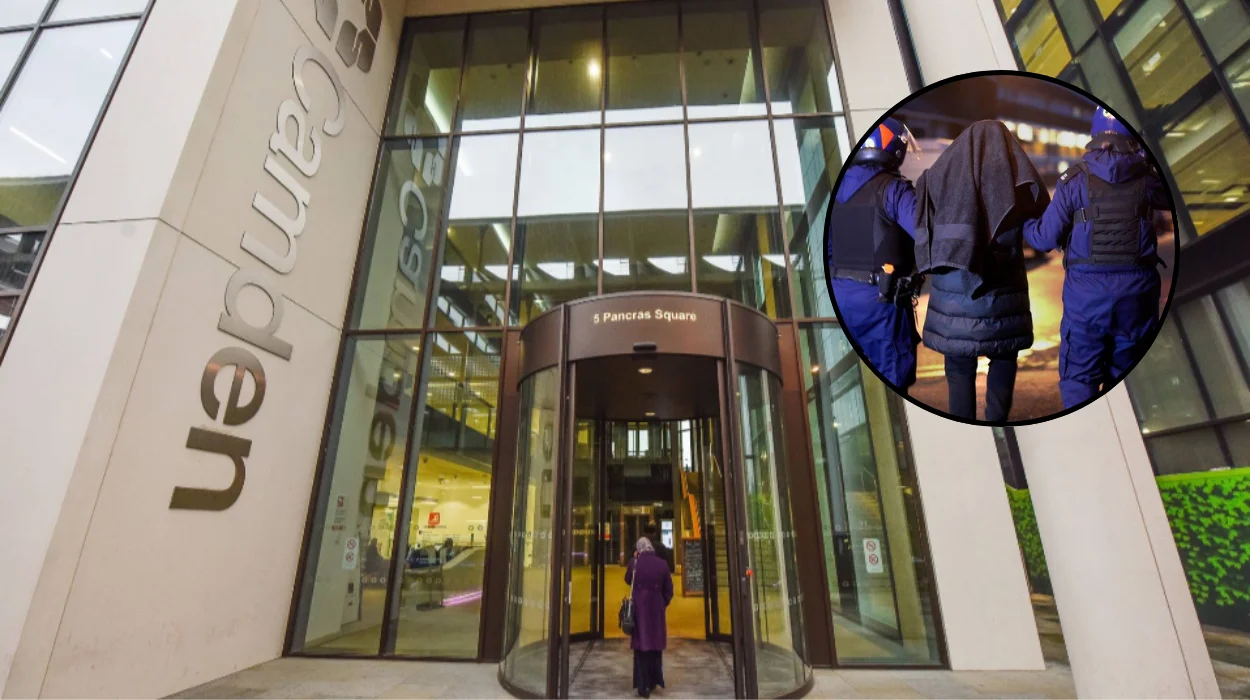
Camden (Extra London News) May 21, 2026 – The London Borough of Camden has officially been identified as the primary capital hotspot for criminal gangs who exploit vulnerable residents to launch illicit operations from their living rooms. According to comprehensive Metropolitan Police data obtained through a Freedom of Information (FOI) request by the Local Democracy Reporting Service (LDRS), Camden outstrips all other London boroughs in both the number of identified victims and total logged incidents of “cuckooing”—the practice wherein criminals infiltrate, seize, and weaponise a person’s private home. The newly published figures reveal that between 2021 and 2025, Camden recorded 34 formally flagged cuckooing victims, whilst police registered 161 independent cuckooing incidents within the district between 2023 and 2026. This systemic criminal targeting is heavily tied to regional county lines drug operations, which systematically establish local bases to store firearms, distribute narcotics, and evade metropolitan law enforcement.
- Key Points
- What Is Cuckooing and How Are Criminals Seizing Control of Homes in Camden?
- What Does the Metropolitan Police Data Show About the Scale of Cuckooing Across London?
- Why Is Camden Uniquely Vulnerable to This Dynamic Crime Trend?
- How Are Local Authorities and Charities Responding to Protect At-Risk Residents?
- What Legal and Structural Measures Are the Metropolitan Police Deploying to Stop Cuckooing?
What Is Cuckooing and How Are Criminals Seizing Control of Homes in Camden?
The criminal tactic of cuckooing follows a distinct, highly manipulative operational pattern that relies on structural social isolation. As documented in the field findings compiled by the Local Democracy Reporting Service (LDRS), perpetrators typically identify an isolated or structurally disadvantaged resident before initiating contact under a false pretext of friendship, assistance, or transactional equity.
Initially, the criminal offers the victim seemingly benign forms of support, including small sums of money, illicit drugs, or general physical assistance with daily tasks. Once a rapport or an artificial sense of indebtedness is established, the perpetrator convinces or manipulates the resident into allowing them temporary entry or short-term usage of the property.
However, once physical access to the home is secured, the dynamic undergoes a rapid and aggressive transformation. The primary perpetrator typically assumes absolute control over the physical premises, frequently introducing external criminal associates to visit or cohabit in the space.
This influx swiftly outnumbers the original resident, leaving them physically intimidated and psychologically trapped within their own home. With control established, the gang transforms the property into an operational node to coordinate localized illicit networks, use it as a secure warehouse for lethal weapons, or run active drug-distribution rings.
Furthermore, the perpetrators frequently attempt to co-opt or coerce the resident into participating directly in the unlawful operations, forcing them to hold packages, manage door security, or actively sell narcotics, thereby insulating the actual gang leaders from direct police exposure.
What Does the Metropolitan Police Data Show About the Scale of Cuckooing Across London?
The data obtained via the Freedom of Information (FOI) request exposes a concentrated crisis within Camden, whilst highlighting wider geographical shifts across the capital. While Camden remains the absolute statistical peak of cuckooing activity, several other boroughs have experienced aggressive localized spikes.
While boroughs like Islington, Southwark, Lewisham, and Tower Hamlets faced severe operational pressures through the 2024/25 financial year, subsequent law enforcement monitoring indicated an overall, cross-borough decline across the wider expanse of London the following year. This macro-level reduction, however, has failed to diminish the localized severity of Camden’s ongoing numbers, which continue to dominate the Metropolitan Police’s investigative logs.
Why Is Camden Uniquely Vulnerable to This Dynamic Crime Trend?
In analysing the disproportionate concentration of cases highlighted by the Local Democracy Reporting Service (LDRS), local authorities point toward a convergence of transit infrastructure and aggressive diagnostic reporting.
According to an official statement issued by a Camden Council spokesperson, the borough’s high incident rate is intimately linked to its status as London’s premier domestic rail gateway. The borough is home to three of the United Kingdom’s most significant national transport hubs: Euston, King’s Cross, and St Pancras.
These terminals provide seamless, rapid rail links connecting London directly to the North, the Midlands, and international trans-European lines. For county lines drug networks, which rely heavily on couriers moving illicit capital and products between major urban centers and regional satellite towns, properties located within walking distance of these hubs represent premium strategic infrastructure.
Concurrently, the local authority maintains that the sheer volume of recorded incidents is a direct byproduct of their proactive tracking systems. Camden Council explicitly attributes the elevated figures to its long-term institutional investment in raising community awareness around the issue.
By educating housing officers, social workers, and neighbors on how to spot the early warning signs of home takeovers, the borough has systematically uncovered hidden cases that might otherwise have gone completely unrecorded in less vigilant districts.
Explore More Camden News
Party Manifestos and Key Pledges for London Local Elections: Camden 2026
Labour Retains Camden Council Amid Green Surge, 2026
How Are Local Authorities and Charities Responding to Protect At-Risk Residents?
The hidden, highly coercive nature of cuckooing makes standard municipal enforcement difficult, prompting specialized administrative and charitable interventions.
An official spokesperson representing Camden Council addressed the profound difficulties inherent in these investigations, stating:
“The practice is notoriously hard to detect, but the local authority is already working with the police and other partners to tackle the issue, including by creating a dedicated panel for ‘highest risk’ cases.”
The spokesperson further contextualized the acute human cost driving these municipal efforts, noting:
“People who are vulnerable to cuckooing are often isolated and preyed upon by criminals exploiting their situation. Recognising the extent of where this is taking place is crucial, so we can intervene and put the right support in place.”
To operationalize this strategy, Camden Council introduced a specialized Cuckooing Panel in 2025. This multi-agency administrative body brings together social services, housing providers, and law enforcement to review complex cases, coordinate evictions of illegal occupants, and implement protective measures for the victims. According to internal council evaluations, this panel has already delivered tangible, positive interventions for targeted individuals across the borough.
Simultaneously, third-sector organizations are sounding the alarm over the specific psychological profiles targeted by these syndicates. Commenting on the systemic drivers of the crisis, the national homelessness charity St Mungo’s described cuckooing as a relatively new, highly predatory phenomenon.
The charity warned that individuals currently navigating homelessness or unstable housing cycles face an elevated risk of exploitation. This vulnerability is exacerbated by the high statistical prevalence of severe physical and mental health needs, complex psychological trauma, chronic substance dependencies, and persistent institutional barriers to accessing traditional statutory support services.
What Legal and Structural Measures Are the Metropolitan Police Deploying to Stop Cuckooing?
As reported by the Local Democracy Reporting Service (LDRS), the structural fight against home takeovers received major legislative backing on 29 April, when Parliament officially passed the comprehensive Crime and Policing Bill. This legislative milestone explicitly designated cuckooing as a distinct, standalone criminal offence.
Prior to the passage of this bill, prosecutors and police teams were forced to rely on a patchwork of secondary charges—such as conspiracy to supply narcotics, criminal trespass, or old anti-social behaviour orders—which frequently failed to encapsulate the specific element of vulnerable exploitation. The new law provides police forces with direct statutory powers to arrest, charge, and prosecute perpetrators purely for the act of taking over a vulnerable person’s domicile.
On the operational front, the Metropolitan Police confirmed to the LDRS that it is actively collaborating with an array of statutory partner agencies, including local municipal authorities and regional housing associations, to maintain continuous monitoring networks and dismantle localized anti-social behaviour patterns.
Detailing the specific tactical shifts taking place within the hotspot zone, an official spokesperson for the Metropolitan Police stated:
“In Camden, we are also piloting an approach with partners which includes a new governance structure alongside academic research, aimed at gaining a deeper knowledge into cuckooing and the way we work to tackle it.”
This ongoing pilot program is designed to bridge the gap between academic criminological insights and frontline street policing. By mapping the socio-economic profiles of victims and tracking the precise movements of county lines actors near major transit links, the Metropolitan Police aims to transition from a reactive, emergency-response model to a predictive system of early intervention capable of securing vulnerable homes before criminal networks can set foot through the door.