Key Points
- Call for Suspension: Westminster City Council Leader Adam Hug has formally requested Home Secretary Shabana Mahmood to suspend pro-Palestine marches planned for Saturday, 16 May 2026.
- High-Stakes Convergence: Capital streets face a volatile mix of demonstrations, including the Palestinian ‘Nakba Day’ march, a Stand Up To Racism rally, and a counter-protest by the right-wing group Unite The Kingdom.
- Major Sporting Clash: The political demonstrations directly coincide with the FA Cup Final at Wembley, stretching emergency services to their absolute limits.
- Police on High Alert: The Metropolitan Police Service has classified the upcoming operations as one of the busiest and most challenging days of policing in Central London in recent history.
- Public Safety Concerns: Local authorities have expressed severe anxieties regarding potential clashes between rival groups, disruptions to businesses, and the strain on public transport networks.
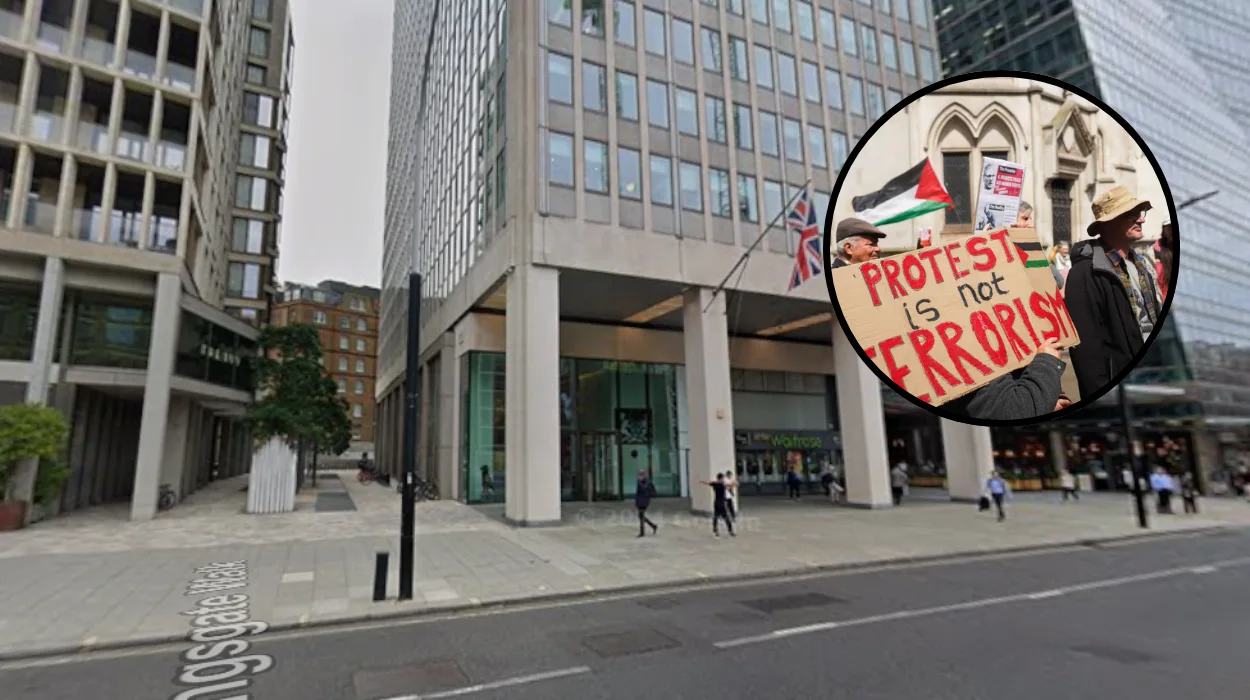
Westminster (Extra London News) May 15, 2026 – The Leader of Westminster City Council has made a formal, high-stakes appeal to the Home Office demanding the immediate suspension of pro-Palestine marches scheduled to take place across Central London this weekend. In an official letter addressed directly to Home Secretary Shabana Mahmood, Councillor Adam Hug expressed profound anxieties over public safety, citing an unprecedented convergence of rival political demonstrations and a major national sporting event. The requested ban comes as Metropolitan Police officials warn that London is bracing for one of its most logistically challenging and heavily policed days in recent history, with tensions expected to reach a boiling point on Saturday, 16 May.
- Key Points
- Why Is the Westminster Council Leader Requesting a March Ban?
- What Protests Are Planned for London This Saturday?
- How Will the FA Cup Final Impact London Policing?
- What Has the Metropolitan Police Said About the Weekend Security?
- Will the Police Use Public Order Act Conditions?
- How Has the Home Secretary Responded to the Ban Request?
- What Are the Legal Thresholds for Banning a Public March?
The primary catalyst for the local government’s intervention is the scheduled Nakba Day march, an annual demonstration marking the displacement of Palestinians during the 1948 Arab-Israeli war. Organisers from various pro-Palestine coalitions are expected to draw tens of thousands of demonstrators to the streets of the capital.
According to briefing documents, these marchers will be joined concurrently by activists from the advocacy group Stand Up To Racism. However, the security situation has been severely complicated by a planned counter-protest organized by Unite The Kingdom, a right-wing group assembling under the banner of political activist Tommy Robinson, creating a high-probability scenario for direct physical confrontation.
Compounding the policing crisis is the fact that these highly charged political demonstrations are set to coincide directly with the FA Cup Final at Wembley Stadium.
The influx of tens of thousands of football fans into transit hubs, alongside thousands of polarised political demonstrators in the heart of Westminster, has created what local authorities describe as a perfect storm for civil unrest. Security experts warn that the geographic overlap of these distinct groups will put an unsustainable strain on the transport infrastructure and emergency service personnel.
Why Is the Westminster Council Leader Requesting a March Ban?
The decision by the local authority to seek central government intervention stems from acute fears over community cohesion and physical security in the heart of the capital. As reported by Senior Political Correspondent Fiona Leishman of The London Evening Standard, Councillor Adam Hug stated that
“the sheer volume of conflicting groups on the streets simultaneously presents an unacceptable risk to our residents, businesses, and visitors.”
Leishman writes that the council leader’s letter to the Home Office emphasizes that while the right to democratic protest is fundamental, it should not supersede the basic safety of the public.
Furthermore, reporting by Home Affairs Editor Mark Townsend in The Guardian reveals that Westminster officials have grown increasingly weary of the financial and operational toll that consecutive weekend protests have levied on the borough.
Townsend notes that Councillor Hug highlighted the specific vulnerability of the West End retail district, which relies heavily on Saturday trade.
The council’s position argues that the unique combination of the Nakba Day remembrance and an adversarial right-wing counter-protest creates an environment where peaceful policing becomes exponentially more difficult to guarantee.
What Protests Are Planned for London This Saturday?
The scheduled events for Saturday, 16 May, represent a highly volatile cross-section of opposing political movements. As detailed by Crime Reporter Matt Thompson of The Daily Telegraph, the largest anticipated crowd will belong to the pro-Palestine coalition marking Nakba Day.
Thompson reported that organisers view the 1948 displacement as an ongoing historical event and intend to march through major Westminster thoroughfares to demand immediate policy changes from the British government regarding foreign affairs in the Middle East.
Simultaneously, anti-racism campaigners are planning to mobilize. Writing for The Independent, Social Affairs Correspondent Lizzie Dearden noted that activists from Stand Up To Racism have confirmed they will join the streets in a show of solidarity with the minority communities and to oppose the presence of right-wing nationalist factions. Dearden reported that an internal memo from the group stated,
“We will not allow our streets to be taken over by division and hatred, and we will stand shoulder-to-shoulder with those marching for justice.”
Directly opposing these groups is Unite The Kingdom. As uncovered by investigative journalist Nick Lowles for Hope Not Hate, the right-wing organisation has mobilised its base using the name and rhetoric of Tommy Robinson. Lowles reported that the group’s promotional material calls on supporters to “defend British heritage” and directly confront what they term
“the capitulation of London’s streets to extremist elements.”
The explicit intention of the United Kingdom to hold their rally within close proximity to the pro-Palestine route is the primary source of anxiety for municipal planners.
Explore More Westminster News
Mouse Poo Shuts Ark Atwood Kitchen in Westminster 2026
Tories Win Westminster Council, Oppose Oxford Street Pedestrianisation, Westminster 2026
How Will the FA Cup Final Impact London Policing?
The logistical nightmare facing emergency services is severely exacerbated by Britain’s premier domestic football event. As reported by Chief Sports Writer Martin Samuel of The Times, the FA Cup Final at Wembley will draw upwards of 80,000 spectators into the Greater London area, a significant portion of whom will transit through Central London hubs such as Euston, King’s Cross, and Waterloo. Samuel noted that
“the intersection of highly passionate football supporters, many of whom will be consuming alcohol throughout the day, with deeply entrenched political demonstrators is a recipe for chaos that the Metropolitan Police are desperate to avoid.”
According to transport assessments published by Gwyn Topham, the Transport Correspondent for The Guardian, the London Underground network is projected to operate at absolute maximum capacity. Topham reported that British Transport Police (BTP) officials have already cancelled leave for officers to ensure a visible presence on trains and at platforms. Topham noted that a BTP spokesperson stated,
“Our priority is ensuring that families and fans travelling to Wembley can do so safely, without becoming inadvertently entangled in political demonstrations taking place across the city centre.”
What Has the Metropolitan Police Said About the Weekend Security?
The leadership of the Metropolitan Police Service has been candid about the monumental scale of the task ahead. As reported by Home Affairs Correspondent Dominic Casciani for BBC News, Assistant Commissioner Matt Twist confirmed that Saturday could mark
“one of the busiest and most complex days of policing in Central London in recent years.”
Casciani reported that Twist stated the force is deploying thousands of specialized public order officers, drawing on mutual aid from constabularies across the United Kingdom to reinforce the capital’s defenses.
Will the Police Use Public Order Act Conditions?
To manage the competing crowds, the police intend to rely heavily on legislative boundaries. Writing for Sky News, Crime Correspondent Martin Brunt reported that the Metropolitan Police are actively preparing to enforce strict conditions under Sections 12 and 14 of the Public Order Act. Brunt stated that Commissioner Sir Mark Rowley has authorized measures that will dictate precise assembly points, rigid start and end times, and completely separate geographical routes for the pro-Palestine marchers and the Unite The Kingdom counter-protesters. Brunt noted that Rowley commented,
“Our job is not to judge the politics of these groups, but to keep them apart and keep Londoners safe. Anyone stepping outside the designated parameters will face immediate arrest.”
How Has the Home Secretary Responded to the Ban Request?
The political pressure now rests firmly on the shoulders of the newly appointed Home Secretary. As reported by Political Editor Anushka Asthana for ITV News, the Home Office has acknowledged receipt of Councillor Adam Hug’s letter but has stopped short of issuing an immediate ban. Asthana reported that a Home Office spokesperson stated that
“the power to ban a march under Section 13 of the Public Order Act is a measure of absolute last resort, requiring a formal application from the Metropolitan Police Commissioner demonstrating that serious public disorder cannot be prevented by any other means.”
Asthana further noted that Home Secretary Shabana Mahmood is locked in ongoing operational briefings with senior police chiefs to monitor the threat assessment in real-time.
According to sources close to the Home Secretary, the government remains deeply committed to upholding the democratic right to protest but is acutely aware of the escalating public anxiety. The Home Office has urged all demonstration leaders to cooperate fully with police directions to prevent violence on Saturday.
What Are the Legal Thresholds for Banning a Public March?
The statutory framework governing the suppression of public assemblies in the United Kingdom is notoriously stringent. As explained by Legal Affairs Analyst Joshua Rozenberg in his independent publication, A Lawyer Writes, a local council leader does not possess the unilateral legal authority to cancel a protest. Rozenberg noted that under current UK constitutional law, “the mechanisms for a total prohibition require the chief of police to form the opinion that the powers available under the Public Order Act are insufficient to prevent serious disorder. Only then can the police ask the local authority to apply to the Home Secretary for an executive ban.”