Shoreditch is one of East London’s most significant cultural landscapes. Its modern identity combines historic streets, immigrant communities, industrial buildings, independent commerce, public art, markets, and creative industries. Exploring Shoreditch like a local requires understanding how these layers developed and how historic spaces continue to shape the district.
- What makes Shoreditch historically important to London’s cultural identity?
- How did Shoreditch become one of London’s leading creative districts?
- Where can visitors find Shoreditch’s most significant street art?
- Why is Brick Lane essential to understanding Shoreditch’s history?
- Which markets reveal the historic character of Shoreditch and East London?
- What creative spaces preserve Shoreditch’s industrial past?
- How does Shoreditch’s architecture explain its social history?
- How have migration and community shaped Shoreditch’s cultural landscape?
- What historic places should visitors notice while exploring Shoreditch?
- How can visitors explore Shoreditch like a local while respecting its heritage?
- Why does Shoreditch remain important to London’s future cultural history?
- What is the lasting legacy of Shoreditch’s street art, markets and creative spaces?
- Frequently Asked Question
The area sits immediately north of the City of London and forms part of a wider East London landscape connected with Hoxton, Spitalfields, Brick Lane and Bethnal Green. Shoreditch’s transformation did not happen through a single cultural movement. It developed across several distinct historical periods, including medieval settlement, early modern expansion, industrialisation, post-war decline, late twentieth-century artistic occupation and twenty-first-century regeneration.
Today, Shoreditch is internationally associated with street art, creative businesses and independent culture. Hackney Council identifies the area’s diverse communities, cultural heritage and creative economy as central features of its identity. The district’s contemporary character developed from older structures and economic systems rather than replacing them completely. Former warehouses became offices and studios. Industrial walls became surfaces for public art. Historic market streets continued as commercial spaces.
What makes Shoreditch historically important to London’s cultural identity?
Shoreditch is historically important because it developed from a medieval settlement into an industrial district, working-class neighbourhood and global creative centre. Its surviving churches, markets, warehouses, housing estates and public spaces record successive changes in London’s economy, migration and urban culture.
The name Shoreditch has a long history, but the modern cultural district developed most visibly through London’s expansion beyond the medieval City. Its location outside the historic City boundary shaped its economic and social development. Activities that required space, lower land costs or separation from the City’s regulated commercial core found opportunities in East London.
By the nineteenth century, Shoreditch and neighbouring districts supported workshops, manufacturing, furniture production and railway infrastructure. The built environment reflected this economy. Warehouses, workshops, railway arches and commercial buildings became defining elements of the urban landscape.
The twentieth century brought another major transformation. Industrial decline affected many traditional businesses. The London Museum records that Shoreditch was once strongly associated with working-class employment and furniture workshops. From the 1980s onwards, as workshops closed and rents remained comparatively low, artists and creative companies occupied available buildings. This transition established conditions for the modern creative economy.
This history explains why Shoreditch contains contrasting architectural periods. An eighteenth-century church, a Victorian industrial building, twentieth-century social housing and contemporary commercial development can stand within a short walking distance of each other.
The area’s historical importance also lies in continuity. Shoreditch repeatedly adapted older spaces for new economic purposes. Industrial buildings became creative workplaces. Commercial streets developed new retail identities. Public walls became recognised locations for temporary visual culture.
For history enthusiasts, this makes Shoreditch an important example of urban adaptation. For educators and students, it provides evidence of changing relationships between industry, housing, migration, culture and regeneration.
How did Shoreditch become one of London’s leading creative districts?
Shoreditch became a leading creative district through the decline of traditional industries, the availability of comparatively affordable commercial space and the arrival of artists, designers and media businesses. Its industrial architecture later supported technology, cultural enterprises and internationally recognised creative activity.
The physical structure of Shoreditch played a major role in its transformation. Large workshops and warehouses were designed for production and trade. When traditional industries contracted, these buildings offered adaptable floor space.
Artists and creative businesses used this available environment during the late twentieth century. Studios, galleries, designers and independent enterprises established a new economic ecosystem. The process changed Shoreditch from a predominantly industrial district into a recognised cultural centre.
The transformation accelerated during the growth of London’s digital and technology economy. Hackney Council describes Shoreditch as an area where creative and cultural activity attracted technology start-ups alongside established media, art and night-time businesses. The area’s reputation for creativity and innovation subsequently attracted larger commercial investment.
This development produced a major urban change. Affordable workspace became increasingly valuable. New offices and mixed-use developments appeared. Independent businesses operated alongside international companies.
The contemporary creative economy therefore exists alongside a continuing debate about preservation and redevelopment. Shoreditch’s historic character remains economically important because its architecture and cultural identity distinguish it from newer business districts.
Hackney’s planning for Shoreditch continues to address this relationship between growth and heritage. A 2026 council plan described proposals extending to 2040, including additional office space, jobs, homes and public-realm projects while protecting and enhancing the area’s built heritage and character.
Shoreditch’s creative identity is therefore both historical and economic. It emerged from physical structures created for earlier industries and continues to depend on the relationship between cultural production and urban space.
Where can visitors find Shoreditch’s most significant street art?
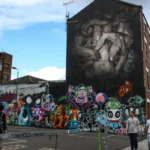
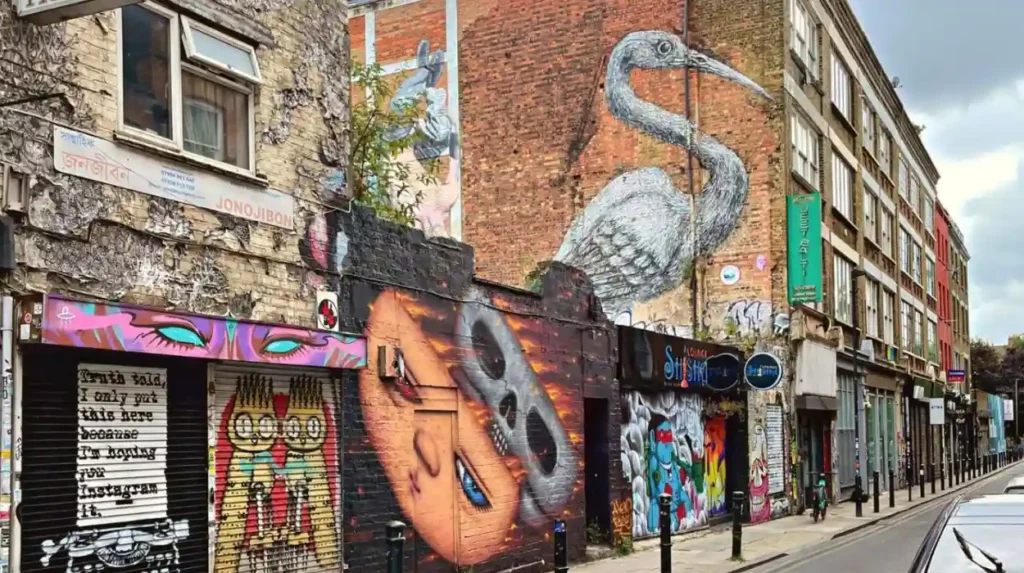
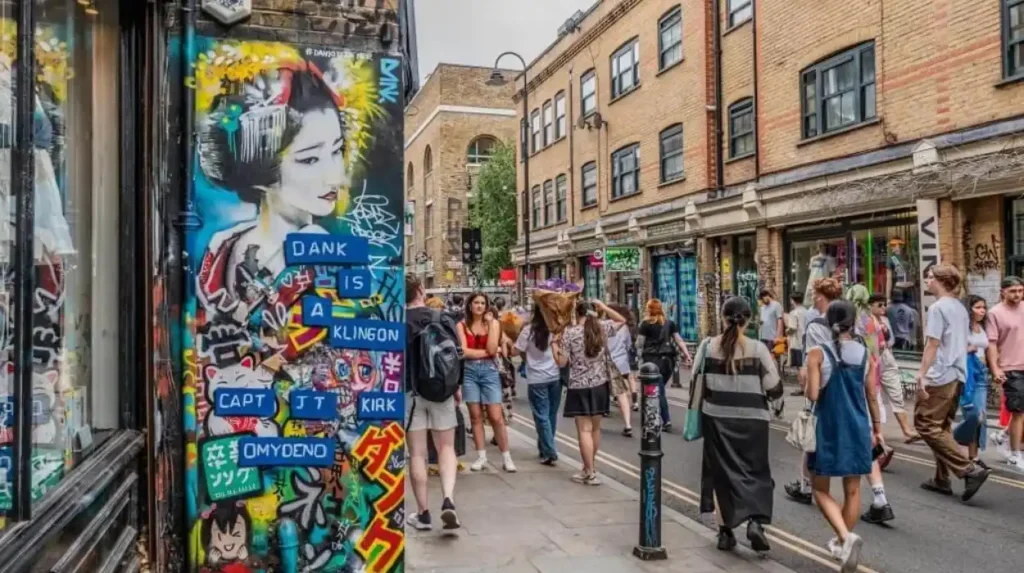
Shoreditch’s most significant street art is concentrated around Shoreditch High Street, Brick Lane, Redchurch Street and surrounding lanes, where industrial walls and changing commercial spaces provide prominent public surfaces. The artwork forms a continuously changing layer within East London’s historic streetscape.
Street art is one of the most visible elements of modern Shoreditch. Unlike permanent monuments, much of it changes regularly. Murals are painted over, walls are reused and new artists contribute to the visual landscape.
The importance of Shoreditch street art lies partly in the built environment. Brick walls, warehouse facades, railway infrastructure and side streets provide large surfaces that differ from the formal architectural environment of central London.
Tower Hamlets identifies street art and murals across Brick Lane and surrounding public spaces as major elements of the area’s distinctiveness. The council’s planning evidence also recognises the relationship between historic architecture, markets and contemporary public art in sustaining Brick Lane’s identity as a visitor destination.
Visitors should understand that Shoreditch street art is not a museum collection with a fixed inventory. Its value comes from its changing nature. A wall documented during one visit can contain different work months later.
The best approach is to observe the relationship between the artwork and the surrounding architecture. A contemporary mural on an industrial wall represents a different historical layer from the building beneath it. The wall records the district’s manufacturing past while the artwork records its modern cultural economy.
Brick Lane provides one of the strongest examples of this relationship. The street has developed through brickmaking, immigration, brewing, markets, religious change and contemporary creative activity. Street art now forms another layer in that historical sequence.
Public art also has a broader history in the Shoreditch area. Shoreditch Trust has supported cultural engagement and public-art projects, including commissions created with PEER Gallery and community-based programmes. These initiatives demonstrate that public creativity in the area extends beyond informal murals.
Why is Brick Lane essential to understanding Shoreditch’s history?
Brick Lane is essential because it records more than four centuries of migration, industry, religion, trade and cultural adaptation. Its history connects brickmaking, Huguenot weaving, Jewish settlement, Bangladeshi heritage, brewing, markets and contemporary creative industries within one historic corridor.
Brick Lane developed as a route outside the historic City of London. Tower Hamlets records that it existed by the sixteenth century as a field path through open countryside near the boundary of the medieval Priory of St Mary Spital.
Its name came from brick kilns established in the area, including activity associated with early Flemish settlers. The district later experienced major urban development during the second half of the seventeenth century.
From the 1680s, Protestant Huguenot refugees from France established a significant community in the surrounding area. They brought specialist silk-weaving skills. Spitalfields developed into a major centre of silk production and later garment manufacturing.
The architecture of nearby streets still records this history. Large upper-floor windows in former weavers’ houses provided light for textile work. Tower Hamlets identifies surviving eighteenth-century buildings around Brick Lane and Redchurch Street as important remnants of this economic period.
Jewish communities later became another major part of the area’s history. After the Second World War, migration from Bangladesh, particularly from the Sylhet region, transformed Brick Lane into a major centre of Bangladeshi community life.
The district’s religious buildings provide especially clear evidence of historical change. One building associated with the Brick Lane area served successive religious communities and became a mosque in the twentieth century. This pattern records demographic change through architecture rather than demolition.
Brick Lane therefore provides an important historical framework for understanding Shoreditch’s wider cultural landscape. Its contemporary food, markets and street art exist within a district shaped by successive communities.
Which markets reveal the historic character of Shoreditch and East London?
The markets around Shoreditch reveal East London’s commercial history through long-established street trading, specialist goods and independent businesses. Brick Lane Market and Columbia Road Flower Market remain important examples of how historic public streets continue to function as active commercial and social spaces.
Markets are essential to understanding the everyday history of East London. They connect residents, traders, visitors and surrounding neighbourhoods through regular public exchange.
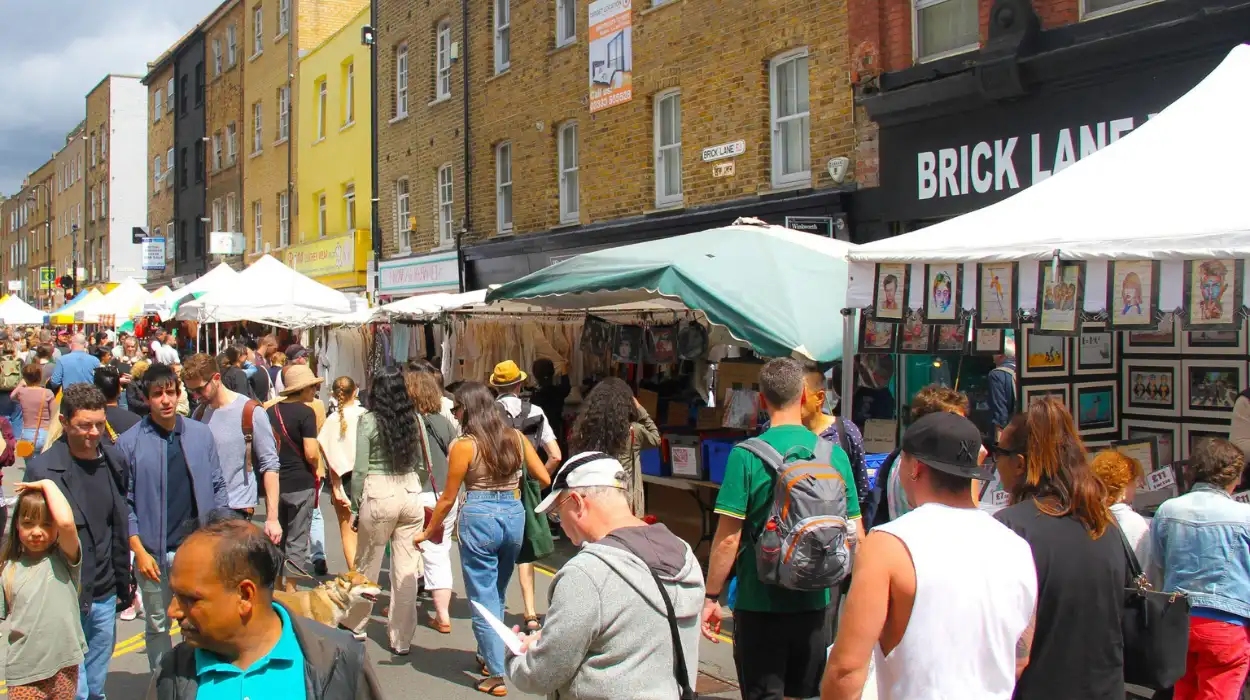
Brick Lane has a long market history. Tower Hamlets records that market activity developed during the eighteenth century, when farmers sold livestock and produce outside the City boundary. The modern market continues this commercial tradition in a substantially changed form.
The borough currently identifies Brick Lane Market as a Sunday market associated with fashion, food, art, household goods, jewellery and retro clothing. This combination reflects the area’s modern role as both a local commercial district and an international visitor destination.
The historic character of Brick Lane Market is especially significant because the surrounding buildings retain evidence of earlier industries. Former weavers’ houses, commercial buildings and industrial structures remain part of the streetscape.
Columbia Road Flower Market provides another important East London example. The market operates on Sundays and specialises in flowers and plants, while the surrounding street includes independent shops, galleries, antique businesses and hospitality venues.
Markets also demonstrate how public streets change without losing their commercial purpose. The products sold in Shoreditch have changed across generations, but the use of streets as places of exchange remains.
To experience this historic cultural landscape in person today, consult our comprehensive [How Shoreditch Became London’s Thriving Hub for Art and Innovation] for itineraries and visiting parameters.
What creative spaces preserve Shoreditch’s industrial past?
Shoreditch’s creative spaces preserve its industrial past by reusing former factories, warehouses, workshops and commercial buildings for exhibitions, studios, offices and cultural events. The Old Truman Brewery is the clearest example of industrial architecture adapted for contemporary creative and business activity.
Adaptive reuse is one of Shoreditch’s defining historical processes. Instead of removing every industrial structure, redevelopment has repeatedly changed the function of existing buildings.
The Old Truman Brewery provides a major example. Brewing was active in the Brick Lane area from around 1666. Joseph Truman purchased a brewery in 1679, and the business expanded over subsequent centuries. The brewery remained an important industrial site until its closure during the twentieth century.
The former brewery site later developed into a centre for arts, exhibitions, events and creative businesses. Tower Hamlets identifies the Old Truman Brewery as a cultural hub within the modern Brick Lane landscape.
This transformation demonstrates a broader Shoreditch pattern. Buildings designed for production can support new forms of economic activity while retaining visible evidence of their original function.
Railway infrastructure has also influenced the district’s appearance. The Bishopsgate Goods Yard developed from railway infrastructure established in the nineteenth century. The surrounding arches and former transport structures continue to influence redevelopment and movement through the area.
Creative spaces are therefore not isolated attractions. They are part of a historical process in which London’s industrial infrastructure became a resource for cultural and commercial renewal.
How does Shoreditch’s architecture explain its social history?
Shoreditch’s architecture explains its social history because churches, weavers’ houses, warehouses, workshops and social housing were built for different communities and economic systems. Their survival creates a visible record of migration, industry, poverty, reform and regeneration across several centuries.
Architecture provides physical evidence of historical change.
Eighteenth-century weavers’ houses in the wider Brick Lane and Spitalfields area demonstrate the importance of textile production. Their distinctive upper floors were connected to the practical requirements of weaving.
Industrial buildings record later changes. Victorian manufacturing and commercial activity created larger workshops, warehouses and specialised premises. Tower Hamlets identifies the expansion of cabinet-making and associated commercial construction as an important part of the area’s nineteenth-century development.
Housing provides another historical record. The Boundary Estate, near Shoreditch, was developed from 1890 to replace the Old Nichol slum area. Tower Hamlets describes it as the world’s first council housing development and notes that Arnold Circus incorporates material from demolition and construction works.
This transformation reflected changing attitudes towards urban poverty and public responsibility. Victorian and later housing reforms increasingly recognised the relationship between overcrowding, sanitation and public health.
Religious architecture records demographic change. Churches, chapels, synagogues and mosques in the wider East End demonstrate the arrival and settlement of different communities.
Preservation remains important because these buildings contain evidence that written records alone cannot provide. Street patterns, workshop windows, building materials and changing uses help historians reconstruct how people lived and worked.
Tower Hamlets notes that historic streets and buildings around Brick Lane remain protected through conservation-area status. Preservation therefore connects heritage management with the continuing economic and cultural use of the district.
How have migration and community shaped Shoreditch’s cultural landscape?
Migration shaped Shoreditch’s cultural landscape through successive communities that introduced skills, businesses, religious institutions and social networks. Huguenot weavers, Jewish residents and Bangladeshi communities each transformed the surrounding streets while contributing to East London’s long-term multicultural identity.
The history of Shoreditch cannot be separated from the history of migration in East London.
The seventeenth-century arrival of Huguenot refugees established an internationally connected textile community. Their skills supported the growth of silk weaving and influenced the architecture of surrounding streets.
Jewish communities subsequently contributed to the area’s commercial and social life. Their presence formed another major stage in the demographic history of the East End.
Bangladeshi migration after the Second World War created a further transformation. Brick Lane became strongly associated with the Bangladeshi community and developed as a major centre of Bengali culture and commerce.
Tower Hamlets describes Brick Lane as historically associated with French Huguenot and Jewish immigrants and now as an important centre for the Bangladeshi community.
These changes were not simply demographic statistics. Communities changed the physical environment through businesses, food, places of worship, housing and cultural organisations.
For genealogical researchers, the area is especially important because successive populations left records across parish documents, migration histories, commercial directories, census material and property records. The district’s streets therefore connect family history with wider patterns of London migration.
The cultural landscape remains dynamic. Contemporary Shoreditch includes long-established communities alongside newer residents and businesses. Understanding the earlier history prevents modern creative branding from obscuring the communities that built the area’s economic and social foundations.
What historic places should visitors notice while exploring Shoreditch?
Visitors should notice Shoreditch’s historic churches, industrial buildings, market streets, former weavers’ houses and planned housing estates. These places provide direct evidence of the area’s transformation from a historic settlement into an industrial district, multicultural neighbourhood and modern creative centre.
St Leonard’s Church is one important historic landmark in Shoreditch. Tower Hamlets identifies the present church as a building designed in the late 1730s by George Dance the Elder. Its famous bells also entered English popular culture through the nursery-rhyme tradition associated with Shoreditch.
Arnold Circus and the Boundary Estate provide evidence of nineteenth-century housing reform.
Redchurch Street contains surviving historic elements of the street pattern and eighteenth-century buildings associated with the wider weaving economy. Tower Hamlets identifies numbers 113–115 Redchurch Street as three-storey weavers’ houses dating from 1735.
Brick Lane provides evidence of several historical periods within one route. Visitors can observe commercial buildings, former industrial structures, religious architecture, market activity and contemporary public art.
Nearby Christ Church Spitalfields, completed in 1729 to a design by Nicholas Hawksmoor, represents the architectural importance of the wider East End. The church faced threats during the twentieth century and became the subject of major preservation efforts.
The strongest historical method is to look beyond individual landmarks. Shoreditch is best understood through relationships between places. A market connects with migration. A warehouse connects with industry. A mural connects with changing cultural production. A housing estate connects with social reform.
How can visitors explore Shoreditch like a local while respecting its heritage?
Visitors can explore Shoreditch like a local by following historic streets, observing changing building uses and supporting established independent businesses. Respect for heritage requires recognising that street art, markets and creative spaces exist within living neighbourhoods with long community histories.
A historically informed visit should begin with the street pattern rather than a checklist of attractions. Shoreditch High Street, Redchurch Street, Brick Lane and nearby routes reveal how the district developed through connected commercial corridors.
Visitors should observe building details. Large workshop windows, warehouse facades, railway arches and older residential structures provide evidence of earlier economic activity.
Markets should also be understood as working commercial spaces. Their importance extends beyond tourism. Street markets have historically supported local trade and continue to connect traders with residents and visitors.
Street art requires similar awareness. Public murals attract photographers and tourists, but the surrounding streets remain residential and commercial environments. Respectful exploration includes avoiding obstruction of entrances, businesses and pedestrian routes.
The wider Shoreditch area also demonstrates the importance of independent commerce. Local shops, galleries and cultural organisations contribute to the district’s identity while continuing traditions of small-scale enterprise.
This approach produces a more accurate understanding of Shoreditch. The district is not simply a collection of fashionable locations. It is a layered urban environment shaped by centuries of work, settlement and cultural change.
Why does Shoreditch remain important to London’s future cultural history?
Shoreditch remains important because current development is creating the next historical layer of a district already transformed by industry, migration and creative enterprise. Decisions about housing, workspace, public space and heritage preservation will determine how its cultural identity survives future economic change.
Every historic district continues to change. Shoreditch is currently experiencing another major period of redevelopment.
The central challenge is maintaining continuity while accommodating economic growth. Historic buildings and street patterns contribute to the area’s identity, while new development provides workplaces, homes and infrastructure.
Hackney Council’s current planning framework explicitly addresses this balance. The Future Shoreditch Area Action Plan sets out long-term proposals for development while identifying the protection and enhancement of built heritage and character as part of the area’s future.
This makes Shoreditch an important case study for educators, planners and heritage preservationists.
The district demonstrates that cultural identity is created through accumulated history. Shoreditch’s contemporary reputation for street art and creativity depends on earlier physical and social conditions. Industrial buildings supplied adaptable spaces. Migration created diverse communities. Markets maintained commercial traditions. Artists and entrepreneurs developed new cultural economies.
The future historical value of Shoreditch will depend on whether these relationships remain visible.
Preservation therefore involves more than protecting isolated buildings. It includes understanding streets, public spaces, commercial traditions and community histories as connected parts of an urban landscape.
What is the lasting legacy of Shoreditch’s street art, markets and creative spaces?
Shoreditch’s lasting legacy is its demonstration that historic urban spaces can support continuous cultural change without losing every connection to their past. Its street art, markets and creative spaces remain meaningful because they occupy landscapes shaped by industry, migration, trade and community life.
Shoreditch represents one of London’s clearest examples of urban continuity through change.
Its oldest surviving features connect visitors with earlier centuries. Historic street patterns and religious buildings record the expansion of London beyond the medieval City.
Its eighteenth-century architecture records textile production and Huguenot settlement. Its nineteenth-century workshops and railway structures record industrialisation. Its housing estates record social reform. Its markets record long traditions of public commerce.
Its contemporary murals and creative businesses represent the latest major layer.
This combination gives Shoreditch exceptional cultural significance. The district demonstrates that heritage is not limited to monuments. Working streets, reused buildings, markets and public art also contribute to historical understanding.
For cultural tourists, Shoreditch offers a route through several centuries of London history. For educators, it provides direct evidence of urban change. For students, it connects architecture with economics and migration. For heritage preservationists, it demonstrates the importance of protecting character as well as individual structures. For genealogical researchers, the wider East End remains connected with generations of families who arrived, worked and established communities there.
Exploring Shoreditch like a local therefore begins with historical awareness. Look at the walls beneath the murals. Notice the former industrial buildings behind modern businesses. Follow the streets that connected workshops and markets. Recognise the communities that transformed Brick Lane and the wider East End.
Shoreditch’s best street art, markets and creative spaces are not separate attractions. Together, they form part of a continuously evolving historical landscape that remains central to the cultural identity of London.
Frequently Asked Question
What is Shoreditch best known for?
Shoreditch is best known for its vibrant street art, creative industries, independent shops, historic architecture, markets and cultural connections with East London’s industrial and immigrant heritage.