
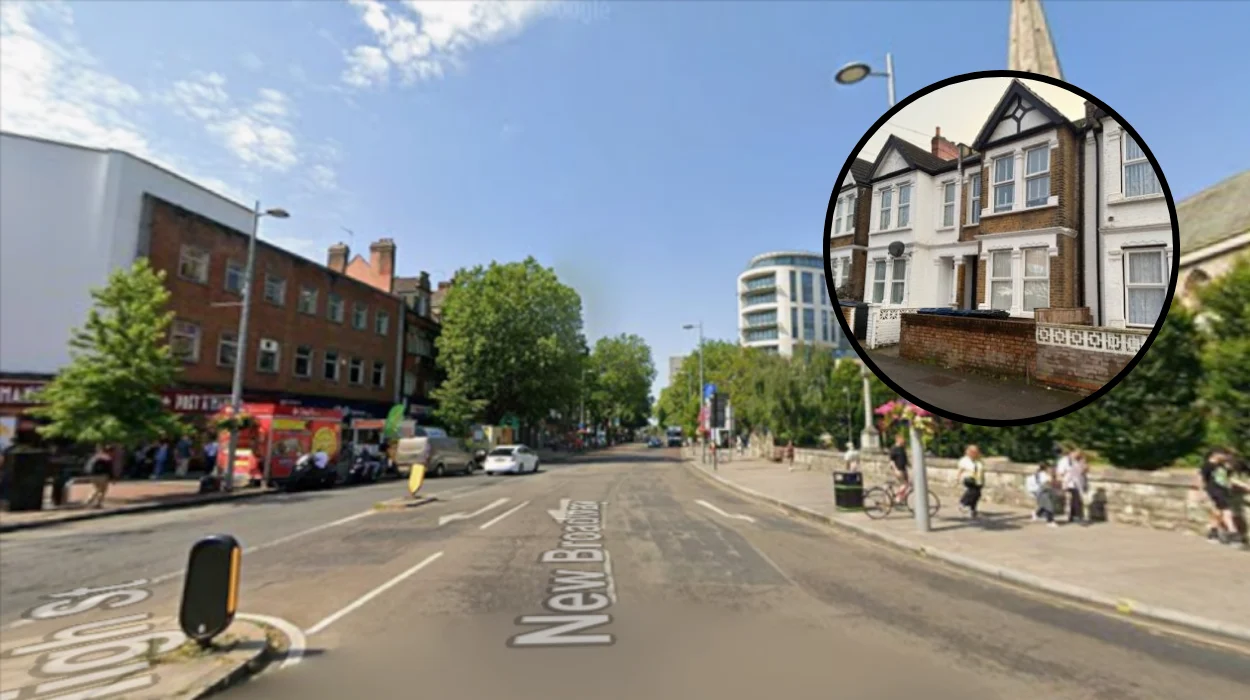
Key Points
- Efficiency Deficit: More than 42,000 homes in the London Borough of Ealing are rated below an Energy Performance Certificate (EPC) grade C, representing 44.14% of all assessed properties in the area.
- Capital Disadvantage: Whilst Ealing outperforms the national baseline for energy efficiency, it falls short of the wider London average, where 56.11% of properties achieve a C rating or higher.
- The Performance Breakdown: Out of 96,878 certificates analysed, a mere 0.20% secured the top ‘A’ grade, whilst 34.71% sit at grade D and 8.11% are at grade E.
- League Table Positions: The data places Ealing 16th out of London’s 33 boroughs, positioning it exactly in the middle tier of the capital, and 85th out of 346 local authority areas across England and Wales.
- The 2030 Deadline: The findings emerge amidst growing pressure on the housing sector, with landlords nationwide legally expected to elevate their properties to at least an EPC grade C by October 2030.
- Remedial Action Required: Industry leaders stress that both minor adjustments, such as draught-proofing, and major capital investments, including solar panels and loft insulation, must be accelerated to bridge the efficiency gap.
Ealing (Extra London News) June 8, 2026 – Tens of thousands of households across West London are facing steep energy challenges as new data reveals that more than 42,000 domestic properties in the London Borough of Ealing fail to meet key energy efficiency benchmarks. According to an extensive study analysing data from the Energy Performance of Buildings Register, 44.14% of assessed homes in the borough have been rated below an Energy Performance Certificate (EPC) grade C. This deficit places Ealing behind the broader London average for housing efficiency, triggering concerns among local stakeholders regarding heating costs, carbon footprints, and the looming statutory deadlines for rental properties.
- Key Points
- Why are Ealing homes falling behind the London average for energy efficiency?
- What do the specific EPC statistics reveal about Ealing’s housing stock?
- How does Ealing compare to other London boroughs and national averages?
- What are the legal implications for Ealing landlords before October 2030?
- How can property owners effectively improve their EPC ratings?
- What are the economic impacts of low EPC scores on local residents?
- How can municipal authorities support Ealing’s green transition?
The data, which compiled and reviewed 96,878 domestic EPC certificates issued in Ealing between January 2016 and December 2025, shows that while 55.86% of local homes achieved a grade C or above, the borough remains highly reliant on poorly insulated, older housing stock. This performance positions Ealing 16th out of London’s 33 boroughs and 85th out of 346 local authority areas across England and Wales. Although local properties performed marginally better than the combined average for England and Wales, the fact that nearly half of the borough’s homes occupy lower efficiency bands highlights a significant infrastructure gap that regional policy experts say must be addressed before the end of the decade.
Why are Ealing homes falling behind the London average for energy efficiency?
The root of Ealing’s energy efficiency deficit lies primarily in its architectural heritage and the age of its residential property portfolio. Large swathes of the borough feature Victorian, Edwardian, and inter-war suburban developments. These properties were typically constructed using solid brick walls rather than modern cavity walls, making them notoriously prone to heat loss unless retrofitted with expensive internal or external insulation.
As documented in the data processing report by the research team at Cut Plastic Sheeting, the vast majority of underperforming homes are concentrated in these older structural brackets. When heat escapes rapidly through uninsulated walls and single-glazed windows, a property’s environmental impact increases alongside its utility bills, dragging down the overall EPC score.
Furthermore, the local pace of residential modernization has not matched the rapid deployment of high-efficiency, high-rise developments seen in central and eastern London boroughs. Municipal areas that have undergone massive, top-tier urban regeneration over the last decade naturally boast higher concentrations of band A and B properties due to strict modern building regulations. Ealing’s mix of conservation areas and traditional family housing means that upgrading the local energy profile requires individual property interventions rather than blanket corporate developments, decelerating the borough’s upward trajectory.
What do the specific EPC statistics reveal about Ealing’s housing stock?
A granular inspection of the 96,878 certificates registered over the ten-year tracking period reveals a heavily skewed distribution across the standardised A-to-G efficiency scale. Top-tier energy performance remains an extreme rarity within the borough.
The complete statistical breakdown of Ealing’s certified housing stock shows:
- Grade A: 197 homes (0.20%)
- Grade B: 19,343 homes (19.97%)
- Grade C: 34,577 homes (35.69%)
- Grade D: 33,622 homes (34.71%)
- Grade E: 7,856 homes (8.11%)
- Grade F: 909 homes (0.94%)
- Grade G: 374 homes (0.39%)
The bulk of Ealing’s domestic architecture sits squarely within the middle-to-low tiers. The combined total of homes languishing in categories D through G stands at 42,761 properties. This substantial volume of subpar housing presents an immediate challenge for local carbon reduction strategies, as homes in the D and E brackets represent the largest drain on the local electrical and gas grids.
Explore More Ealing News
London Air Ambulance Walk: Mum’s 100k Challenge After Daughter’s Crash, Ealing 2026
Police Appeal After Violent Train Station Assault: West Ealing 2026
How does Ealing compare to other London boroughs and national averages?
Contextualizing Ealing across regional and national datasets demonstrates a distinct geographical paradox: the borough is simultaneously an national overachiever and a regional underperformer.
As outlined by the data analysts at Cut Plastic Sheeting, Ealing’s attainment rate of 55.86% keeps it ahead of the aggregated England and Wales benchmark, where over half of all assessed properties (51.66%) failed to secure a C grade or better. This indicates that on a macro level, West London housing is generally in a superior state of modification compared to post-industrial towns or rural localities across the state.
However, when compared directly against its immediate municipal peers, Ealing falters. The average for greater London stands at 56.11% of homes reaching the grade C threshold. While a discrepancy of 0.25% appears marginal on paper, when scaled across a populous borough like Ealing, it represents thousands of homes that are lagging behind the capital’s collective green transition. This mid-tier performance places Ealing 16th out of the 33 London administrative areas, illustrating that the borough is treading water rather than leading the municipal race toward urban sustainability.
What are the legal implications for Ealing landlords before October 2030?
The high volume of sub-C rated homes in Ealing sets up a high-stakes scenario for the local private rental sector (PRS). Under current legislative roadmaps, domestic landlords across England and Wales face a firm compliance deadline of October 2030, by which point they are expected to bring all leased residential properties up to a minimum EPC standard of grade C.
For the owners of the 42,761 substandard homes in Ealing, this timeline creates an urgent financial and administrative burden. Failing to reach the benchmark could result in severe civil penalties and a legal prohibition against letting out the properties to tenants. Given that a substantial percentage of Ealing’s Victorian and Edwardian conversions are operated as private rentals, local property markets could face severe disruption if landlords choose to divest from their portfolios rather than absorb the capital expenditure required for green retrofits.
Legal analysts note that the local authority will be tasked with enforcing these standards, requiring robust inspection regimes to ensure compliance and prevent substandard housing from being illicitly maintained on the rental market.
How can property owners effectively improve their EPC ratings?
Addressing the energy efficiency gap in Ealing requires a multi-tiered approach to property modification, ranging from simple, cost-effective adjustments to structural capital projects. Industry specialists indicate that significant progress can be achieved without always requiring complete architectural overhauls.
As reported by Daniel Southern, the managing director of Cut Plastic Sheeting, property owners should look toward targeted incremental modifications to elevate their homes out of the lower bands. In an official analytical commentary, Southern stated that:
“There is still meaningful work to do to improve the energy efficiency of homes across the borough.”
To facilitate this transition, Southern highlighted that smaller, highly accessible measures can provide immediate assistance to struggling households. He noted that installations such as comprehensive draught-proofing, the comprehensive adoption of energy-efficient LED lighting systems, and the application of thick hot water cylinder insulation are highly effective initial steps that directly contribute to increasing a building’s baseline thermal retention.
For properties deep within the D, E, or F bands, however, minor alterations will likely prove insufficient to breach the grade C threshold. For these homes, deeper structural interventions are required. Industry guidance specifies that major architectural upgrades—most notably extensive loft insulation, the integration of advanced, intelligent heating controls, and the deployment of microgeneration systems like rooftop solar panels—can deliver the deeper efficiency gains necessary to meet modern environmental demands. While these larger installations require notable upfront capital, they protect properties against future energy hikes and ensure full alignment with upcoming statutory property mandates.
What are the economic impacts of low EPC scores on local residents?
Beyond the long-term legal and environmental concerns, the immediate consequence of low EPC scores in Ealing is felt directly in the bank accounts of local residents. Properties rated D or below consume substantially more gas and electricity to maintain standard comfort levels than their higher-rated counterparts. This lack of efficiency translates into inflated utility expenditures, leaving families exposed to volatility in global wholesale energy markets.
Local economic assessments suggest that households residing in Ealing’s 7,856 E-rated homes and 1,283 F- and G-rated homes are particularly vulnerable to fuel poverty. During colder winter periods, the financial resources required to counteract structural heat loss force tough budgetary trade-offs for lower-income households.
Furthermore, low energy efficiency directly dampens long-term property valuations. As modern buyers become increasingly climate-conscious and wary of high running costs, homes tied to poor EPC grades run the risk of experiencing diminished market demand, creating an economic incentive for homeowners to pursue efficiency retrofits.
How can municipal authorities support Ealing’s green transition?
With nearly half of the borough’s assessed homes failing to meet the preferred efficiency standard, sector analysts argue that local government intervention will be vital to accelerate retrofitting efforts. Relying entirely on private capital from individual homeowners and landlords may result in a fragmented and slow transition, leaving vulnerable communities exposed to high bills for longer.
To remedy this, municipal policymakers could look to expand local grant schemes and establish specialized clean-energy delivery partnerships. By providing targeted financial subsidies for low-income owner-occupiers living in D- through G-rated properties, the borough can systematically eradicate its worst pockets of fuel poverty.
Additionally, establishing streamlined planning permission channels for historical properties looking to install external insulation or double glazing could eliminate the administrative bottlenecks that frequently discourage property owners from initiating substantive energy upgrades. Through proactive policy management, Ealing has the opportunity to close its efficiency gap and move closer to the top tier of London’s sustainable boroughs.