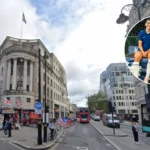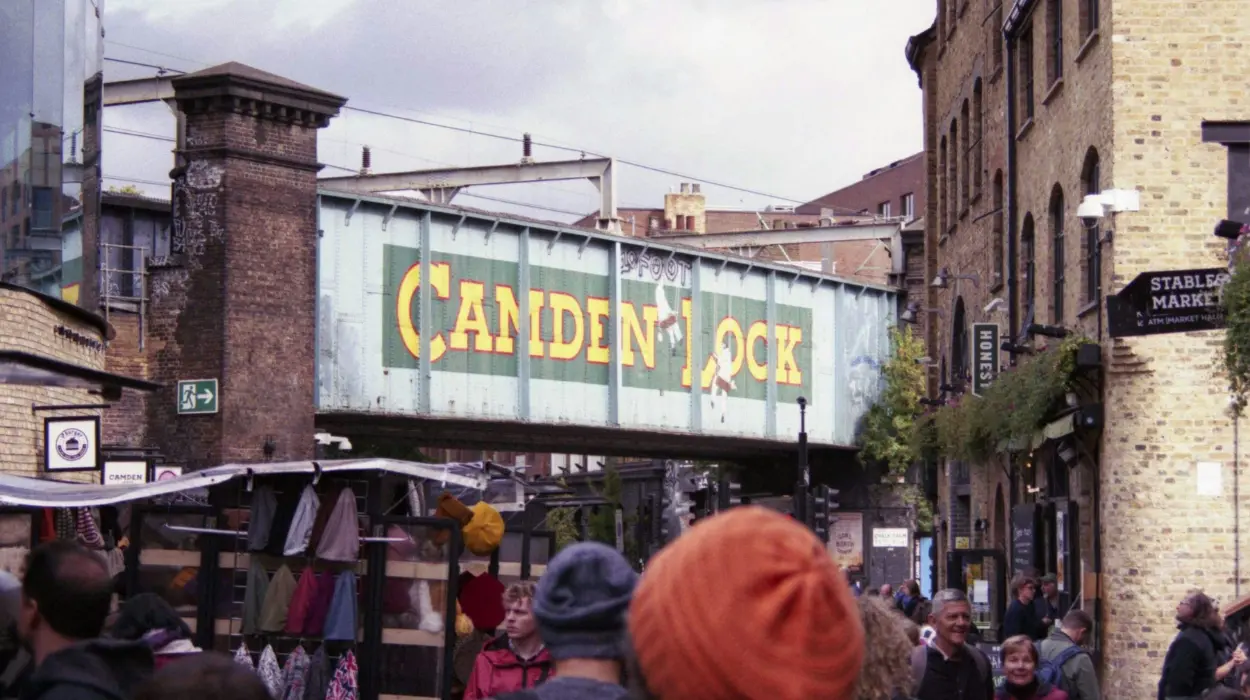
Camden Market is one of London’s best-known destinations for shopping, food, entertainment, and live music. Its present identity developed from a much older landscape of canals, warehouses, railway infrastructure, industrial yards, stables, and music venues.
- How did Camden Market develop from an industrial district into a major London attraction?
- When did Camden Market first open and what did the original market sell?
- What historic buildings and industrial features survive around Camden Market?
- How did the Regent’s Canal shape Camden Market’s history?
- Why is Camden Market associated with alternative fashion and independent shopping?
- How did Camden become one of London’s important live music districts?
- What food experiences define Camden Market today?
- Which Camden Market areas are most important for understanding its modern identity?
- How does Camden Market preserve its industrial heritage while operating as a modern shopping district?
- What historical evidence explains Camden Market’s transformation after the decline of industry?
- What does Camden Market reveal about London’s wider social and economic history?
- Why is Camden Market historically important for future generations?
- Frequently Asked Question
The market stands beside the Regent’s Canal in Camden Town, north London. Its commercial history as a market dates from 30 March 1974, when 16 traders opened a Saturday market selling antiques, jewellery, arts, and crafts. The site later expanded into a much larger collection of interconnected retail and entertainment spaces.
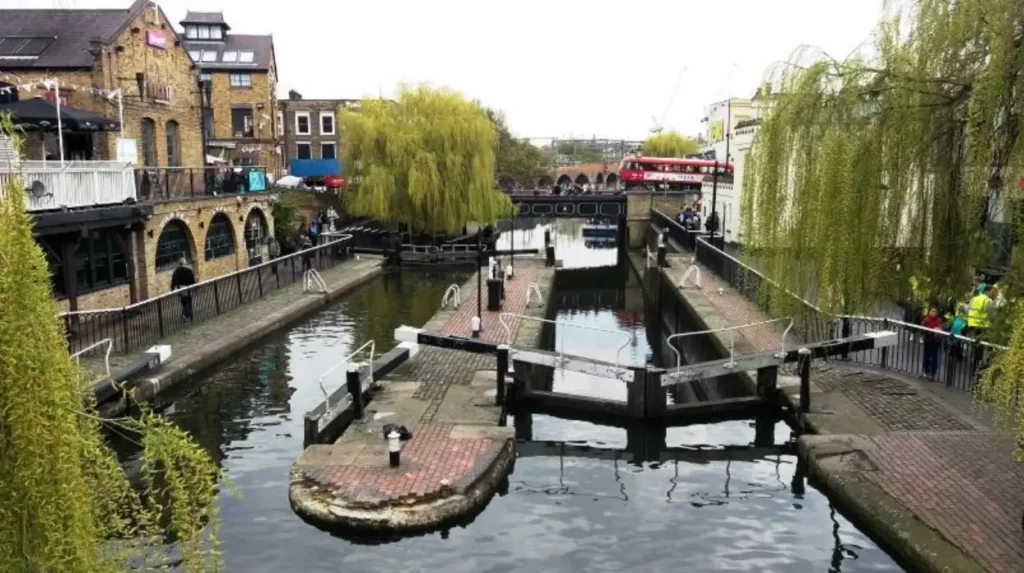
The surrounding landscape provides the deeper historical context. The Regent’s Canal was constructed between 1812 and 1820 to connect the Grand Junction Canal at Paddington with the River Thames at Limehouse. Its transport function helped establish Camden as an industrial and distribution centre. The later arrival of railways strengthened that role.
Today, Camden Market describes itself as a community of creative sellers, street-food traders, and independent stores with more than 1,000 places to shop, eat, drink, and dance. Its modern commercial identity therefore sits directly on top of a documented industrial and transport heritage.
Understanding this history explains why Camden Market combines Victorian buildings, canal infrastructure, former railway facilities, alternative fashion, international food, independent retail, and live music within one compact district.
How did Camden Market develop from an industrial district into a major London attraction?
Camden Market developed after industrial decline transformed canal-side warehouses and yards into spaces for crafts, antiques, fashion, food, entertainment, and music. The process began in the early 1970s and accelerated after the first 16-trader market opened in 1974.
Before the market existed, Camden Lock formed part of a major industrial transport environment. The Regent’s Canal provided a route for moving goods between London’s canal network, docks, warehouses, and industrial businesses.
Historic England identifies the wider Camden Goods Depot as an important concentration of nineteenth-century transport infrastructure. The complex connected railway freight with the Regent’s Canal and included goods sheds, warehouses, locomotive facilities, stables, tunnels, and a canal basin.
The London and Birmingham Railway selected the Camden site for its goods terminus because of the connection between the railway and Regent’s Canal. Construction began on a 25-acre site in 1837, and the goods depot opened in 1839. Robert Stephenson, the railway engineer, played a central role in selecting the location.
The industrial landscape later changed as transport systems evolved. Railways expanded, road transport became increasingly important, and canal freight declined. Historic England records that the Camden Goods Depot eventually closed around 1980.
This industrial decline created a large collection of buildings and spaces with alternative commercial potential. In the 1970s, entrepreneurs and market organisers began converting former industrial areas around Camden Lock into places for small traders and creative businesses.
The transformation was not an isolated redevelopment project. It reflected wider changes in London during the late twentieth century, when former industrial districts increasingly accommodated cultural, commercial, and creative activities.
Camden Council specifically identifies the conversion of Camden Lock’s wharves and warehouses into craft markets during the 1970s as a major factor in Camden Town’s emergence as a leading tourist destination.
When did Camden Market first open and what did the original market sell?
Camden Market opened on Saturday 30 March 1974 with 16 traders selling antiques, jewellery, arts, and crafts. The original market operated as a small non-essential-goods market and established the commercial model that later expanded throughout Camden Lock.
The first market was deliberately different from conventional high-street retail. Camden Council records that town planners did not want the new market to compete directly with shops on Camden High Street. The market therefore concentrated on non-essential products that traders could make or sell from temporary stalls.
The original 16 traders established a small-scale trading environment. Camden Market’s own historical record identifies 30 March 1974 as the opening date and states that the market began with antiques, jewellery, arts, and crafts.
The location behind the T.E. Dingwall building was important because it provided an existing industrial setting beside the canal. Rather than requiring the construction of a conventional shopping centre, the market reused an established collection of commercial and industrial spaces.
The early market also benefited from Camden’s growing reputation for alternative culture. Music, fashion, craft production, independent retail, and youth culture developed around the same time.
The market’s expansion demonstrates a significant shift in London’s commercial geography. A former industrial environment became a destination where small traders could sell products directly to visitors.
The concept also supported a different type of retail economy. Individual traders occupied relatively small spaces and offered specialist products instead of the standardised merchandise associated with large department stores.
This early emphasis on independent commerce remains central to Camden Market’s modern identity.
What historic buildings and industrial features survive around Camden Market?
Camden Market retains historic railway, canal, warehouse, stable, tunnel, and dock infrastructure from the nineteenth and early twentieth centuries. These surviving structures document how canal freight, rail transport, horse-drawn distribution, and industrial storage operated before the market occupied the site.
The most important heritage features belong to the former Camden Goods Depot.
Historic England describes the complex around Camden Lock as one of the best-preserved examples of nineteenth-century transport infrastructure in England. The surviving elements include the canal basin, vaults, horse tunnels, stables, warehouses, railway structures, and the Roundhouse.
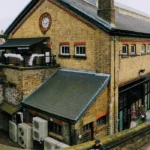
The Horse Hospital is one of the most recognisable surviving structures within the market environment. It was built in 1882–83 for the London and North Western Railway and extended in 1897. Historic England lists it at Grade II* because of its architectural and historic importance.
A Grade II* listed building is a structure of particularly important architectural or historic interest. The designation places the Horse Hospital within England’s statutory heritage protection system.
The building was part of a much larger stabling system. Victorian railway goods depots depended heavily on horses for local distribution and wagon movement. Historic England records that around 700–800 horses were used at the Camden Goods Depot at its peak.
The Horse Hospital contained stalls, mangers, hay racks, ventilation features, and ramps. Its survival provides physical evidence of the relationship between railway freight and horse-powered transport.
The wider site also contains the Interchange building, constructed between 1901 and 1905. It incorporates an earlier 1850s dock basin, vaults, and horse tunnel. Historic England lists the building at Grade II.
These structures give Camden Market an unusually strong connection between modern commerce and nineteenth-century transport history.
How did the Regent’s Canal shape Camden Market’s history?
The Regent’s Canal provided the transport infrastructure that made Camden an industrial distribution centre. Built between 1812 and 1820, it connected London’s canal network with the Thames and supported warehouses, docks, freight movement, and industrial activity around Camden Lock.
The Regent’s Canal formed part of London’s expanding inland-waterway system during the Industrial Revolution. Its construction created a reliable route for transporting heavy materials and commercial goods across northern London.
Camden’s canal basin became an important interchange point. Goods could move between water transport, railway facilities, warehouses, and horse-drawn vehicles.
Historic England records that the railway goods depot was deliberately located to take advantage of the canal connection. The canal provided a route towards London’s docks, while the railway provided access to the national rail network.
The relationship between canal and railway infrastructure shaped the physical layout of the district. Goods sheds, sidings, stables, tunnels, warehouses, and loading areas were arranged around the movement of freight.
This explains several unusual architectural features visible around Camden Market today.
Horse tunnels connected stables and working areas. Vaults supported railway infrastructure. Dock basins enabled cargo transfer. Ramps provided access for horses and goods.
The canal therefore represents more than a scenic feature beside the market. It is a fundamental reason why the site developed its industrial character.
The modern market retains this geographical relationship. Retail spaces occupy former industrial areas while visitors walk beside infrastructure originally designed for commercial transportation.
The survival of the canal also gives Camden Market a clear physical connection with the nineteenth-century economic history of London.
Why is Camden Market associated with alternative fashion and independent shopping?
Camden Market became associated with alternative fashion because independent traders, designers, musicians, and youth subcultures developed around its market spaces from the 1970s onward. Retail activity increasingly reflected punk, rock, mod, bohemian, vintage, and other alternative styles.
The relationship between fashion and music was particularly important. Camden’s cultural economy expanded during a period when young designers and independent retailers sought inexpensive spaces outside established retail districts.
Camden Market’s own history records that alternative fashion developed alongside the area’s music scene. Market stalls became places where young designers experimented with new clothing styles and where different subcultures gathered.
This process created a distinctive retail environment.
Instead of focusing exclusively on mainstream department-store products, traders sold clothing, jewellery, accessories, artworks, records, vintage items, handmade goods, and specialist merchandise.
The market also benefited from its proximity to major music venues. Shoppers and music audiences occupied the same district, creating a strong relationship between commercial and cultural activity.
The Stables became particularly important. According to Camden Market’s historical material, the Stables joined the wider market later than the original Lock area and became strongly associated with antique dealers during the 1980s.
The distinction between separate market areas gradually became less important. By 2014, the former markets had become part of the wider Camden Market identity.
Today, shopping at Camden Market therefore reflects several historical phases rather than one retail tradition. Traditional crafts, alternative fashion, vintage products, contemporary design, souvenirs, independent labels, and specialist goods coexist within the same commercial district.
For visitors interested in London’s social history, the retail environment also demonstrates how youth culture influenced urban commerce during the late twentieth century.
How did Camden become one of London’s important live music districts?
Camden became a major live music district through venues such as Dingwalls and the Roundhouse, which hosted influential performers and helped establish the area as a centre for rock, punk, alternative music, and countercultural activity from the 1960s onward.
Music history predates the 1974 market.
Dingwalls Dance Hall opened in June 1973 after the former packaging warehouse was converted into a music venue. Camden Market’s historical record identifies the venue as an important part of the area’s subsequent music culture.
The Roundhouse provides an even earlier cultural connection. The building was originally constructed as a railway engine shed in the nineteenth century and later became an important performance venue.
Camden Market’s official history identifies the 1960s music scene around Dingwalls and the Roundhouse as a major influence on Camden’s cultural identity. The venues became associated with rock and punk performers, including The Clash, the Sex Pistols, and Blondie.
Dingwalls developed from an industrial building into a cultural venue. The transition illustrates the broader transformation of Camden from an industrial district into a centre for creative activity.
Music also affected the market’s retail culture. Audiences attending concerts encountered independent clothing, records, artwork, jewellery, and other specialist goods nearby.
This created an integrated cultural economy. Music generated visitors, visitors supported traders, and traders reinforced Camden’s reputation as an alternative cultural destination.
The connection remains important today. Live music is not simply an entertainment addition to the market. It is part of the district’s documented modern history.
What food experiences define Camden Market today?
Camden Market’s modern food scene reflects London’s multicultural population and the market’s evolution from crafts and antiques into a broad visitor destination. Street-food traders now offer international cuisines alongside established restaurants, cafés, drinks businesses, and specialist food outlets.
Food was not the defining product of the original 1974 market. The first traders concentrated on antiques, jewellery, arts, and crafts.
The food economy developed as the market expanded and visitor numbers increased. Street food became an important component of the visitor experience because traders could operate from relatively compact spaces and serve customers directly.
Camden Market now promotes a wide range of food and drink businesses within its broader commercial community. Its current description identifies street-food traders among the market’s central features.
The range reflects the international character of modern London. Visitors encounter cuisines and food traditions associated with different regions and communities.
The historical significance lies in the changing function of the market. A location originally shaped by industrial freight became a place for cultural exchange through food.
Food also reinforces the market’s relationship with tourism. Visitors can combine eating with shopping, music, architecture, and canal-side exploration without leaving the immediate district.
The food offer therefore represents another stage in Camden’s economic transformation.
The market’s commercial evolution moved from industrial production and distribution to small-scale craft retail, alternative fashion, entertainment, and international food.
That sequence demonstrates how urban spaces can acquire new economic functions while retaining physical evidence of earlier periods.
Which Camden Market areas are most important for understanding its modern identity?
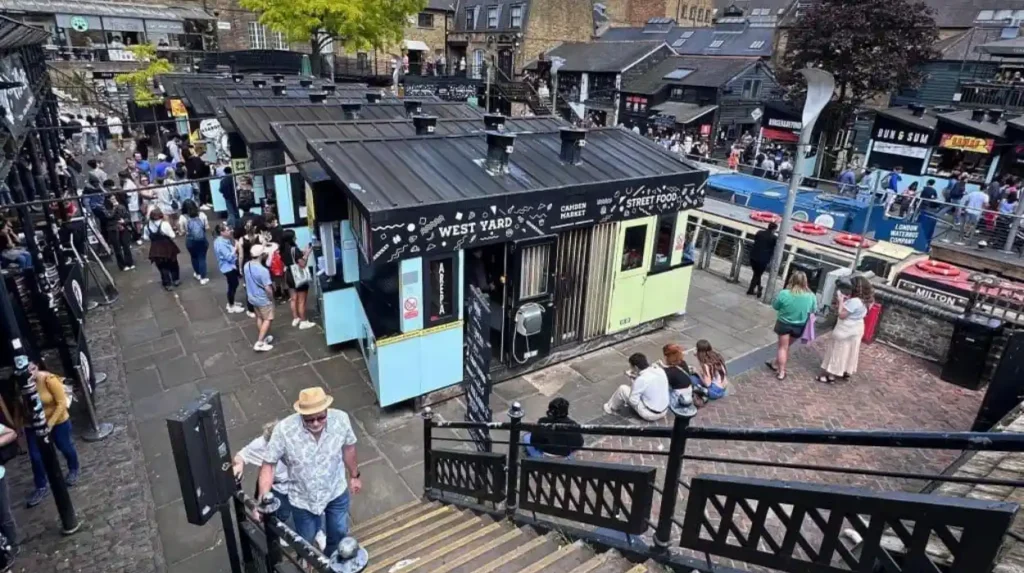
Camden Market consists of interconnected areas whose histories developed at different times. Camden Lock, East Yard, West Yard, Camden Lock Place, the Market Hall, and the Stables collectively demonstrate the market’s expansion from a small 1974 trading site.
Camden Lock represents the historic centre of the modern market. The original market opened nearby in 1974 with 16 traders.
East Yard is associated with the early Camden Lock Market site and remains part of the market’s independent retail environment.
The Market Hall occupies a former dockside industrial setting. Its position reflects the relationship between contemporary retail and the historic canal infrastructure.
Camden Lock Place is recognised by the Camden Lock Bridge and forms another important commercial section.
The Stables represents a later stage in the market’s development. Its historic buildings are directly connected with railway goods distribution and horse-powered transport.
The Horse Hospital is particularly important because its architectural fabric preserves elements of Victorian stabling. Historic England identifies surviving stalls, mangers, hay racks, ventilation features, ramps, and other evidence of its original use.
These areas should not be understood as identical markets that appeared simultaneously. They represent different phases of development.
The original Lock market emerged in the 1970s. The Stables became associated with antique dealers during the 1980s. The separate market areas were eventually integrated into the wider Camden Market identity.
This layered development explains the market’s architectural variety.
How does Camden Market preserve its industrial heritage while operating as a modern shopping district?
Camden Market preserves industrial heritage through the continued presence and reuse of canal-side warehouses, railway structures, stables, tunnels, dock infrastructure, and listed buildings. Their adaptation demonstrates how historic buildings can support contemporary commercial and cultural functions.
Adaptive reuse is central to Camden Market’s physical character.
Adaptive reuse means giving an existing historic structure a new function while retaining significant elements of its original fabric or character.
The Horse Hospital provides a clear example. Historic England records that it has been converted for shops and includes a music venue on the upper floor.
The Interchange provides another example. Its former warehouse function changed, while its architectural and industrial significance remains protected through listing.
The wider area contains additional surviving transport infrastructure. Historic England identifies the canal basin, vaults, horse tunnel, stables, railway structures, and Roundhouse as parts of a significant historic group.
Preservation is important because individual buildings provide evidence of historical processes that are difficult to understand from written records alone.
A surviving horse ramp demonstrates how goods were moved.
A canal basin demonstrates how water transport operated.
A railway warehouse demonstrates how freight was stored and transferred.
A stable demonstrates the dependence of Victorian logistics on animal labour.
A reused industrial building demonstrates the transition from manufacturing and distribution to cultural commerce.
Camden Market therefore functions as both a commercial destination and a visible historical landscape.
For visitors, the architecture provides physical evidence of several centuries of economic change without requiring the site to operate as a conventional museum.
To experience this historic landmark in person today, consult our comprehensive [The Fascinating History Behind Camden Market’s Rise to Global Popularity] for itineraries and visiting parameters.
What historical evidence explains Camden Market’s transformation after the decline of industry?
Camden Market’s transformation followed the decline of industrial freight activity, changing transport patterns, and the availability of former warehouses and yards. Entrepreneurs converted underused industrial spaces into market and cultural venues, creating a new commercial role for the district.
The transformation was closely connected with London’s changing transport economy.
The Camden Goods Depot had originally depended on railway and canal freight. The site contained goods sheds, railway sidings, warehouses, stables, and specialist infrastructure.
As freight patterns changed, the original industrial functions became less important.
The decline created opportunities for alternative uses.
The early 1970s market was therefore established at a significant moment in Camden’s history. The industrial landscape was no longer expanding in the nineteenth-century manner, while creative and cultural businesses were seeking affordable urban premises.
Northside Developments Limited played an important role in the early market story. Camden Council identifies Bill Fulford and Peter Wheeler as the people who obtained the remaining lease for the Dingwalls building yard and worked with Eric Reynolds, an experienced local boat builder who became involved in managing activities at the site.
This redevelopment model relied on existing structures rather than replacing the entire industrial landscape.
The result was a gradual transformation rather than a single redevelopment event.
Markets appeared.
Music venues expanded.
Independent businesses arrived.
Antique dealers occupied former industrial spaces.
Food traders became increasingly important.
The area became a visitor destination.
Each stage added a new function while retaining much of the physical environment created during the industrial era.
What does Camden Market reveal about London’s wider social and economic history?
Camden Market demonstrates how London converted declining industrial infrastructure into commercial and cultural space. Its history connects nineteenth-century transport, twentieth-century music and youth culture, independent retail, immigration, tourism, and contemporary street food within one urban district.
Camden’s history reflects several major changes in London.
The first was industrialisation. The Regent’s Canal and railway network transformed Camden into an important freight and distribution district.
The second was the growth of mass railway transport. Euston opened in 1837, King’s Cross in 1852, and St Pancras in 1868. Camden Council identifies these stations and their goods yards as major influences on local employment and industrialisation.
The third was industrial decline. Canal and railway freight lost some of its earlier dominance as road transport and new economic structures changed London’s commercial geography.
The fourth was cultural redevelopment. Former industrial buildings became spaces for music, markets, crafts, fashion, and entertainment.
The fifth was tourism. Camden Market became an internationally recognised destination within London’s visitor economy.
The market’s current multicultural food and retail environment also reflects London’s demographic and cultural diversity.
These changes illustrate an important principle in urban history: the physical landscape often survives after its original economic purpose disappears.
Camden Market remains a strong example because the historic infrastructure is visible alongside modern commerce.
Why is Camden Market historically important for future generations?
Camden Market is historically important because it preserves evidence of London’s industrial transport system while documenting the late twentieth-century rise of independent retail, alternative fashion, live music, street food, and cultural tourism in a continuously evolving urban environment.
Future heritage research will benefit from Camden Market’s layered physical evidence.
The surviving railway and canal structures establish the nineteenth-century foundation.
The 1974 market records the beginning of the modern commercial phase.
The growth of music venues documents Camden’s cultural development.
The expansion of alternative fashion illustrates changing consumer and youth cultures.
The modern food economy records London’s increasingly international commercial environment.
Historic England’s designations provide statutory recognition for significant structures such as the Grade II* Horse Hospital and other components of the former Camden Goods Depot.
The market also demonstrates the importance of adaptive reuse in conservation.
Preservation does not require every historic building to remain in its original function. Camden’s heritage survives because historic structures continue to accommodate useful activities.
This approach creates a direct relationship between heritage and everyday life.
A visitor buying clothing, eating street food, attending music, or walking beside the canal encounters a landscape shaped by earlier generations of engineers, railway workers, boatmen, warehouse employees, traders, horse handlers, musicians, designers, and entrepreneurs.
The historical value of Camden Market therefore extends beyond its commercial popularity.
It represents the physical and economic transformation of a London district from canal-side industry to railway logistics, from industrial decline to cultural enterprise, and from a 16-stall craft market in 1974 to a major contemporary destination.
Camden Market’s significance ultimately rests on this continuity.
The market is modern, but its setting is historic.
Its shops occupy spaces shaped by industrial commerce.
Its food economy reflects contemporary London.
Its music culture continues a tradition established by venues such as Dingwalls and the Roundhouse.
Its architecture preserves evidence of railway and canal transport.
Its evolution provides a clear case study of how London continually adapts historic urban spaces to new social and economic purposes.
For history enthusiasts, cultural tourists, educators, students, and heritage researchers, Camden Market offers a compact example of London’s changing identity. The site connects infrastructure, commerce, architecture, music, food, fashion, and tourism within a single historical landscape.
That combination explains why Camden Market remains more than a shopping destination. It is a living record of London’s transition from industrial transport economy to modern cultural and visitor economy.
Frequently Asked Question
When did Camden Market first open?
Camden Market first opened on 30 March 1974 with 16 traders selling antiques, jewellery, arts and crafts. The market initially operated as a small Saturday trading site near Camden Lock.