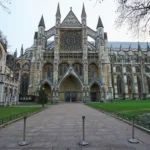
Westminster Abbey stands among the most significant historic buildings in the United Kingdom. Located in the City of Westminster in central London, the abbey has served as the ceremonial church of the English and later British monarchy for nearly 1,000 years. It is a place of worship, a royal coronation venue, a burial site for monarchs and notable figures, and a repository of national memory.
- What is Westminster Abbey and why is it historically important?
- What architectural features should visitors notice inside Westminster Abbey?
- What can visitors see in the Nave?
- Why is the Coronation Chair one of the abbey’s most famous objects?
- What royal tombs are located inside Westminster Abbey?
- What makes the Lady Chapel a highlight of any visit?
- What is Poets’ Corner and who is commemorated there?
- Which scientists and national figures are buried or memorialised inside the abbey?
- What can visitors learn from the Chapter House and other historic spaces?
- How has Westminster Abbey been preserved for future generations?
- Why does Westminster Abbey remain one of London’s most important landmarks?
Recognised as part of the UNESCO World Heritage Site that includes the Palace of Westminster and St Margaret’s Church, Westminster Abbey attracts more than one million visitors annually. Its interior contains medieval architecture, royal tombs, memorials, chapels, stained glass, historic artefacts, and some of the most important funerary monuments in Britain.
For visitors, understanding what lies inside Westminster Abbey provides essential context for appreciating one of London’s most iconic landmarks.
What is Westminster Abbey and why is it historically important?
Westminster Abbey is a Gothic church that has hosted every English and British coronation since 1066, houses the tombs and memorials of national figures, and preserves nearly a millennium of political, religious, architectural, and cultural history within its walls.
The official name of Westminster Abbey is the Collegiate Church of Saint Peter at Westminster. The site originated as a Benedictine monastery and evolved into one of the most important religious institutions in England.
The earliest documented church on the site dates to the tenth century. The structure most visitors recognise today began under King Henry III in 1245. Henry commissioned a grand Gothic rebuilding inspired by French cathedral architecture. Large sections of the church visible today originate from this medieval construction campaign.
The abbey’s significance extends beyond religion. It has witnessed coronations, royal weddings, funerals, state ceremonies, and national commemorations. Every monarch since King William I, known as William the Conqueror, has been crowned there except Edward V and Edward VIII.
The building functions as a Royal Peculiar, meaning it reports directly to the British monarch rather than to a diocesan bishop. This unique status reflects its enduring connection to the Crown.
The abbey also serves as a national mausoleum. More than 3,300 individuals are buried or commemorated inside the church. These include monarchs, scientists, military leaders, politicians, poets, musicians, and explorers.
To experience this historic landmark in person today, consult our comprehensive The Story of Westminster Abbey: A Thousand Years of Royal History for itineraries and visiting parameters.
What architectural features should visitors notice inside Westminster Abbey?
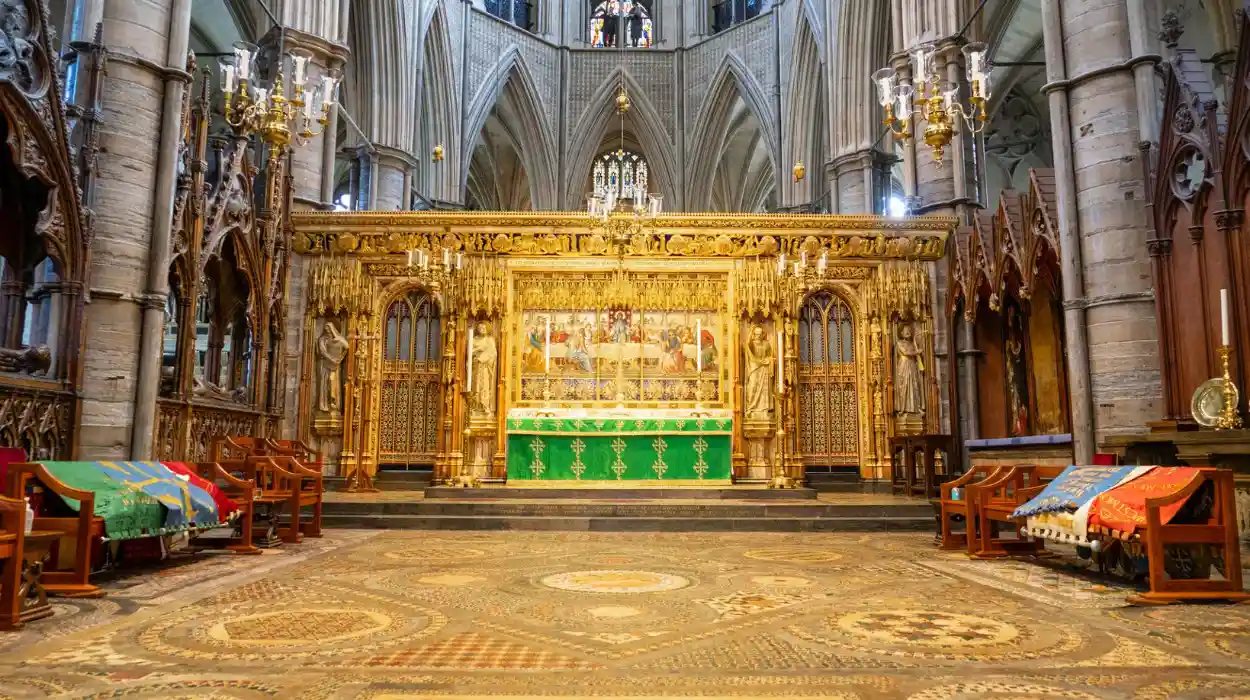
Visitors should focus on the abbey’s Gothic vaulting, pointed arches, flying buttress-supported structure, medieval stonework, stained-glass windows, chapter house, and intricate decorative elements that demonstrate centuries of architectural development and craftsmanship.
Westminster Abbey represents one of the finest examples of Gothic architecture in Britain. The design emphasises height, light, and visual harmony.
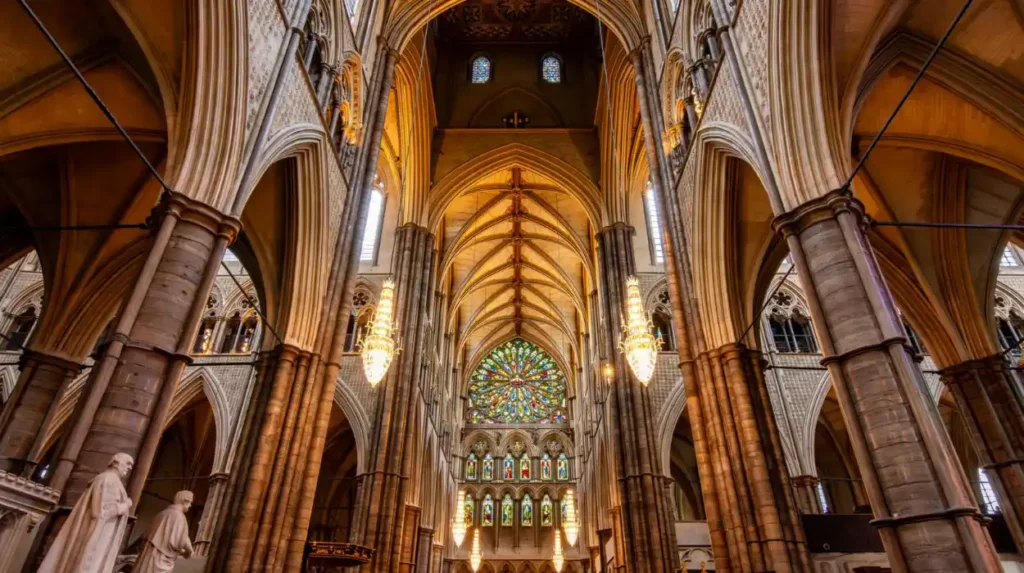
The nave reaches approximately 31 metres in height, making it one of the tallest Gothic naves in England. Its soaring columns draw attention upward toward rib-vaulted ceilings. These structural innovations allowed medieval builders to create larger interior spaces while distributing weight efficiently.
Pointed arches appear throughout the church. This hallmark of Gothic architecture enabled greater height and flexibility than earlier Romanesque forms.
Visitors frequently notice the extensive stone carvings that decorate capitals, screens, tombs, and chapels. These carvings depict religious imagery, heraldic symbols, foliage motifs, and historical figures.
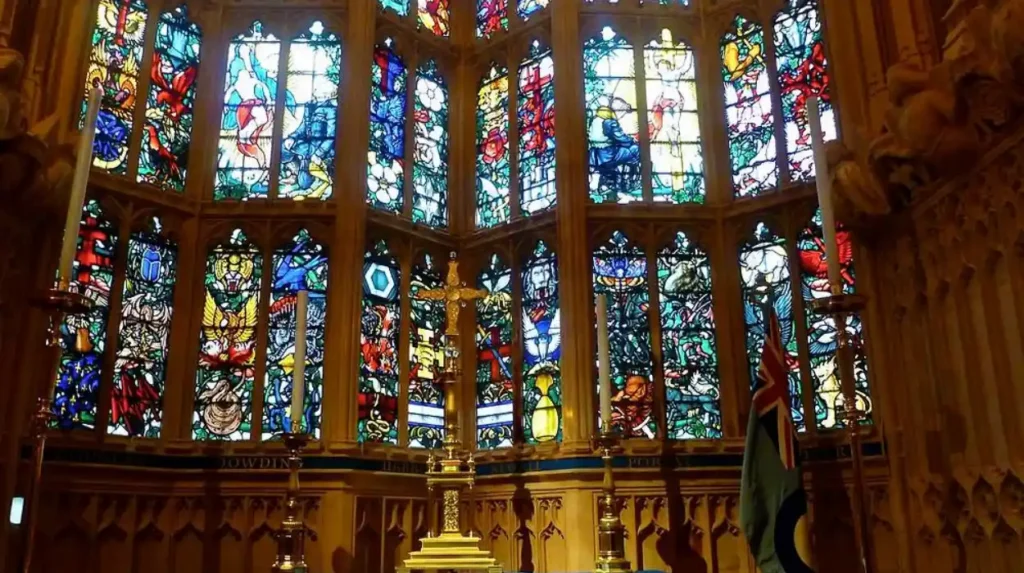
The stained-glass windows provide another important feature. Although some medieval glass survives, many windows reflect later restoration and replacement campaigns. The windows contribute both artistic value and historical interpretation.
The architectural layout follows a traditional cruciform plan. The nave, transepts, choir, and chapels create a complex interior arrangement that developed over centuries.
The abbey’s design influenced numerous churches across Britain and throughout the former British Empire, demonstrating its lasting architectural legacy.
What can visitors see in the Nave?
The nave contains memorials, historic monuments, ceremonial spaces, and one of England’s tallest Gothic interiors, serving as the primary entrance area where visitors first encounter Westminster Abbey’s scale, historical significance, and national commemorative function.
The nave forms the central passage leading through the abbey. It immediately conveys the monumental scale of the building.
Among its most notable features is the Tomb of the Unknown Warrior. Installed in 1920 following the First World War, the tomb contains the remains of an unidentified British soldier. It symbolises all military personnel who died without known graves.
The tomb remains one of the most visited and respected memorials in the United Kingdom. Visitors traditionally avoid walking directly across it as a mark of respect.
The nave also contains numerous memorial stones and monuments dedicated to military leaders, politicians, and public figures. These commemorations illustrate how the abbey evolved into a national memorial space.
Modern additions coexist alongside medieval architecture. This blending of eras reflects the abbey’s continuous use rather than preservation as a static historical monument.
The nave serves important ceremonial functions during royal and state occasions, reinforcing its role in contemporary British public life.
Why is the Coronation Chair one of the abbey’s most famous objects?
The Coronation Chair is one of Britain’s most important ceremonial artefacts because it has been used during coronations since 1308 and symbolises continuity between successive monarchs across more than seven centuries of constitutional history.
The Coronation Chair was commissioned by King Edward I between 1297 and 1300. It originally housed the Stone of Scone, a symbol associated with Scottish kingship.
Constructed primarily from oak, the chair remains remarkably intact despite centuries of use. Generations of visitors carved graffiti into its surface before modern conservation measures were introduced.
The chair has been used during coronations of English and British monarchs since the early fourteenth century. This uninterrupted ceremonial role makes it one of the oldest continuously used pieces of furniture in the world.
During coronation ceremonies, the monarch sits upon the chair while receiving sacred anointing and formal investiture. These rituals establish the symbolic and constitutional foundations of the reign.
The Coronation Chair provides a direct physical connection to major historical events spanning medieval, early modern, and contemporary Britain.
What royal tombs are located inside Westminster Abbey?
Westminster Abbey contains the tombs of more than 30 monarchs and numerous royal family members, making it one of Europe’s most important royal burial sites and a central location for understanding British dynastic history.
Royal burials constitute one of the abbey’s defining features.
Among the earliest royal tombs is that of King Edward the Confessor. His shrine became a major medieval pilgrimage destination and remains a focal point of the church.
Visitors encounter the tombs of monarchs including Henry III, Edward I, Edward III, Richard II, Henry V, and Elizabeth I.
Particularly significant is the shared burial area associated with Elizabeth I and her half-sister Mary I. Their complex relationship shaped sixteenth-century English politics and religion.
The abbey also contains the tomb of Mary, Queen of Scots. Initially buried elsewhere, her remains were later transferred to Westminster Abbey by her son, King James I.
These royal tombs provide valuable insight into changing funerary practices, artistic styles, dynastic succession, and political legitimacy.
The monuments incorporate marble, alabaster, bronze, and intricate sculptural programmes that reveal evolving attitudes toward kingship and remembrance.
What makes the Lady Chapel a highlight of any visit?
The Lady Chapel, formally known as Henry VII’s Lady Chapel, showcases exceptional late medieval craftsmanship through fan-vaulted ceilings, elaborate stone carving, royal tombs, heraldic decoration, and significant examples of Tudor artistic patronage.
Completed in the early sixteenth century, Henry VII’s Lady Chapel ranks among the greatest achievements of English Gothic architecture.
The chapel is particularly famous for its spectacular fan vaulting. This architectural feature creates a lace-like stone canopy overhead and represents one of the most technically advanced examples in Europe.
The chapel contains the tomb of Henry VII and Elizabeth of York. Their marriage united the rival houses of Lancaster and York following the Wars of the Roses.
Many visitors also seek the chapel because it houses memorials and tombs connected to later monarchs and royal families.
The chapel serves as the spiritual home of the Order of the Bath, a British order of chivalry. Heraldic banners belonging to members hang above the stalls, creating a colourful display of ceremonial tradition.
The combination of architecture, sculpture, and historical associations makes the Lady Chapel one of the most photographed areas within Westminster Abbey.
What is Poets’ Corner and who is commemorated there?
Poets’ Corner is a section of Westminster Abbey dedicated to literary figures, containing graves and memorials that celebrate writers whose works shaped English literature, national identity, education, and global cultural heritage.
Poets’ Corner developed gradually rather than through a single plan. Its origins are commonly linked to the burial of Geoffrey Chaucer in 1400.
Chaucer was initially buried in the abbey because of his position within the royal household rather than his literary achievements. Over time, however, his presence encouraged commemorations of other writers.
The area includes memorials to William Shakespeare, John Milton, Jane Austen, Charles Dickens, Samuel Johnson, William Blake, George Eliot, and many other literary figures.
Not every individual commemorated there is buried in the abbey. Some are honoured through monuments, plaques, or memorial inscriptions.
Poets’ Corner reflects changing ideas about national culture. By commemorating authors alongside monarchs and political leaders, Britain acknowledged literature as a defining component of national achievement.
For educators and students, this area offers a concentrated overview of several centuries of English literary history.
Which scientists and national figures are buried or memorialised inside the abbey?
Westminster Abbey honours leading scientists, statesmen, military leaders, and reformers whose contributions influenced Britain and the wider world, transforming the church into a national record of intellectual and civic achievement.
The abbey extends beyond royal and literary commemoration.
One of the most famous burials is that of Sir Isaac Newton. The mathematician and physicist revolutionised scientific understanding through his work on gravity, motion, and optics.
Nearby lies Charles Darwin, whose theory of evolution transformed biological science. His burial in the abbey demonstrated broad recognition of scientific achievement.
Other commemorated scientists include Stephen Hawking, whose ashes were interred in the abbey in 2018.
Political figures also feature prominently. Memorials honour leaders who shaped parliamentary government, imperial administration, and public reform.
Military figures, explorers, and humanitarian campaigners appear throughout the church. Together, these monuments create a narrative of national development spanning many centuries.
The diversity of commemorated individuals reflects evolving definitions of public service and historical significance.
What can visitors learn from the Chapter House and other historic spaces?
The Chapter House and associated historic rooms reveal Westminster Abbey’s administrative, political, and monastic functions, illustrating how the institution operated beyond worship and contributed to medieval governance and record-keeping.
The Chapter House represents one of the best-preserved medieval spaces within the abbey complex.
Constructed during the thirteenth century, it originally served as a meeting place for Benedictine monks. The room’s octagonal design and vaulted ceiling demonstrate advanced medieval engineering.
Historical records indicate that the Chapter House hosted important governmental gatherings. Early parliamentary assemblies met there during the medieval period.
Visitors can observe surviving medieval floor tiles, decorative stonework, and architectural details that provide evidence of monastic life.
Other historic spaces include the cloisters, which connected different parts of the monastic complex. These covered walkways facilitated movement between religious, residential, and administrative areas.
The abbey’s museum collections contain artefacts linked to coronations, religious ceremonies, and royal events. These objects help contextualise the building’s historical functions.
Together, these spaces reveal that Westminster Abbey functioned as a religious institution, administrative centre, political venue, and educational environment.
How has Westminster Abbey been preserved for future generations?
Westminster Abbey survives through continuous conservation, scientific monitoring, specialist restoration, and heritage management programmes that protect its architecture, monuments, artworks, and historical records against environmental and structural threats.
Preserving a building that approaches 1,000 years of continuous use requires extensive planning and expertise.
Conservation specialists regularly assess stonework, stained glass, wood carvings, metal components, and monuments. Environmental monitoring helps identify risks associated with pollution, humidity, and temperature fluctuations.
Major restoration campaigns have occurred during different periods. Victorian conservation projects significantly influenced the abbey’s appearance, while modern initiatives prioritise historical accuracy and scientific methods.
Digital documentation now plays a growing role in preservation. High-resolution scanning, photographic archives, and structural analysis provide detailed records for future research and restoration.
The abbey also manages extensive historical archives that document centuries of religious, political, and social activity.
As one of Britain’s most visited heritage sites, Westminster Abbey balances public access with long-term conservation objectives.
Its preservation ensures that future generations can continue studying architecture, monarchy, religion, literature, science, and national history within a single historic environment.
Why does Westminster Abbey remain one of London’s most important landmarks?
Westminster Abbey remains significant because it combines architectural excellence, royal tradition, national commemoration, religious heritage, and historical continuity within a single site that reflects nearly every major period of British history.
Few buildings encapsulate the history of Britain as comprehensively as Westminster Abbey.
Its walls preserve evidence of medieval monarchy, Reformation-era change, parliamentary development, imperial expansion, scientific advancement, literary achievement, and modern remembrance.
The abbey continues to host nationally significant ceremonies while functioning as an active church. This continuity distinguishes it from many historic monuments that serve solely as museums.
Visitors encounter tangible connections to figures such as Edward the Confessor, Henry III, Elizabeth I, Isaac Newton, Charles Darwin, and countless others whose actions shaped the nation.
Architecturally, the abbey remains one of the finest examples of Gothic design in Europe. Historically, it serves as the ceremonial heart of the British monarchy. Culturally, it preserves the memory of individuals who transformed literature, science, politics, and public life.
For history enthusiasts, cultural tourists, educators, students, and researchers, Westminster Abbey offers an unparalleled opportunity to explore nearly a thousand years of British heritage within a single landmark. Its interiors remain among the most historically rich and symbolically important spaces in London, ensuring its enduring relevance for generations to come.
What is Westminster Abbey famous for?
Westminster Abbey is famous for hosting royal coronations since 1066, royal weddings, state ceremonies, and housing the tombs and memorials of monarchs, scientists, writers, and national figures.