London has inspired writers for centuries, but few fictional worlds have become as globally recognised as the Harry Potter universe. Although the Wizarding World includes many imaginary settings, numerous memorable locations were inspired by real streets, stations, markets, libraries, buildings, and historic institutions across London. These places reflect centuries of British architectural development, medieval commerce, Victorian engineering, Georgian urban planning, and modern cultural preservation.
- Why did London become a major inspiration for the Harry Potter universe?
- Which real London railway station inspired Platform 9¾?
- How does Leadenhall Market connect with Diagon Alley?
- What historical significance does Westminster Underground Station hold in Harry Potter?
- Why is Australia House important in Harry Potter history?
- What is the historical background of Millennium Bridge in Harry Potter?
- How did London’s historic government district influence the Ministry of Magic?
- Did London’s medieval streets influence the design of Diagon Alley?
- How have these Harry Potter locations been preserved for future generations?
- Why do London’s Harry Potter inspirations remain historically important today?
J.K. Rowling drew upon Britain’s historic landscapes while writing the Harry Potter novels during the 1990s. Film producers later expanded these inspirations by selecting authentic historic locations throughout London and England to create believable magical environments. As a result, London’s rich heritage became permanently associated with one of the world’s most influential literary franchises.
Today, these historic sites attract millions of visitors annually while continuing to preserve their original historical importance. Their architectural evolution, institutional history, and cultural significance extend far beyond their cinematic fame.
Why did London become a major inspiration for the Harry Potter universe?
London became a major inspiration because it combines nearly two thousand years of continuous urban history with preserved medieval streets, Victorian transport systems, Gothic architecture, royal institutions, and historic marketplaces. These authentic environments naturally supported the visual identity of the Wizarding World while reflecting Britain’s historical development.
London’s history stretches back to the Roman settlement of Londinium, founded around AD 47. Successive periods transformed the city into one of Europe’s most historically layered capitals. Roman walls, Norman castles, Tudor palaces, Georgian squares, Victorian railway stations, Edwardian government buildings, and modern skyscrapers exist within relatively compact distances.
This architectural diversity creates visual continuity between different historical eras. Narrow medieval alleys exist alongside nineteenth-century railway terminals. Gothic churches stand beside contemporary financial districts. These contrasts allowed filmmakers to present magical spaces hidden within ordinary urban environments.
The Harry Potter novels rarely describe London in excessive detail. Instead, they rely upon familiar British geography, allowing readers to recognise authentic settings without overwhelming the fictional narrative. Film adaptations strengthened this connection by filming at actual historic landmarks rather than constructing every location inside studios.
London’s long-standing literary tradition also influenced this approach. Writers including Charles Dickens, Arthur Conan Doyle, Virginia Woolf, and Neil Gaiman used the city as both setting and character. Rowling continued this tradition by integrating magical society into an already historically rich urban landscape.
Which real London railway station inspired Platform 9¾?
Platform 9¾ is associated with King’s Cross Station, one of Britain’s most historically significant railway terminals. Opened in 1852, King’s Cross represented Victorian engineering innovation and later became permanently linked with Harry Potter through both literature and film adaptations.
King’s Cross Station opened on 14 October 1852 as the London terminus of the Great Northern Railway. Designed principally by architect Lewis Cubitt, the station introduced large-span iron-and-glass train sheds that symbolised Britain’s Industrial Revolution.
During the nineteenth century, railways transformed Britain by connecting industrial centres, ports, universities, and agricultural regions. King’s Cross became one of London’s busiest transport hubs, linking the capital with northern England and Scotland.
Rowling selected King’s Cross because it represented departure, transition, and discovery. The fictional Platform 9¾ exists between Platforms 9 and 10, accessible only to witches and wizards.
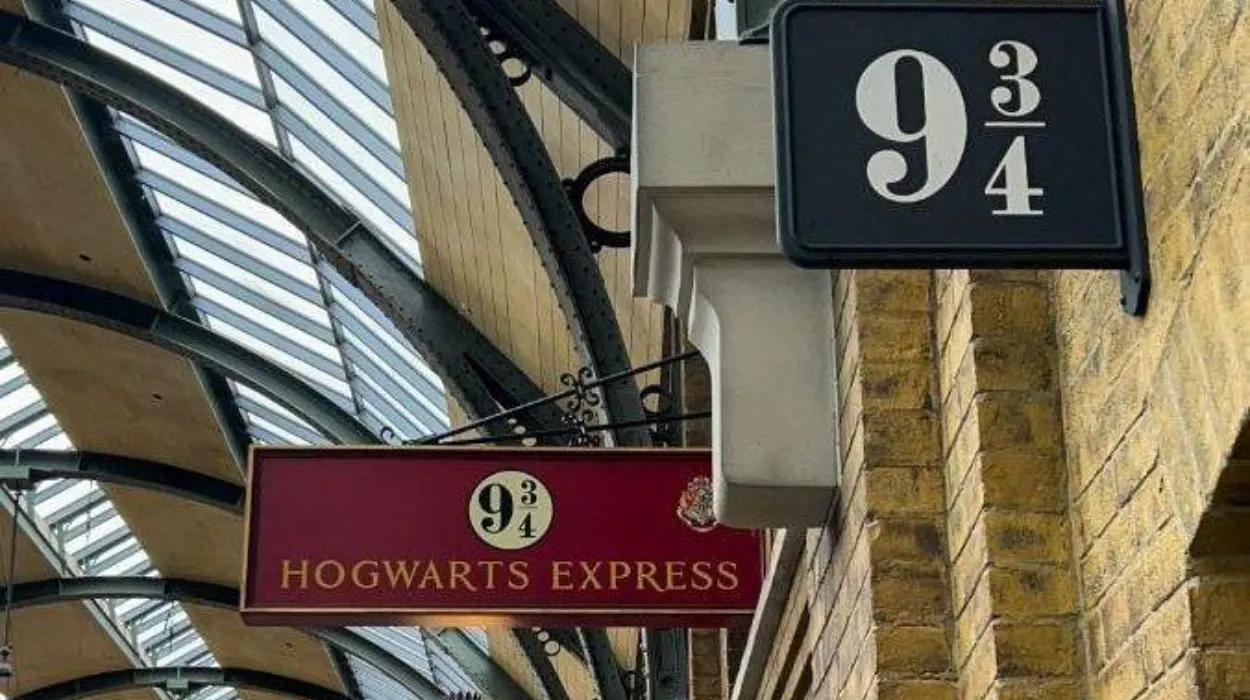
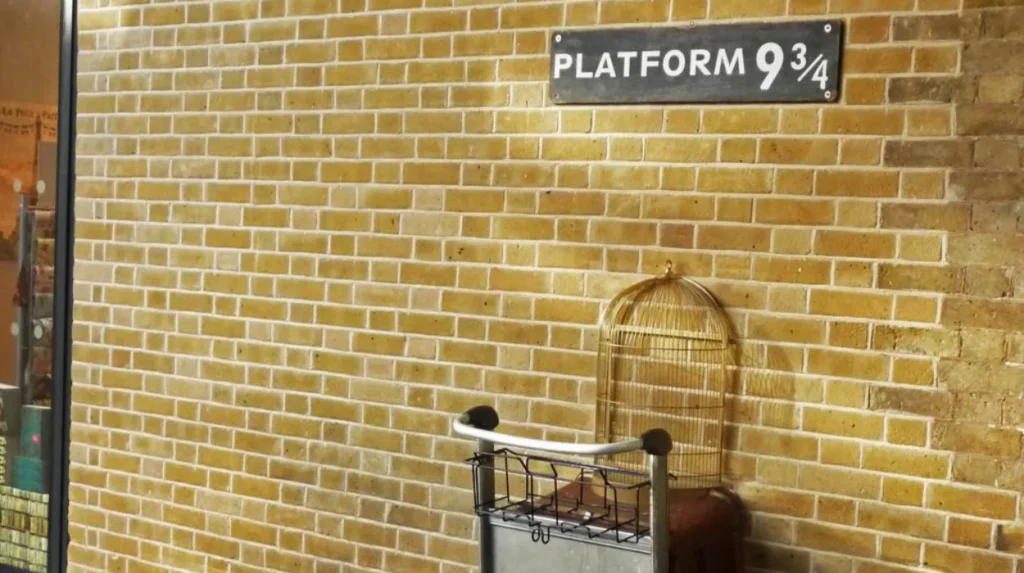
Although the exact film location differs slightly from the original station layout, King’s Cross later installed a permanent luggage trolley embedded in the wall alongside a Platform 9¾ sign. The installation became one of London’s most photographed visitor attractions.
Extensive restoration completed during the twenty-first century preserved the Victorian station while introducing modern transport facilities. The renovated Western Concourse, opened in 2012, demonstrates how historic infrastructure continues serving contemporary transport needs.
To experience this historic landmark in person today, consult our comprehensive [Famous Harry Potter Locations Across London Every Fan Should Visit During Their Journey] for itineraries and visiting parameters.
How Victorian railways shaped magical transportation
The nineteenth-century railway revolution fundamentally changed British mobility. Steam locomotives reduced travel times dramatically while standardising national timekeeping.
The Hogwarts Express mirrors this historical transformation. Steam-powered locomotives evoke Britain’s railway heritage while symbolising educational journeys and social mobility.
How does Leadenhall Market connect with Diagon Alley?
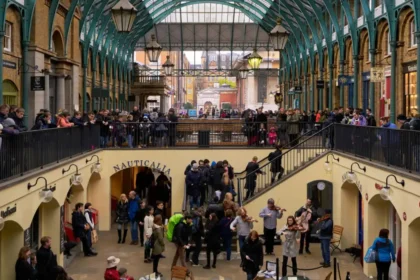
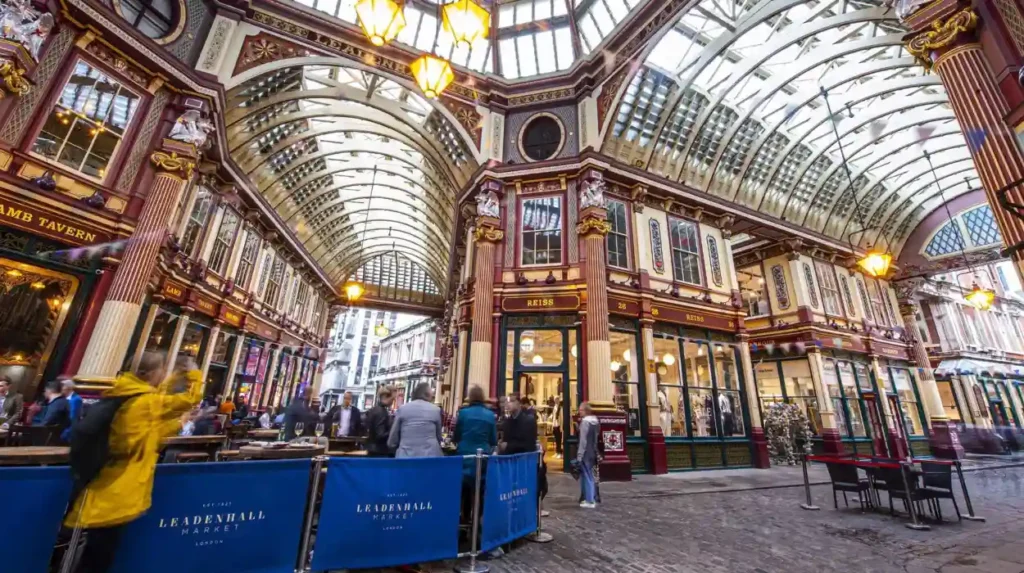
Leadenhall Market represents one of London’s oldest commercial marketplaces. Its Victorian architecture, medieval origins, and preserved covered passages provided the visual inspiration for Diagon Alley during filming while reflecting over seven centuries of continuous commercial activity.
Leadenhall Market occupies a site that has functioned as a marketplace since the fourteenth century. Earlier Roman commercial activity also occurred nearby, demonstrating the area’s long economic importance.
The present structure largely dates from 1881 when architect Sir Horace Jones redesigned the market using wrought iron, decorative roofing, painted ornamentation, and glazed arcades.
Jones also designed other celebrated London structures including Smithfield Market and Tower Bridge, making him one of Victorian London’s most influential municipal architects.
For Harry Potter and the Philosopher’s Stone, Bull’s Head Passage inside Leadenhall Market became the entrance to the Leaky Cauldron. Digital effects later expanded the surrounding streets into Diagon Alley.
Historically, Leadenhall specialised in poultry, meat, cheese, leather, and game trading. Merchants supplied London’s rapidly growing population throughout the medieval and early modern periods.
Today, the market continues operating with restaurants, boutiques, and independent retailers while retaining its Grade II* listed architectural status.
Why Victorian covered markets became architectural landmarks
Covered markets improved sanitation, weather protection, lighting, and commercial organisation.
Examples include Leadenhall Market, Covent Garden Market, and Smithfield Market. These developments reflected nineteenth-century urban planning reforms responding to population growth.
What historical significance does Westminster Underground Station hold in Harry Potter?
Westminster Underground Station represents both modern engineering and historic parliamentary surroundings. Its appearance in Harry Potter reflects London’s combination of contemporary infrastructure with centuries-old political institutions located immediately above the Underground network.
Westminster Station serves the Circle, District, and Jubilee lines. Earlier station facilities opened in 1868, while the current deep-level redevelopment opened in 1999.
Its exposed steel beams, concrete construction, and dramatic escalators created an architectural setting suitable for magical government sequences.
Nearby stands the Palace of Westminster, the meeting place of the United Kingdom Parliament. The present Gothic Revival building largely dates from reconstruction following the devastating fire of 1834.
The Ministry of Magic’s fictional visitor entrance through a London telephone box reinforces the idea that magical government operates beneath ordinary civic infrastructure.
Westminster demonstrates how London’s historic institutions coexist with advanced engineering systems beneath the streets.
Why is Australia House important in Harry Potter history?
Australia House became Gringotts Wizarding Bank in the first Harry Potter film because its Edwardian interior reflected the grandeur, security, and financial authority associated with Britain’s historic banking architecture.
Australia House opened in 1918 as Australia’s diplomatic headquarters in London.
Designed by Alexander Marshall Mackenzie and his son Alexander George Robertson Mackenzie, the building combines Beaux-Arts and Edwardian classical architectural traditions.
Its marble interiors, vaulted ceilings, elaborate columns, and decorative detailing provided the visual basis for Gringotts’ banking hall in Harry Potter and the Philosopher’s Stone.
Although later Gringotts interiors were recreated inside studio sets, Australia House established the institution’s visual identity.
The building continues serving diplomatic functions while remaining an important example of imperial-era architecture.
Edwardian architecture and imperial administration
Edwardian public buildings emphasised permanence, authority, and civic confidence.
Examples include Australia House, Admiralty Arch, and numerous government offices constructed during Britain’s imperial administration.
What is the historical background of Millennium Bridge in Harry Potter?
Millennium Bridge symbolises modern London’s architectural evolution. Although dramatically destroyed in Harry Potter fiction, the real bridge represents twenty-first-century engineering innovation connecting historic St Paul’s Cathedral with the South Bank cultural district.
The Millennium Bridge opened officially in June 2000.
Designed by Foster and Partners, Arup, and sculptor Sir Anthony Caro, the bridge introduced an innovative lateral suspension system.
Unexpected pedestrian movement caused noticeable swaying immediately after opening. Engineers temporarily closed the bridge before installing dampers that permanently solved the issue.
In Harry Potter and the Half-Blood Prince, Death Eaters destroy the bridge using magical force. This fictional event contrasts modern engineering with supernatural power.
Historically, the bridge strengthens pedestrian access between the City of London and Bankside, encouraging cultural tourism and sustainable transport.
Its alignment creates outstanding views of St Paul’s Cathedral, completed by Sir Christopher Wren in 1710 after the Great Fire of London.
How did London’s historic government district influence the Ministry of Magic?
The fictional Ministry of Magic reflects London’s governmental landscape, particularly Westminster and Whitehall, where Britain’s political administration has operated for centuries through Parliament, ministerial departments, and civil service institutions.
Whitehall developed into Britain’s governmental centre following the construction of Whitehall Palace during the Tudor period.
Although most of the palace disappeared after fires in 1698, the surrounding district remained the administrative heart of national government.
Government ministries gradually concentrated around Parliament, creating a recognisable political landscape familiar to British audiences.
The Ministry of Magic mirrors this bureaucratic structure through departments, legal systems, administrative offices, and ministerial leadership.
This fictional government draws organisational inspiration from Britain’s constitutional institutions rather than copying individual departments directly.
Administrative continuity through history
British government evolved gradually rather than through revolutionary replacement.
Medieval royal councils developed into parliamentary institutions, cabinet government, permanent civil service departments, and specialised ministries.
Did London’s medieval streets influence the design of Diagon Alley?
London’s surviving medieval street patterns strongly influenced Diagon Alley’s atmosphere through narrow passageways, irregular building alignments, mixed commercial uses, and centuries of continuous urban adaptation visible throughout the historic City of London.
Much of medieval London consisted of narrow lanes designed before modern planning regulations.
Commercial districts developed organically around markets, guild halls, churches, and river transport.
Although many medieval buildings disappeared following the Great Fire of 1666 and later redevelopment, numerous street alignments survived.
Locations including Cecil Court, Goodwin’s Court, and sections near Leadenhall preserve intimate urban spaces resembling Rowling’s fictional shopping district.
These environments illustrate how historical urban form influences contemporary cultural imagination.
How have these Harry Potter locations been preserved for future generations?
Historic Harry Potter locations survive because British heritage organisations, conservation legislation, local authorities, and private owners actively protect architecturally significant buildings while allowing continued public use, tourism, and commercial activity.
Britain developed comprehensive heritage protection during the twentieth century.
Listed building legislation protects structures with exceptional architectural or historical importance.
Grades include Grade I, Grade II*, and Grade II classifications.
Examples include Leadenhall Market, Westminster Palace, and numerous surrounding historic buildings that remain protected despite continued everyday use.
Organisations including Historic England, local planning authorities, museums, conservation charities, and property owners collaborate to maintain historic authenticity.
Tourism generated by Harry Potter also contributes economic value that encourages ongoing preservation investments.
Digital documentation, structural monitoring, conservation science, and skilled restoration ensure these landmarks remain accessible for future generations.
Why preservation matters beyond popular culture
Harry Potter increased international awareness of London’s historic environment.
However, preservation efforts existed long before the films.
Historic conservation protects architectural craftsmanship, archaeological evidence, urban planning history, and cultural identity independently of cinematic popularity.
These buildings continue educating visitors about Roman foundations, medieval commerce, Victorian engineering, Edwardian administration, and modern architectural innovation within one continuously evolving capital.
Why do London’s Harry Potter inspirations remain historically important today?
London’s Harry Potter inspirations remain historically important because they preserve authentic evidence of Britain’s architectural, commercial, political, transport, and cultural evolution while demonstrating how historic environments continue shaping contemporary literature, cinema, education, and international tourism.
The relationship between Harry Potter and London extends beyond film tourism. Every featured location possesses an independent historical narrative rooted in genuine urban development.
King’s Cross documents the expansion of Victorian railway infrastructure that transformed national mobility. Leadenhall Market preserves commercial traditions established during the medieval period while showcasing outstanding Victorian civic architecture. Westminster illustrates the interaction between historic political institutions and modern transport engineering. Australia House reflects Britain’s early twentieth-century diplomatic presence within the imperial era. Millennium Bridge demonstrates contemporary engineering responding to the needs of a modern capital while complementing historic landmarks such as St Paul’s Cathedral.
Together, these sites represent nearly two millennia of London’s continuous development, from Roman settlement through medieval commerce, industrial innovation, imperial administration, and modern urban regeneration.
Their preservation allows visitors, researchers, educators, and historians to examine authentic historical environments that later inspired one of the world’s most influential literary and cinematic franchises.
Rather than replacing historical significance, Harry Potter has introduced new global audiences to London’s architectural heritage. Millions of visitors now encounter these landmarks through both historical curiosity and literary interest, creating an enduring connection between Britain’s built heritage and contemporary cultural history.
This combination ensures that London’s real inspirations behind Harry Potter remain valuable educational resources, internationally recognised heritage assets, and lasting symbols of the city’s remarkable historical continuity.
Which real London location inspired Platform 9¾?
Platform 9¾ is associated with King’s Cross Station, a Victorian railway terminus that opened in 1852. The station became one of the most iconic Harry Potter landmarks after appearing in both the books and films.