London’s museums are central to the development of modern British cultural life. They transformed private collections into public institutions, connected education with physical evidence, supported scientific and industrial research, and preserved objects that document political, social, artistic, technological, and natural history.
- How did London’s museum tradition begin?
- How did Victorian museums connect education with industrial development?
- How did London’s museums support scientific and technological innovation?
- How did museums preserve Britain’s cultural memory?
- How did London’s museums change British cultural identity?
- How did museum architecture reinforce British cultural and educational ambitions?
- How do London’s museums support education today?
- How are London’s museums preserving knowledge for future generations?
- Why will London’s museums remain important to British culture?
- Frequently Asked Questions
The development of London’s museums followed major changes in British society. The Enlightenment encouraged systematic collecting and scientific inquiry. Industrialisation created demand for technical education. The expansion of the British Empire brought large quantities of material into European collections. Victorian reform expanded public education and created new expectations for civic institutions. The twentieth century introduced museums devoted to war, urban history, design, transport, science, and everyday life.
The result is a complex museum landscape in which institutions serve different historical functions. The British Museum represents global cultural and archaeological history. The Victoria and Albert Museum connects art and design with education and manufacturing. The Natural History Museum preserves biological, geological, and environmental evidence. The Science Museum documents scientific and technological development. London Museum records the history of the capital and its population. Imperial War Museums preserve evidence of modern conflict.
These institutions did more than display objects. They established systems for collecting, cataloguing, conserving, researching, interpreting, and teaching. Their influence therefore extends beyond galleries into universities, schools, scientific laboratories, creative industries, heritage organisations, archives, and public education.
How did London’s museum tradition begin?
London’s museums shaped British culture by turning collections into public knowledge, supporting research, teaching historical literacy, preserving material evidence, and connecting national history with everyday life. Their development followed Enlightenment thought, industrialisation, imperial expansion, democratic reform, and modern multicultural society.
The foundation of London’s modern museum culture belongs to the eighteenth-century Enlightenment. The Enlightenment was an intellectual movement that promoted observation, classification, scientific inquiry, debate, and the systematic organisation of knowledge. Collectors, physicians, naturalists, antiquarians, and scholars accumulated objects to understand the natural and human worlds.
The most important institutional milestone came with the foundation of the British Museum. An Act of Parliament in 1753 established the museum, and it opened to visitors in 1759. Its founding collections included material acquired from Sir Hans Sloane, Robert Harley, and the Cotton Library. Sloane alone had accumulated more than 80,000 natural and artificial specimens, alongside more than 40,000 books and manuscripts and 32,000 coins and medals.
The British Museum represented an important change in the ownership and circulation of knowledge. Collections previously associated with private wealth entered a public institution intended for education and study. The museum described its original purpose as serving humanity through the preservation, research, conservation, and exhibition of representative collections.
Access was initially controlled. Visitors required tickets and entered during limited hours. The system gradually became more accessible during the nineteenth century as regulations changed and opening hours expanded. This transition established an important principle of British museum culture: collections held for public benefit required public access.
London’s museum landscape then expanded beyond the universal collection model. Specialised institutions developed around science, natural history, decorative arts, technology, urban history, and military history. This specialisation reflected the rapid growth of knowledge during the nineteenth and twentieth centuries.
The museum therefore became more than a repository. It became an organised mechanism for transmitting knowledge between generations.
How did Victorian museums connect education with industrial development?
London’s museum tradition began with Enlightenment collecting and became a public institution through Parliament, philanthropy, scientific societies, and urban development. The British Museum opened in 1759, South Kensington museums expanded after 1851, and specialised institutions followed as knowledge became organised.
The nineteenth century transformed the relationship between museums and education. Britain’s industrial economy required trained designers, engineers, manufacturers, scientists, and skilled workers. Museums became part of the educational infrastructure supporting this economic transformation.
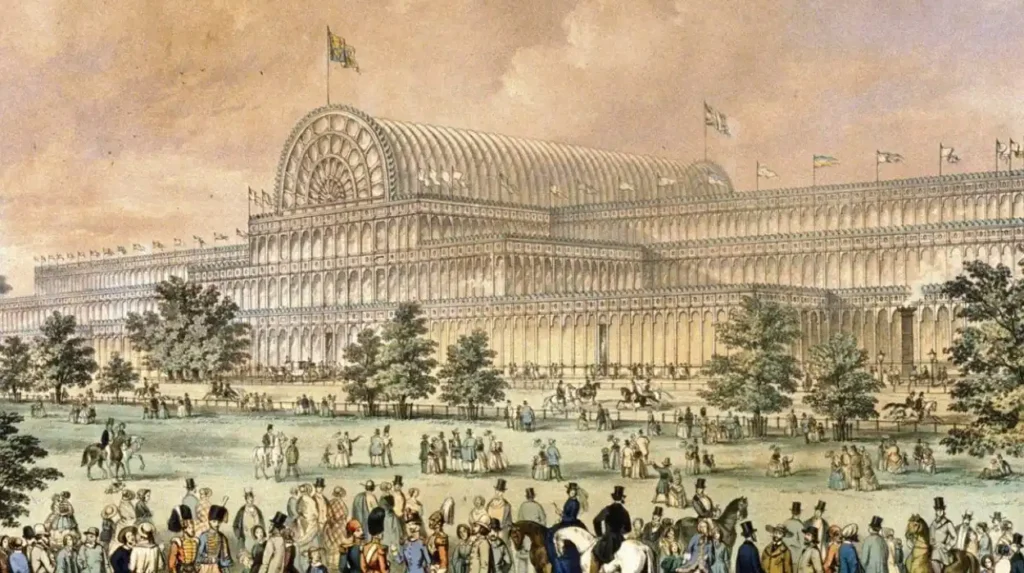
The Great Exhibition of 1851 was a decisive influence. Held in the Crystal Palace in Hyde Park, the exhibition displayed industrial products, machinery, manufactured goods, raw materials, and design from Britain and other countries. Its success demonstrated the educational and commercial value of displaying technological and artistic achievements to a large public.
The South Kensington Museum developed directly from this environment. Its origins lay in the Museum of Manufactures, which opened in 1852. The institution moved to South Kensington and officially opened its new site in 1857. Its collections combined applied art and science, while its educational mission connected museum displays with British manufacturing.
Henry Cole, the institution’s first director, described the museum as a “schoolroom for everyone.” The phrase expressed a practical educational objective. Designers, manufacturers, consumers, and students could study examples of art, science, machinery, materials, and manufacturing.
The institution later became the Victoria and Albert Museum. The Victoria and Albert Museum continues this historical relationship between collections, design education, and public learning. Its collections cover approximately 5,000 years of human creativity across numerous media.
The architecture itself formed part of the educational system. Museum buildings displayed examples of design, decoration, construction, and spatial planning. Visitors learned through direct observation rather than through books alone.
This model had a lasting effect on British education. Museum learning became associated with object-based study. A manufactured object could demonstrate industrial technique. A textile could demonstrate materials and design. A scientific instrument could explain technological development. A painting could provide evidence about artistic practice and social values.
The museum therefore became an educational environment in which physical objects operated as primary sources.
How did London’s museums support scientific and technological innovation?
Museums influenced British innovation by linking collections with industry, science, engineering, design, and technical education. South Kensington developed this model after the Great Exhibition, while later institutions such as the Science Museum and Design Museum connected exhibitions with research and practice.
Scientific museums developed from the same nineteenth-century demand for systematic knowledge. Collections of instruments, machines, engineering models, industrial products, and scientific specimens allowed visitors and specialists to examine technological change.
The Science Museum emerged from this South Kensington tradition. Its historical collections include important examples of machinery, transport, scientific instruments, communications technology, medicine, and engineering. Early displays included locomotives such as Puffing Billy, dating from 1814, and Stephenson’s Rocket, built in 1829.
These objects preserved technological evidence that written descriptions alone could not provide. Engineers could study construction. Students could examine mechanical principles. Historians could trace changes in manufacturing and transportation. General visitors could observe the physical development of industrial society.
Museum collections also supported professional research. Objects were catalogued, classified, compared, and conserved. Libraries and archives developed alongside exhibition galleries, creating research infrastructures for specialists.
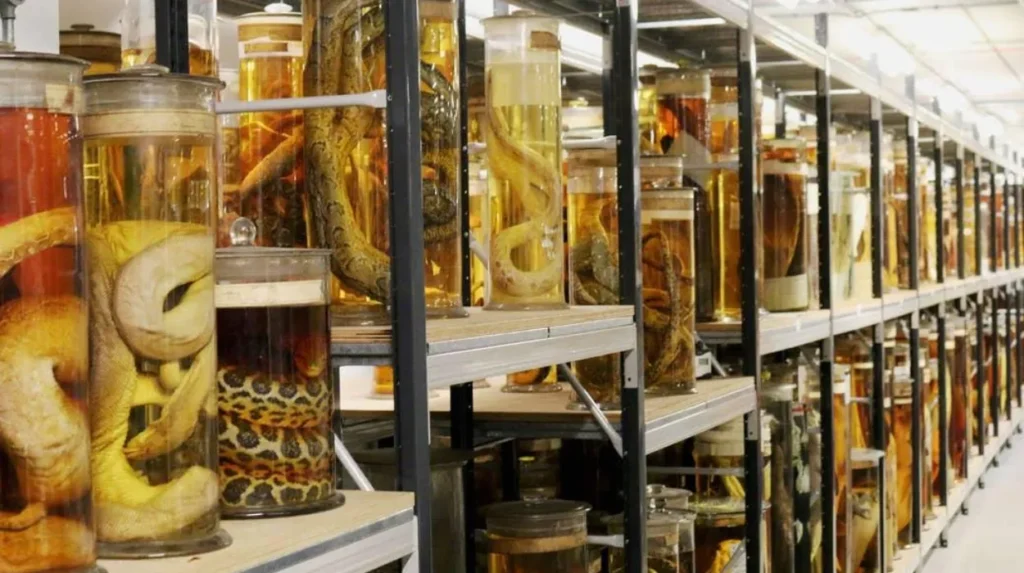
The Natural History Museum demonstrates another form of museum-based scientific innovation. Its collections contain more than 80 million objects spanning approximately 4.5 billion years of Earth’s history. The collection includes more than 34 million insects and arachnids, approximately six million botanical specimens, and 29 million zoological specimens.
These collections are not simply historical displays. Scientists use them to study biodiversity, evolution, geology, taxonomy, environmental change, and the history of the natural world. Specimens collected generations ago remain scientific evidence.
The Natural History Museum’s historical collections also demonstrate the connection between collecting and scientific classification. Its Sloane and Banks entomological collections are approximately three centuries old and provide evidence about the history of collecting and taxonomy.
The twentieth century extended this model into modern design. The Design Museum was founded by Sir Terence Conran in 1989 to promote awareness of design in education, industry, commerce, and culture. It opened in a converted warehouse at Shad Thames before relocating to Kensington in 2016.
London’s museums therefore contributed to innovation by preserving previous technologies while providing environments for studying new ideas.
How did museums preserve Britain’s cultural memory?
London’s museums preserved cultural memory by collecting, cataloguing, conserving, researching, and documenting physical evidence. Archaeological objects, manuscripts, photographs, artworks, scientific specimens, oral histories, and industrial artefacts became durable research resources, allowing later generations to examine societies through primary material evidence.
Preservation is one of the most important functions of museums. Preservation means protecting physical or recorded evidence from deterioration while maintaining enough information for future research and interpretation.
London’s museums developed sophisticated preservation systems during the nineteenth and twentieth centuries. Objects were classified, accessioned, labelled, stored, conserved, photographed, and documented. Museum catalogues created structured information about provenance, material, date, location, creator, ownership, and historical significance.
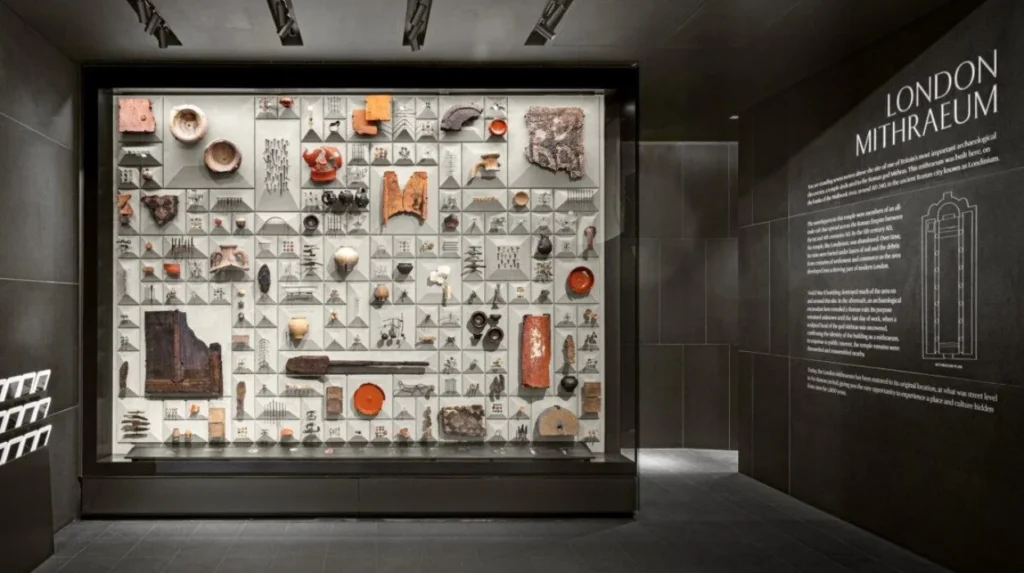
Archaeology became especially important to London’s cultural memory. The modern London Museum traces part of its institutional history to the Guildhall Museum, established in 1826 with a strong archaeological focus. Its first acquisition was a fragment of Roman mosaic discovered on Tower Street in the City of London.
Today, London Museum holds more than seven million objects covering approximately 450,000 years of London’s history. Its collections include archaeology, fashion, photography, ceramics, protest history, social history, oral histories, and records of Londoners’ lives.
The museum’s collection is particularly important for understanding London as a changing urban society. Archaeological evidence records ancient settlement. Industrial objects document employment and production. Clothing records changing social practices. Photographs preserve visual evidence. Oral histories provide personal testimony.
This approach expanded the definition of heritage. Historic culture no longer depended solely on royal buildings, major artworks, or famous individuals. Ordinary objects also became evidence of social history.
The preservation process also involves research. Curators compare objects with archival documents, archaeological records, photographs, scientific analysis, and related collections. New evidence can alter previous interpretations.
Museum preservation therefore protects both objects and knowledge. An artefact without documentation loses much of its research value. A properly documented object remains available for future historical questions.
How did London’s museums change British cultural identity?
London’s museums changed British cultural identity by expanding subjects considered worthy of preservation and public study. Collections moved beyond elite art and antiquities toward industrial work, migration, popular culture, conflict, women’s history, urban life, science, technology, and ordinary personal experience.
British cultural identity developed through multiple historical experiences, including monarchy, empire, industrialisation, migration, war, urbanisation, scientific discovery, social reform, and popular culture. Museums helped organise evidence from these experiences into publicly accessible narratives.
The expansion was especially visible in urban history. London Museum developed from the merger of the Guildhall Museum and the London Museum. The Museum of London was established through the Museum of London Act 1965, and the institution became London Museum in 2024.
Its collections demonstrate how the meaning of London changed over time. The museum collects archaeological material as well as objects from modern communities. Its collecting practices include archaeological excavations, community partnerships, individual donations, and purchases.
The history of conflict provides another example. Imperial War Museums was founded on 5 March 1917 while the First World War was still being fought. The original purpose was to record the experiences and sacrifices of military personnel and civilians rather than simply celebrate military victory.
The Imperial War Museums collection now contains more than one million items. It includes approximately 11 million photographs, more than 155,000 three-dimensional objects, over 33,000 sound recordings, and more than 23,000 hours of moving images.
This range of evidence changed how modern conflict entered public memory. War could be studied through uniforms, weapons, photographs, letters, official documents, films, recordings, artwork, and civilian testimony.
The expansion of museum collecting also created space for histories previously underrepresented in national narratives. Women’s suffrage, migration, labour, domestic life, social protest, popular entertainment, and community identity entered museum collections.
This transformation remains important for genealogical research. Family photographs, employment records, domestic objects, military documents, business archives, and oral histories can provide evidence about individuals and communities that do not appear in conventional political histories.
Museums therefore became institutions for studying society from the bottom up as well as from the top down.
How did museum architecture reinforce British cultural and educational ambitions?
London’s museum buildings reinforced cultural and educational ambitions through monumental architecture, specialised galleries, libraries, laboratories, study spaces, and public circulation areas. Victorian institutions especially treated architecture as part of education, using buildings, displays, materials, and decorative schemes to demonstrate knowledge.
Museum architecture became an important component of cultural policy during the nineteenth century. Large institutions required galleries for public display, storage areas for collections, laboratories for scientific work, libraries for research, and classrooms for education.
The British Museum’s current building developed during this period. Sir Robert Smirke designed the principal Greek Revival building, constructed between 1823 and 1852. The architecture communicated the institution’s national and scholarly importance.
South Kensington developed a different architectural model. Its buildings were closely associated with the educational mission of the museum complex. The institution displayed scientific and artistic objects while its architecture demonstrated contemporary ideas about design and manufacturing.
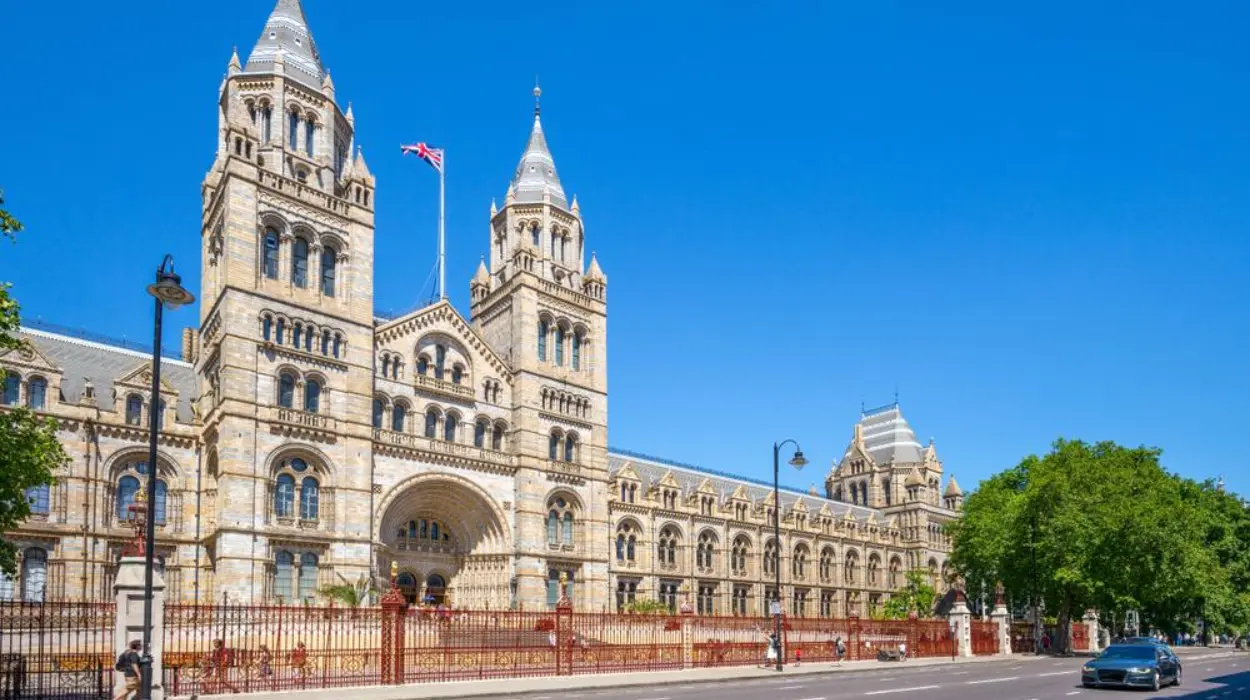
The Natural History Museum provides another significant example. The building in South Kensington was created to accommodate natural history collections that had previously been housed within the British Museum. The natural history departments moved to the new building in 1881.
Its architecture was closely connected to the scientific purpose of the institution. The building provided extensive exhibition spaces while establishing a monumental environment for the study of nature.
Museum architecture also affected visitor behaviour. Large entrances, galleries, cases, labels, reading rooms, and circulation routes established patterns of looking and learning.
The museum became a place where knowledge was organised spatially. Archaeological chronology could be arranged through galleries. Scientific classifications could be displayed through specimens. Industrial development could be represented through machines and models.
This relationship between architecture and education continued into the twentieth and twenty-first centuries. The Design Museum’s relocation to the former Commonwealth Institute in Kensington preserved a significant 1960s building while adapting it for contemporary museum use. The project retained important elements of the historic structure while introducing modern exhibition facilities.
The architectural history of London’s museums therefore forms part of British cultural history itself.
How do London’s museums support education today?
London’s museums now combine physical collections with conservation science, digitisation, open databases, research facilities, exhibitions, loans, and educational programmes. These systems extend access beyond gallery buildings while protecting original objects and generating evidence for historians, scientists, teachers, and heritage researchers.
Modern museum education extends far beyond traditional guided tours. Museums now operate learning departments, digital databases, research rooms, school workshops, lectures, family programmes, online collections, and specialist study facilities.
The British Library provides a clear example of this educational expansion. Its workshops support curriculum learning and develop visual literacy, critical thinking, source-based learning, and research skills. Programmes range from activities for primary schoolchildren to advanced study sessions for older students.
Digital access has transformed the geographical reach of museum education. Researchers no longer need to travel to London to identify every object or consult every catalogue record. Digitised images, metadata, collection databases, archival descriptions, and scientific datasets allow remote research.
The Natural History Museum provides access to data associated with its extensive scientific collections. Its collections are being digitised and made available through its Data Portal.
Imperial War Museums also provides extensive online collection information. Its database contains more than 1.7 million object records, while its broader collection includes documents, photographs, films, sound recordings, artwork, and three-dimensional objects.
This digital infrastructure is particularly valuable for academic students. A researcher studying the First World War can examine photographs and documents alongside published scholarship. A historian studying London can combine archaeological records with photographs and oral histories. A science student can investigate specimens and associated scientific data.
Museum education also supports teachers. Objects provide primary sources for lessons about history, art, geography, science, technology, and social change.
For visitors, the connection between historical collections and present-day London provides a practical route into the city’s cultural landscape. To experience this historic museum environment in person today, consult our comprehensive [London’s Most Unique Museums to Explore Beyond Traditional Tourist Attractions and Galleries] for itineraries and visiting parameters.
The educational role of museums has therefore expanded from gallery interpretation into a wider research and learning ecosystem.
How are London’s museums preserving knowledge for future generations?
The lasting cultural importance of London’s museums rests on their role as long-term knowledge infrastructures. Their collections preserve evidence, educators interpret it, and researchers revise understanding. Future relevance depends on careful conservation, transparent collecting histories, responsible interpretation, accessibility, and research.
Preservation remains a continuous process rather than a completed historical task. Museums must protect objects from physical deterioration while maintaining accurate documentation and research access.
Conservation science has become increasingly sophisticated. Museum specialists examine materials, monitor environmental conditions, repair objects, assess deterioration, and develop storage methods. Scientific analysis also produces new information about historic objects.
Digitisation adds another preservation layer. Digital photography, three-dimensional scanning, database records, and digital archives create additional forms of access while reducing the need for physical handling of vulnerable objects.
The Natural History Museum demonstrates the scale of this challenge. Its collections cover more than 80 million objects and span approximately 4.5 billion years of Earth history. More than 300 scientists work with the museum’s collections and research facilities.
Its library and archive contain more than one million items, including books, journal titles, artworks, and archival records. These resources support scientific research and document the institutional history of the museum itself.
Preservation also requires museums to examine the history of collecting. Collections were created under different political, economic, scientific, and colonial conditions. The British Museum records multiple routes through which objects entered its collections, including excavation, purchase, donation, conflict, colonial activity, and government or missionary activity.
This history has direct implications for modern museum practice. Understanding provenance means establishing where an object came from, who owned it, how it was acquired, and how it entered an institution.
Museums increasingly document these histories as part of responsible interpretation. The Natural History Museum explicitly recognises that collections and scientific knowledge were shaped by the views and cultures of people involved in collecting and research.
This approach strengthens historical research because it distinguishes the evidence represented by an object from the circumstances in which the object was collected.
London’s museums therefore preserve two connected forms of heritage: the material evidence itself and the documentary information needed to understand it.
Why will London’s museums remain important to British culture?
London’s museums remain important because they connect preserved evidence with public education, scientific research, cultural interpretation, and historical debate. Their collections provide primary sources for future generations, while their educational systems make those sources accessible to students, researchers, residents, and visitors.
The long-term significance of London’s museums rests on continuity. Objects collected centuries ago remain available for new research questions. A Roman archaeological fragment can support modern urban archaeology. A nineteenth-century machine can illuminate industrial history. A historic specimen can contribute to current biological research.
The institutions also provide continuity between generations. Curators interpret collections for present audiences while preserving them for future researchers. Teachers use museum evidence to explain historical processes. Universities use museum collections for specialist research. Heritage organisations use museum documentation to support preservation projects.
London’s museums also demonstrate how British culture has changed. The earliest major public museums emphasised universal knowledge, antiquities, science, and natural history. Victorian museums added industrial education and design. Twentieth-century museums expanded into war, urban history, technology, and modern culture. Contemporary museums increasingly address migration, identity, community history, environmental change, digital culture, and contested collecting histories.
This development does not represent the replacement of older museum functions. It represents their expansion.
The British Museum continues to preserve global archaeological and cultural collections. The Victoria and Albert Museum continues the educational relationship between art, design, and manufacturing. The Natural History Museum remains a major scientific collection. The Science Museum continues to preserve technological history. London Museum documents the capital and its communities. Imperial War Museums preserve evidence of modern conflict. The Design Museum connects contemporary design with education and industry.
Together, these institutions form a cultural infrastructure that extends beyond tourism.
Their greatest historical contribution is the creation of durable systems for turning physical evidence into knowledge. Collecting establishes the evidence base. Conservation protects it. Cataloguing identifies it. Research interprets it. Education communicates it. Exhibitions make it accessible. Digital systems extend its reach.
That process explains why London’s museums have influenced British culture for more than two centuries.
The history of London’s museums is therefore also a history of British attitudes toward knowledge. The institutions reflect changing ideas about who should access culture, what deserves preservation, how science should be taught, how industrial skills should develop, and whose experiences should enter the historical record.
From the British Museum’s eighteenth-century foundation to the specialised museums of modern London, the central principle remains the preservation and communication of evidence.
London’s museums shaped British culture because they made knowledge tangible, organised, researchable, teachable, and publicly accessible. Their collections preserve the physical record of changing societies, while their educational and research programmes ensure that this record continues to generate new historical understanding.
Frequently Asked Questions
How did London’s museums shape British culture?
London’s museums shaped British culture by making historical, scientific, artistic, and technological knowledge accessible to the public. Institutions such as the British Museum, Victoria and Albert Museum, Natural History Museum, and Science Museum preserved collections while supporting education and research.