London occupies a central place in the history of the Harry Potter film series. The city supplied real streets, railway stations, markets, government buildings, bridges, and historic architecture that became recognisable settings throughout the eight-film adaptation of J. K. Rowling’s novels. Between 2001 and 2011, filmmakers combined authentic London locations with studio-built sets to create a believable magical world that remained rooted in Britain’s capital.
- Why does London play such an important role in the Harry Potter film series?
- Which London railway station became the world’s most famous Harry Potter destination?
- How did Leadenhall Market become the entrance to the magical shopping district?
- Why is Millennium Bridge associated with Harry Potter and the Half-Blood Prince?
- What makes Piccadilly Circus an important Harry Potter filming location?
- Why does Australia House represent Gringotts Wizarding Bank?
- How did Westminster shape the political atmosphere of the Harry Potter films?
- What role did Lambeth Bridge play in the Harry Potter films?
- How does St Pancras International relate to Hogwarts?
- How have London’s Harry Potter locations influenced heritage tourism?
- Why do these locations remain historically significant beyond Harry Potter?
The Harry Potter film franchise transformed many ordinary London landmarks into internationally recognised cultural destinations. Millions of visitors now include these filming sites in their travel itineraries, creating a form of screen tourism that contributes significantly to London’s visitor economy. According to VisitBritain, film and television tourism influences millions of international travel decisions each year, with Harry Potter remaining one of the United Kingdom’s strongest cultural exports.
Unlike purpose-built attractions, London’s Harry Potter locations preserve their original historical and architectural identities. Railway stations continue serving commuters. Historic markets remain active commercial centres. Government buildings maintain their official functions. This combination of cinematic fame and genuine heritage creates an experience that appeals to film enthusiasts, architectural historians, educators, and cultural tourists alike.
Why does London play such an important role in the Harry Potter film series?
London provided authentic Victorian architecture, historic transport infrastructure, government districts, and iconic urban landscapes that perfectly supported the magical world portrayed in the Harry Potter films. These real locations connected fantasy with Britain’s cultural heritage while preserving historical authenticity across multiple productions.
The Harry Potter film adaptation began production in 2000 under Warner Bros. Pictures. Director Chris Columbus sought locations that reflected Britain’s architectural history rather than relying entirely on constructed film sets.
London offered centuries of preserved urban development. Medieval lanes, Georgian terraces, Victorian railway stations, Edwardian public buildings, and twentieth-century infrastructure created visually distinct environments that strengthened the films’ realism.
Many magical locations described in the novels were inspired by recognisable elements of London life. Instead of recreating every location inside a studio, filmmakers incorporated genuine landmarks that audiences could later visit.
This production strategy also reduced construction costs while giving the films historical depth. Real locations naturally display architectural details that would require extensive resources to reproduce artificially.
The resulting combination established London as one of the world’s leading destinations for literary and film tourism.
Which London railway station became the world’s most famous Harry Potter destination?
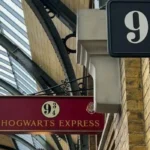
King’s Cross Station became the best-known Harry Potter filming location because it represents Platform 9¾, the fictional departure point for the Hogwarts Express. The station combines Victorian railway engineering with modern visitor facilities while remaining one of Britain’s busiest transport hubs.
King’s Cross Station opened in 1852 and was designed by architect Lewis Cubitt. The station became an engineering landmark during Britain’s railway expansion in the nineteenth century.
Although Platform 9¾ exists only in fiction, filmmakers used sections of King’s Cross to establish the magical entrance leading to Hogwarts School of Witchcraft and Wizardry.
The evolution of Platform 9¾
During filming, the production crew altered station interiors using visual effects and carefully selected camera angles.
Following the films’ global success, King’s Cross installed a permanent Platform 9¾ luggage trolley display. Visitors now photograph themselves pushing a luggage cart through the brick wall, recreating scenes from the films.
The station also includes an official Harry Potter retail store serving international visitors.
King’s Cross remains a functioning railway terminal linking London with northern England and Scotland. Its dual role as historic transport infrastructure and cultural attraction demonstrates how heritage sites evolve without losing their original purpose.
To experience this historic landmark in person today, consult our comprehensive [Real London Inspirations Behind Harry Potter and Their Fascinating Historical Backgrounds] for itineraries and visiting parameters.
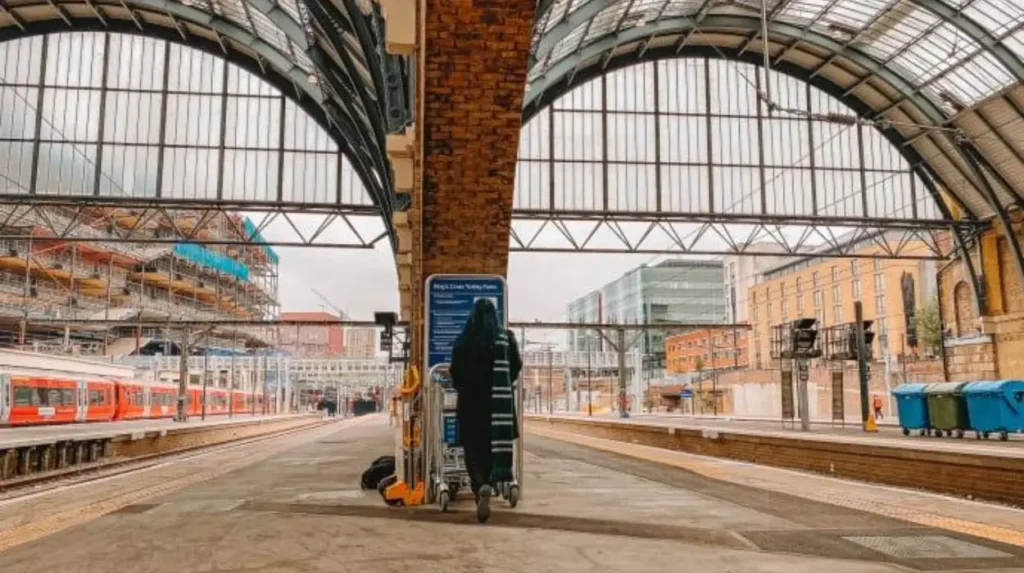
How did Leadenhall Market become the entrance to the magical shopping district?
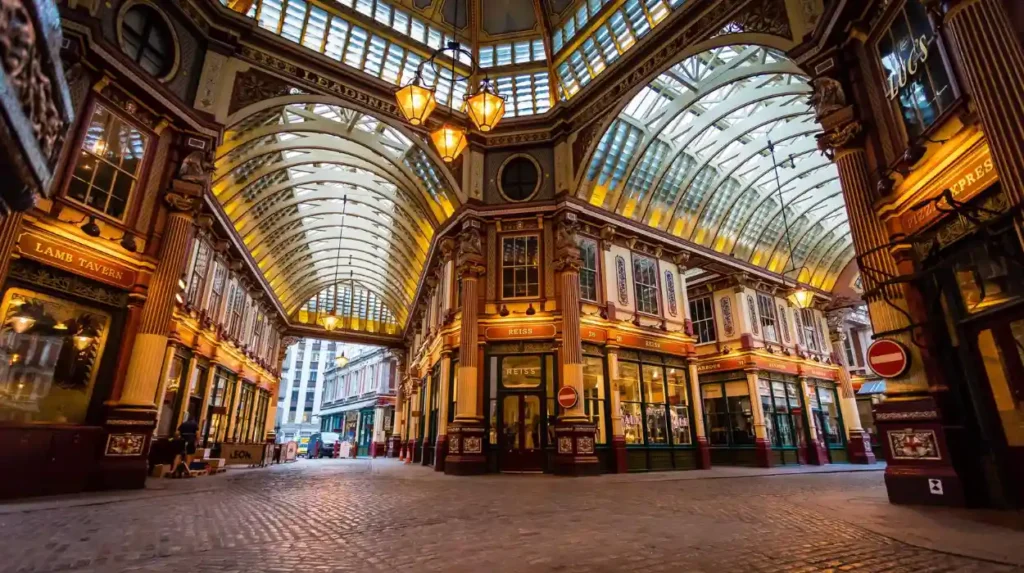
Leadenhall Market represented Diagon Alley during the first Harry Potter film because its Victorian architecture, covered walkways, ornate decoration, and historic commercial character matched the fictional wizard marketplace described within the novels while preserving London’s mercantile heritage.
Leadenhall Market stands within the City of London.
The market traces its origins to the fourteenth century, although the present structure largely dates from 1881 following redevelopment by architect Sir Horace Jones.
Its painted ironwork, decorative roof, cobbled passages, and elaborate Victorian design provided an ideal cinematic setting.
Why filmmakers selected Leadenhall Market
The entrance to the Leaky Cauldron was filmed using a real shopfront inside Bull’s Head Passage adjoining the market.
Digital effects transformed the surrounding environment into Diagon Alley while preserving the original architecture.
Leadenhall Market remains an active shopping destination with restaurants, cafés, and independent retailers operating beneath its historic roof.
The structure is protected as a Grade II* listed building, ensuring long-term conservation of its architectural significance.
Why is Millennium Bridge associated with Harry Potter and the Half-Blood Prince?
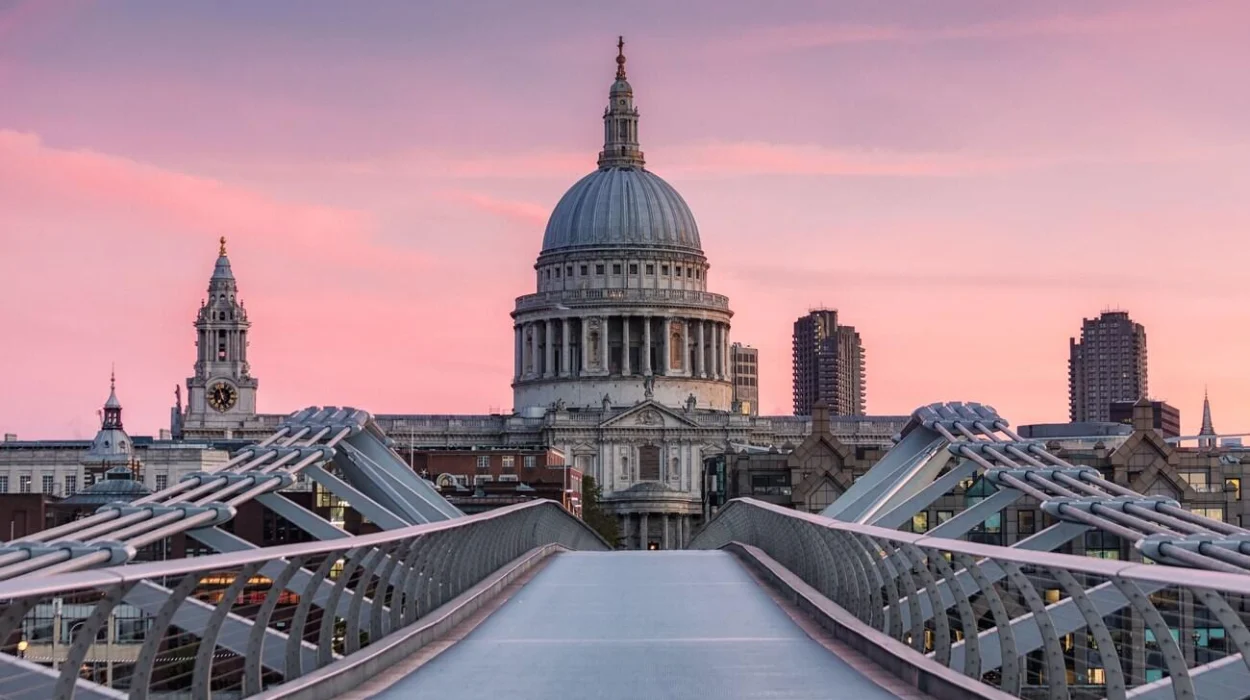
Millennium Bridge gained worldwide recognition after appearing in Harry Potter and the Half-Blood Prince during the dramatic opening sequence depicting a Death Eater attack. The film transformed a modern pedestrian bridge into one of London’s most recognisable cinematic landmarks.
Millennium Bridge opened officially in June 2000.
Designed by Foster + Partners, Arup, and Sir Anthony Caro, the steel suspension bridge links St Paul’s Cathedral with Tate Modern across the River Thames.
Historical significance beyond the films
Soon after opening, unexpected pedestrian movement caused noticeable lateral swaying.
Engineers temporarily closed the bridge before introducing dampening systems that resolved the problem.
The Harry Potter film digitally exaggerated structural movement during the fictional attack sequence.
In reality, Millennium Bridge has remained structurally safe since reopening in 2002.
Its appearance introduced modern London architecture into the predominantly historic visual language of the Harry Potter films.
What makes Piccadilly Circus an important Harry Potter filming location?
Piccadilly Circus appears in Harry Potter and the Deathly Hallows – Part 1 when Harry, Ron, and Hermione escape from a wedding before entering London’s busy streets. The location represents London’s fast-paced urban environment within the magical narrative.
Piccadilly Circus was created in 1819 to connect Regent Street with major West End thoroughfares.
Its illuminated advertising displays became internationally recognised during the twentieth century.
London’s commercial crossroads
The Harry Potter sequence captures genuine traffic, historic streets, and surrounding architecture.
Rather than constructing an artificial cityscape, filmmakers embraced one of London’s busiest public spaces.
Piccadilly Circus also reflects London’s continuing evolution as a commercial, cultural, and entertainment centre.
Its cinematic role demonstrates how ordinary public spaces acquire additional cultural meaning through film.
Why does Australia House represent Gringotts Wizarding Bank?
Australia House served as the interior inspiration for Gringotts Wizarding Bank because its Edwardian architecture, marble columns, grand banking hall, and decorative detailing reflected the wealth and authority associated with the fictional goblin-operated financial institution.
Australia House opened officially in 1918.
It functions as Australia’s High Commission in the United Kingdom.
Architect Alexander Marshall Mackenzie designed the building in the Edwardian Baroque style.
Architectural importance
The magnificent entrance hall became the visual basis for Gringotts in Harry Potter and the Philosopher’s Stone.
Later films recreated the bank using increasingly sophisticated studio sets while preserving the original architectural inspiration.
Public access remains limited because Australia House continues operating as a diplomatic building.
Its role demonstrates how historic government architecture contributes to cinematic storytelling.
How did Westminster shape the political atmosphere of the Harry Potter films?
Westminster supplied governmental architecture that reinforced themes of political authority, institutional power, and national identity throughout the Harry Potter series. Historic streets and public buildings established believable surroundings for the fictional Ministry of Magic.
Westminster has served as Britain’s political centre for centuries.
Parliament, Whitehall, government departments, and ceremonial routes define the district’s national importance.
Government architecture and cinematic realism
Several Harry Potter scenes use Westminster streets as transition points before characters enter magical government spaces.
The Ministry of Magic itself was largely constructed inside studios.
However, exterior London locations established continuity between Britain’s real institutions and Rowling’s fictional government.
This technique strengthened audience immersion while preserving recognisable urban geography.
What role did Lambeth Bridge play in the Harry Potter films?
Lambeth Bridge appeared prominently when the Knight Bus travelled through central London, combining practical filming with digital visual effects. The bridge connected historic parliamentary surroundings with one of the franchise’s most memorable magical transport sequences.
Lambeth Bridge opened in 1932.
It spans the River Thames between Westminster and Lambeth.
Painted red, the bridge visually complements the nearby Palace of Westminster.
The Knight Bus sequence
Harry Potter and the Prisoner of Azkaban introduced audiences to the triple-decker Knight Bus.
Digital effects exaggerated vehicle movement while real London streets formed the journey’s foundation.
The sequence highlighted familiar landmarks before transitioning into fantasy.
This blend of authentic geography and visual effects became a defining characteristic of the series.
How does St Pancras International relate to Hogwarts?
St Pancras International became visually associated with Hogwarts because its Gothic Revival architecture featured prominently in promotional material despite interior Platform 9¾ scenes being filmed primarily at neighbouring King’s Cross Station. The distinction remains historically important for visitors.
St Pancras station opened in 1868.
Architect George Gilbert Scott designed the adjoining Midland Grand Hotel, one of Britain’s finest Gothic Revival buildings.
Separating myth from reality
Many visitors mistakenly believe Platform 9¾ exists inside St Pancras.
In reality, exterior establishing shots often featured St Pancras because of its dramatic architecture.
Interior scenes largely relied upon King’s Cross.
Understanding this distinction improves historical accuracy while appreciating how filmmakers combined multiple locations into one fictional destination.
How have London’s Harry Potter locations influenced heritage tourism?
Harry Potter filming locations transformed traditional heritage tourism by connecting historic buildings with popular culture. This combination increased visitor numbers, expanded educational opportunities, and strengthened international appreciation for London’s architectural and cultural history.
Film tourism has become a recognised segment of global travel.
Academic research consistently demonstrates that successful film franchises encourage visitors to explore authentic filming locations.
Economic and cultural impact
Visitors purchase guided tours, museum admissions, transport tickets, accommodation, and local services.
Historic markets receive additional foot traffic.
Railway stations benefit from international recognition.
Educational institutions increasingly examine Harry Potter tourism through disciplines including geography, cultural studies, economics, architecture, and heritage management.
Local conservation organisations also benefit because increased awareness encourages public support for preserving historic buildings.
Why do these locations remain historically significant beyond Harry Potter?
Every major Harry Potter location retains independent historical value because each site represents genuine developments in London’s architectural, commercial, transport, or governmental history. Their cinematic fame complements rather than replaces centuries of documented historical importance.
King’s Cross illustrates Victorian railway expansion.
Leadenhall Market represents medieval commerce and Victorian redevelopment.
Westminster embodies constitutional government.
Millennium Bridge demonstrates modern engineering.
Australia House reflects imperial diplomacy.
Piccadilly Circus symbolises commercial London.
Lambeth Bridge illustrates twentieth-century transport planning.
Together these locations form a chronological journey through London’s development spanning several centuries.
Their preservation benefits historians, educators, architects, urban planners, and future generations studying Britain’s evolving capital.
The Harry Potter films introduced millions of people to landmarks they might otherwise never have explored. Many visitors arrive because of cinema but leave with a deeper understanding of London’s architectural heritage, public transport history, commercial evolution, and cultural identity.
This lasting educational value explains why London’s Harry Potter locations remain relevant decades after filming concluded. Rather than functioning solely as movie settings, they continue serving their original civic purposes while simultaneously representing one of the most influential literary and cinematic franchises in modern history. Their enduring significance demonstrates how cultural heritage and contemporary storytelling can coexist, strengthening public engagement with historic places and ensuring these landmarks remain meaningful for residents, scholars, educators, and international visitors alike.
Where is Platform 9¾ in London?
Platform 9¾ is located inside King’s Cross Station in central London. The famous luggage trolley photo spot and the official Harry Potter Shop attract millions of visitors every year.