London is one of the world’s most walkable historic capitals. Its streets preserve nearly 2,000 years of continuous urban development, allowing visitors to explore Roman foundations, medieval lanes, Tudor landmarks, Georgian squares, Victorian engineering, and modern architecture within a single city. Self-guided walking tours provide a structured way to understand how London’s political, commercial, religious, and cultural institutions developed while allowing travellers to explore at their own pace.
- Why are self-guided walking tours one of the best ways to explore London?
- What makes London’s streets ideal for historical walking tours?
- Which historic walking route best introduces first-time visitors to London’s origins?
- How does a Westminster walking tour explain Britain’s political and royal history?
- Why is the South Bank one of London’s most rewarding cultural walks?
- What can visitors learn from walking through London’s oldest neighbourhoods?
- How do London’s parks enhance historical walking routes?
- Why are bridges essential parts of London’s walking experience?
- How has heritage preservation shaped today’s walking routes?
- What practical approach creates the most rewarding self-guided walking tour?
- How do London’s self-guided walking tours help visitors understand the city’s long history?
Unlike organised tours, self-guided routes encourage deeper engagement with historic buildings, public monuments, archaeological remains, museums, and conservation areas. They also reveal how London’s boroughs evolved through centuries of expansion, rebuilding, and preservation. Every route connects important landmarks with wider historical events, making each walk an educational experience as well as a practical way to discover the capital.
Why are self-guided walking tours one of the best ways to explore London?
Self-guided walking tours allow visitors to explore London’s history chronologically and geographically while controlling their own schedule. They connect major landmarks with surrounding streets, historic districts, museums, and public spaces, creating a deeper understanding of London’s continuous development across nearly two millennia.
Walking remains the most effective method of understanding London’s urban evolution. Many of the city’s oldest streets retain their medieval layouts despite repeated rebuilding after fires, wars, and redevelopment. Distances between major landmarks are often shorter than first-time visitors expect, making walking both practical and historically meaningful.
Unlike transport journeys that move beneath or around the city, walking reveals architectural transitions between neighbourhoods. A visitor can leave Roman archaeological remains and reach Georgian townhouses within minutes before continuing towards Victorian civic buildings and contemporary skyscrapers.
Self-guided routes also encourage longer visits at churches, museums, memorials, and public squares without the time restrictions of organised excursions. Visitors determine their own pace while adapting routes according to opening hours or personal interests.
Historic walking has become increasingly popular because many important heritage sites remain freely accessible through public streets, riverside paths, and conservation areas maintained by heritage organisations and local authorities.
What makes London’s streets ideal for historical walking tours?
London’s street network preserves evidence from Roman, medieval, Tudor, Georgian, Victorian, and modern periods. Historic roads, markets, bridges, churches, and civic buildings remain interconnected, allowing visitors to experience centuries of urban history within relatively compact walking distances.
The original Roman settlement of Londinium established roads that influenced later medieval street patterns. Several important modern routes still follow ancient alignments established nearly 2,000 years ago.
Following the Norman Conquest in 1066, London expanded around defensive walls, churches, royal institutions, and commercial markets. Medieval guilds concentrated economic activity within districts that remain recognisable today.
The Great Fire of 1666 transformed much of the City of London while preserving its irregular medieval street pattern. Reconstruction introduced new churches, improved building standards, and wider streets without completely replacing the earlier layout.
Victorian expansion added railway stations, embankments, bridges, museums, and government offices while maintaining connections to older districts.
Modern conservation policies now protect numerous historic streetscapes, ensuring visitors experience authentic urban environments rather than reconstructed heritage attractions.
Which historic walking route best introduces first-time visitors to London’s origins?
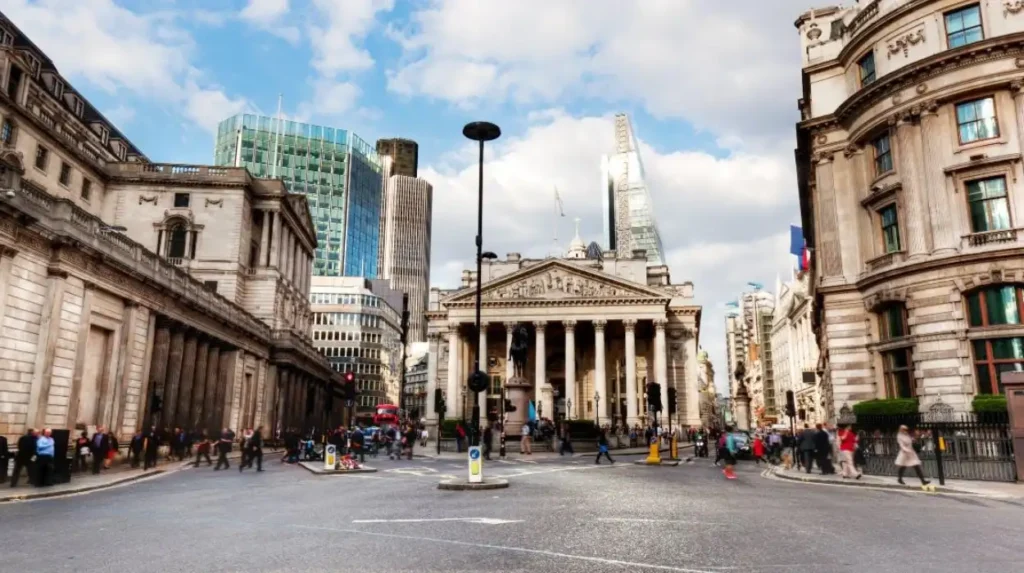
The City of London heritage walk offers the strongest introduction to London’s origins because it combines Roman archaeology, medieval churches, financial institutions, historic markets, and post-Great Fire reconstruction within a compact and easily walkable area.
A classic introduction begins near the remains of London’s Roman Wall before continuing towards medieval churches rebuilt after the Great Fire.
The route typically includes historic commercial streets, traditional markets, public squares, and important financial institutions that demonstrate London’s rise as an international trading centre.
Walking through the Square Mile illustrates how Roman military planning evolved into one of the world’s leading financial districts while preserving numerous historic landmarks.
Architectural contrasts become particularly clear as Gothic churches stand beside Victorian banking headquarters and contemporary skyscrapers.
Historic alleyways reveal the dense medieval street pattern that survived repeated rebuilding campaigns over several centuries.
To experience this historic district in person today, consult our comprehensive [The Origins of London’s Historic Streets and Their Fascinating Stories Through Time] for itineraries and visiting parameters.
How does a Westminster walking tour explain Britain’s political and royal history?
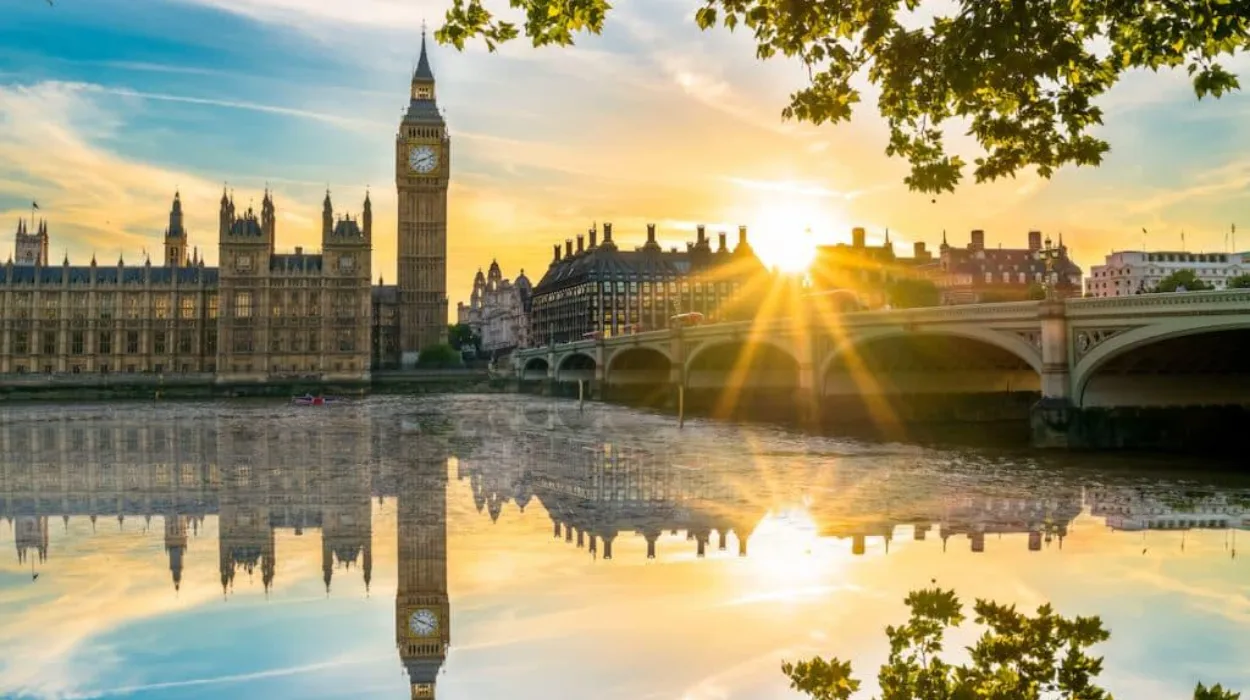
A Westminster walking tour explains Britain’s constitutional development by connecting royal residences, parliamentary institutions, ceremonial spaces, religious buildings, and national memorials that shaped British governance over nearly one thousand years.
Westminster developed separately from the medieval City before becoming England’s political centre during the Middle Ages.
The area demonstrates the close historical relationship between monarchy, religion, and government. Royal ceremonies, parliamentary traditions, judicial institutions, and national commemorations continue within the same district today.
Walking through Westminster illustrates how successive monarchs expanded royal influence while Parliament gradually increased constitutional authority.
Important public spaces commemorate military service, political leadership, scientific achievement, and national remembrance.
Visitors also observe how Victorian rebuilding after the nineteenth-century Palace of Westminster fire created one of Europe’s most recognisable parliamentary landscapes.
Government departments, historic churches, royal parks, and ceremonial avenues remain concentrated within walking distance, making Westminster particularly suitable for independent exploration.
Why is the South Bank one of London’s most rewarding cultural walks?
The South Bank combines industrial heritage, theatre history, riverside engineering, public art, museums, and modern cultural institutions. Walking beside the River Thames demonstrates how London’s waterfront evolved from commercial infrastructure into an internationally recognised cultural destination.
For centuries, the southern riverbank developed differently from the commercial City.
Industries including shipbuilding, brewing, warehousing, entertainment, and manufacturing dominated the waterfront. The nineteenth century introduced improved embankments, bridges, and transport links.
Twentieth-century redevelopment transformed former industrial sites into cultural venues, performance spaces, museums, and public parks.
Today, visitors encounter historic bridges, restored warehouses, theatres, galleries, and riverside promenades connected through continuous pedestrian pathways.
The route also offers exceptional views across the Thames towards London’s historic skyline, allowing visitors to compare architectural styles spanning several centuries.
The South Bank demonstrates how adaptive reuse preserves historic structures while accommodating contemporary cultural activities.
What can visitors learn from walking through London’s oldest neighbourhoods?
London’s oldest neighbourhoods preserve evidence of changing settlement patterns, religious communities, commercial activity, immigration, and architectural development. Walking these districts reveals how local identities formed through centuries of continuous urban occupation and economic change.
Neighbourhoods including the City, Covent Garden, Clerkenwell, Southwark, Spitalfields, and Whitechapel each represent distinct phases of London’s expansion.
Clerkenwell reflects medieval monastic influence before becoming an important centre for printing, watchmaking, and engineering.
Southwark developed as a major commercial suburb outside the medieval city walls, supporting markets, theatres, inns, and river trade.
Spitalfields illustrates successive immigration waves, including Huguenot silk weavers, Jewish communities, and later Bangladeshi residents, each contributing to London’s cultural diversity.
Covent Garden demonstrates how aristocratic urban planning evolved into one of London’s best-known commercial and entertainment districts.
Walking between these neighbourhoods highlights London’s remarkable continuity despite centuries of political, economic, and demographic change.
How do London’s parks enhance historical walking routes?
London’s historic parks preserve former royal hunting grounds, landscaped estates, ceremonial avenues, monuments, and memorials. They provide environmental context while demonstrating changing attitudes towards public recreation, conservation, and urban planning across several centuries.
Many central parks originated as private royal estates before gradually opening for public recreation.
Landscape architects introduced formal gardens, lakes, tree-lined avenues, and ornamental features during the eighteenth and nineteenth centuries.
Public monuments commemorate military victories, scientific achievements, royal jubilees, and national leaders.
The parks also preserve ecological diversity within a densely developed capital. Mature trees, protected habitats, and historic landscapes coexist alongside recreational facilities.
Walking routes that incorporate these green spaces provide opportunities to understand London’s environmental history alongside its political and architectural development.
The parks also connect numerous museums, memorials, and ceremonial routes through pleasant pedestrian corridors.

Why are bridges essential parts of London’s walking experience?
London’s bridges demonstrate centuries of engineering innovation while linking historic districts across the River Thames. Each crossing offers unique perspectives on urban growth, commercial development, transport infrastructure, and architectural change throughout London’s long history.
The Thames has always defined London’s geography and commercial success.
Early crossings concentrated trade, administration, and settlement on both riverbanks. As London’s population expanded, additional bridges improved connectivity between rapidly growing districts.
Victorian engineering introduced stronger iron and steel structures capable of supporting increasing traffic.
Modern pedestrian access allows visitors to appreciate both engineering design and panoramic city views unavailable from street level.
Each bridge provides visual connections between historic landmarks, illustrating how successive generations expanded London’s infrastructure while preserving river navigation.
Walking across multiple bridges during a single tour also helps visitors understand London’s scale and geographic organisation.
How has heritage preservation shaped today’s walking routes?
Heritage preservation protects London’s historic buildings, archaeological remains, conservation areas, and public spaces. These protections allow visitors to experience authentic historic environments while ensuring significant landmarks remain accessible for future generations.
Following extensive wartime damage and post-war redevelopment, conservation policies expanded significantly during the second half of the twentieth century.
Thousands of listed buildings now receive legal protection according to their architectural or historical significance.
Conservation areas safeguard entire historic streets rather than individual structures, preserving neighbourhood character and traditional street layouts.
Archaeological excavations continue to reveal new evidence from Roman and medieval London, improving public understanding through museum exhibitions and interpretation panels.
Historic churches, civic buildings, markets, and public monuments undergo regular conservation programmes funded through public authorities, charitable organisations, and heritage partnerships.
These preservation efforts enable self-guided visitors to encounter authentic historic settings rather than reconstructed replicas.
What practical approach creates the most rewarding self-guided walking tour?
Successful self-guided walking combines historical preparation, manageable distances, regular museum visits, scheduled rest periods, and flexible timing. This approach encourages deeper learning while allowing visitors to appreciate London’s architectural and cultural diversity without unnecessary time pressure.
Planning begins by selecting one geographical area rather than attempting to cover the entire city during a single day.
Historic districts contain enough significant landmarks to occupy several hours without extensive travel.
Museum visits enrich walking routes by providing archaeological discoveries, historical artefacts, maps, manuscripts, paintings, and educational interpretation that explain nearby streets and buildings.
Comfortable footwear remains essential because many historic routes include uneven paving, narrow lanes, and extended pedestrian sections.
Visitors also benefit from carrying printed or digital maps that identify conservation areas, public transport connections, and heritage sites.
Allowing time for observation encourages appreciation of architectural details, memorial inscriptions, public sculpture, and surviving medieval street patterns frequently overlooked during faster sightseeing.
How do London’s self-guided walking tours help visitors understand the city’s long history?
London’s self-guided walking tours transform individual landmarks into a connected historical narrative. They reveal how Roman settlement, medieval commerce, royal government, industrial expansion, immigration, conservation, and modern regeneration collectively shaped one of the world’s most historically significant capitals.
Few cities preserve such a continuous historical record within an active modern metropolis.
Walking between historic districts demonstrates how each era contributed to London’s development without completely replacing earlier layers of history.
Roman roads influenced medieval commerce. Medieval markets supported Tudor prosperity. Georgian planning reflected imperial expansion. Victorian engineering enabled industrial growth. Twentieth-century conservation preserved these achievements for future generations.
This chronological continuity explains why London attracts millions of cultural tourists annually while serving as an important centre for historical research, education, archaeology, and heritage conservation.
For first-time visitors, self-guided walking offers more than sightseeing. It creates an informed understanding of how political institutions, religious traditions, commerce, architecture, and communities evolved together over nearly two thousand years.
Every preserved street, public square, church, bridge, market, and riverside pathway contributes evidence to London’s remarkable historical story. By following carefully planned walking routes, visitors experience not isolated attractions but an interconnected urban landscape where history remains visible at street level. This enduring combination of accessibility, authenticity, and historical depth makes London one of the world’s finest destinations for self-guided heritage walking.
Are self-guided walking tours a good way to explore London?
Yes. Self-guided walking tours let you explore London at your own pace while discovering historic landmarks, museums, parks, and neighbourhoods without being tied to a group schedule.