
Key Points
- Widespread Disruptions: More than 800 flights traveling through London’s primary aviation hubs, Heathrow and Gatwick, have faced severe delays of up to 11 hours, alongside dozens of outright cancellations.
- Climatic Pivot: The severe travel disruption follows a record-breaking summer heatwave, which peaked on Friday with a historic high temperature of 37.3°C in Suffolk before giving way to volatile overnight thunderstorms.
- Airspace Restrictions: National Air Traffic Services (NATS) and Eurocontrol instituted temporary safety restrictions across south-east England and north-western Europe due to highly unstable air, severe turbulence, and active lightning storms.
- Airlines Responding: Major carriers, including British Airways and EasyJet, have issued public apologies and adjusted scheduling parameters, while advising passengers to verify travel statuses before proceeding to terminals.
- Compensation Disparity: Stranded passengers have reported severe operational gridlocks at local and European gateways, amid escalating frustration over a lack of direct carrier communication and explicit exclusions regarding weather-related financial compensation.
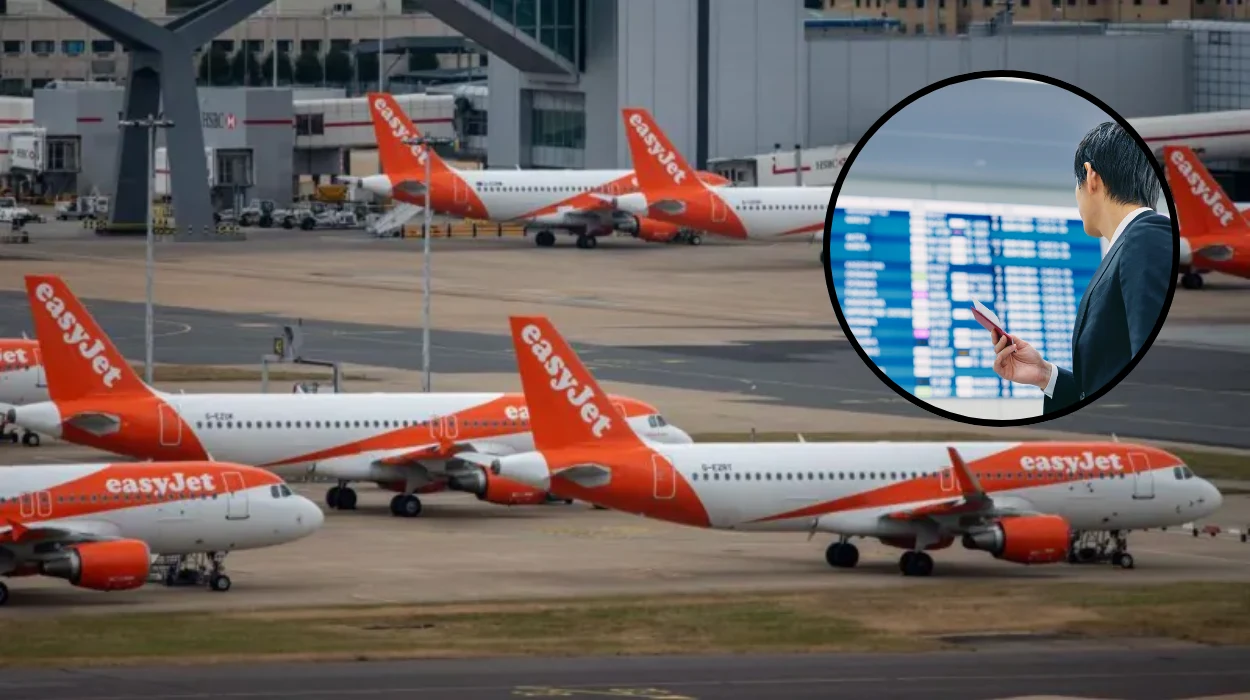
London (Extra London News) June 27, 2026 – A volatile shift in summer weather patterns across south-east England has triggered severe operational gridlocks at the UK’s premier aviation gateways, with hundreds of departures and arrivals facing lengthy suspensions. Severe convective activity, tracking directly through critical flight paths connecting the United Kingdom to north-western Europe, forced aviation authorities to implement emergency air traffic constraints. The sudden meteorological deterioration has disrupted seasonal travel plans for tens of thousands of passengers, converting peak-season itineraries into multi-hour terminal delays.
- Key Points
- What Caused the Sudden Gridlock at London’s Major Airports?
- How Widespread Are the Flight Delays and Cancellations?
- What Are Air Traffic Control Authorities Saying About the Disruptions?
- How Have Major Airlines and Gateways Responded to the Storms?
- What Are Grounded Passengers Experiencing During the Gridlock?
- Are Other UK Airports Affected by the Convective Weather?
The structural impact on schedules intensified as cumulative cancellations forced air traffic controllers to implement defensive spacing parameters for remaining flights. Data aggregated by international tracking portals indicated that the severe delays, which reached up to 11 hours for certain long-haul itineraries, were expected to persist throughout the afternoon and late evening. While regional networks remained functional, the concentrated density of the storm cells over the English Channel created an operational bottleneck that quickly overwhelmed standard recovery schedules at both Heathrow and Gatwick airports.
What Caused the Sudden Gridlock at London’s Major Airports?
The sudden paralysis across London’s primary runways stems directly from an atmospheric breakdown following an intense, record-breaking summer heatwave. As documented by official meteorological logs, the regional climate had registered unprecedented thermal peaks on Friday, including a historic high of 37.3°C monitored in Suffolk. The subsequent introduction of a cooler, highly unstable air mass over the warming terrain triggered volatile thunderstorm systems overnight, generating sustained lightning strikes and intense localized rainfall.
Aviation safety protocols dictate strict operational boundaries when handling active convective clouds. Because aircraft are unable to traverse active storm cells safely due to structural hazards and severe internal turbulence, incoming and outgoing flights were forced to execute complex detour vectors. These diversions rapidly consumed lateral airspace capacity, creating a compounding backlog that systematically disrupted tightly packed morning and afternoon arrival slots across the metropolitan region.
How Widespread Are the Flight Delays and Cancellations?
Statistical documentation compiled by aviation tracking analytics provider FlightAware revealed a symmetric impact across both primary transport hubs on Saturday. According to live tracking logs, more than 400 flights arriving at or departing from Heathrow Airport had been systematically delayed, supplemented by at least 68 outright cancellations. Concurrently, Gatwick Airport encountered an equivalent operational burden, registering more than 400 separate flight delays along with 31 formal cancellations before the afternoon period.
The scope of the disruption is explicitly reflected on the physical arrival and departure arrays inside the airport concourses. At Heathrow, the live operations display highlighted severe logistical shifts, notably including a British Airways long-haul flight arriving from Santiago, Chile. The intercontinental service, which had been originally scheduled to touch down at 10:00 BST, saw its expected arrival window deferred by 11 hours to 21:00 BST.
Explore More London Local News
Sadiq Khan Hailed ULEZ Air Pollution Falls in London 2026
Why Camden Council Must Crack Down on A-Board Clutter, Camden 2026
What Are Air Traffic Control Authorities Saying About the Disruptions?
National Air Traffic Services (NATS), the principal body overseeing civil aviation movements within United Kingdom airspace, issued an official assessment warning that the operational drag would remain active for the remainder of the calendar day. In an official bulletin published on Saturday morning, NATS representatives stated that “weather disruption was expected to continue through the rest of the day” following the manifestation of “forecasted severe weather across the south east of England.”
On an international scale, the European pan-continental aviation regulatory agency, Eurocontrol, mapped the active congestion zones across the continent. Their diagnostic arrays identified the most critical air traffic control constraints concentrated in the upper airspace directly separating south-east England from north-western Europe. Eurocontrol analysts observed a “broad area of hot, unstable air” stretching from northern Spain to southern Sweden, noting that further storm-cloud development remained highly probable overnight. The agency explicitly emphasized that there remained “a large degree of uncertainty” regarding the precise geographical coordinates and times where the subsequent storm cells would mature.
How Have Major Airlines and Gateways Responded to the Storms?
In response to the growing operational backlogs, individual airport operators and commercial carriers deployed distinct corporate updates. As reported by the BBC News aviation desk, an official spokesperson for Gatwick Airport confirmed that specialized air traffic control interventions had to be instituted to preserve safe minimum separations between active airframes. The Gatwick operational team stated that:
“Due to ongoing thunderstorms across the network last night, temporary air traffic restrictions were put in place, which resulted in some flights being delayed and cancelled this morning. Passengers should contact their airline for further information.”
Simultaneously, Heathrow Airport management focused its corporate communications on mitigating terminal crowding, advising all ticketed travelers to proactively verify the operational status of their flights with their respective carriers prior to leaving for the airport.
Carrier corporations also issued public positions addressing their respective logistical strategies. In an official communication obtained by journalists, a corporate spokesperson for British Airways outlined the external variables dictating their current scheduling adjustments:
“Like other airlines, we’ve had to make some adjustments to our schedule today due to air traffic control restrictions caused by adverse weather conditions affecting parts of UK airspace.”
The legacy carrier expressed regret for the mounting customer inconvenience and asserted that its back-office teams were moving quickly to recalibrate journeys, concluding that the absolute majority of its wider global customer network would remain unaffected by the local weather front.
Concurrently, budget operator EasyJet released an independent statement outlining the preventative steps taken to prevent terminal gridlocks. An official spokesperson for EasyJet explained that because the regional thunderstorms significantly restricted the net volume of permissible arrivals and departures, the airline had been required to “pre-emptively cancel some flights to and from Gatwick in advance.” The corporate representative further detailed their passenger mitigation strategy:
“We are doing all possible to minimise the impact of the weather disruption for our customers and are notifying passengers in advance with their options to rebook or receive a refund as well as hotel accommodation and meals where required.”
What Are Grounded Passengers Experiencing During the Gridlock?
Disrupted travelers have increasingly utilized social media platforms to document significant communication failures and prolonged periods of confinement inside grounded aircraft. Individual passenger testimonials paint a vivid picture of the human cost associated with the systemic transport standstill. As recorded by BBC News reporters, one mother detailed her daughter’s experience after being confined on an immobilized EasyJet aircraft on a Gatwick tarmac for a continuous four-hour period, a delay that ultimately culminated in the complete cancellation of the flight.
The logistical issues also extended to European departure points servicing inbound UK routes. In an interview conducted by a BBC News correspondent, Adam Joseph, a 29-year-old traveler, described being stranded inside Venice Airport in Italy under increasingly difficult physical conditions. Joseph explained that his return flight to Gatwick had encountered an indefinite four-hour delay because the assigned inbound aircraft had been unable to depart its London terminal.
Reflecting on the breakdown in carrier communication, Joseph remarked:
“We could’ve stayed at the hotel for another three to four hours. We are also being told that even in the event of a four-hour-plus delay, because of an air traffic control restriction we will not be entitled to compensation. People are very angry… we have had no communication from [BA] whatsoever.”
Are Other UK Airports Affected by the Convective Weather?
Despite the acute disruption reported across the metropolitan London area, the broader domestic transport infrastructure has retained its structural integrity. Mapping documentation supplied by Eurocontrol verified that Heathrow and Gatwick remain uniquely impacted by the dense weather front.
Other major international entry points across England, Scotland, and Northern Ireland continue to report routine processing metrics. According to verified flight path data, aircraft tracking along maritime corridors outside the immediate south-eastern storm trajectory are landing and departing within standard operational tolerances.
The Met Office has maintained an amber warning for extreme heat through Sunday morning for localized zones within eastern and south-east England. However, because the primary convective storm cells remain physically concentrated to the immediate south of the UK over the English Channel, the surrounding regional airfields are expected to avoid the systemic delays currently impacting the capital’s primary runways.