Key Points
- Dramatic Decline in Deaths: A new independent study shows that premature deaths linked to air pollution in London fell by approximately 40% over a five-year period following the introduction of the Ultra Low Emission Zone (ULEZ).
- Current Mortality Burden: Despite the progress, air pollution remains a critical public health crisis, contributing to between 3,800 and 5,100 premature deaths across the capital in 2024.
- Historical Baseline: In 2019, researchers estimated that between 6,390 and 8,040 annual deaths were attributable to poor air quality, illustrating the scale of the subsequent decline.
- Political Consensus and Caveats: London Mayor Sir Sadiq Khan hailed the data as “unarguable” proof of the scheme’s success, a sentiment echoed by the Green Party’s Caroline Russell, who simultaneously warned that more must be done to curb traffic miles.
- Outer London Disparities: The research highlights that the highest rates of pollution-attributable deaths per 100,000 residents are heavily concentrated in outer London boroughs, specifically Bexley, Havering, and Sutton.
- Conservative Opposition: Critics, including Conservative Assembly Member Thomas Turrell, disputed the findings, accusing the Mayor of cherry-picking data and arguing that the reduction is a natural trend of vehicle upgrades rather than a direct result of political intervention.
London (Extra London News) June 27, 2026 – A major independent analysis has revealed that premature deaths caused by toxic air pollution in London have plummeted by roughly 40% in the five years since the introduction of the Ultra Low Emission Zone (ULEZ). The findings, compiled by environmental and public health experts at Imperial College London, indicate that while the controversial clean-air initiative has dramatically curbed mortality rates, poor air quality remains a lethal threat, claiming thousands of lives annually. The publication of the data has reignited a fierce political debate across the capital regarding the necessity, scope, and true economic and social impact of the ULEZ expansion.
- Key Points
- How Much Has Air Pollution Changed Since the Introduction of ULEZ?
- What Did Sadiq Khan Say About the New ULEZ Pollution Data?
- Why Are Outer London Boroughs Facing the Highest Mortality Rates?
- How Have Political Opponents Criticised the ULEZ Report?
- What Further Steps Do Environmental Campaigners Want London to Take?
According to the comprehensive report published on Wednesday, the total number of annual premature deaths linked to long-term exposure to fine particulate matter ($PM_{2.5}$) and nitrogen dioxide ($NO_2$) dropped significantly when contrasted with historical baselines. In 2019, researchers calculated that the capital’s toxic air accounted for an estimated 6,390 to 8,040 premature fatalities. By 2024, that mortality burden had shrunk to between 3,800 and 5,100 deaths. This notable shift underscores a substantial improvement in urban air quality, even as municipal leaders acknowledge that pollution levels continue to present a formidable, deep-seated public health challenge for millions of Londoners.
How Much Has Air Pollution Changed Since the Introduction of ULEZ?
The core findings of the Imperial College London study center on the steep trajectory of declining air pollution levels and their direct correlation to human life expectancy. The data isolates two primary pollutants that have long plagued the capital: nitrogen dioxide ($NO_2$), which is heavily emitted by older diesel and petrol engines, and fine particulate matter ($PM_{2.5}$), which can penetrate deep into the human respiratory system and enter the bloodstream.
As reported by Local Democracy Reporter Kumail Jaffer, researchers discovered that the systematic reduction of these specific gases across London’s 32 boroughs directly triggered the drop in the annual mortality burden. The timeline of this reduction aligns with the phased implementation of the ULEZ, which initially launched in central London in April 2019 before expanding to the North and South Circular roads in 2021, and ultimately encompassing the entirety of Greater London in August 2023.
The publication of this mortality data follows closely on the heels of complementary medical research. As noted by Kumail Jaffer of the Local Democracy Reporting Service (LDRS), independent experts from Imperial College London recently established a direct statistical link between the implementation of the ULEZ scheme and a measurable reduction in respiratory and cardiovascular hospital admissions across the city. This dual validation from both mortality and hospitalization data suggests that the changes in London’s atmosphere are yielding tangible, clinical benefits.
What Did Sadiq Khan Say About the New ULEZ Pollution Data?
The political response to the independent analysis was immediate, with the Mayor of London framing the data as an absolute vindication of his administration’s environmental strategy. The expansion of the ULEZ to outer London boroughs had previously met with intense resistance, legal challenges, and public protests, making the publication of these figures a pivotal moment for the mayoral office.
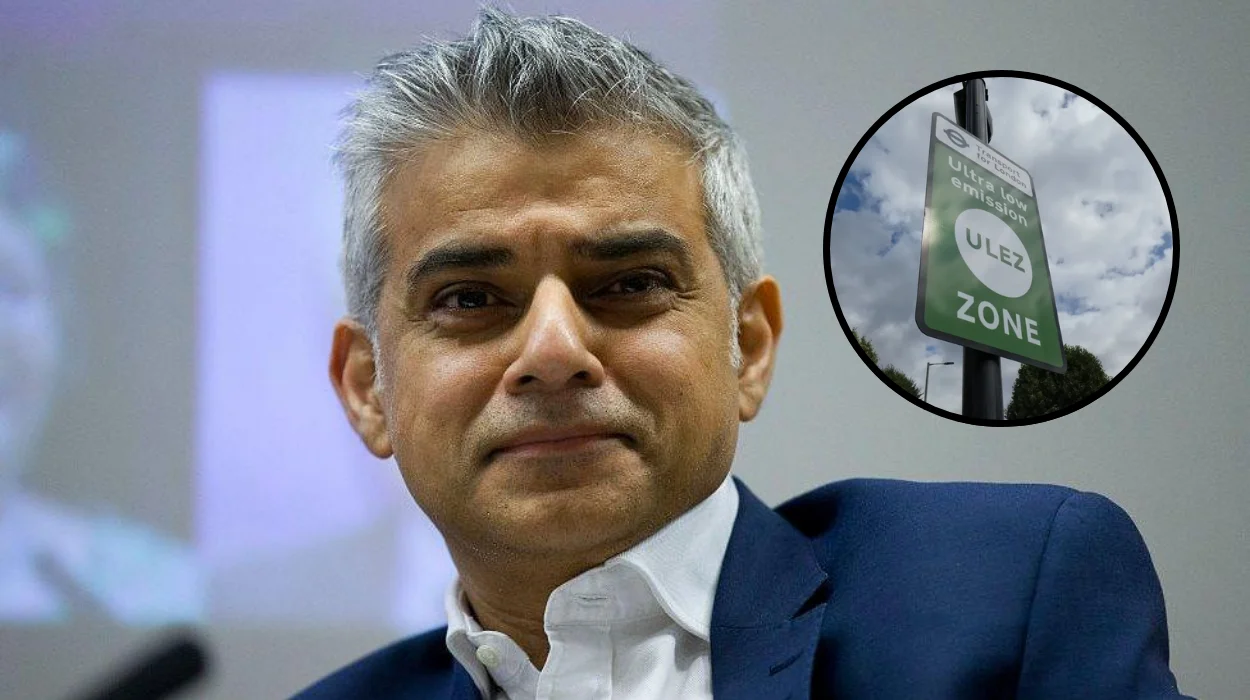
As reported by Kumail Jaffer of the LDRS, the Mayor of London, Sir Sadiq Khan, hailed the results as “overwhelming and unarguable” evidence that the ULEZ, alongside accompanying clean air policies, has successfully achieved its core objectives. Emphasizing the real-world impact of the statistics, Sir Sadiq Khan stated:
“The bold action we have taken in London has reduced pollution, improved public health and saved lives. From dementia to childhood asthma, we know what a wide range of illnesses are linked to air pollution. This latest data shows why expanding Ulez London-wide was even more important than we previously thought and is transforming lives right across our capital.”
The Mayor openly acknowledged the severe political friction that accompanied the rollout of the zone, particularly into the suburbs where public transport options are less dense than in the urban core. As detailed in the LDRS report, Sir Sadiq Khan added:
“The decision to expand the Ulez was not an easy decision, but it’s now proven beyond doubt that it was crucial to protect the health and lives of Londoners. However, I’m not complacent. Despite our incredible progress, there is still more to do.”
Explore More London Local News
Why Camden Council Must Crack Down on A-Board Clutter, Camden 2026
Sadiq Khan Sued by Hackney Over Slashed Housing Targets: London 2026
Why Are Outer London Boroughs Facing the Highest Mortality Rates?
One of the most striking revelations within the Imperial College London study is the geographical disparity in air pollution impacts. The data indicates that the public health burden is no longer concentrated primarily in the heavily congested, commercial heart of central London, but has shifted significantly toward the suburban fringes.
According to the analysis mapped out by the independent research team, the specific London boroughs recorded as having the highest number of deaths attributable to air pollution per 100,000 residents in 2024 were predominantly located in outer London. The three worst-affected areas identified in the report were:
- Bexley
- Havering
- Sutton
This geographical distribution highlights a complex socio-demographic challenge. While inner London residents have benefited from rapid transitions to active travel, extensive cycling infrastructure, and dense public transport networks, outer London boroughs feature longer driving distances, a higher reliance on private vehicles, and historically slower rates of infrastructure upgrading. The data implies that while the London-wide expansion was politically contentious, the outer boroughs were arguably the areas in most critical need of intervention to protect vulnerable populations from prolonged exposure.
How Have Political Opponents Criticised the ULEZ Report?
The narrative of unconditional success presented by City Hall faces stiff resistance from conservative politicians and anti-ULEZ campaigners, who argue that the data is being manipulated to justify an aggressive tax on motorists. Critics maintain that the reduction in air pollution is part of a broader, macroeconomic shift toward cleaner technology that would have occurred regardless of municipal zoning laws.
As reported by Kumail Jaffer of the LDRS, Conservative Assembly Member Thomas Turrell, who represents the outer London constituency of Bexley and Bromley, fiercely disputed the Mayor’s conclusions. Thomas Turrell countered the administration’s claims by stating:
“Sadiq Khan is once again cherry picking what science he supports. Many studies never see the light of day once they contradict mayoral objectives. The truth is that air pollution was coming down naturally as Londoners upgraded to cleaner cars, not because of any government intervention.”
To substantiate his argument, the Conservative Assembly Member pointed toward the internal operational metrics of the city’s transport authority. As documented by Kumail Jaffer, Thomas Turrell asserted:
“If you look at TfL’s [Transport for London] own data on NO2 emissions, you can’t even plot the point when Ulez was expanded because of how little an impact it has had compared to the natural trend. Once again, it’s just Sadiq Khan taking credit for the work of Londoners.”
This faction of the London Assembly contends that natural vehicle fleet turnover—driven by manufacturer compliance with European emission standards and individual consumers choosing hybrid or electric models—is the genuine driver of the 40% decline in premature deaths, rather than the financial penalties imposed by the daily £12.50 ULEZ charge.
What Further Steps Do Environmental Campaigners Want London to Take?
While the political right views the ULEZ as an overreach, environmental advocates and left-leaning assembly members view the policy as merely a foundational baseline. For these groups, the revelation that up to 5,100 Londoners still died prematurely from air pollution in 2024 is proof that current measures do not go far enough.
As reported by Kumail Jaffer of the LDRS, Green Party Assembly Member Caroline Russell expressed alignment with the Mayor regarding the positive initial outcomes of the scheme, but strongly emphasized that ULEZ was “not the end of the story”. Speaking directly to the Local Democracy Reporting Service, Caroline Russell stated:
“Just as we knew it would, the London-wide Ulez has delivered cleaner air across the capital, saving lives and improving the health of millions of Londoners. Its success is a testament to the many campaigners who pushed for the mayor to act so that Londoners can trust the air they breathe.”
However, Russell quickly pivoted to the lingering public health risks exposed by the Imperial College London study. As recorded by the LDRS, Caroline Russell cautioned:
“But this is not the end of the story. Too many Londoners are still breathing air that damages their lungs and increases the risk of serious disease. That is why we must go further, by rejecting the expansion of Heathrow, tackling dangerous pollutants such as ozone and most importantly by further reducing miles driven in London by investing in clean, safe and sustainable ways to travel around our city.”
The Green Party’s position introduces a secondary legislative front for City Hall. It underscores that to eliminate the remaining thousands of premature deaths, future policies must target non-exhaust emissions—such as tyre and brake wear particles, which are generated by electric and combustion vehicles alike—alongside structural transport reductions across Greater London.