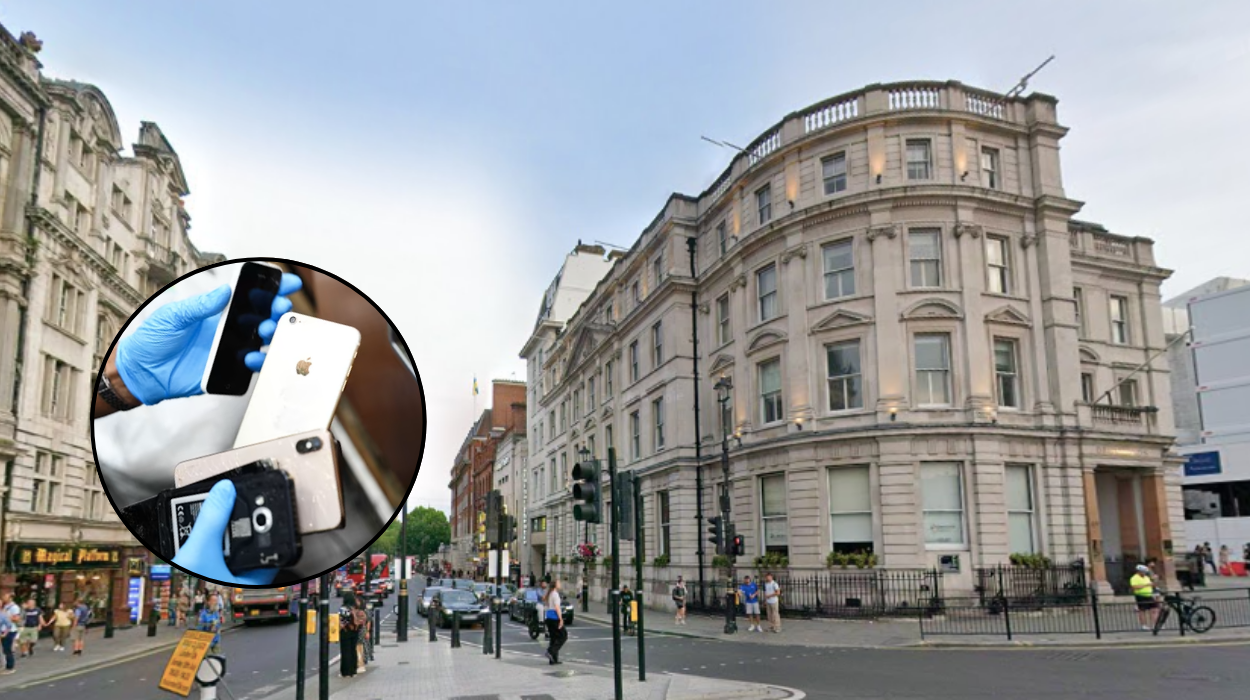
Key Points
- Significant Reduction in Crime: Smartphone theft across London has dropped by 18% over a twelve-month period, resulting in 14,000 fewer incidents.
- Unprecedented Corporate Partnership: The Metropolitan Police Service and tech giant Apple established a data-sharing partnership to directly target the economic infrastructure of stolen hardware.
- Loopholes Closed: The joint operation successfully identified and neutralised illicit third-party software that previously enabled thieves to factory reset stolen devices for international resale.
- Hyper-Local Impact: Westminster, the most heavily targeted borough in the capital, saw phone theft figures plunge by 45.8% due to targeted policing and software updates.
- Tactical Enforcement Increases: Alongside digital interventions, London police deployed drones to combat mobile snatching gangs on e-bikes and authorised physical vehicle interventions against suspects on motorcycles.
London (Extra London News) June 11, 2026 – An unprecedented intelligence-sharing alliance between the Metropolitan Police Service and Apple Inc. has triggered an 18 per cent drop in smartphone thefts across the capital over the past year. By systematically targeting the digital loopholes that allowed stolen handsets to be wiped and resold on foreign black markets, the collaboration has stripped high-value devices of their criminal utility. Data released by law enforcement agencies reveals that between June 2025 and May 2026, London recorded 14,000 fewer phone thefts compared to the previous twelve months, marking a major turning point in the city’s fight against street-level robbery.
- How Has the Apple and Met Police Partnership Reduced Phone Theft?
- What Security Loopholes Did Apple and the Police Close?
- Why Does Failing to Reactivate a Stolen iPhone Prevent Street Crime?
- Which Areas of London Have Seen the Biggest Drop in Mobile Theft?
- What Tactical Methods Are the Met Police Using to Stop Thieves?
How Has the Apple and Met Police Partnership Reduced Phone Theft?
The core of the strategy relies on a real-time data exchange designed to map the global illicit supply chain of stolen telecommunications hardware. According to senior investigative reporters covering the Home Office beat, the Metropolitan Police Service has been feeding operational field data directly to Apple’s software engineering teams in Cupertino. This loop gives the technology company direct oversight regarding how their security ecosystems perform under real-world criminal duress.
By establishing this data-sharing network, officers have built a comprehensive international map tracking the life cycle of a stolen handset from the moment it is snatched on a London street. This includes tracking whether the devices are being turned on, broken down for replacement components, or reconnected to domestic or international mobile networks following an offense.
As noted by technology correspondents tracking the development, this corporate-public alliance marks the first time a major smartphone manufacturer has integrated local police intelligence directly into its software development life cycle to combat street crime.
What Security Loopholes Did Apple and the Police Close?
For years, organized criminal networks relied on a severe vulnerability within the smartphone secondary market: specialized, illicit third-party software applications capable of bypassing Apple’s native security features. These exploit packages allowed software fences to completely bypass standard device authentication, forcing factory resets on stolen iPhones. Once wiped clean, the devices appeared entirely legitimate to automated checking systems, allowing them to be boxed and sold on foreign markets as near-new stock.
Using ground-level data gathered from raids and electronic forensics by the Met Police, Apple engineers successfully isolated the digital signatures of these bypass applications. The tech giant subsequently issued targeted system overrides that blocked the software from communicating with activation servers.
As reported by senior crime editors, Metropolitan Police Commissioner Sir Mark Rowley confirmed that Apple’s engineering departments now believe they have decisively solved this long-standing security vulnerability. Data compiled over recent weeks shows that the vast majority of iPhones stolen across Greater London can no longer be factory reset by criminal vendors.
Explore More London Police News:
Two Charged in Central London Rival Protest Arrests: London 2026
Rival Rallies Spark Massive Police Operation: London 2026
Why Does Failing to Reactivate a Stolen iPhone Prevent Street Crime?
The economic rationale behind the drop in offenses relies entirely on market devaluation. Historically, street snatches were driven by high liquidity; a pristine, reset iPhone could command hundreds of pounds on secondary markets. By eliminating the ability to reset the hardware, the handset remains permanently tied to its original owner’s account via hardware-level protections.
In an official briefing detailed by police affairs correspondents, Metropolitan Police Commissioner Sir Mark Rowley emphasized the economic mechanics of the reduction, stating that “if stolen phones cannot be reactivated, their value collapses, and so does the incentive to steal them.”
Without the ability to clear the device for resale, criminals are left with hardware that can only be sold for basic spare parts, drastically lowering the financial yield of the crime while leaving the perpetrator exposed to severe criminal charges. Law enforcement analysts suggest this shift has fundamentally broken the risk-to-reward ratio for opportunistic street thieves.
Which Areas of London Have Seen the Biggest Drop in Mobile Theft?
While the 18 per cent decline represents a city-wide average, the operational impact has been most acute within London’s commercial and tourist heartland. The effects of the initiative have been felt most clearly in Westminster, the capital’s central borough, where mobile phone snatches historically constituted the overwhelming majority of opportunistic street offenses.
According to crime statistics analysed by local government reporters, mobile devices regularly account for between 69 and 72 per cent of all personal thefts recorded within Westminster on a weekly basis. Because the borough acts as a high-density hub for commuters and international tourists, it became the primary testing ground for the joint security initiative.
Through the combination of Apple’s software lockdowns and heightened police patrols, the rate of phone theft in Westminster plummeted by 45.8 per cent over the last year, outperforming the city-wide average by more than double.
What Tactical Methods Are the Met Police Using to Stop Thieves?
The digital interventions have been matched by aggressive, highly visible physical tactics on the streets of London. Recognizing that modern phone thieves rely heavily on speed and mobility—frequently utilizing modified electric bicycles and mopeds to ambush pedestrians—the Metropolitan Police Service has modified its active pursuit policies.
As documented by emergency services correspondents, police units are now actively deploying specialized drone fleets to monitor and track gangs utilizing high-speed e-bikes through pedestrianized zones. Furthermore, tactical drivers within the Met’s traffic divisions have been instructed to utilize vehicle intercept maneuvers—including authorized tactical contact where police vehicles intentionally nudge suspects off moving motorcycles—to bring high-speed pursuits to an end. This combined approach of hardware devaluation and uncompromising physical enforcement has heavily disrupted street-level criminal operations across the capital.