Key Points
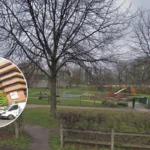
- Repeated Early-Morning Disruptions: Residents of Elder Street, an historic cul-de-sac in Spitalfields, East London, have been systematically woken up around 04:00 BST by autonomous test vehicles getting trapped in their dead-end street.
- Distinctive Safety Siren Nuisance: The autonomous vehicles, manufactured by Alphabet-owned US technology company Waymo, emit a piercing, automated safety siren combined with a rhythmic reversing alarm whilst backing out of the narrow street.
- Conservation Area Architecture Amplifies Sound: Because Elder Street is situated inside a strictly protected conservation zone, municipal regulations prevent properties from installing modern double-glazed windows, leaving residents uniquely exposed to low-frequency vehicular noise.
- Failure of System Corrections: Despite initial exposés by local broadcasters and formal assurances from the tech firm that the specific street layout had been geofenced and blocked on its navigation systems, at least one test vehicle has continued to repeatedly enter the cul-de-sac.
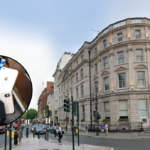
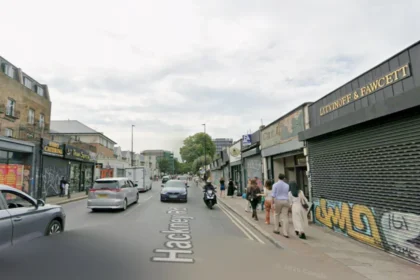
- Broader Operational Blind Spots: The recurring navigational breakdown on Elder Street coincides with wider public scrutiny across London, following separate testing incidents where Waymo vehicles breached active police crime scenes in Harlesden and entered complex dead-ends in Shoreditch.
- Regulatory Timeline Pressure: The testing friction comes as Waymo aggressively ramps up its comprehensive 3D mapping and safety validation trials across 15 London boroughs ahead of a projected public launch timeline in the United Kingdom.
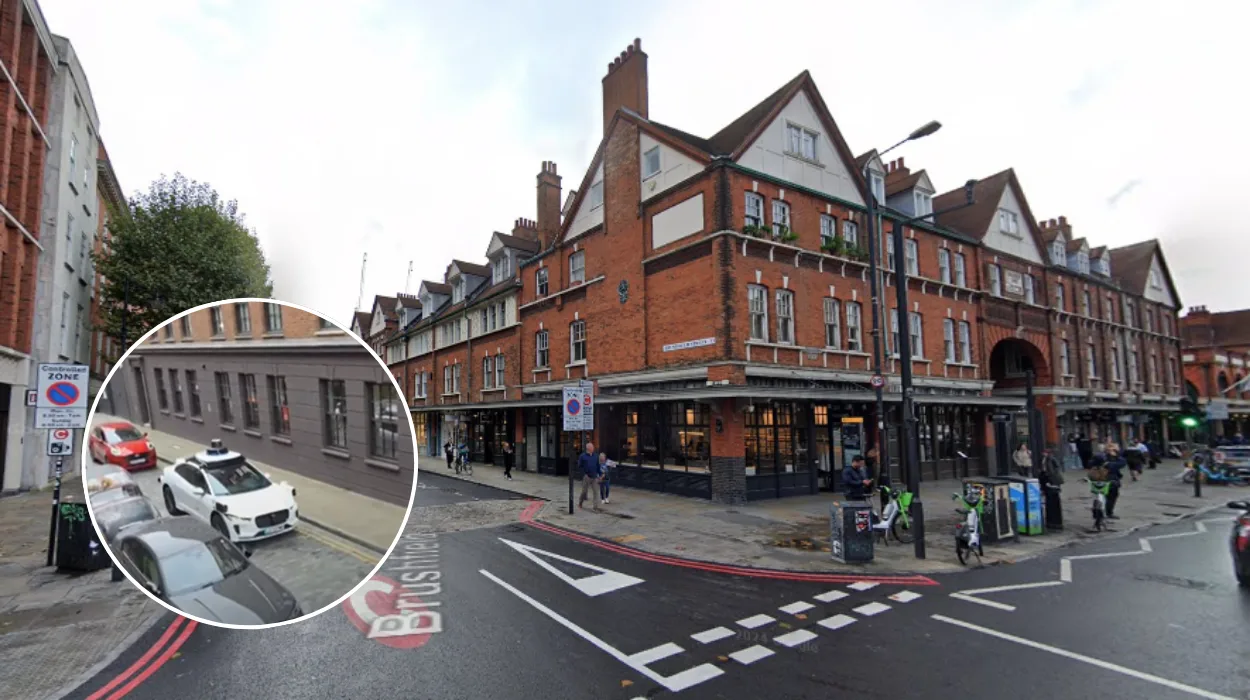
London (Extra London News) June 11, 2026 – A fleet of high-tech self-driving vehicles operating under the commercial brand name Waymo has plunged a historic East London community into a localized battle over noise pollution and artificial intelligence mapping errors. Residents living on Elder Street, a quiet cul-de-sac in the Spitalfields area, report being systematically woken in the early hours of the morning by an automated, piercing safety siren. The vehicles, which are modified Jaguar I-Pace SUVs belonging to the American autonomous driving giant, have repeatedly become trapped at a permanent metal traffic barrier at the end of the narrow street, forcing them to perform lengthy reversing maneuvers while broadcasting a loud, industrial acoustic alert into nearby bedrooms.
- Key Points
- Why Is A Leading US Tech Firm Causing Middle-Of-The-Night Disruptions In Spitalfields?
- What Exactly Do Residents Hear During These Early-Hour Navigation Failures?
- How Did A Waymo Safety Driver Explaining A Routing Error Spark Local Frustration?
- What Promises Did The Autonomous Vehicle Giant Make To Resolve The Issue?
- Why Has At Least One Test Car Continued To Get Stuck Despite The Corporate Geofence?
- Are Similar Navigational Anomalies Occurring In Other Parts Of London?
- How Does Waymo Counter Safety Concerns Raised By Local Incidents?
- What Are The Multi-Billion Dollar Stakes Driving This Intensely Competitive Tech Race?
The persistent navigational failures have sparked growing local resentment and highlighted unexpected regulatory vulnerabilities as the technology firm accelerates its mapping operations across the capital. Despite direct interventions from local media outlets and formal corporate apologies promising that the road would be blacklisted from the vehicles’ global positioning routes, residents allege that the intrusions have continued unabated throughout the spring. The situation has intensified the public debate surrounding the readiness of autonomous vehicle systems to accurately interpret the labyrinthine, non-grid layouts characteristic of London’s oldest municipal quarters.
Why Is A Leading US Tech Firm Causing Middle-Of-The-Night Disruptions In Spitalfields?
The underlying cause of the localized friction stems from an ongoing, intensive urban mapping and validation campaign being executed by Waymo, the autonomous driving subsidiary of Google’s parent company, Alphabet. The company deployed its specialized fleet of white, sensor-laden Jaguar SUVs to British soil to meticulously map out London’s complex street architecture, pedestrian patterns, and traffic flow layouts. This data harvesting is a critical prerequisite designed to prepare the company’s autonomous navigation software for a projected commercial launch of driverless minicabs in the United Kingdom, capitalising on new national transport frameworks.
However, the automated systems have hit a persistent digital hurdle at Elder Street. Local layout features indicate that the road is a strict cul-de-sac, closed off to through-traffic by a robust metal barrier designed to preserve the quiet nature of the neighborhood. While human motorists seamlessly identify the “no-through road” signage or recognize the physical obstruction from the street entrance, Waymo’s onboard routing algorithms have repeatedly directed test vehicles directly down the cobbled corridor. Because the historic street is far too narrow to permit an automated three-point turn, the vehicles have no choice but to engage reverse gear and back up the entirety of the road, triggering an unyielding, high-decibel acoustic warning mechanism designed to alert vulnerable road users.
What Exactly Do Residents Hear During These Early-Hour Navigation Failures?
The chief source of local exasperation is the specific acoustic profile of the vehicle’s external safety system, which residents describe as far more invasive than a standard commercial backup bleeper or an ordinary automotive horn. As reported by Chris Lloyd, a 56-year-old resident who has lived on Elder Street for 16 years, the neighborhood has been subjected to a highly disruptive sound profile in the dead of night. Writing for the BBC London network, reporter Tom Edwards documented Lloyd’s direct experiences with the autonomous fleet since the initial onset of the disturbances at the beginning of May.
“I knew it was Waymo instantly from that hideous siren and reversing noise,” Lloyd stated to the public broadcaster.
The resident explained that the vehicles typically arrive at approximately 04:00 BST, a time when ambient urban noise is at its lowest, meaning the piercing mixture of an automated siren and an intermittent reversing alarm reverberates heavily off the historic brick facades.
Further compounding the neighborhood’s vulnerability is its official designation as a municipal conservation area. Because of strict architectural preservation laws implemented to protect the Georgian and Victorian structural integrity of Spitalfields, home owners are legally prohibited from upgrading their properties with modern, sound-insulating double-glazing. As a result, the historic single-paned windows offer virtually no resistance to the low-frequency acoustic alerts generated by the reversing robotaxis, channeling the noise directly into residential bedrooms and waking up families and young children.
How Did A Waymo Safety Driver Explaining A Routing Error Spark Local Frustration?
Under current British transport legislation governing autonomous vehicular testing, all self-driving fleets must maintain a qualified human “autonomous specialist” or safety driver behind the wheel to monitor the vehicle’s diagnostics and assume manual control if an emergency situation materializes. This legal requirement led to a highly publicized, direct confrontation between an aggrieved local resident and a Waymo employee, exposing a perceived disconnect between corporate safety mandates and real-world testing ethics.
As detailed by journalist Nikhil Pandey of NDTV News, local resident Jenny Black directly approached one of the idling white Jaguar vehicles after it became physically blocked by the Elder Street barrier. When Black questioned the safety driver as to why he had actively permitted the vehicle to ignore multiple clear “no-through road” signs posted at the mouth of the street, the employee’s response highlighted the rigid protocols dictating the testing phase.
According to the NDTV report, Black recounted that the safety driver stated he was strictly required to let the vehicle drive itself autonomously without human intervention, specifically so he could log and correct the software when it committed a critical navigational error. When Black pointed out that the vehicle had already demonstrably failed the test by entering a highly visible dead-end for the third time in a single week, the operator reportedly deflected the criticism, stating simply that it was his “first day” on the job. This exchange fueled local sentiment that residents were effectively being utilized as involuntary test subjects for unrefined artificial intelligence systems.
Explore more Politics News:
SNP Urges Rachel Reeves to Lower Fuel Tax: London 2026
James Murray Appointed Health Secretary After Wes Streeting Resigns: Westminster 2026
What Promises Did The Autonomous Vehicle Giant Make To Resolve The Issue?
The mounting public backlash and subsequent media coverage forced Waymo’s corporate communications apparatus to issue a sequence of formal public statements and technical explanations. Following the initial wave of complaints exposed by investigative journalists, the tech firm acknowledged the disruption and promised immediate computational corrections to its local routing matrix.
As published across international syndicates, an official spokesperson for Waymo issued a clear corporate apology to the residents of Spitalfields:
“As we prepare for fully autonomous operations in London, we want to validate our technology on roads across the city. However, we’ve now limited vehicles’ ability to drive on this street in response to feedback.”
The tech firm expanded on this position in a subsequent statement provided directly to BBC London, reiterating that its engineering teams had actively modified their central mapping software to block off the specific coordinates of Elder Street. The geofencing adjustment was intended to create a permanent digital barrier within Waymo’s operational system, preventing any future test vehicle from calculating a route that utilized the cul-de-sac.
Why Has At Least One Test Car Continued To Get Stuck Despite The Corporate Geofence?
Despite the absolute nature of Waymo’s public assurances and technical explanations, the reality on the ground in East London has failed to align with the company’s official corporate statements. Residents report that the digital geofence has proven leaky, with at least one autonomous vehicle continuing to slip through the system and enter the conservation area during the early hours of the morning.
According to updated filings and follow-up reporting by BBC London, local stakeholders confirmed that despite the high-profile corporate apologies, the underlying issue remains unresolved. Residents noted that while the overall frequency of the autonomous intrusions had briefly dipped following the initial media spotlight, the neighborhood was still being abruptly woken up by the unmistakable “hideous siren” of a Waymo vehicle struggling against the Spitalfields cul-de-sac layout.
Technology analysts suggest this recurring breakdown points to a deeper synchronization flaw within the company’s fleet-wide software distribution. While the main corporate servers may have flagged Elder Street as a restricted zone, individual test vehicles operating on localized or legacy software caches may still be relying on older mapping data during their 24/7 validation routines, overriding the central geofence commands.
Are Similar Navigational Anomalies Occurring In Other Parts Of London?
The operational friction documented on Elder Street does not appear to be an isolated geographic quirk, but rather part of a broader systemic challenge regarding how Waymo’s artificial intelligence handles the highly irregular layout of the British capital. As reported by automotive journalist Mathilda Bartholomew of the specialized industry publication Regit Cars, a string of recent high-profile incidents across multiple London boroughs has fueled an intense debate regarding the “common sense” capabilities of autonomous driving algorithms.
Bartholomew’s investigative dossier highlighted several separate testing failures that occurred concurrently with the Spitalfields noise disputes. These cumulative incidents have provided ammunition to automotive skeptics who argue that while Waymo’s robotics approach—which relies heavily on pre-rendered 3D maps paired with LiDAR and radar sensors—works exceptionally well in grid-based American cities like Phoenix or San Francisco, it struggles significantly when confronted with the organic, medieval layouts and highly volatile social environment of London.
How Does Waymo Counter Safety Concerns Raised By Local Incidents?
In the face of intensifying local criticism, Waymo has aggressively defended its technological track record by pointing to an overwhelming volume of empirical safety data harvested from millions of miles of public road testing across the globe. The company maintains that its automated system, colloquially dubbed “The Waymo Driver,” represents an undeniable net-positive for public safety when weighed against the catastrophic human cost of ordinary motorists.
According to official technical dossiers published via Waymo’s global research portal, the company’s autonomous framework delivers a profound statistical reduction in vehicular trauma:
“Our powerful suite of sensors—lidar, cameras, and radar—gives the Waymo Driver a precise, 360-degree view of its surroundings, day or night, rain or shine, up to 300 metres away. Our latest data indicates an 82% reduction in injury-causing crashes compared to a human driving the same distance in the cities where we operate.”
Furthermore, as noted in the Regit Cars analytical report, Waymo’s internal safety projections assert that its systems are involved in a staggering 12 times fewer injury-causing collisions involving pedestrians than traditional human drivers over a benchmarked 96 million miles of real-world operation. Waymo executives argue that minor navigational anomalies and localized noise complaints are part of an essential, temporary friction phase required to train an AI driver that never gets tired, never drives under the influence, and never experiences cognitive distraction.
What Are The Multi-Billion Dollar Stakes Driving This Intensely Competitive Tech Race?
The corporate determination to push through local resistance in places like Spitalfields becomes clear when viewed through the lens of the massive financial and strategic stakes under-pinning the global autonomous vehicle sector. London is widely considered the ultimate testing ground and the most lucrative European market for the future of urban mobility.
As reported by principal technology writer Katie Collins of CNET News during the international SXSW London conference, Waymo is locked in an intense, high-stakes race for market dominance against a powerful domestic rival. Wayve, a heavily backed British artificial intelligence startup that recently secured a landmark partnership with Uber, is simultaneously trialing its own autonomous fleet across the capital.
The two companies represent fundamentally opposing ideological approaches to machine learning:
- Waymo’s Structural Approach: Utilizes a classical robotics paradigm that mandates exhaustive, millimeter-accurate 3D mapping of a city before deployment, relying on an array of expensive hardware to safely guide the vehicle.
- Wayve’s End-to-End Neural Network Approach: Uses a lean, vision-based artificial intelligence system that effectively “learns to drive” dynamically through reinforcement learning, mimicking human visual processing without requiring rigid pre-mapped boundaries.
As Saswat Panigrahi, Waymo’s Chief Product Officer, stated publicly during a key address at SXSW London, the American firm is fully aware of the unique obstacles presented by the UK market.
“We’re treating London with the appropriate amount of humility and respect,” Panigrahi told the industry audience.
Yet, despite these assurances of corporate humility, the economic reality dictates a relentless operational tempo. With both Waymo and Wayve targeting comprehensive commercial rollouts in London by the end of the year, neither firm can afford to slow down their validation testing. For the residents of Elder Street, this means their historic, single-glazed homes remain on the front lines of a global technological transformation, where the immediate cost of innovation is measured in shattered night-time sleep.