London is home to the world’s first underground railway system. The London Underground transformed urban transport, reshaped city development, and established engineering principles that influenced metro systems across the globe. Its origins lie in the rapid growth of nineteenth-century London, when overcrowded streets and expanding suburbs created unprecedented transportation challenges.
- Why was the London Underground built?
- What was London like before the Underground existed?
- Who conceived the idea of the world’s first underground railway?
- How was the first Underground line constructed?
- When did the London Underground officially open?
- How did the Underground expand during the Victorian era?
- What engineering innovations made deeper Tube lines possible?
- How did the Underground change London society and urban development?
- What historic remnants of the original Underground still survive today?
- Why does the London Underground remain globally significant?
Why was the London Underground built?
The London Underground was built to solve severe traffic congestion in nineteenth-century London, connect major railway termini, improve urban mobility, and support economic growth. The system emerged as a response to population expansion, industrialisation, and increasing pressure on the city’s transport infrastructure.
By the middle of the nineteenth century, London had become the largest city in the world. The population grew from approximately 1 million residents in 1800 to more than 3 million by 1861. Industrialisation attracted workers, businesses, and investment into the capital, creating significant pressure on roads and public transport.
Most long-distance railway companies terminated their services at stations located around the edge of central London. Examples included Euston, Paddington, King’s Cross, and Liverpool Street. Passengers arriving at these stations needed alternative transport to complete journeys across the city. Horse-drawn omnibuses and carriages became overwhelmed by demand.
Congestion reached unprecedented levels. Streets were crowded with commercial traffic, pedestrians, carts, and public vehicles. Journey times increased and economic productivity suffered. Parliament, city authorities, and railway companies recognised the need for a new transport solution capable of moving large numbers of people efficiently.
The concept of an underground railway emerged as a practical answer. Engineers proposed constructing railway lines beneath London’s streets to connect major stations without disrupting existing urban development.
What was London like before the Underground existed?
Before the Underground, London relied on horse-drawn transport, walking, river traffic, and surface railways. Rapid population growth overwhelmed existing infrastructure, producing severe congestion, lengthy travel times, and significant challenges for commerce, governance, and daily urban life.
Transportation in early Victorian London depended largely on horse power. Thousands of horses pulled omnibuses, cabs, delivery wagons, and commercial carts through crowded streets every day.
The scale of congestion created public health concerns. Horses generated large quantities of waste, while narrow roads restricted traffic flow. Major commercial districts experienced frequent bottlenecks that affected business operations and public movement.
The River Thames continued to serve as an important transport corridor. However, river travel could not meet the demands of a rapidly expanding metropolis. Surface railways provided access from suburban areas but failed to offer direct cross-city connections.
Urban expansion accelerated transportation difficulties. New residential districts developed beyond the historic city centre, increasing commuting distances. Employers required workers to travel more efficiently between homes and workplaces.
Government reports, railway studies, and municipal discussions increasingly highlighted the need for innovative transport infrastructure capable of supporting London’s growth.
Who conceived the idea of the world’s first underground railway?
The concept was developed through collaboration between engineers, politicians, and railway promoters. Charles Pearson played the most influential role by advocating underground railways as a solution to congestion and social inequality within Victorian London.
One of the most important figures in Underground history was Charles Pearson. Serving as the City Solicitor of London, Pearson championed transportation reform throughout the 1840s and 1850s.
Pearson believed improved transport could benefit both commerce and society. He argued that efficient rail connections would enable workers to live farther from overcrowded central districts while maintaining access to employment opportunities.
His proposals attracted support from railway companies seeking improved connectivity between major termini. Parliament eventually authorised construction of an underground railway linking key stations.
Several engineers contributed technical expertise to the project. Among them was John Fowler, whose engineering leadership proved critical to successful construction.
The collaboration between political advocates, financial backers, and engineers transformed a visionary proposal into a practical infrastructure project.
How was the first Underground line constructed?
The first Underground line was built using the cut-and-cover method, which involved excavating trenches beneath streets, constructing railway tunnels, and then restoring the road surface above. This technique enabled large-scale urban railway construction using contemporary engineering capabilities.
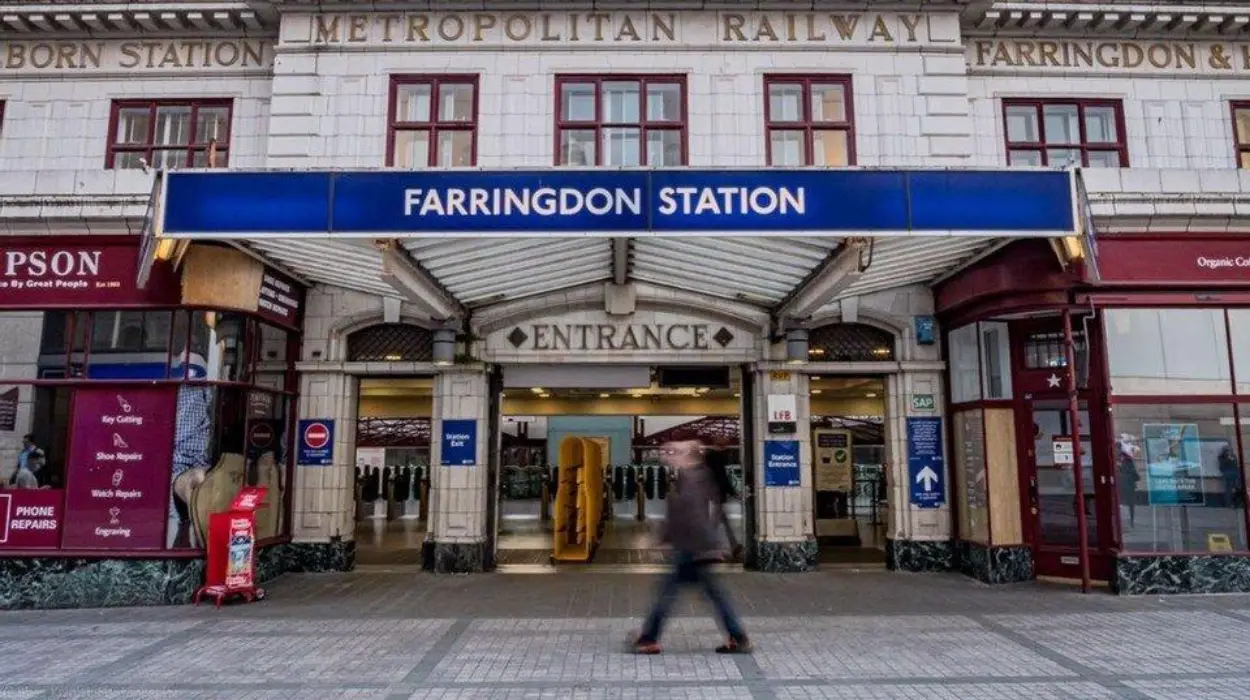
Construction began in 1860 on the Metropolitan Railway. The route connected Paddington with Farringdon, linking several important railway termini and commercial districts.
Engineers selected the cut-and-cover method because tunnel-boring technology remained limited. Workers excavated large trenches along existing roads, installed brick tunnel structures, laid railway tracks, and then rebuilt the streets above.
The process created considerable disruption. Roads were closed, utilities were relocated, and businesses experienced temporary inconvenience. Nevertheless, authorities considered these challenges necessary for long-term improvements.
Approximately three million cubic yards of earth were removed during construction. Thousands of labourers participated in excavation, masonry, track installation, and infrastructure development.
Brick became the primary construction material. Victorian engineering standards emphasised durability, resulting in structures that remain visible in parts of the Underground network today.
The project represented one of the most ambitious urban engineering undertakings of its era.
When did the London Underground officially open?
The London Underground officially opened on 10 January 1863 when the Metropolitan Railway began passenger operations between Paddington and Farringdon. The opening marked the birth of underground urban rail transport and established a model later adopted worldwide.
The inaugural route extended approximately six kilometres and included seven stations. Passenger demand exceeded expectations from the first day of operation.
Around 30,000 passengers used the railway on its opening day. During the first year, more than 9 million passenger journeys were recorded. These figures demonstrated strong public demand for efficient urban transport.
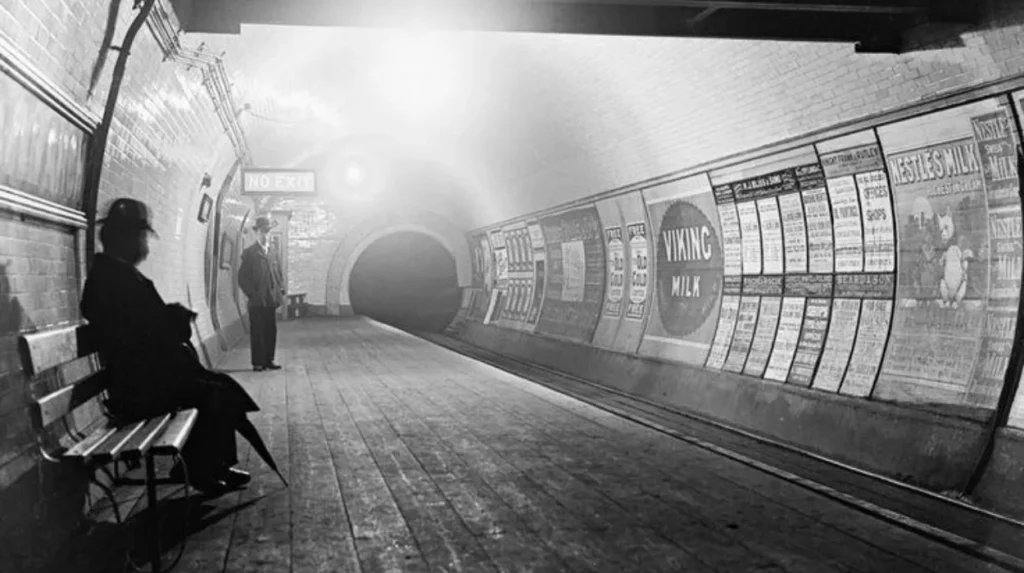
Steam locomotives powered the earliest services. Special ventilation openings and tunnel design features attempted to manage smoke accumulation underground.
Although passengers frequently complained about steam, heat, and air quality, the railway still represented a major improvement over congested surface transport.
The success of the Metropolitan Railway encouraged further expansion throughout London.
How did the Underground expand during the Victorian era?
The Underground expanded rapidly during the Victorian era as new lines connected residential districts, commercial centres, and railway stations. Success encouraged investment, technological innovation, and the development of an increasingly integrated metropolitan transport network.
The success of the Metropolitan Railway inspired competing and complementary projects. Additional underground railways appeared throughout the latter half of the nineteenth century.
Important developments included the creation of the District Railway, which eventually formed part of the Circle route around central London. Expanded rail connections improved access between key commercial and residential districts.
Several significant milestones shaped Victorian expansion:
The Metropolitan Railway extended north-westward into developing suburbs.
The District Railway expanded westward and southward across London.
New interchange stations improved passenger connectivity.
Additional tunnels increased network coverage.
Suburban development accelerated alongside railway expansion. Areas previously considered distant became accessible to commuters. This phenomenon reshaped London’s geography and residential patterns.
The Underground became both a transportation system and a catalyst for urban growth.
What engineering innovations made deeper Tube lines possible?
Advances in tunnelling technology, electric traction, and shield excavation enabled the construction of deeper Tube lines beneath London. These innovations transformed underground transport by improving efficiency, safety, capacity, and passenger comfort.
The earliest Underground routes relied on cut-and-cover construction. However, this method became impractical in densely developed districts.
A major breakthrough came through the use of tunnelling shields developed from earlier engineering concepts pioneered by Marc Isambard Brunel and later refined by other engineers.
Deep-level tunnels were excavated using circular tunnel shields that supported surrounding ground during construction. This approach minimised surface disruption.
Electric traction represented another transformative innovation. Steam locomotives produced smoke and ventilation challenges. Electrification eliminated these problems while improving operational efficiency.
The opening of the City and South London Railway in 1890 demonstrated the viability of deep-level electric railways. It became the world’s first successful deep-level electric underground railway.
These innovations established the foundations of the modern Tube system.
How did the Underground change London society and urban development?
The Underground transformed London by enabling suburban expansion, increasing labour mobility, supporting economic growth, and reshaping residential patterns. Its influence extended beyond transport, fundamentally altering the city’s social and geographical structure.
Before rapid Underground expansion, many workers lived near employment centres due to transportation limitations.
Improved rail access allowed residents to relocate farther from congested inner-city districts. New suburban communities emerged along railway corridors.
Examples included expanding residential districts around Metropolitan Railway routes. These developments contributed to the creation of what became known as “Metro-land,” a term associated with suburban growth encouraged by railway connectivity.
Economic benefits were substantial. Businesses gained access to larger labour markets. Commercial districts attracted more customers. Property values increased near stations.
The Underground also improved social mobility by providing affordable transport options for broader sections of society.
Over time, the network became an essential component of London’s economic and social infrastructure.
To experience this historic transport network in person today, consult our comprehensive How to Navigate the London Underground: A Complete Visitor Guide for itineraries and visiting parameters.
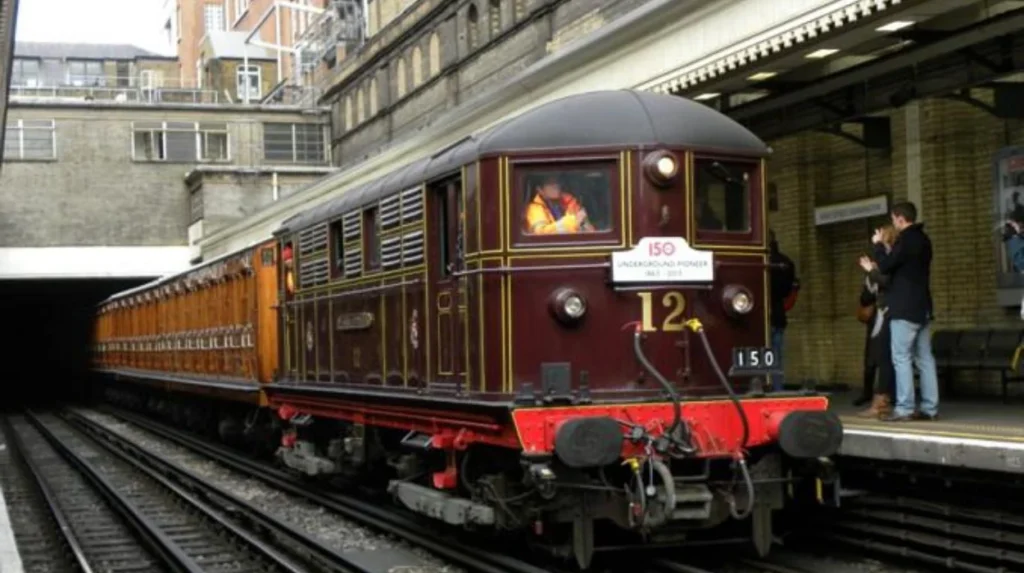
What historic remnants of the original Underground still survive today?
Many original Underground structures survive, including Victorian stations, brick tunnels, historic infrastructure, and preserved railway architecture. These remnants provide valuable evidence of nineteenth-century engineering and London’s transport heritage.
Several elements of the original Metropolitan Railway remain operational or visible within the modern network.
Historic station buildings survive at various locations. Victorian brickwork, tunnel sections, bridges, and architectural details continue to illustrate early construction techniques.
The London Transport Museum preserves artefacts, engineering drawings, vehicles, and archival records documenting the network’s development.
Former stations also provide insight into changing transport needs. Some disused stations remain preserved beneath modern streets, offering rare examples of historic Underground infrastructure.
Preservation efforts ensure future generations can study the engineering achievements that created the world’s first underground railway.
Archaeological investigations occasionally reveal previously hidden infrastructure associated with nineteenth-century construction projects. These discoveries contribute valuable evidence to ongoing historical research.
Why does the London Underground remain globally significant?
The London Underground remains globally significant because it pioneered urban underground transport, influenced metro development worldwide, and continues to demonstrate the long-term value of innovative infrastructure investment in growing cities.
The Metropolitan Railway established a precedent for urban transportation systems worldwide.
Cities across Europe, North America, Asia, and Australia studied London’s example when planning their own underground rail networks. Lessons learned from Victorian construction informed future engineering practices.
The Underground influenced transportation development in cities such as Paris, New York City, Moscow, and Tokyo. Each developed extensive metro systems inspired in part by London’s pioneering achievements.
Today, the London Underground serves millions of passengers each week and remains one of the world’s most recognisable transport networks.
Its historical significance extends beyond engineering. The system demonstrates how infrastructure investment can address urban challenges, support economic development, and influence city planning for generations.
More than 160 years after its opening in 1863, the London Underground continues to function as both a practical transportation network and a globally important historical landmark. Its origins illustrate the intersection of engineering innovation, political leadership, and urban necessity. As the world’s first underground railway, it established principles that transformed transportation history and continue to shape modern cities across the world.
When did the London Underground first open?
The London Underground officially opened on 10 January 1863 with the launch of the Metropolitan Railway between Paddington and Farringdon. It became the world’s first underground passenger railway.