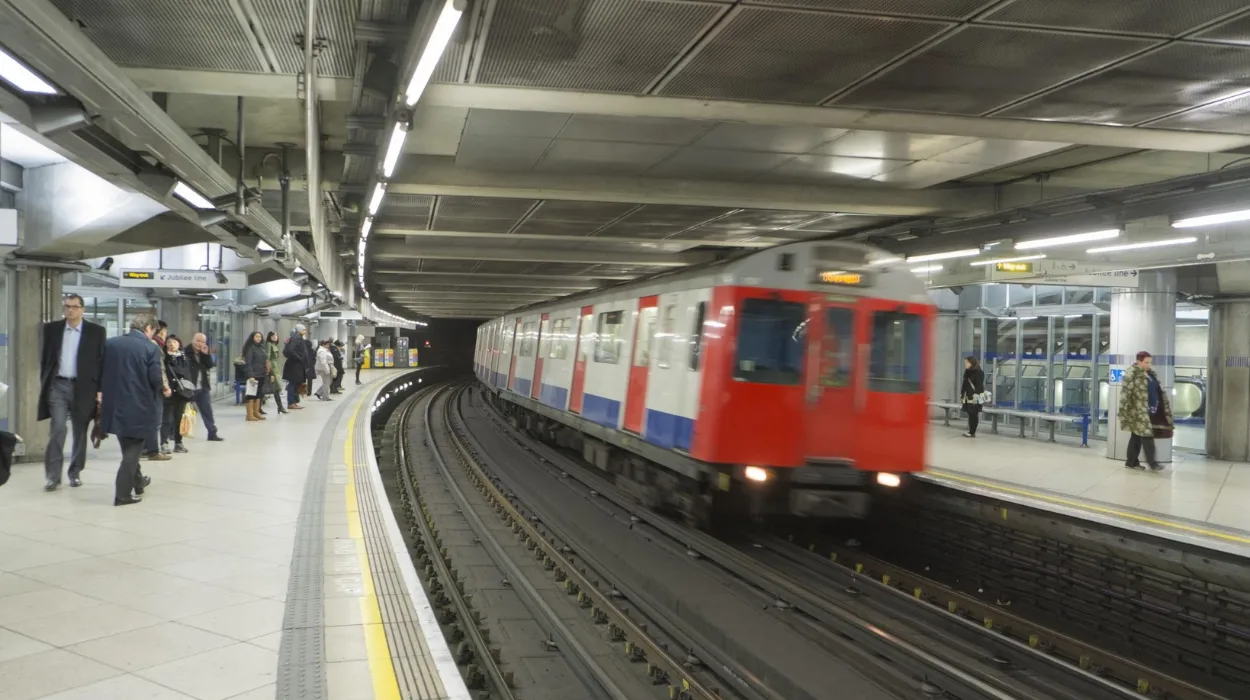
The London Underground is the world’s oldest underground railway system and one of the most extensive urban transport networks. Commonly known as the Tube, it serves millions of passengers annually and connects central London with outer boroughs, airports, business districts, cultural landmarks, and residential communities. Understanding how the system works enables visitors to travel efficiently while also appreciating an important piece of London’s transport history.
- What is the London Underground and why is it important?
- How does the London Underground network work?
- Which London Underground lines should visitors know?
- How can visitors pay for travel on the Tube?
- How do you plan a Tube journey efficiently?
- What should first-time visitors expect inside Tube stations?
- What are the most useful Tube etiquette and safety rules?
- How can visitors use the Underground to reach major London attractions?
- How has the London Underground evolved over time?
- Why does understanding the Tube improve a visit to London?
What is the London Underground and why is it important?
The London Underground is a rapid transit railway network serving Greater London. Opened in 1863, it became the world’s first underground railway system and remains a vital transport infrastructure connecting major districts, historic landmarks, airports, businesses, and residential communities across the capital.
The London Underground operates under Transport for London (TfL), the public body responsible for most transportation services in London. The network consists of multiple lines identified by distinct colours and names. Together, these lines form a transportation system that extends across hundreds of kilometres of track.
The system began on 10 January 1863 with the opening of the Metropolitan Railway between Paddington and Farringdon. This milestone marked a significant development in urban transportation during the Industrial Revolution. Steam-powered trains initially operated through underground tunnels before electrification transformed the network during the late nineteenth and early twentieth centuries.
Today, the Underground includes 11 major lines. Examples include the Central Line, the Northern Line, and the Piccadilly Line. More than 270 stations serve passengers throughout Greater London. The network handles well over one billion passenger journeys annually, making it one of the world’s busiest metro systems.
The Tube plays a significant role in London’s economy, tourism sector, and daily life. Visitors use it to access museums, government institutions, theatres, universities, and historic districts. Residents depend upon it for commuting, education, healthcare access, and leisure activities.
Understanding the Underground helps travellers move efficiently while gaining insight into an infrastructure system that has influenced metro development across the world.
How does the London Underground network work?
The London Underground operates through interconnected railway lines, fare zones, stations, and transfer points. Passengers travel between destinations using a colour-coded route map, electronic ticketing systems, and strategically located interchange stations that allow seamless movement across the city.
The network is organised into numbered fare zones. Zone 1 covers central London and contains many major attractions, business districts, and government institutions. Additional zones extend outward toward suburban areas and regional transport connections.
Each line appears in a distinct colour on the official Tube map. Examples include the red Central Line, dark blue Piccadilly Line, and yellow Circle Line. This visual organisation allows passengers to identify routes quickly.
Stations fall into different categories. Some stations serve a single line. Others function as major interchanges connecting several routes. Examples include King’s Cross St Pancras, Oxford Circus, and Victoria.
Passengers enter stations through ticket gates. Contactless bank cards, mobile payment devices, Oyster cards, and selected travel passes provide access. Fare calculations occur automatically based on journey distance and travel zones.
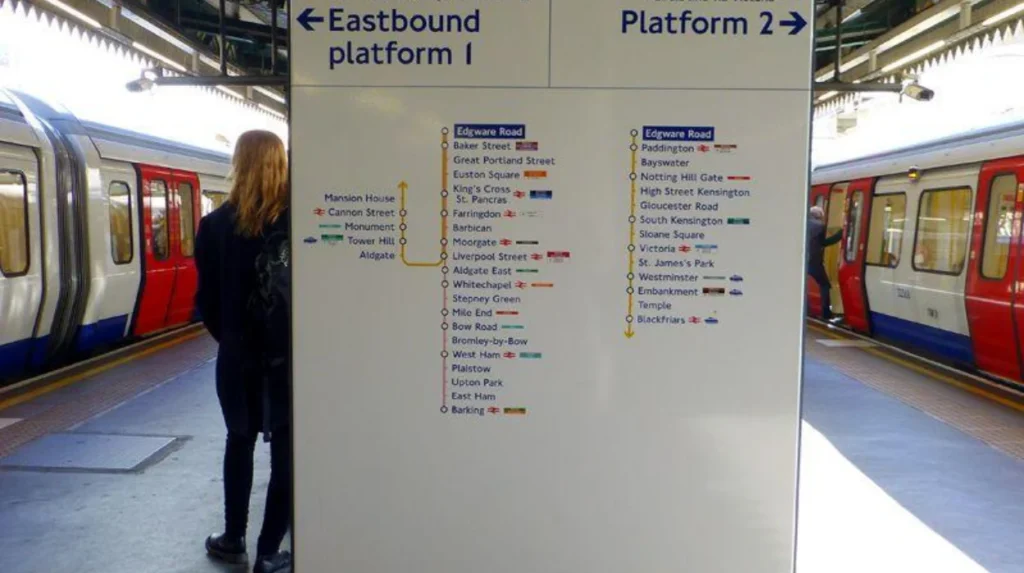
Electronic displays provide real-time train information. Platform signage identifies destinations and directions. Most lines operate with high-frequency services, reducing waiting times throughout the day.
The famous Tube map, originally designed by transport draftsman Harry Beck in 1931, revolutionised public transport cartography. Instead of emphasising geographical accuracy, Beck prioritised clarity and ease of navigation. His design influenced transit maps worldwide.
Which London Underground lines should visitors know?
Visitors benefit from understanding the major Underground lines serving airports, tourist attractions, railway stations, museums, and entertainment districts. Familiarity with key routes simplifies travel planning and reduces confusion when navigating central London and surrounding areas.
The Piccadilly Line provides one of the most important routes for international visitors because it connects central London with Heathrow Airport. It also serves notable destinations including South Kensington and Covent Garden.
The Central Line runs east-west across London and connects locations such as Oxford Circus, Liverpool Street, and Stratford.
The Northern Line serves major destinations including London Bridge, Camden Town, and King’s Cross St Pancras. Its multiple branches require careful attention to destination displays.
The Jubilee Line connects Westminster, London Bridge, Canary Wharf, and Stratford. It plays a major role in linking central London with financial and regeneration districts.
The District and Circle Lines provide access to historic areas including Westminster, South Kensington, and Tower Hill.
The Victoria Line offers rapid north-south travel and connects major railway terminals. Examples include Victoria Station, King’s Cross St Pancras, and Euston.
The Elizabeth Line, although technically separate from the Underground network, integrates with Tube services and provides fast travel across London. It has significantly improved connections between Heathrow Airport, central London, and eastern districts.
Understanding these major routes enables visitors to reach most attractions without difficulty.
How can visitors pay for travel on the Tube?
Visitors can pay for Tube journeys using contactless bank cards, mobile payment systems, Oyster cards, and selected travel passes. Contactless payment is often the simplest option because fares are automatically calculated and daily spending caps are applied.
Transport for London introduced modern fare technology to simplify travel. Most international visitors can use contactless credit cards, debit cards, smartphones, or smartwatches directly at station gates.
An Oyster card is a reusable smart travel card that stores credit electronically. Passengers tap in and tap out during each journey. The system automatically calculates the correct fare.
Daily fare caps ensure passengers do not pay above a specified limit for eligible journeys within certain zones. This feature often provides savings compared with purchasing multiple single tickets.
Travelcards remain available for visitors planning extensive travel over fixed periods. Examples include one-day and seven-day travel passes.
Paper tickets are available but generally cost more than contactless or Oyster fares. Most experienced travellers therefore choose electronic payment methods.
Visitors should always use the same payment method throughout a journey. Entering with one card and exiting with another can result in incomplete fare calculations.
Fare enforcement officers conduct regular inspections across the network. Valid payment remains mandatory for all journeys.
How do you plan a Tube journey efficiently?
Efficient Tube travel requires understanding route maps, interchange stations, service updates, and destination directions. Planning journeys before departure reduces travel time, minimises unnecessary transfers, and helps visitors avoid congestion during busy operating periods.
Journey planning begins with identifying the nearest station to both the starting point and destination. The official Tube map provides a clear overview of available routes.
Direction of travel is important because platforms are usually identified by final destinations rather than compass directions. Passengers should confirm the train’s destination before boarding.
Interchange stations allow transfers between lines. Examples include Green Park, Bank, and King’s Cross St Pancras. These locations connect multiple routes and significantly increase travel flexibility.
Digital journey planners provide real-time information regarding delays, engineering works, and alternative routes. Transport for London continuously updates operational information throughout the day.
Peak travel periods typically occur during weekday commuting hours. Examples include approximately 07:00–09:30 and 16:30–19:00. Travelling outside these periods often results in a more comfortable experience.
Visitors carrying luggage should allow additional time at larger interchange stations. Some interchanges involve lengthy walking distances between platforms.
Careful planning reduces confusion and improves overall travel efficiency.
What should first-time visitors expect inside Tube stations?
First-time visitors should expect ticket gates, escalators, directional signs, electronic displays, platform announcements, and clearly marked exits. Most stations provide comprehensive wayfinding systems that guide passengers from entry points to trains and onward destinations.
Station layouts vary according to age, location, and passenger volume. Some historic stations retain architectural features dating to the early twentieth century, while modern stations incorporate contemporary design standards.
Escalators are common in deep-level stations. London etiquette requires passengers standing still to remain on the right side, allowing others to walk on the left.
Electronic displays provide train arrival times and service information. Public announcements communicate operational updates and safety instructions.
Colour-coded signage helps passengers identify lines and platforms. Exit signs frequently include nearby landmarks, streets, and district names.
Many stations contain retail facilities. Examples include convenience stores, coffee outlets, and newsagents. Larger stations often provide additional services such as cash machines and customer assistance desks.
Accessibility improvements have expanded step-free access across parts of the network. However, not all stations provide complete accessibility features due to historic infrastructure constraints.
Visitors should follow directional signs carefully, especially at complex interchange stations.
What are the most useful Tube etiquette and safety rules?
Tube etiquette emphasises efficiency, courtesy, and safety. Passengers should allow others to exit before boarding, stand on the right side of escalators, keep belongings secure, and follow station staff instructions throughout their journey.
The London Underground serves enormous passenger volumes daily. Efficient passenger movement depends upon established behavioural conventions.
Allowing passengers to leave trains before boarding improves flow and reduces delays. Standing directly in front of train doors obstructs movement and creates congestion.
Escalator etiquette remains one of London’s most recognised transport customs. Standing passengers stay on the right, while those walking proceed on the left.
Priority seating exists for passengers with disabilities, older travellers, pregnant individuals, and those with less visible mobility needs.
Passengers should keep luggage and personal belongings under control at all times. Security awareness remains an important component of transport operations.
Eating and drinking are generally discouraged in crowded areas. Maintaining awareness of announcements and signage contributes to safe travel.
Photography is permitted in many public areas, although restrictions can apply in operational zones or during specific circumstances.
Respecting these guidelines helps maintain efficient network operation and improves the experience for everyone.
How can visitors use the Underground to reach major London attractions?
The Underground provides direct access to many of London’s most important attractions, museums, historic landmarks, theatres, and cultural districts. Strategic station locations allow visitors to explore the capital efficiently while reducing reliance on road transport.
Westminster Station provides access to the Palace of Westminster, Big Ben, and Westminster Abbey. These landmarks represent significant elements of British political and religious history.
South Kensington Station serves several major museums. Examples include the Natural History Museum, the Science Museum, and the Victoria and Albert Museum.
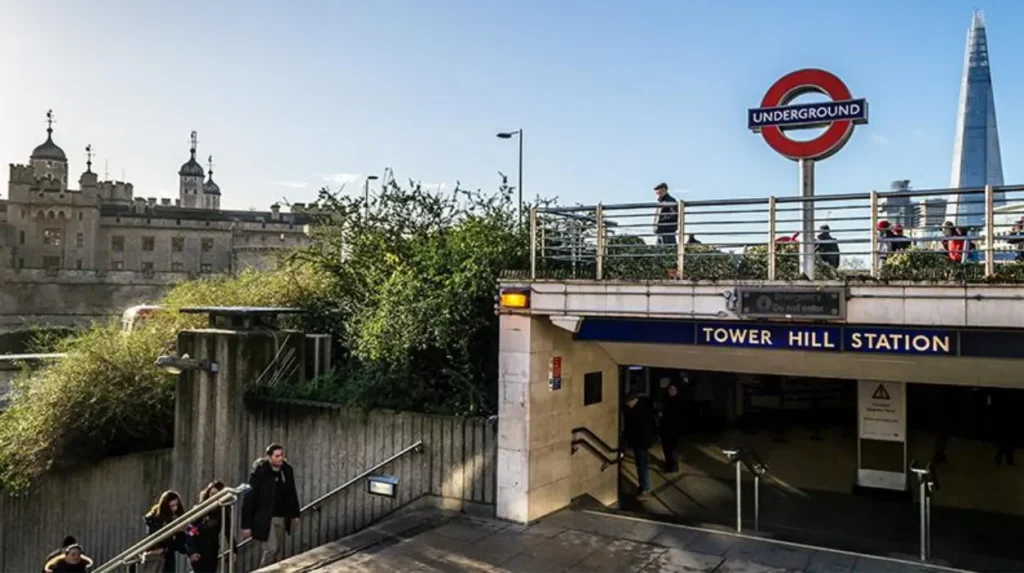
Tower Hill Station offers convenient access to the Tower of London and Tower Bridge. These structures illustrate different phases of London’s medieval and modern development.
Covent Garden Station provides access to theatres, markets, and entertainment venues in the West End.
St Paul’s Station serves the area surrounding St Paul’s Cathedral, one of London’s most important religious and architectural landmarks.
To experience these historic landmarks in person today, consult our comprehensive The Origins of the London Underground: How the World’s First Tube Was Built for itineraries and visiting parameters.
The Underground’s connectivity allows visitors to combine multiple attractions within a single day while minimising travel time.
How has the London Underground evolved over time?
The London Underground evolved from a steam-powered Victorian railway into a technologically advanced transit system. Successive expansions, electrification projects, modern signalling systems, and accessibility improvements transformed it into a global model for urban transportation.
The Metropolitan Railway opened in 1863 using steam locomotives. Early tunnels employed cut-and-cover construction methods, requiring streets to be excavated and rebuilt.
Deep-level tube tunnels emerged during the late nineteenth century. Electric traction enabled trains to operate efficiently below ground, reducing smoke and improving passenger comfort.
Network expansion accelerated throughout the twentieth century. New suburban developments often followed Underground extensions, demonstrating the transport system’s influence on urban growth.
During the Second World War, many stations functioned as air-raid shelters. Thousands of London residents used Underground facilities for protection during bombing campaigns.
Technological advancements introduced automatic signalling systems, improved communications, electronic ticketing, and enhanced safety procedures.
Modernisation programmes continue to improve capacity, reliability, and accessibility while preserving significant historic infrastructure. Examples include station restorations, heritage preservation projects, and upgraded train fleets.
The Underground remains both a functioning transport system and an important cultural asset reflecting London’s industrial, social, and architectural history.
Why does understanding the Tube improve a visit to London?
Understanding the Tube allows visitors to travel confidently, save time, reduce transportation costs, and access a wider range of destinations. Knowledge of the network transforms the Underground from a complex transit system into a practical tool for exploring London.
London covers a vast geographical area, and many attractions are separated by considerable distances. The Underground provides efficient movement between districts that would otherwise require lengthy road journeys.
A well-planned Tube journey often reduces travel time significantly compared with surface transportation. This efficiency enables visitors to experience more cultural sites, historic landmarks, and neighbourhoods during limited travel periods.
The network also reveals important aspects of London’s historical development. Station architecture, route expansions, and transport policies reflect broader patterns of urban growth spanning more than 160 years.
For educators and researchers, the Underground serves as a valuable case study in industrial history, engineering innovation, urban planning, and public infrastructure management.
For tourists, it provides practical access to the city’s most significant destinations. For historians, it represents a landmark achievement in transport development. For London itself, it remains an essential component of daily life and a defining symbol of the capital.
Mastering the Tube is therefore both a practical travel skill and an introduction to one of the world’s most influential urban transportation systems.
Is the London Underground the oldest metro system in the world?
Yes. The London Underground opened on 10 January 1863, making it the world’s first underground railway network and the model for many metro systems developed later across the globe.