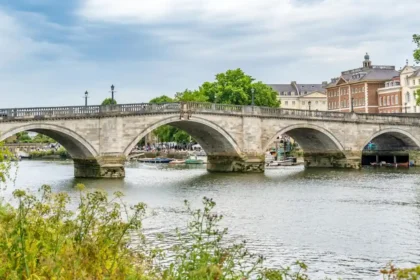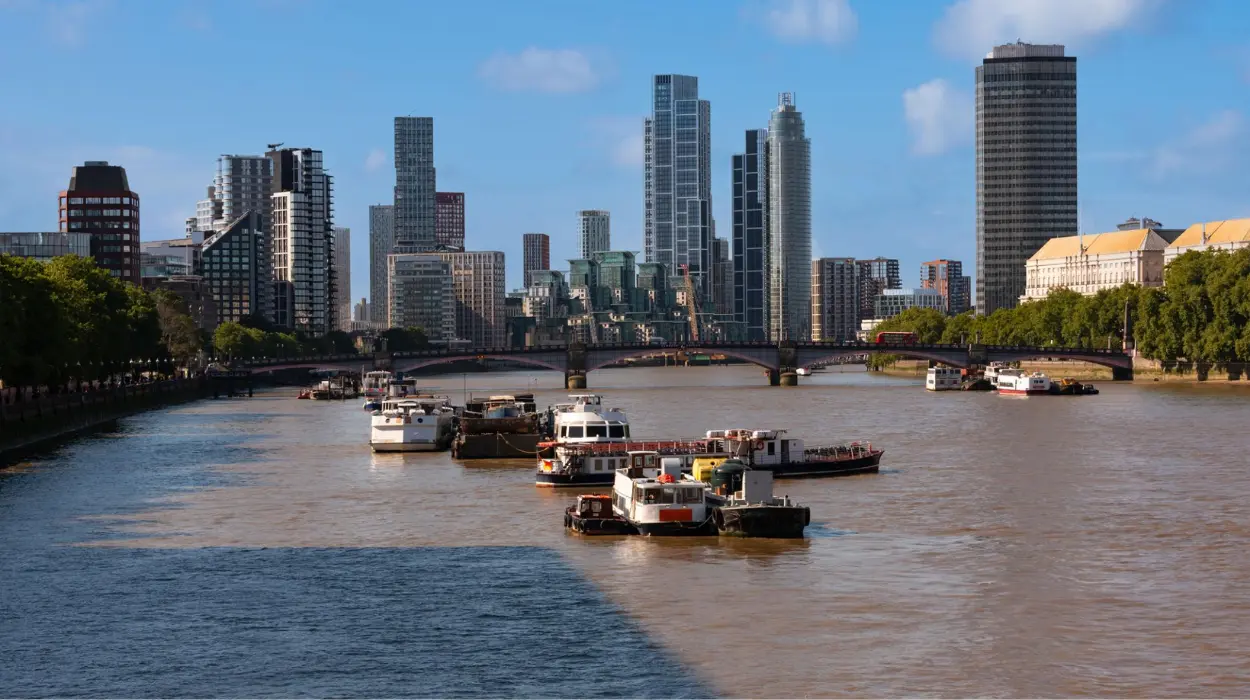
The River Thames has shaped London’s history for more than two millennia. As England’s most important river, it influenced settlement patterns, commerce, transportation networks, governance, industry, and urban expansion. Flowing approximately 346 kilometres (215 miles) from its source in Gloucestershire to the North Sea, the Thames remains the defining geographical feature of London.
- What is the historical significance of the River Thames to London?
- How did the River Thames influence the founding of London?
- How did the Thames shape medieval London?
- Why was the Thames essential to Britain’s maritime power?
- How did the Industrial Revolution transform the River Thames?
- What role did the Thames play in modern London’s development?
- How has the Thames influenced London’s culture and identity?
- What evidence reveals the Thames’ ancient past?
- How is the River Thames preserved for future generations?
The history of London cannot be separated from the history of the Thames. From Roman merchants and medieval traders to Victorian engineers and modern conservationists, generations have depended upon the river for economic survival and urban development. Today, the Thames remains both a working waterway and a cultural landmark that attracts millions of visitors annually.
What is the historical significance of the River Thames to London?
The River Thames served as London’s primary transportation corridor, commercial gateway, defensive barrier, and source of economic growth for more than 2,000 years. Its strategic location enabled trade, urban expansion, industrial development, and political influence that transformed London into a global city.
The River Thames is the longest river entirely within England. Its importance stems from its navigability and direct connection to the North Sea. This connection allowed merchants, armies, settlers, and goods to move efficiently between Britain and continental Europe.
Archaeological evidence indicates human activity along the Thames dating back thousands of years. Bronze Age communities established settlements near the river because of fertile floodplains, fishing opportunities, and access to freshwater resources.
The river’s strategic importance increased significantly after the Roman conquest of Britain in AD 43. Roman engineers selected a crossing point along the Thames to establish Londinium, the settlement that evolved into modern London. This decision created the foundation for one of the world’s most influential cities.
Throughout history, the Thames functioned as London’s primary highway. Before modern roads and railways, river transport provided the fastest and most economical method of moving people and goods. The city’s wealth, population growth, and political power developed directly from this geographical advantage.
How did the River Thames influence the founding of London?
The Thames influenced London’s founding because it provided a defensible crossing point, access to international trade routes, reliable transportation, and proximity to fertile land. Roman planners established Londinium around AD 47 at the river’s lowest practical bridge crossing.
Roman authorities recognised the strategic value of the Thames shortly after invading Britain. The location offered a narrow crossing point while remaining accessible to sea-going vessels travelling inland from the North Sea.
The establishment of Londinium
Around AD 47, Roman engineers constructed the first bridge across the Thames near the location of present-day London Bridge. This bridge connected important military and commercial routes throughout Roman Britain.
The settlement rapidly expanded into a major trading centre. Archaeological discoveries reveal imported goods from regions including Gaul, Spain, Italy, and North Africa. These findings demonstrate Londinium’s role within the wider Roman Empire.
The river as a commercial artery
Roman merchants transported wine, olive oil, pottery, metals, and luxury goods via the Thames. The river facilitated efficient movement of products between inland settlements and international markets.
By the second century AD, Londinium had become Britain’s largest Roman city, with an estimated population exceeding 45,000 residents. The Thames was central to this growth.
The city’s prosperity reflected the advantages of river-based commerce. Economic activity concentrated around docks, warehouses, and markets situated along the waterfront.
How did the Thames shape medieval London?
The Thames shaped medieval London by supporting trade networks, fishing industries, royal administration, and population growth. River commerce connected England’s capital to European markets while encouraging the construction of wharves, bridges, and commercial districts.
Following the Roman withdrawal in the fifth century, London experienced periods of decline and recovery. By the medieval era, the Thames had re-emerged as the city’s economic backbone.
Trade and merchant activity
During the Middle Ages, London became England’s principal commercial centre. Merchant vessels regularly transported wool, timber, grain, and manufactured goods along the Thames.
The river connected London with trading partners across northern Europe. Commercial links with regions including Flanders, the Hanseatic ports, and France generated substantial wealth.
The medieval waterfront became densely developed. Warehouses, docks, markets, and workshops lined the riverbanks. These facilities supported growing trade volumes and urban expansion.
London Bridge and urban development
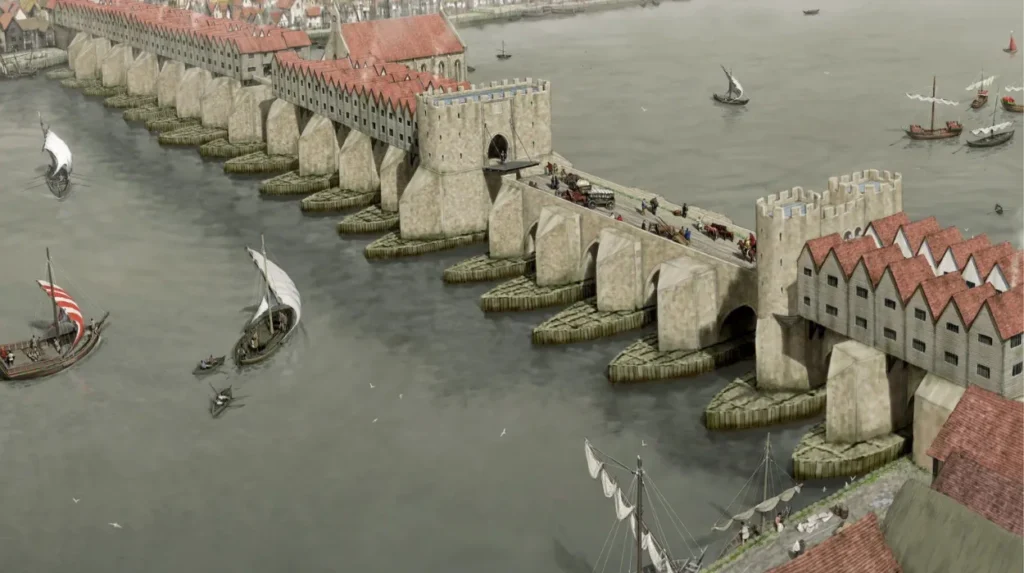
Medieval London Bridge played a crucial role in connecting communities north and south of the river. The stone bridge, completed in 1209, remained London’s only bridge for more than 600 years.
Buildings constructed directly on the bridge created a unique commercial district. Shops, residences, and chapels occupied valuable space above the river crossing.
The bridge also influenced water flow and navigation patterns, becoming an important feature of London’s urban landscape.
Why was the Thames essential to Britain’s maritime power?
The Thames became essential to Britain’s maritime power because it supported naval operations, international trade, shipbuilding industries, and imperial expansion. London’s port facilities enabled Britain to emerge as a dominant commercial and naval power from the seventeenth century onward.
The growth of British maritime influence depended heavily upon London’s river infrastructure.
Expansion of the Port of London
From the Tudor period onward, increasing overseas trade transformed the Thames into one of the world’s busiest waterways.
Ships arriving from North America, Africa, Asia, and the Caribbean transported commodities including sugar, tea, tobacco, spices, cotton, and manufactured products.
By the eighteenth century, the Port of London had become a critical hub within global trading networks.
Naval and military significance
The Thames supported the development of Britain’s naval capabilities. Royal dockyards and shipbuilding facilities along the river contributed to national defence and overseas expansion.
The river’s accessibility enabled rapid movement of supplies, personnel, and vessels. Maritime industries created thousands of jobs and stimulated economic growth throughout London and surrounding regions.
The Thames became a symbol of Britain’s commercial and naval achievements during the age of empire.
How did the Industrial Revolution transform the River Thames?
The Industrial Revolution transformed the Thames through increased shipping traffic, extensive dock construction, industrial development, and major engineering projects. These changes expanded London’s economy but also created severe environmental challenges that affected public health and river ecosystems.
The nineteenth century marked one of the most significant periods of change in Thames history.
Growth of industrial infrastructure
Industrialisation increased demand for transportation and storage facilities. New dock systems improved efficiency and accommodated larger volumes of cargo.
Examples of major dock developments include the West India Docks, East India Docks, and Royal Docks. These facilities handled millions of tonnes of goods annually.
Railways eventually connected docklands to inland markets, strengthening London’s position as a commercial centre.
Population growth and pollution
London’s population expanded dramatically during the nineteenth century. Industrial activity and inadequate sanitation systems generated severe pollution.
Large quantities of untreated sewage entered the Thames. Water quality deteriorated significantly, creating public health risks.
One of the most famous environmental crises occurred during the Great Stink of 1858, when hot weather intensified odours from polluted river water.
Engineering solutions
Engineer Joseph Bazalgette designed an extensive sewer network to address London’s sanitation crisis.
Completed during the Victorian era, Bazalgette’s system diverted sewage away from central London and significantly improved public health conditions.
Many elements of this engineering achievement remain operational today.
What role did the Thames play in modern London’s development?
The Thames continued shaping modern London through urban regeneration, transportation innovation, environmental restoration, and cultural development. Former industrial zones evolved into residential, commercial, and recreational districts while preserving connections to the city’s maritime heritage.
The twentieth century brought substantial changes to river-based commerce and urban planning.
Decline of traditional docklands
Containerisation transformed global shipping practices after the 1950s. Larger vessels required facilities unavailable within central London.
Many traditional docks closed during the late twentieth century. Economic restructuring affected communities that had depended on maritime employment.
Urban regeneration
Former industrial areas underwent extensive redevelopment.
Examples include the transformation of the Canary Wharf district into a major financial centre. Redevelopment projects introduced office towers, residential buildings, transportation links, and public spaces.
These initiatives reshaped East London while maintaining connections to the area’s maritime past.
Modern transportation
The Thames continues supporting transportation through river buses, commuter services, and tourist vessels.
Waterborne transport provides an alternative to road and rail congestion while preserving the river’s historical role as a transportation corridor.
How has the Thames influenced London’s culture and identity?
The Thames influenced London’s culture by inspiring literature, art, architecture, ceremonies, and public traditions. The river remains a defining symbol of London and serves as a focal point for cultural expression, tourism, and civic identity.
The Thames occupies a central position within London’s cultural landscape.
Literary and artistic influence
Writers, artists, and historians have documented the river for centuries.
Notable literary figures associated with Thames-related works include Charles Dickens and Joseph Conrad. Their writings captured the social and economic realities of riverside life.
Painters frequently depicted the Thames as a symbol of commerce, industry, and urban transformation.
Ceremonial traditions
Numerous civic and royal ceremonies take place on the river.
Examples include state celebrations, royal pageants, and traditional rowing events. These activities reinforce the Thames’ role within British public life.
Tourism and heritage
Millions of visitors explore riverside attractions annually.
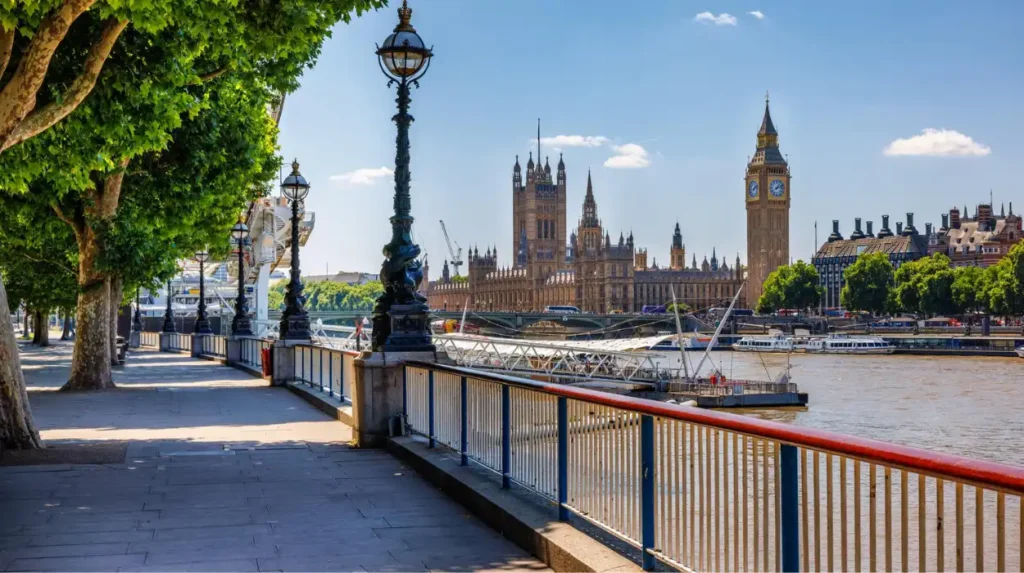
Landmarks including Tower Bridge, Tower of London, and Houses of Parliament demonstrate the close relationship between London’s built environment and the river.
To experience this historic riverside environment in person today, consult our comprehensive [Exploring the South Bank Walk: London’s Most Scenic Riverside Route] for itineraries and visiting parameters.
What evidence reveals the Thames’ ancient past?
Archaeological discoveries within the Thames reveal evidence of prehistoric settlements, Roman trade, medieval commerce, and industrial development. Artefacts recovered from river sediments provide one of Britain’s richest records of continuous human activity across thousands of years.
The Thames functions as an important archaeological resource.
Prehistoric discoveries
Researchers have recovered Bronze Age weapons, tools, ceremonial objects, and human remains from river deposits.
These discoveries indicate that communities used the Thames for transportation, ritual activities, and economic exchange long before written records existed.
Roman and medieval artefacts
Excavations continue uncovering Roman coins, pottery fragments, building materials, and commercial goods.
Medieval finds include trading equipment, household items, and maritime artefacts that reveal daily life along the river.
Scientific research
Modern archaeological techniques enable detailed analysis of environmental and historical changes.
Sediment studies provide evidence of shifting river channels, climate variations, and human modifications to the landscape.
These findings contribute significantly to understanding London’s long-term development.
How is the River Thames preserved for future generations?
The River Thames is preserved through environmental regulation, conservation initiatives, heritage protection, scientific monitoring, and public education. Restoration efforts have improved biodiversity, water quality, and public access while safeguarding historically significant sites and structures.
Environmental conditions within the Thames improved substantially during the late twentieth and early twenty-first centuries.
Water quality improvements
Government agencies and environmental organisations implemented extensive pollution-control measures.
Fish populations returned to stretches of the river previously considered biologically degraded. Scientific monitoring now records dozens of fish species within Thames ecosystems.
Biodiversity conservation
Conservation projects protect habitats supporting birds, fish, mammals, and aquatic plants.
Examples include wetland restoration programmes and riverbank habitat improvements. These initiatives strengthen ecological resilience while enhancing public awareness.
Heritage protection
Historic structures along the Thames receive legal protection through conservation frameworks.
Protected assets include bridges, dock facilities, waterfront buildings, and archaeological sites. Preservation efforts ensure future generations can study and appreciate London’s river heritage.
The River Thames remains the defining force behind London’s historical development. From the establishment of Roman Londinium to contemporary environmental restoration projects, the river has influenced commerce, transportation, governance, culture, and urban planning.
Its waters carried merchants, soldiers, migrants, and ideas that shaped Britain’s capital over more than two thousand years. Archaeological evidence, preserved landmarks, and continuing river activity demonstrate the Thames’ enduring importance.
As London evolves, the Thames continues fulfilling its historic role as the city’s lifeline. Its past provides essential insight into the origins of modern London, while ongoing conservation efforts ensure that future generations can understand and benefit from one of Europe’s most historically significant waterways.
Why is the River Thames important to London’s history?
The River Thames is important because it enabled trade, transportation, settlement, defence, and economic growth, helping London develop into one of the world’s most influential cities.