Brick Lane is one of London’s most historically significant streets. Located in the East End within the London Borough of Tower Hamlets, it has experienced repeated waves of migration, economic transformation, religious change, and cultural reinvention. Over more than 400 years, the area evolved from rural farmland into a centre of industry, immigration, commerce, faith, and contemporary culture.
- Why is Brick Lane considered one of London’s most important historic streets?
- How did Brick Lane begin and where did its name originate?
- How did Huguenot refugees transform Brick Lane in the seventeenth century?
- How did the silk industry shape life around Brick Lane?
- Why did Jewish communities settle in Brick Lane during the nineteenth century?
- How did Brick Lane become associated with anti-fascist resistance?
- How did Bengali migration reshape Brick Lane after the Second World War?
- Why is Brick Lane famous for its curry houses and food culture?
- How has Brick Lane’s architecture preserved its layered history?
- How has street art contributed to Brick Lane’s modern identity?
- What is the lasting historical significance of Brick Lane today?
Today, Brick Lane is internationally recognised for its Bengali heritage, street art, food culture, and historic buildings. Its identity emerged through successive communities, including the Huguenots, Jewish immigrants, and Bangladeshi settlers. Each group left lasting social, architectural, economic, and cultural influences that remain visible throughout the area.
Why is Brick Lane considered one of London’s most important historic streets?
Brick Lane is important because it demonstrates how successive immigrant communities transformed a single London street across four centuries. Huguenot silk weavers, Jewish refugees, and Bengali migrants each reshaped its economy, architecture, religion, and culture, creating a unique record of urban change.
The significance of Brick Lane extends beyond local history. Historians frequently cite the street as a case study of migration and urban adaptation in Britain. Few locations in London display such visible evidence of continuous demographic change.
The street runs north from Whitechapel High Street toward Spitalfields and Bethnal Green. Its location near the historic Port of London provided employment opportunities that attracted newcomers from across Europe and later from South Asia.
Brick Lane also illustrates how cities evolve through migration. Religious buildings changed function as communities shifted. Economic activities moved from silk production to tailoring and later to restaurant businesses. Residential housing adapted to different populations over time.
How did Brick Lane begin and where did its name originate?
Brick Lane originated as a rural track outside medieval London. Its name emerged during the fifteenth century when local brick and tile manufacturing expanded, supplying construction materials for the growing city and establishing the area’s earliest economic identity.
Before urban development reached the East End, the area consisted largely of fields and market gardens. Historical records indicate that clay-rich ground supported brick-making activities from the fifteenth century onward.
The name “Brick Lane” appeared in historical documents by the sixteenth century. The production of bricks became increasingly important as London expanded beyond its medieval walls.
The Great Fire of London in 1666 accelerated demand for brick construction throughout the capital. New building regulations encouraged the use of brick instead of timber, increasing the importance of brick-making districts around London.
How did Huguenot refugees transform Brick Lane in the seventeenth century?
French Protestant refugees known as Huguenots transformed Brick Lane after arriving in large numbers during the late seventeenth century. They established a prosperous silk-weaving industry, introduced specialised craftsmanship, and constructed houses that still define parts of the area’s historic landscape.
The Huguenots were French Protestants who fled persecution after the revocation of the Edict of Nantes in 1685. Thousands settled in Spitalfields and surrounding streets near Brick Lane.
Their advanced textile skills helped create one of Britain’s most successful silk-weaving industries. By the eighteenth century, Spitalfields silk was renowned across Europe.
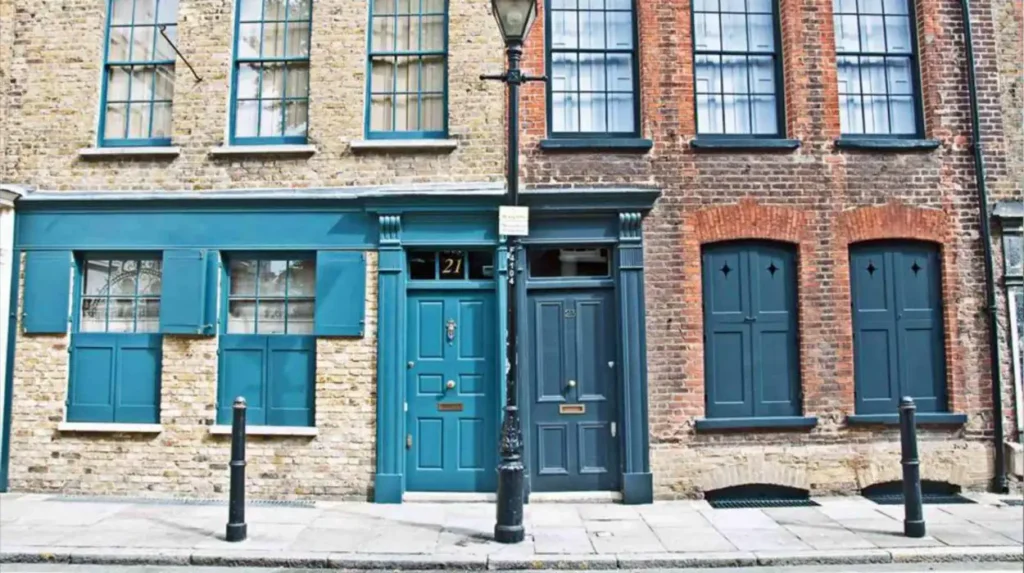
Distinctive Huguenot houses appeared throughout the district. These buildings featured large attic windows that provided natural light for weaving activities. Many remain standing today and represent some of London’s finest Georgian architecture.
The Huguenots also established churches, schools, and charitable institutions that contributed to the development of the East End.
How did the silk industry shape life around Brick Lane?
The silk industry defined Brick Lane’s economy during the eighteenth century. It created employment, encouraged urban development, supported international trade networks, and established the neighbourhood as one of Britain’s most important textile production centres.
Silk weaving involved skilled labour and often took place within family homes. Entire households participated in production.
Economic prosperity encouraged the construction of new housing, workshops, and commercial premises. The district became closely associated with luxury textile manufacturing.
However, the industry faced periodic crises due to imported competition and changing fashion trends. By the nineteenth century, mechanised manufacturing gradually reduced the importance of traditional weaving.
Even after the industry’s decline, the buildings and street layouts created during this period remained central features of the neighbourhood.
Why did Jewish communities settle in Brick Lane during the nineteenth century?
Jewish immigrants settled around Brick Lane because affordable housing, employment opportunities, and established community networks existed in the East End. Large numbers arrived from Eastern Europe during the nineteenth century, transforming the area’s demographic and cultural character.
Jewish migration increased substantially after the 1880s. Many arrivals came from Poland, Lithuania, and territories within the Russian Empire.
The garment industry attracted large numbers of workers. Tailoring workshops and clothing factories became major employers throughout Whitechapel and Spitalfields.
Community institutions flourished. Synagogues, schools, newspapers, and charitable organisations supported new arrivals.
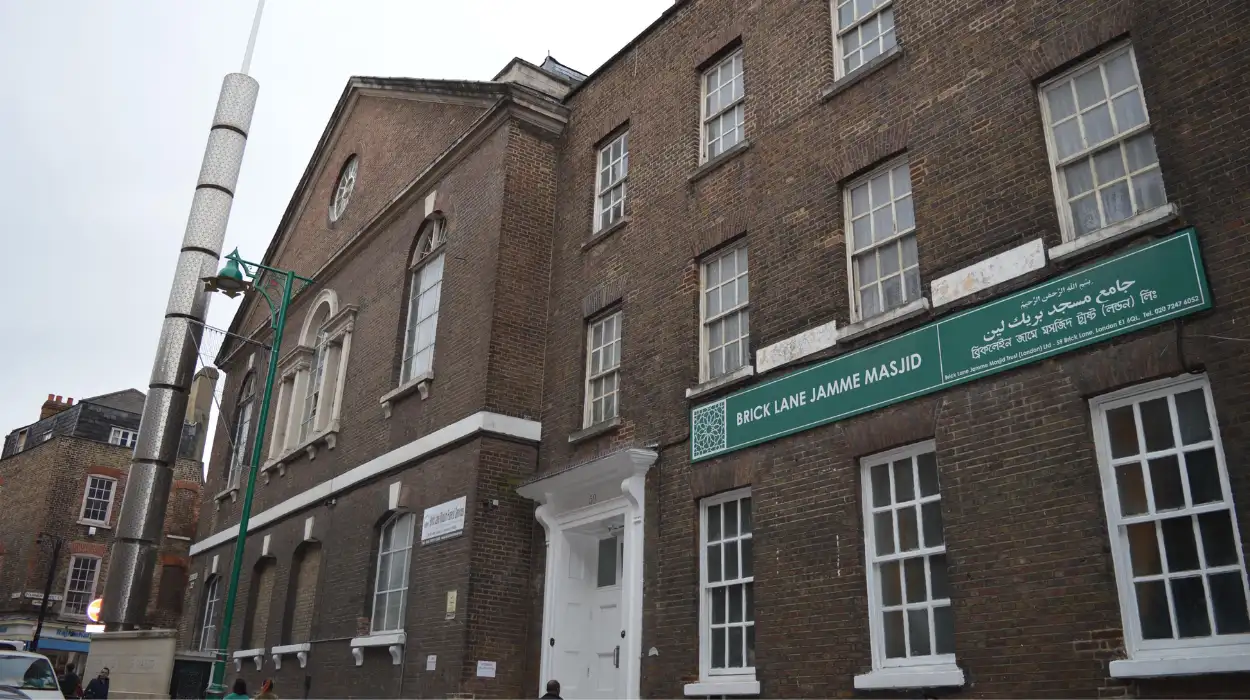
One of the most significant buildings in the area reflects these demographic changes. A structure originally built as a Huguenot chapel later became a synagogue before eventually serving as a mosque, illustrating the succession of communities that shaped Brick Lane.
How did Brick Lane become associated with anti-fascist resistance?
Brick Lane became associated with anti-fascist resistance through organised opposition to extremist political movements. The most significant event occurred in 1936 when local residents helped prevent a major fascist demonstration from marching through the East End.
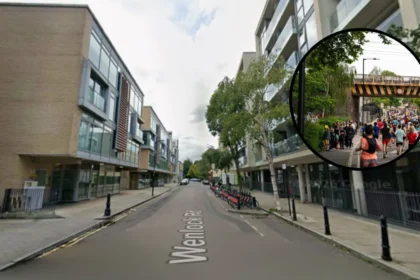
The most famous confrontation was the Battle of Cable Street on 4 October 1936. Tens of thousands of East End residents, including many from nearby Brick Lane, opposed a march organised by the British Union of Fascists.
The event became a landmark moment in British anti-fascist history and remains an important symbol of community solidarity and resistance against intolerance.
How did Bengali migration reshape Brick Lane after the Second World War?
Bengali migration reshaped Brick Lane through population growth, entrepreneurship, religious institutions, and cultural traditions. Migrants primarily from the Sylhet region of Bangladesh transformed the area into the recognised centre of British Bangladeshi life.
Migration from what was then East Pakistan increased after the Second World War. Many workers arrived to fill labour shortages in Britain.
By the 1970s and 1980s, Bengali residents formed one of the largest communities in the neighbourhood. Businesses including grocery stores, travel agencies, clothing retailers, and restaurants flourished.
Political activism also emerged in response to discrimination and racial tensions. Community organisations played a vital role in promoting social cohesion and representation.
Today, the area is widely known as Banglatown and remains a focal point of British Bangladeshi culture.
Why is Brick Lane famous for its curry houses and food culture?
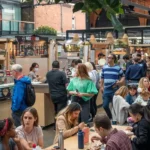
Brick Lane became famous for curry houses because Bengali entrepreneurs established restaurants that attracted local residents, tourists, and international visitors. The concentration of South Asian dining establishments created one of Britain’s best-known culinary districts.
Restaurant growth accelerated during the late twentieth century. Many businesses were founded by families with roots in Bangladesh, particularly the Sylhet region.
The area’s food culture expanded beyond restaurants to include bakeries, sweet shops, food markets, and specialist retailers.
Today, Brick Lane’s culinary reputation attracts visitors from around the world and contributes significantly to London’s tourism economy.
To experience the area today, consult our comprehensive [Things to Do in Shoreditch: Street Art, Food & Nightlife] for itineraries and visiting parameters.
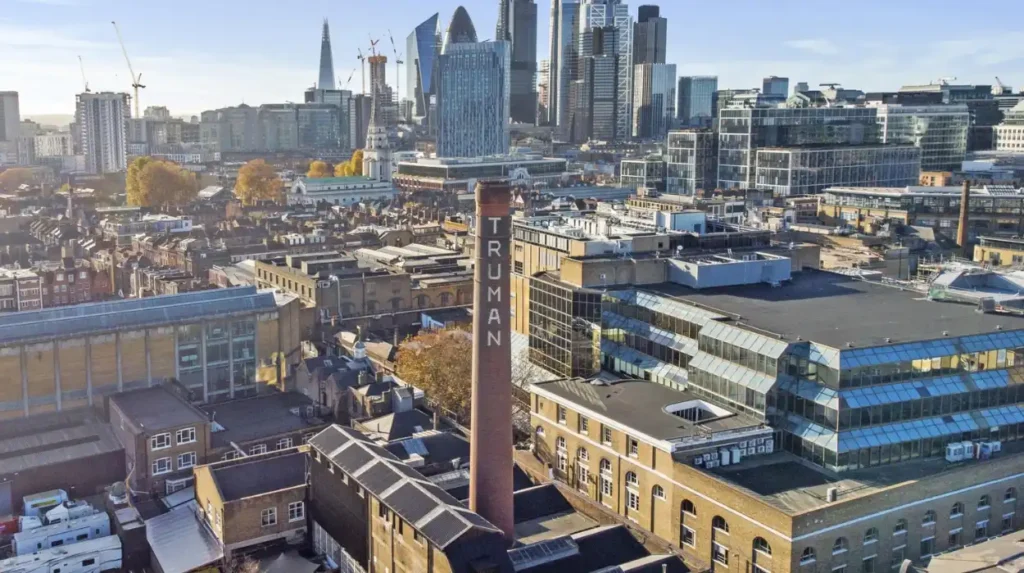
How has Brick Lane’s architecture preserved its layered history?
Brick Lane’s architecture preserves multiple historical periods through surviving Huguenot houses, former synagogues, religious buildings, industrial structures, and Victorian developments. These buildings provide physical evidence of successive communities that occupied and transformed the area.
Architectural continuity represents one of Brick Lane’s most valuable heritage assets.
Eighteenth-century Huguenot houses remain among the district’s most recognisable landmarks. Religious buildings reveal changing demographics, while Victorian warehouses reflect industrial growth and commercial activity.
Conservation efforts continue to protect large sections of the historic streetscape. Heritage organisations and local authorities recognise the importance of preserving both the physical environment and the stories associated with it.
How has street art contributed to Brick Lane’s modern identity?
Street art contributed to Brick Lane’s modern identity by transforming walls, alleys, and public spaces into widely recognised cultural attractions. Contemporary artists use the area as an open-air gallery that reflects ongoing creativity and social commentary.
During the late twentieth and early twenty-first centuries, Brick Lane became a major centre for urban art.
Murals, stencils, and installations attract visitors from around the world. New works regularly appear, reflecting the area’s continuing tradition of adaptation and cultural reinvention.
The district demonstrates how historic neighbourhoods can preserve heritage while embracing contemporary creative expression.
What is the lasting historical significance of Brick Lane today?
Brick Lane’s lasting significance lies in its role as a living record of migration, cultural adaptation, and urban transformation. Few streets illustrate the long-term impact of successive immigrant communities on British society as clearly or comprehensively.
Modern Brick Lane combines heritage preservation with active cultural life. Historic buildings coexist with restaurants, galleries, markets, educational institutions, and creative industries.
Researchers continue studying the area because it offers valuable insights into migration, identity formation, economic adaptation, and multicultural urban development.
The history of Brick Lane is defined by continuous transformation. Huguenot weavers, Jewish tailors, and Bengali entrepreneurs each added new layers to its identity. That process of change remains the defining characteristic of the street and the reason it continues to occupy a central place in London’s historical narrative.
Where is Brick Lane located?
Brick Lane is located in the East End of London within the London Borough of Tower Hamlets. It runs north from Whitechapel High Street toward Spitalfields and Bethnal Green.