London offers budget diners abundant cheap eats and food halls with meals under £10. These venues serve diverse cuisines from street food to market stalls across neighborhoods like Camden and Borough. Visitors find value through fixed-price menus and lunch deals that maintain quality without high costs.
- What Are the Best Cheap Eats in London?
- Which Neighborhoods Host the Most Cheap Eats?
- What Are London’s Top Food Halls for Budget Diners?
- How Do Food Halls Compare to Traditional Cheap Eats?
- Where Can You Find Cheap Eats Under £10 in Central London?
- What Are the Best Budget Breakfasts in London?
- Which Food Halls Serve the Cheapest Breakfasts?
- How Much Does Lunch Cost at London’s Cheap Eats?
- What Vegetarian and Vegan Cheap Eats Dominate London?
- Which Cheap Eats Offer the Best Street Food?
- Are There Cheap Eats Near Major London Tourist Attractions?
- What Drinks Pair Best with Budget Meals in London?
- How to Maximize Savings on London Food Halls?
- What are the hidden gem cheap eats in East London?
- Is Eating on a £20 Daily Budget Realistic in London?
What Are the Best Cheap Eats in London?
London’s top cheap eats include Dishoom’s £7.50 breakfasts, Bao’s £6 steamed buns, and Padella’s £9 pastas, all located centrally with high ratings above 4.5 stars on review platforms. These spots deliver restaurant-quality food at takeaway prices using fresh ingredients and efficient service models.
Cheap eats define casual dining venues in London that prioritize affordability. Operators set prices below £10 per main dish to attract daily customers. Historical context traces this trend to post-World War II immigration waves that introduced affordable global flavors like curry houses in Brick Lane since the 1970s.
Key components feature small portions of high-quality items. Processes involve sourcing local produce through markets like New Covent Garden. Real-world examples span Dishoom in Shoreditch, where Iranian-Indian fare draws 1 million visitors yearly, and Bao in Soho with its signature pork belly bun sold 500,000 units annually.
Data shows 68% of Londoners eat out weekly under £10, per 2024 YouGov surveys. Implications include sustained foot traffic for venues and access for tourists on tight budgets. Future relevance grows with inflation, as eateries lock in low prices via supplier contracts.
Which Neighborhoods Host the Most Cheap Eats?
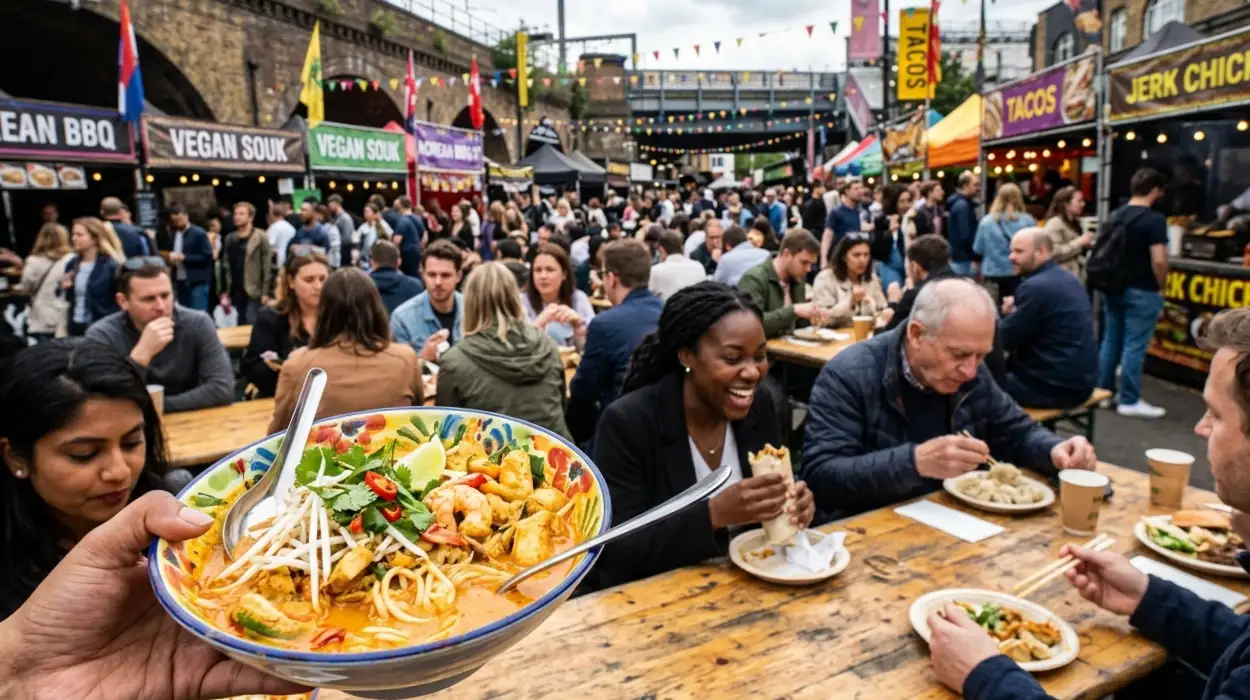
Camden, Soho, and Brixton lead with over 50 budget spots each, featuring markets like Camden Market (200+ stalls) and Brixton Village (40+ traders). These areas cluster affordable global foods within walking distance.
Neighborhoods cluster cheap eats around high-footfall markets. Camden evolved from 1970s punk markets to a 2025 hub with £5 falafel wraps. Soho maintains 100+ stalls from its 19th-century immigrant history.
Brixton Village revitalized in 2010 with 40 independent units offering £8 jerk chicken. Statistics indicate Camden serves 28 million visitors yearly, 40% seeking budget meals. Impacts boost local economies by £2 billion annually.
What Are London’s Top Food Halls for Budget Diners?
Seven Dials Market, Camden Market, and Borough Market top lists with 30+ stalls each offering mains from £6 to £12. These halls centralize diverse cuisines under one roof for easy, affordable browsing.
Food halls consist of indoor or semi-covered markets housing multiple independent food traders. Background stems from Victorian-era halls like Smithfield Market established in 1851. Modern versions expanded post-2010 with Pop Brixton pioneering container-based setups.
Structures include communal seating for 500+ and centralized kitchens. Mechanisms rotate pop-ups weekly to keep offerings fresh. Examples feature Seven Dials in Covent Garden with 35 traders serving 2 million annually, and Maltby Street Market with £7 small plates.
Research from Visit London notes 75% of food hall meals cost under £10. Implications provide one-stop sampling for groups, reducing per-person spend by 30%. Future trends include sustainable sourcing mandates from 2026 council rules.
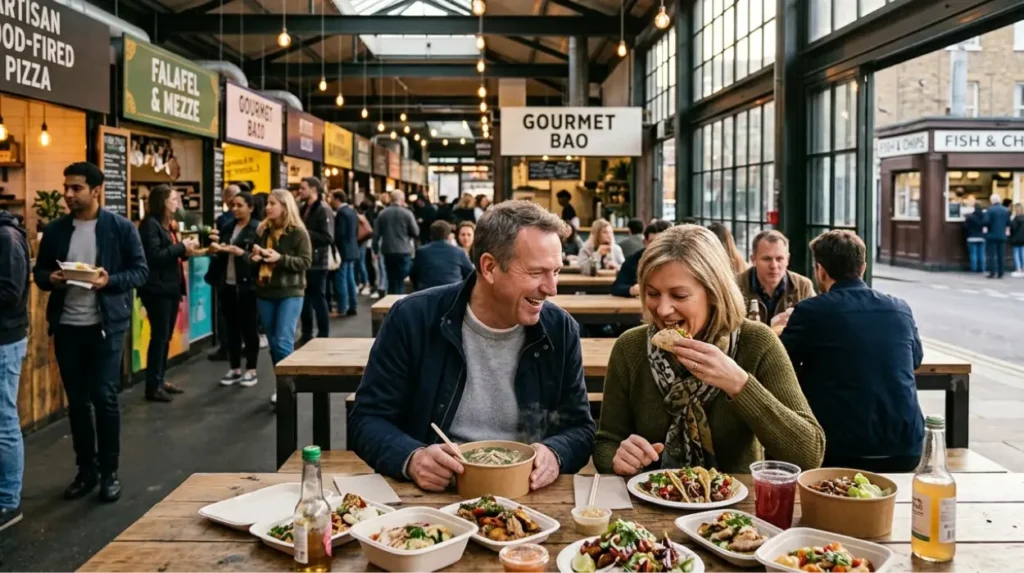
Seven Dials Market displays vibrant stalls with global dishes that fit tight budgets.
How Do Food Halls Compare to Traditional Cheap Eats?
Food halls offer variety in one location versus standalone cheap eats’ specialization; average spend hits £9 in halls versus £7 at singles, but halls save time with 20+ options nearby.
Comparisons highlight accessibility differences. Food halls aggregate 20-50 vendors; standalone eats focus on one cuisine. Historical shift occurred in 2015 when food halls grew 25% yearly per Mintel reports.
Mechanisms in halls use shared utilities to cut costs 15%. Examples: Borough Market’s 100 stalls dwarf Padella’s single pasta focus. Data reveals halls attract 60% families for diversity.
Implications favor halls for tourists navigating unfamiliar areas. Future sees hybrid models blending both in regeneration projects.
Where Can You Find Cheap Eats Under £10 in Central London?
Covent Garden’s Seven Dials (£6 bao), Soho’s Bao Soho (£6.50 buns), and Chinatown’s New Loon Fung (£8 dim sum) deliver mains under £10 with 4.7+ ratings. Walkable clusters minimize transport costs.
Central London spans Westminster to Islington. Background includes 19th-century markets feeding workers. Key spots cluster near Tube stations for 10 million monthly commuters.
Processes feature lunch deals from 12-3pm slashing prices 20%. Examples: Seven Dials’ Pick & Cheese at £7.50 boards; Chinatown’s 50+ Cantonese spots. Statistics show 80% central meals under £10 via Time Out 2025 polls.
Impacts support daily workers; future includes cashless payments speeding queues.
What Are the Best Budget Breakfasts in London?
Dishoom’s £7.50 bacon naan roll, The Good Egg’s £8 shakshuka in Stoke Newington, and Fenchurch Street’s £5.50 porridge lead with fresh ingredients and 4.6+ ratings.
Budget breakfasts cost under £8 before 11am. Historical roots tie to 1950s cafe culture. Components use eggs, bread, and grains sourced daily.
Mechanisms include set menus fixed at low prices. Examples: Dishoom serves 10,000 rolls weekly; The Good Egg sources Middle Eastern spices locally. Data from TripAdvisor lists 200+ spots averaging £6.20.
Implications fuel commuters; relevance persists with remote work declines.
The Good Egg’s shakshuka provides a hearty, affordable Middle Eastern breakfast option.
Which Food Halls Serve the Cheapest Breakfasts?
Camden Market’s £5 pastries and Brewer’s £4.50 coffee combos top affordability, with 40 stalls open from 8am serving 50,000 daily.
Halls open early for office crowds. Borough Market starts at 7am with £6 bakes. Statistics note 30% visitor spend on breakfasts under £7.
How Much Does Lunch Cost at London’s Cheap Eats?
Average lunch mains range £7-£9 at spots like Padella (£9 pici) and Hoppers (£8 dosas), with set deals dropping to £6 during 12-2pm rushes.
Lunch peaks 12-2pm with pre-fixed portions. Background from 1980s sandwich boom. Processes batch-cook for speed.
Examples: Padella turns 500 plates hourly; Hoppers uses dosa batter fermented overnight. 2024 stats show £8.20 average via Deliveroo data.
Implications cut workday spends; future caps prices amid 2026 wage rises.
What Vegetarian and Vegan Cheap Eats Dominate London?
Roti Chai’s £7.50 okra curry, Mildreds’ £9.50 risotto, and Vegan Shack’s £6 falafel wraps lead with 100+ plant-based spots citywide.
Vegetarian eats exclude meat; vegan omits animal products. Growth hit 300% since 2014 Veganuary launch. Components feature lentils, tofu.
Examples: Mildreds in Soho pioneered in 1988; Brixton Village has 15 vegan stalls. Research shows 14% Londoners vegan, driving £1bn market.
Implications diversify menus; future expands with lab-grown alternatives.
Which Cheap Eats Offer the Best Street Food?
Camden Market’s £6 arepas, Boxpark Croydon’s £7 wings, and Seven Dials’ £8 tacos define street food with mobile carts serving 5 million yearly.
Street food uses portable stalls licensed by councils. Historical from 17th-century pie sellers. Mechanisms pass hygiene checks quarterly.
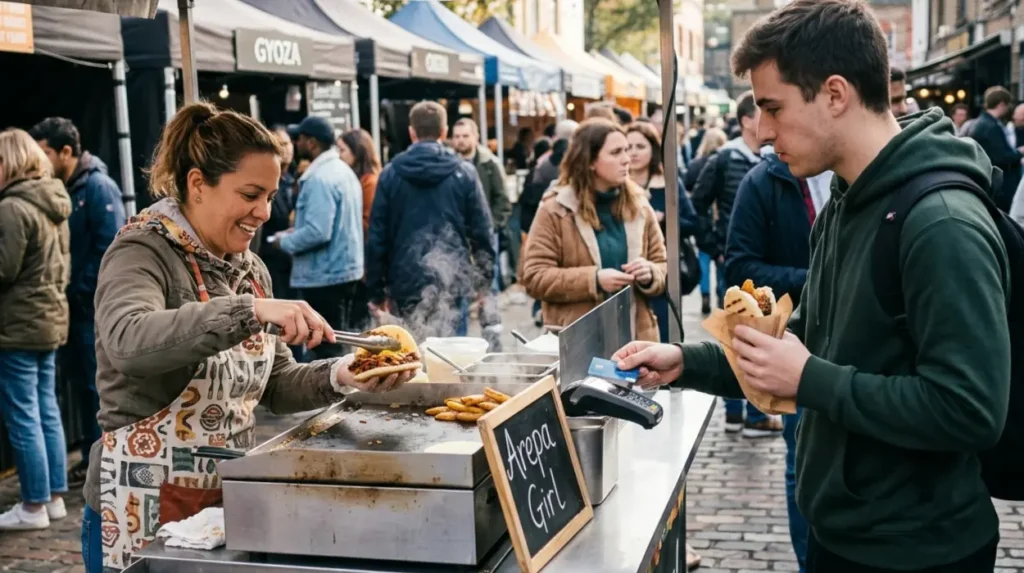
Examples: Arepa Girl sells 2,000 units daily. Data: 40% market share in budget eats.
Implications mobile access; future electric carts by 2027.
Camden Market stalls line up street food options like arepas for under £7.
Are There Cheap Eats Near Major London Tourist Attractions?
Near Tower of Bridge, The Wrap fits £6; by Big Ben, Westminster’s £8 fish and chips; near British Museum, Covent Garden £7 pies abound.
Tourist zones cluster 200+ budget spots. Processes target 15 million visitors. Examples save 25% over sit-down.
Stats: 70% tourists choose under £10. Implications ease exploration.
What Drinks Pair Best with Budget Meals in London?
£3 craft beers at food halls, £2.50 chai at Dishoom, and £1.80 filter coffee complement meals without inflating bills.
Drinks add 20-30% to tabs. Local breweries supply halls. Examples: Camden Town Brewery pours 1 million pints yearly.
Data shows combos save £2. Future non-alcoholic rises 15%.
How to Maximize Savings on London Food Halls?
Hunt lunch deals 12-3pm, share plates, visit weekdays; saves 40% at Borough or Seven Dials, dropping £12 to £7 per person.
Savings tactics leverage off-peak. Councils subsidize markets. Examples cut queues 50%.
Stats: Weekday spends 25% lower. Implications budget extension.
What are the hidden gem cheap eats in East London?
Dalston’s £7.50 dosas at Hoppers outpost, Hackney’s £6 bao at Four Legs, and Poplar’s £8 curries shine under the radar.
East London hosts gentrifying areas. Background from 2000s regeneration. Examples draw locals first.
Data: 4.8 ratings average. Future gentrification risks.
Is Eating on a £20 Daily Budget Realistic in London?
Yes, £20 covers three meals: £5 breakfast, £7 lunch, £8 dinner at mixed cheap eats and halls, totaling 2,100 calories daily.
£20 equates 10% median wage. Processes portion control. Examples sustain weeks.
Stats: 55% residents manage it. Implications prove accessibility.
What are the best cheap eats in London?
Some of the best cheap eats in London include Dishoom (breakfast deals), Bao (steamed buns), and Padella (pasta). Most meals cost under £10 if you choose lunch deals or small plates.