

London combines more than 2,000 years of history with world-class museums, royal parks, scientific discovery, wildlife conservation, and interactive entertainment. The city offers family attractions that educate, inspire curiosity, and preserve Britain’s cultural heritage while providing memorable experiences for children of every age. From medieval fortresses and royal palaces to cutting-edge science museums and zoological collections, London’s attractions reflect the city’s continuous evolution from a Roman settlement into a global capital.
- Why is London considered one of the world’s best destinations for family attractions?
- Which museums offer the most engaging experiences for children?
- How does the Tower of London introduce children to British history?
- Why is the Natural History Museum one of London’s leading family attractions?
- What makes London Zoo historically significant for families?
- How do London’s royal parks create educational outdoor experiences?
- Why is the London Eye popular with families exploring the capital?
- How do river attractions explain London’s historical development?
- What educational value do historic palaces provide for children?
- Why do interactive attractions strengthen children’s understanding of history and science?
- How have London’s family attractions preserved their historical importance for future generations?
- Frequently Asked Question
Many of London’s leading family destinations were originally established for education, conservation, governance, or public recreation rather than tourism. Their historical development explains why they remain internationally respected institutions today. Families visiting London gain access to collections containing millions of objects, thousands of living species, centuries of architecture, and nationally significant monuments that continue serving educational and cultural purposes.
Understanding the historical background of these attractions enhances every visit by connecting modern experiences with Britain’s wider political, scientific, artistic, and social history.
Why is London considered one of the world’s best destinations for family attractions?
London combines internationally significant museums, royal heritage, scientific institutions, historic landmarks, extensive green spaces, and interactive educational experiences within a highly connected transport network. This combination allows families with children of every age to explore history, science, culture, wildlife, and recreation throughout every season of the year.
London’s development over nearly two millennia created an exceptional concentration of educational institutions. Roman Londinium became England’s commercial centre during the first century AD. The medieval city expanded around religious foundations, guilds, and royal authority. The Tudor and Stuart monarchies established royal residences and ceremonial traditions that still define many visitor experiences.
During the eighteenth and nineteenth centuries, Britain’s industrial expansion encouraged investment in museums, libraries, botanical collections, scientific research, and public parks. Victorian reformers promoted public education through accessible cultural institutions, leading to the establishment or expansion of many attractions that families visit today.
The city now welcomes tens of millions of visitors annually while preserving UNESCO World Heritage Sites, royal residences, nationally important museums, and internationally recognised conservation programmes. Many of London’s largest museums offer free permanent admission, supporting the Victorian principle that education should remain accessible to everyone.
Families benefit from London’s integrated public transport, allowing efficient travel between historical districts, museum quarters, royal parks, and riverside attractions without requiring private vehicles.
Which museums offer the most engaging experiences for children?
London’s leading museums combine historic collections with interactive exhibitions, educational programmes, and family-focused galleries that encourage exploration through observation, experimentation, and hands-on learning. These institutions preserve nationally important collections while making complex subjects accessible to younger audiences through carefully designed interpretation.
The Natural History Museum originated in the nineteenth century following the expansion of the British Museum’s natural history collections. Its Romanesque building, completed in 1881, remains one of London’s architectural landmarks. The museum houses approximately 80 million specimens representing geology, botany, zoology, and palaeontology.
Children encounter dinosaur skeletons, fossils, gemstones, earthquake simulators, and biodiversity exhibitions that explain Earth’s evolutionary history through scientific evidence.
The Science Museum traces Britain’s technological achievements from the Industrial Revolution to modern space exploration. Established in its present form during the early twentieth century, it preserves nationally significant engineering achievements, including early steam technology, aviation, medicine, communications, and computing.
Interactive galleries encourage experimentation while demonstrating scientific principles through practical activities designed for different age groups.
The Young V&A, formerly known as the Museum of Childhood, focuses specifically on creativity, design, toys, and childhood experiences. Its redevelopment expanded opportunities for interactive learning through imaginative play, engineering activities, storytelling, and artistic exploration.
The British Museum introduces older children to global civilisations through Egyptian mummies, Greek sculptures, Roman artefacts, Mesopotamian inscriptions, and medieval treasures. These collections demonstrate how archaeology reconstructs human history across thousands of years.
To experience London’s outstanding cultural institutions in greater depth, consult our comprehensive [London’s Family Attractions Through History and Their Growing Popularity Among Visitors] for itineraries and visiting parameters.
How does the Tower of London introduce children to British history?
The Tower of London presents nearly one thousand years of royal authority, military defence, political imprisonment, and ceremonial tradition through preserved medieval architecture, the Crown Jewels, historic fortifications, and educational interpretation that transforms complex history into engaging family learning experiences.
William the Conqueror ordered construction of the White Tower shortly after the Norman Conquest of 1066 to secure control over London. The fortress gradually expanded into a complex of defensive walls, towers, royal accommodation, armouries, workshops, and ceremonial spaces.
Throughout medieval and early modern England, the Tower served multiple governmental functions. It operated as a royal residence, treasury, armoury, prison, mint, archive, and military headquarters.
The Crown Jewels remain one of Britain’s most significant ceremonial collections. They include coronation regalia used during royal ceremonies at Westminster Abbey, representing centuries of constitutional continuity.
Yeoman Warders, commonly called Beefeaters, explain the fortress’s history through guided presentations covering famous prisoners, executions, military traditions, and royal ceremonies.
Children also discover medieval weaponry, defensive architecture, ravens associated with national folklore, and archaeological evidence illustrating nearly ten centuries of continuous occupation.
Why is the Natural History Museum one of London’s leading family attractions?
The Natural History Museum combines internationally significant scientific collections, Victorian architecture, modern research, and interactive galleries that explain biodiversity, evolution, geology, climate, and Earth’s natural history through millions of preserved specimens and engaging educational displays suitable for every generation.
The museum separated administratively from the British Museum during the nineteenth century as scientific collections expanded beyond available exhibition space.
Its collections exceed 80 million specimens, making it one of the world’s largest natural history institutions. These holdings support ongoing scientific research into biodiversity, taxonomy, environmental change, and conservation.
Popular galleries feature dinosaur fossils, including famous carnivorous skeletons and enormous herbivore reconstructions. Geological exhibitions explain earthquakes, volcanoes, plate tectonics, minerals, and Earth’s formation through authentic specimens and multimedia interpretation.
The Darwin Centre demonstrates how modern scientists continue documenting species diversity while responding to environmental challenges affecting global ecosystems.
Educational workshops encourage children to develop observation skills, scientific reasoning, and curiosity through evidence-based learning rather than passive viewing.
What makes London Zoo historically significant for families?
London Zoo pioneered modern zoological science, wildlife conservation, veterinary research, and public education while evolving from a nineteenth-century scientific collection into one of the world’s most influential zoological institutions dedicated to protecting endangered species and inspiring environmental awareness.
Founded in 1828 by the Zoological Society of London, London Zoo initially supported scientific study rather than public entertainment. The institution opened to general visitors in 1847 after recognising the educational value of wildlife observation.
Many innovations originated here, including specialised reptile houses, insect collections, aquarium displays, and improved animal husbandry practices.
Today, conservation programmes protect endangered animals through breeding initiatives, habitat research, veterinary medicine, and international partnerships supporting biodiversity.
Children observe mammals, birds, reptiles, amphibians, and insects while learning about ecosystems, environmental threats, and responsible conservation.
Educational presentations explain animal behaviour, nutrition, adaptation, and ecological relationships using scientific research conducted by zoologists and conservation specialists.

How do London’s royal parks create educational outdoor experiences?
London’s royal parks combine centuries of landscape design, royal history, biodiversity conservation, recreational facilities, and public access, allowing families to explore historic landscapes while learning about environmental stewardship, urban ecology, and Britain’s royal heritage through accessible green spaces.
Many royal parks originated as private hunting grounds reserved for English monarchs. Over time they gradually opened for public recreation while retaining historical monuments, ceremonial routes, and protected landscapes.
Hyde Park developed from land acquired by Henry VIII during the sixteenth century. It later became associated with public gatherings, national celebrations, military reviews, and political demonstrations.
Kensington Gardens evolved alongside Kensington Palace and contains formal gardens, ornamental lakes, memorials, and playgrounds inspired by children’s literature.
Regent’s Park reflects nineteenth-century urban planning led by architect John Nash. Its landscaped gardens surround sports facilities, open lawns, wildlife habitats, and London Zoo.
Richmond Park preserves one of Britain’s largest urban deer populations within a historic royal hunting landscape covering approximately 2,500 acres.
These parks support birds, insects, mammals, ancient trees, and aquatic ecosystems, demonstrating how biodiversity thrives within major cities.
Why is the London Eye popular with families exploring the capital?
The London Eye provides panoramic views that help families understand London’s geography, historic development, river system, architectural evolution, and modern skyline by presenting centuries of urban growth from a single elevated observation platform overlooking central London.
Completed in 1999 to celebrate the approaching new millennium, the London Eye became one of Britain’s most recognisable engineering achievements.
Standing approximately 135 metres tall, it remained the world’s tallest observation wheel when inaugurated.
The gradual rotation allows visitors to identify London’s historical districts, parliamentary buildings, bridges, royal residences, museums, railway stations, and commercial centres.
Children gain a practical understanding of how the River Thames influenced London’s development from Roman trading settlement to international metropolis.
Educational interpretation highlights engineering principles supporting the wheel’s design, including structural tension, rotational movement, and modern construction techniques.
How do river attractions explain London’s historical development?
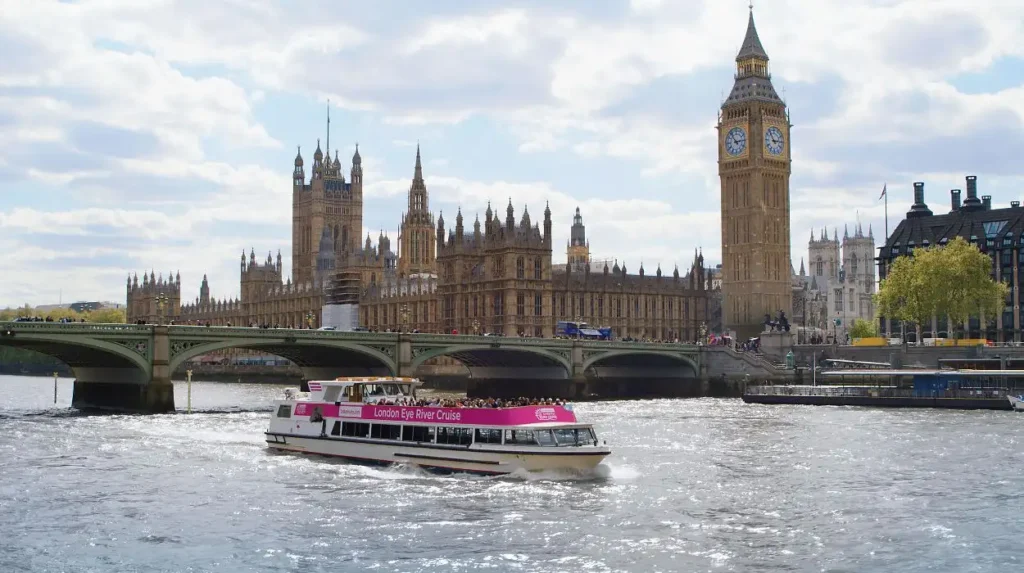
The River Thames shaped London’s economic, political, commercial, and maritime growth for nearly two thousand years. Family river experiences reveal how trade, transport, defence, engineering, and urban expansion transformed the city into Britain’s principal capital and international port.
Roman Londinium developed beside the Thames because the river provided transportation, trade routes, and strategic defence.
During the medieval period, merchants transported wool, timber, grain, wine, and imported luxury goods through London’s expanding port facilities.
The construction of successive bridges connected communities on both riverbanks while encouraging commercial growth.
Modern sightseeing cruises explain the history of Tower Bridge, Westminster, Greenwich, Canary Wharf, and numerous riverside landmarks through chronological interpretation.
Families also discover flood management, tidal patterns, dock redevelopment, and environmental restoration programmes improving water quality and wildlife habitats.
The Thames remains central to London’s identity, supporting tourism, transport, recreation, environmental research, and national ceremonial events.
What educational value do historic palaces provide for children?
London’s historic palaces explain monarchy, governance, architecture, diplomacy, ceremonial tradition, and domestic life through preserved buildings, royal collections, formal gardens, and interpretation that connects constitutional history with everyday experiences of historical communities surrounding the royal court.
Hampton Court Palace illustrates Tudor and Stuart monarchy through surviving kitchens, state apartments, chapels, gardens, and artistic collections.
King Henry VIII transformed Hampton Court into one of England’s grandest royal residences during the early sixteenth century.
Kensington Palace reflects later royal domestic life while presenting exhibitions covering generations of the British royal family.
Buckingham Palace functions as the monarch’s official London residence and administrative headquarters. Although only selected areas open seasonally, ceremonial events including the Changing of the Guard introduce children to continuing constitutional traditions.
These palaces preserve furniture, paintings, decorative arts, manuscripts, and architectural features illustrating changing styles across successive reigns.
Educational programmes explain governance, diplomacy, ceremonial symbolism, and the evolution of Britain’s constitutional monarchy.
Why do interactive attractions strengthen children’s understanding of history and science?
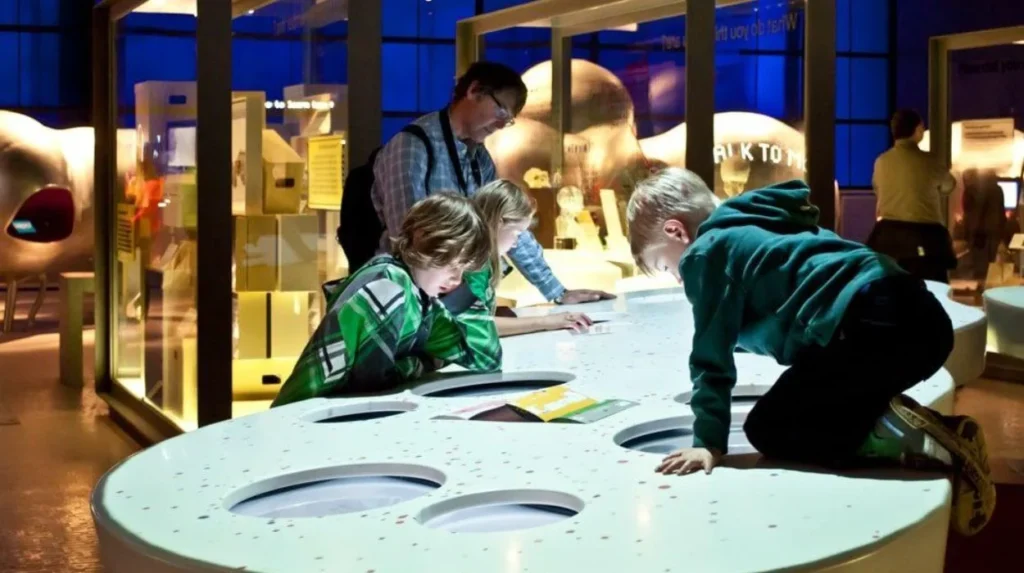
Interactive attractions encourage observation, experimentation, problem-solving, and participation, enabling children to understand historical evidence, scientific processes, engineering principles, and cultural heritage through direct engagement rather than passive information consumption, resulting in stronger educational outcomes and long-term knowledge retention.
Educational research consistently demonstrates that active participation improves comprehension across multiple disciplines.
London’s museums increasingly combine authentic historical collections with digital interpretation, reconstructed environments, experimental demonstrations, and family workshops.
Children investigating Roman artefacts understand archaeology through excavation activities.
Engineering demonstrations illustrate mechanical principles using functioning historical machines.
Scientific laboratories introduce biological classification through specimen examination.
Historical role-playing activities explain medieval governance, Victorian urban life, and wartime experiences by connecting preserved artefacts with everyday human experiences.
This educational approach encourages independent inquiry while supporting classroom learning across history, geography, biology, engineering, environmental science, and cultural studies.
How have London’s family attractions preserved their historical importance for future generations?
London’s leading family attractions preserve nationally significant collections, protected buildings, archaeological evidence, scientific research, historic landscapes, and cultural traditions through conservation, restoration, education, and responsible public access that ensures future generations continue benefiting from Britain’s shared heritage.
Historic England, conservation specialists, museum professionals, archaeologists, architects, scientists, and government agencies collaborate to protect London’s cultural assets.
Major museums maintain climate-controlled storage, digital cataloguing, conservation laboratories, and research partnerships with universities worldwide.
Historic buildings undergo continuous structural monitoring, careful restoration, and archaeological investigation before renovation projects proceed.
Royal parks balance biodiversity conservation with millions of annual recreational visits through habitat management, tree preservation, ecological monitoring, and sustainable landscape planning.
Wildlife institutions expand breeding programmes supporting endangered species while participating in international conservation networks.
Educational outreach increasingly includes digital archives, virtual exhibitions, school partnerships, multilingual interpretation, and accessibility initiatives ensuring wider public engagement.
These preservation efforts maintain London’s reputation as one of the world’s foremost educational destinations for families. Children visiting today experience authentic historical environments, internationally important collections, scientific research, living wildlife, and royal heritage within institutions committed equally to conservation and public education. Their continued protection ensures London’s remarkable combination of history, science, culture, and recreation remains accessible for generations to come, allowing every family visit to contribute to a deeper understanding of Britain’s enduring historical legacy.
Frequently Asked Question
What are the best family attractions in London for children of all ages?
The best family attractions in London include the Tower of London, Natural History Museum, Science Museum, London Zoo, London Eye, British Museum, Hampton Court Palace, Kensington Gardens, and the Royal Parks. These attractions combine history, science, wildlife, and interactive experiences, making them suitable for toddlers, school-age children, teenagers, and adults while providing educational and memorable days out.