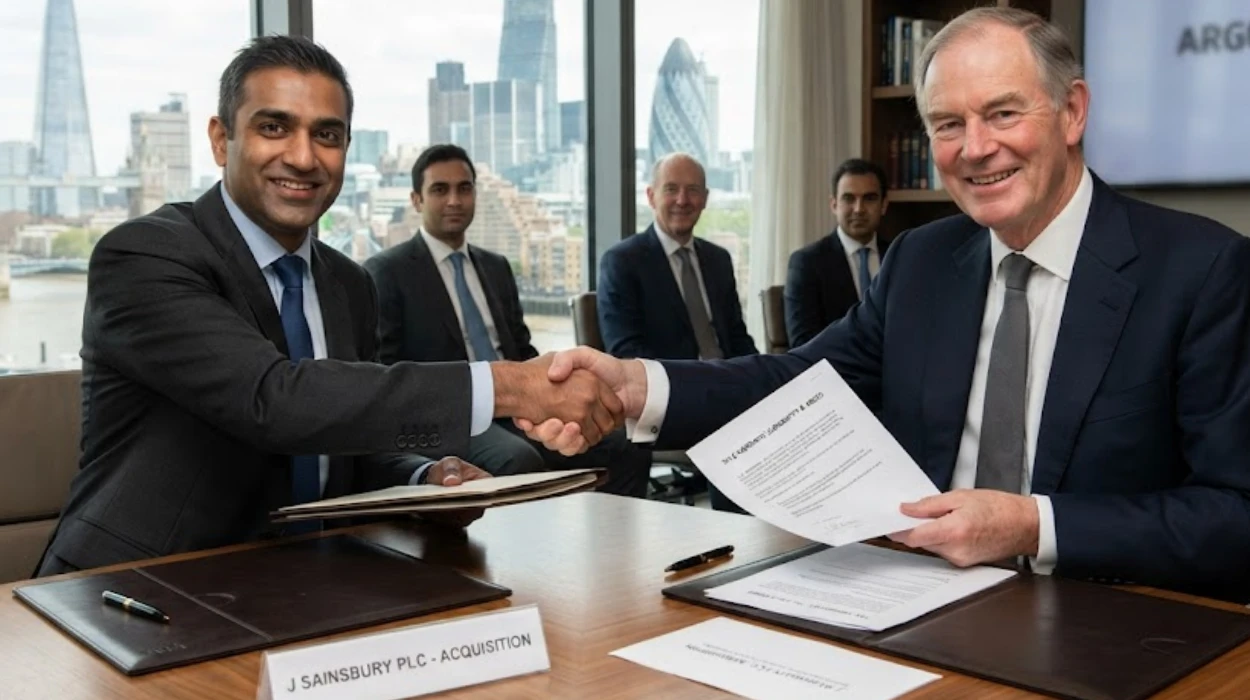
J Sainsbury plc, commonly known as Sainsbury’s, is a multinational grocery and retail chain headquartered in London, United Kingdom. Founded in 1869 by John James Sainsbury, the corporation expanded over a century into one of the “Big Four” supermarkets dominating the British retail landscape. In 2016, Sainsbury’s acquired Home Retail Group—the parent company of Argos—for £1.4 billion, intending to build a dominant food-and-general-merchandise hybrid retailer.
However, shifting market dynamics, escalating supply chain costs, and fierce competition from online-first discount platforms altered the strategic calculus. The acquisition did not yield the long-term synergies or profit margins management anticipated for general merchandise.
By divesting Argos, Sainsbury’s eliminates significant property lease liabilities and dis-synergies, allowing leadership to allocate capital directly toward store expansion, supply chain efficiency, and digital grocery infrastructure.
The structural terms of the transaction specify that Sainsbury’s will receive a cash consideration of at least £120 million.
This figure comprises an initial cash payment of at least £70 million upon the expected completion in February 2027, which includes proceeds from selling an Argos distribution centre. A deferred consideration of £50 million will be disbursed over the subsequent three years.
Market analysts note that while the sale price represents a steep write-down compared to the 2016 acquisition cost, it significantly improves the group’s underlying financial positioning. The transaction reduces lease-adjusted net debt by approximately £250 million and produces a low single-digit accretion to underlying earnings per share.
Sainsbury’s anticipates a non-cash accounting impairment charge of roughly £350 million associated with the disposal, yet maintains its financial guidance for the fiscal year, projecting total underlying operating profit between £975 million and £1.08 billion.
Who are the buyers behind Swift Partners?
Swift Partners is a newly established corporate acquisition vehicle controlled by former Co-op chief executive Richard Pennycook, former Morrisons finance director Trevor Strain, and True Capital executive chairman Matt Truman.
Swift Partners, legally registered as Swift Whistle Midco Limited, was formed specifically to acquire and operate the Argos retail network. The private investment is backed by True Capital, a specialized London-based retail investment and advisory firm.
The leadership team brings extensive operational experience from major British retail institutions, including Tesco, Morrisons, The Co-op, and Howdens.
Richard Pennycook assumes the role of executive chair of Argos, dedicating three days per week to guiding the company’s operational turnaround and strategic expansion. Trevor Strain and Matt Truman join the Argos board of directors to oversee corporate governance, financial restructuring, and technology integration.
The buyer consortium plans to leverage advanced technology, digital innovation, and artificial intelligence transformation to scale Argos operations.
Argos currently operates a multichannel model consisting of 201 standalone retail park stores, 466 collection points, and 466 in-supermarket digital collection points, totaling 1,133 points of presence across the United Kingdom. With approximately 80% of Argos sales generated online, Swift Partners intends to focus on digital-first retail optimization while maintaining physical touchpoints.
The acquisition includes the transfer of standalone stores, in-store operations, logistics networks, and sourcing offices. Meanwhile, Sainsbury’s will retain responsibility for the Argos defined benefit pension scheme, which currently maintains a financial surplus.
What will happen to Argos stores located inside Sainsbury’s supermarkets?
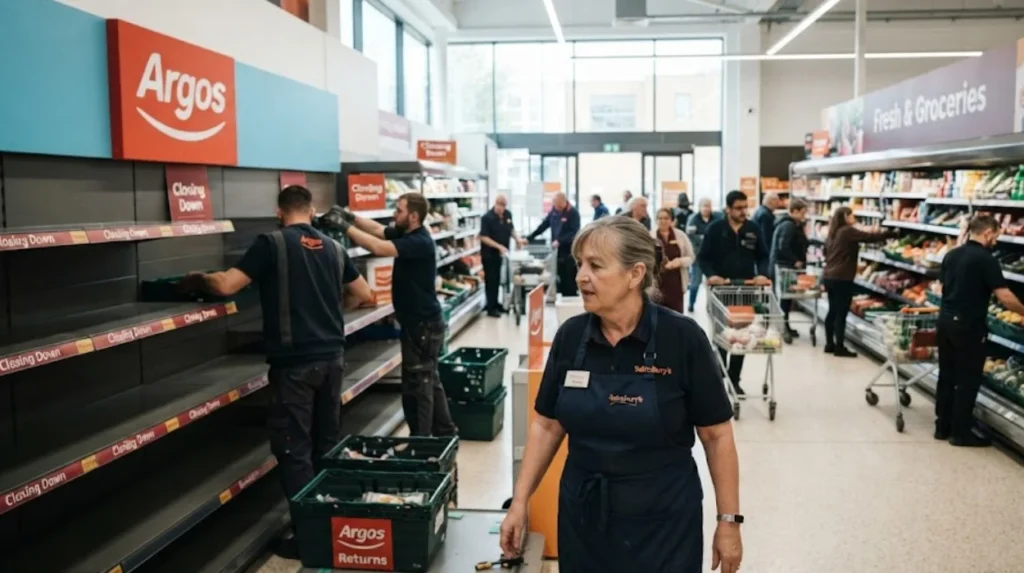
Argos collection points and concessions embedded within Sainsbury’s supermarkets will remain operational through long-term commercial agreements established between Sainsbury’s and Swift Partners.
The structural separation of Argos from Sainsbury’s does not mean the immediate disappearance of the brand from supermarket aisles. Long-term commercial contracts guarantee that existing Argos concessions, store-in-store locations, and collection lockers inside Sainsbury’s branches will continue trading without disruption for customers.
Swift Partners will pay commercial rental income to Sainsbury’s for utilizing retail floor space inside supermarket properties.
Furthermore, the transition preserves cross-brand integration elements. Argos will maintain its integration with the Nectar loyalty program and utilize Nectar360 insight and retail media network services to target shoppers. Additionally, Sainsbury’s will continue to sell Habitat home furnishing products, maintaining strategic alignment in home and lifestyle offerings.
Regulatory review processes mean the transaction is scheduled for formal completion in February 2027. Following completion, a transitional service period of up to 24 months will take place, targeting full corporate and operational separation by February 2029.
During this operational handover window, Sainsbury’s and Swift Partners will deploy transitional service arrangements to ensure supply chain continuity, inventory management, and stability for employees and suppliers.
How does this divestment fit into wider UK retail trends?
J Sainsbury plc’s divestment of Argos mirrors a broader macroeconomic contraction among legacy British supermarkets away from capital-intensive general merchandise toward high-frequency grocery operations and digital media.
The British retail sector has experienced structural transformations driven by e-commerce expansion, rising business rates, and inflationary pressures on consumer discretionary spending.
Supermarket conglomerates that spent the 2000s and 2010s diversifying into banking, insurance, clothing, and electrical goods are systematically shedding non-core assets to streamline operations.
Sainsbury’s previously executed similar divestments, including winding down its banking division, selling off ATM networks, and offloading travel money and Argos financial services portfolios.
These strategic retreats reflect a disciplined focus on unit economic efficiency. Supermarket executives face intense margin compression from discount grocery competitors such as Aldi and Lidl, necessitating concentrated capital expenditure on food quality, automated distribution centres, and proprietary loyalty data monetization via retail media networks.
The £120 million valuation placed on Argos—down from £1.4 billion in 2016—illustrates how traditional retail asset values have adjusted in response to digital-native competition and high physical lease commitments. Analysts point out that general merchandise has become increasingly difficult for grocery operators to manage profitably within large-format hypermarkets, where square-footage revenue requirements are stringent.
By transferring ownership of Argos to a specialized retail equity vehicle like Swift Partners, the brand gains an independent corporate structure capable of executing agile digital transformations unburdened by supermarket-scale grocery logistics.
What are the short-term and long-term implications for customers and employees?
Customer shopping routines, online ordering channels, and employee contracts will experience no immediate alterations, with transitional safeguards protecting workforce stability through the 2029 separation deadline.
For consumers, the acquisition agreement is structured to ensure complete continuity. Website interfaces, home delivery networks, click-and-collect services, and gift card redemptions remain fully operational under existing terms. The physical footprint across high streets, retail parks, and supermarket concessions remains untouched during the regulatory review period leading up to the February 2027 completion date.
For employees across Argos corporate offices, logistics hubs, and retail branches, the transition introduces a dedicated ownership group focused exclusively on scaling the general merchandise brand. Swift Partners has emphasized that protecting the workforce and maintaining existing workplace values are central to its investment thesis.
Over the long term, the entry of retail executives with specialized backgrounds in technology and artificial intelligence suggests that Argos will accelerate its transition toward automated logistics, personalized digital marketing, and streamlined warehouse management. While the physical separation process scheduled to run until February 2029 will require complex IT and supply chain decoupling, the long-term commercial agreements safeguard the brand’s nationwide accessibility within Sainsbury’s locations. Ultimately, the transaction allows Sainsbury’s to consolidate its position as a streamlined food retailer while granting Argos an independent platform to navigate the future of digital-first retail
Why is Sainsbury’s selling Argos?
Sainsbury’s is selling Argos to focus on its core grocery business as part of its “Next Level Strategy.” The move allows the retailer to reduce debt, simplify operations, and invest more in food retail, digital grocery services, and supply chain improvements.