A political row over the future of Soho’s nightlife has intensified after Westminster City Council confirmed it will proceed with licensing measures that favour greater seating and table service in some new venues, while retaining restrictions on new pubs and bars in the West End. London Mayor Sadiq Khan has accused the council of ignoring opposition to its approach, arguing that excessive restrictions could damage businesses and one of the capital’s most important cultural and economic sectors. But Westminster says the controversy has been fuelled partly by misunderstanding technical licensing terminology and insists it is not introducing a blanket ban on standing in pubs.
What Westminster’s Policy Actually Says
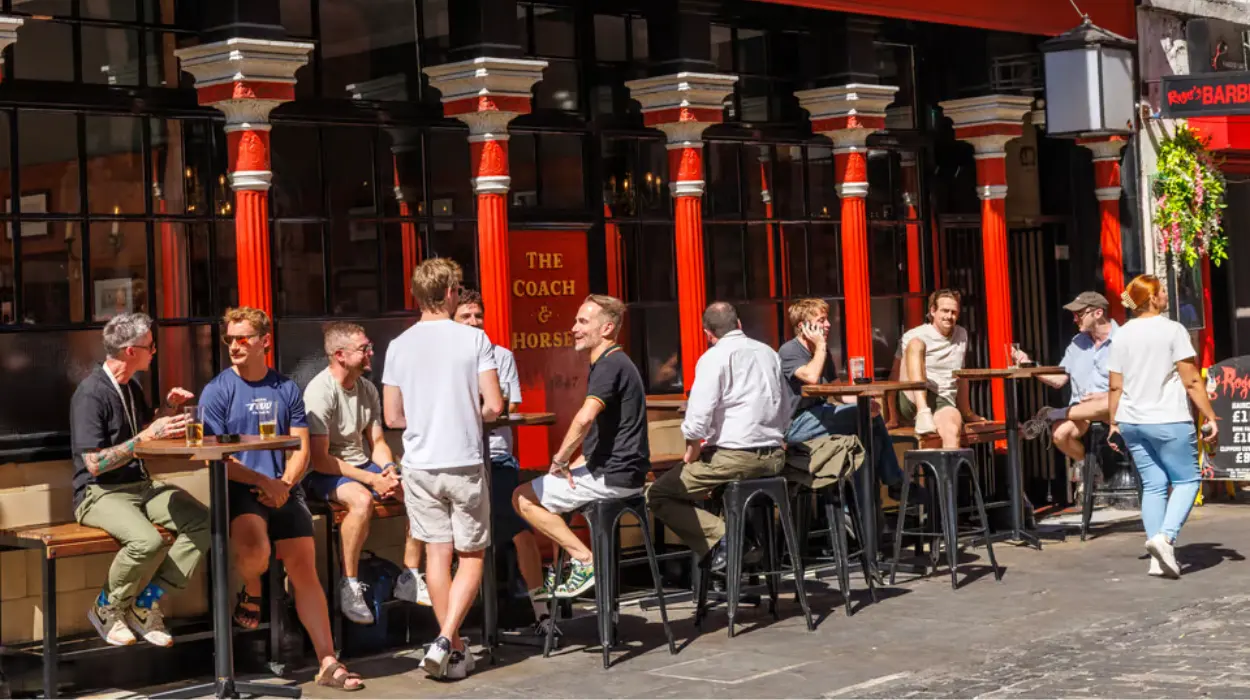
The dispute centres partly on the term “vertical drinking”, which refers to customers drinking while standing rather than being seated. Westminster’s licensing policy says that, when considering new licence applications, the council will seek to discourage excessive drunkenness and encourage more seating and table service instead of open bar space designed for high-volume vertical drinking. However, the council has explicitly rejected claims that it intends to stop people from standing in pubs. In an August 7 clarification, Westminster said there had “never” been a plan to prevent customers from standing while drinking. The council says the approach is particularly relevant to new premises in parts of the West End where there are already hundreds of licensed venues, rather than an across-the-board prohibition affecting existing pubs.
Cumulative Impact Zone Fuels the Dispute
A second and larger point of contention is Westminster’s West End Cumulative Impact Zone (CIZ), which covers Soho and other major nightlife areas. The policy creates a presumption against certain new pub and bar applications in the zone unless exceptional circumstances can be demonstrated. The latest consultation figures have strengthened criticism of the council. According to reporting published on September 8, 81% of respondents opposed the CIZ, while 84% said they believed Westminster’s licensing policy would be damaging to businesses. Khan has called the council’s position “breathtaking” and argued that London’s hospitality and nightlife industries are vital to the capital’s economy and international reputation. The mayor has also backed new powers that are expected to allow him to intervene in some local licensing decisions.
Why the Stakes Are So High
The dispute comes as London seeks to protect its night-time economy from rising costs, staffing pressures, changing consumer behaviour and licensing challenges. A January 27, 2026 report by London’s independent Nightlife Taskforce estimated that the capital’s broader night-time economy generated £139.6 billion in gross value added in 2024, equivalent to roughly a quarter of London’s economic output. The report also said the sector supports more than one million night-time workers. That makes the argument over Soho more than a dispute about how customers drink in pubs. It is part of a wider debate about how London can maintain a thriving nightlife industry while dealing with the consequences of high concentrations of late-night venues.
Westminster Calls for More Police and Transport
Westminster argues that licensing policy is only one part of the problem. On September 7, the council called for greater investment in policing and late-night transport, including additional night buses and a 24-hour Tube service on Thursdays. It said better transport would help reduce crowding around closing times and allow people to leave the West End safely. The council also said it had reviewed how it communicates its licensing policy following the consultation and would clarify technical terms such as “vertical drinking” and “cumulative impact”. It plans to review licensing annually and establish an expert advisory group to develop ideas for supporting the sector.
A Fight Over the Future of Soho
The numbers illustrate the tension. Reporting on the latest licensing data found that only 3.5% of applications referred to Westminster licensing subcommittees between 2023 and 2026 were approved exactly as submitted, while pub and wine-bar applications fell by 80% between 2022 and 2024. For critics, those figures point to a licensing environment that could make it increasingly difficult for new hospitality businesses to open. For Westminster, however, the issue is about managing the cumulative impact of thousands of venues, including concerns over public safety, noise, crime and crowding. The council says it wants to support pubs, clubs and other hospitality businesses while ensuring the West End remains safe and accessible. For Soho, the argument is therefore not simply about whether people can stand at a bar. It is about what kind of nightlife London wants to build and how much regulation is needed to protect the people who live, work and socialise there. As Westminster moves forward with its revised licensing approach, the clash between the council and City Hall is likely to keep Soho at the centre of London’s debate over the future of its night-time economy.