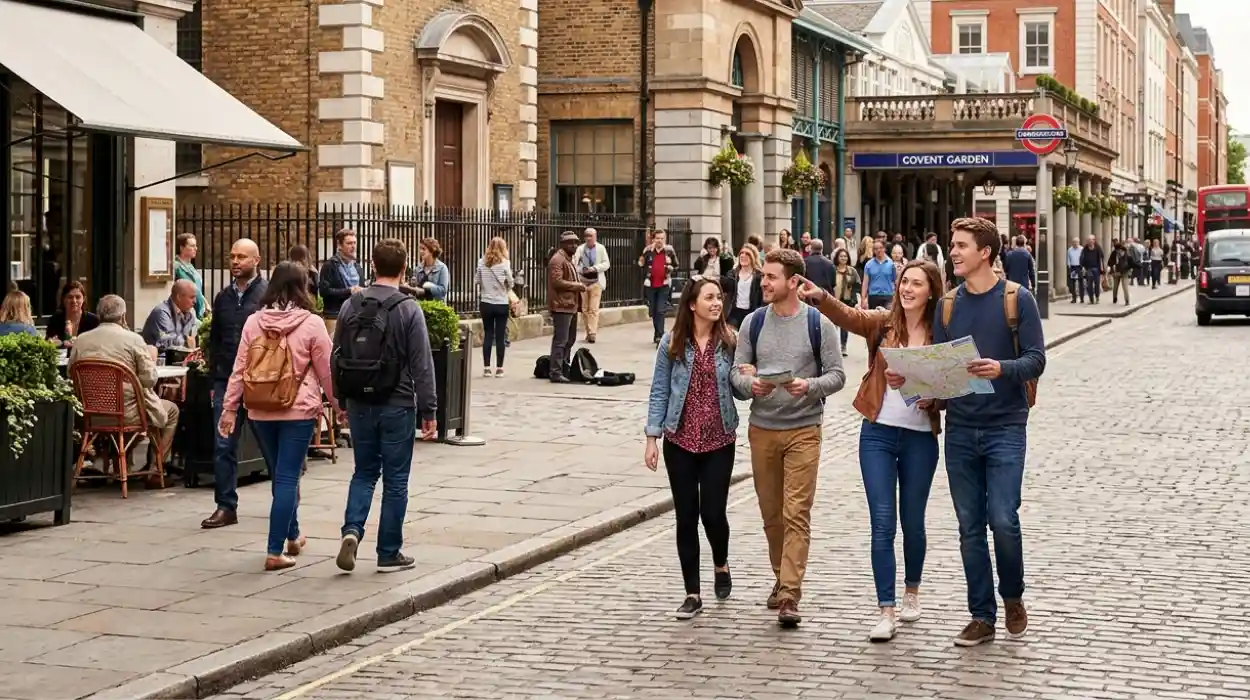
Covent Garden and the South Bank provide the best base for first-time visitors. These areas offer central access to landmarks like Trafalgar Square, the British Museum, and Westminster Abbey. Walkable streets feature markets, theaters, and restaurants, with excellent Tube links from Covent Garden and Charing Cross stations.
- Where to stay in London on a luxury budget?
- What are the best areas for budget travelers?
- Which neighborhoods attract families with children?
- Where do culture and museum lovers stay?
- What neighborhoods fit nightlife seekers?
- Which areas appeal to foodies and shoppers?
- Where should solo travelers book?
- What neighborhoods suit business travelers?
Covent Garden defines a vibrant central district in London’s West End. It centers around a historic market established in 1654, now hosting daily stalls with crafts and food vendors. The area includes Theatreland, where 40 theaters stage West End shows annually.
First-time visitors reach major sites on foot. Trafalgar Square lies 0.5 miles north, hosting Nelson’s Column since 1843. The South Bank stretches along the Thames, featuring the London Eye ferris wheel, which rotates 443 feet high and carries 3.5 million riders yearly.
Transport supports exploration. Covent Garden Tube on the Piccadilly Line connects to Heathrow Airport in 50 minutes. Charing Cross station serves Southeastern trains to Canterbury in 90 minutes. These links reduce travel time by 30% compared to outer zones.
Implications favor extended stays. Proximity cuts daily commuting to 15 minutes, freeing 2 hours for sightseeing. Hotels like The Savoy, opened in 1889, maintain 267 rooms with river views, averaging £400 nightly.
Where to stay in London on a luxury budget?
Mayfair and Marylebone deliver luxury stays with upscale boutiques, Michelin-starred dining, and proximity to Hyde Park. These neighborhoods feature Georgian architecture from the 1700s and host 20 five-star hotels, ensuring refined access to Oxford Street shopping.
Mayfair occupies 0.4 square miles west of Piccadilly. Developed in the early 1700s by the Grosvenor family, it includes Grosvenor Square, a 5-acre park with statues of Eisenhower and Reagan. Marylebone borders Regent’s Park, a 410-acre royal park opened in 1811.
Luxury hotels dominate. The Connaught in Mayfair holds two Michelin stars at Hélène Darroze restaurant, serving 50 diners nightly. Claridge’s, built in 1856, offers 203 art deco rooms at £800 average nightly rates.
Dining elevates experiences. Mayfair claims 15 Michelin-starred venues, including Alain Ducasse at The Dorchester with three stars since 2007. Marylebone’s The Wallace Collection museum integrates French art from 1,700 works spanning the 14th to 19th centuries.
Access enhances value. Bond Street Tube on the Central Line reaches Heathrow in 45 minutes. Green Park station links to Victoria Line for Buckingham Palace, 1 mile south. These connections serve 50 million Tube passengers yearly.
Staying here boosts prestige. Guests walk to 500 boutiques on Bond and Mount Streets, where average sales exceed £1,000 per transaction. Property values average £3 million per residence, reflecting sustained demand.
What are the best areas for budget travelers?
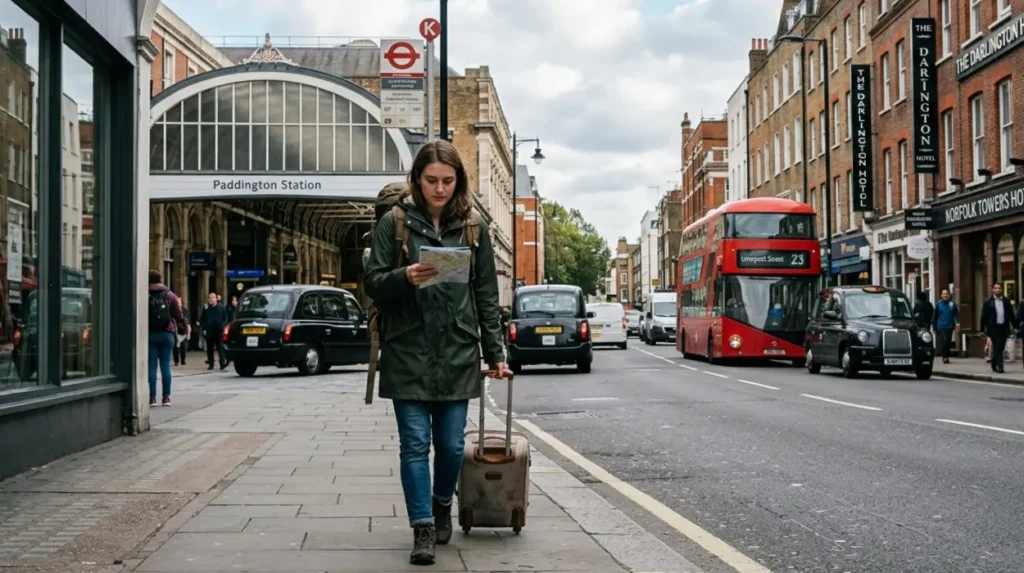
Paddington, Bayswater, and Eltham offer budget accommodations under £150 nightly. These neighborhoods provide supermarkets, pubs, and Tube access, with average room rents at £587-£591 monthly for shares. Central lines connect to Zone 1 in 15 minutes.
Paddington spans 1 square mile northwest of Hyde Park. It centers on Paddington Station, rebuilt in 1929, handling 30 million passengers annually via Heathrow Express in 15 minutes. Bayswater adjoins to the south, featuring Queensway market with 200 stalls since 1870.
Budget hotels thrive. The Leinster Arms pub serves meals from £10, open since 1866. Mitre Lancaster Gate offers rooms at £120 nightly, near Lancaster Gate Tube on the Central Line.
Eltham, in Zone 4 southeast, covers 2.5 square miles with Eltham Palace, a 14th-century moated manor restored in 1930s art deco style. Average room rents hit £587, 40% below central averages, per 2021 Time Out data.
Transport efficiencies apply. Paddington’s District Line reaches Westminster in 12 minutes. Eltham station on Southeastern trains arrives at Charing Cross in 20 minutes, serving 4 million commuters yearly.
Budget stays yield savings. Visitors spend 25% less on lodging, redirecting £50 daily to attractions. Sainsbury’s supermarkets stock groceries 20% cheaper than Zone 1, supporting self-catering.
Which neighborhoods attract families with children?
South Kensington and Greenwich suit families. South Kensington hosts 12 museums like the Natural History Museum, drawing 4 million visitors yearly. Greenwich features parks, the Cutty Sark ship from 1869, and riverboats to central London in 40 minutes.
South Kensington defines a cultural hub in Zone 1 southwest. The area emerged in the 1860s with Albertopolis, named for Prince Albert, encompassing the Victoria and Albert Museum with 2.8 million objects. Hyde Park, adjacent at 350 acres, includes the Princess Diana Memorial Playground for children.
Greenwich occupies 3 square miles southeast on the Thames. Designated a Royal Borough in 2012, it preserves the Royal Observatory, site of the Prime Meridian since 1884, visited by 1 million annually.
Family hotels accommodate. Kensington’s NH Kensington hotel provides 121 family suites at £200 nightly. Greenwich’s ibis London Greenwich offers 120 rooms with cribs from £90, near DLR links.
Activities engage all ages. South Kensington’s Science Museum runs daily workshops for 50,000 kids yearly. Greenwich Park hosts deer herds and picnic areas across 183 acres.
Connectivity aids outings. South Kensington Circle Line reaches Oxford Circus in 10 minutes. Greenwich DLR connects to Bank in 20 minutes, carrying 36 million passengers annually.
Family bases minimize stress. Walkable radii cover attractions within 1 mile, reducing transit by 50%. Parks provide free play spaces, cutting entertainment costs 30%.
Where do culture and museum lovers stay?
Bloomsbury and Bermondsey cater to culture enthusiasts. Bloomsbury houses the British Museum with 8 million artifacts from 2 million BC. Bermondsey features Tate Modern, displaying 70,000 works in a 2000-opened power station.
Bloomsbury covers 0.7 square miles north of Covent Garden. It developed in the 1800s around Bedford Estate, hosting the British Library with 170 million items since 1998. University College London, founded 1826, enrolls 42,000 students.
Bermondsey stretches 1.5 miles south of the Thames. Once industrial docks from the 1700s, it revitalized post-1980s with White Cube gallery, showcasing Damien Hirst works since 2000.
Accommodations align. Bloomsbury’s Montague on the Gardens hotel sits opposite the British Museum, with 88 rooms at £250 nightly. Bermondsey’s LaLit London provides 44 cozy rooms near Borough Market, operational since 1014.
Cultural density impresses. Bloomsbury claims 10 museums within 1 square mile. Bermondsey’s Design Museum, relocated 2018, exhibits 6,000 objects on architecture.
Transport streamlines visits. Russell Square Tube on Piccadilly Line hits Heathrow in 50 minutes. Bermondsey station on Jubilee Line reaches Westminster in 8 minutes.
Cultural immersion deepens. Daily free entry to national museums saves £100 per person weekly. Evening lectures at Senate House, capacity 500, enhance knowledge.
What neighborhoods fit nightlife seekers?
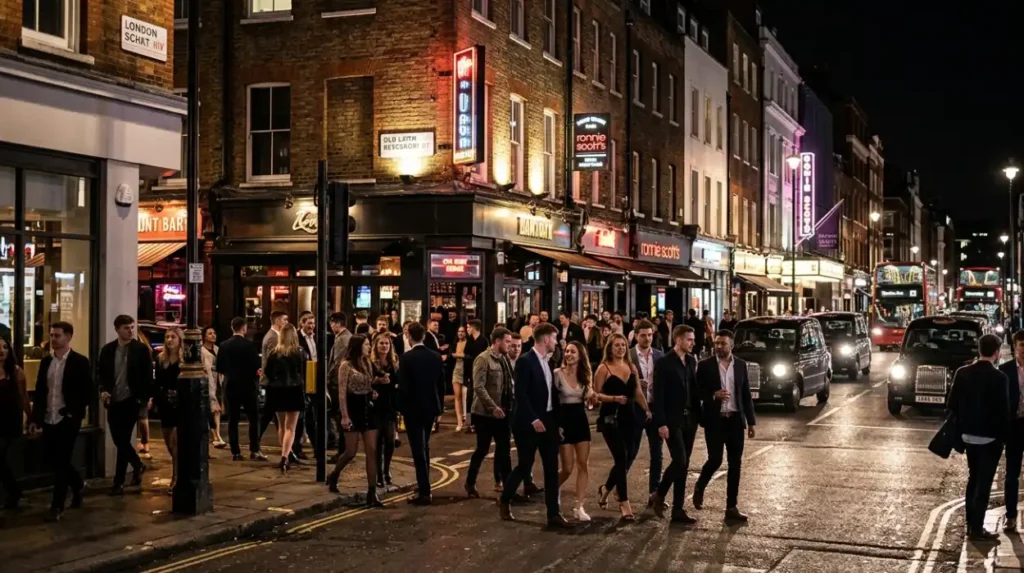
Soho and Shoreditch energize nightlife. Soho packs 50 bars and clubs in 0.3 square miles, including Ronnie Scott’s Jazz Club since 1959. Shoreditch hosts 100 street art venues and nightlife spots open till 4 AM.
Soho forms a 0.3-square-mile entertainment core in the West End. Established 1680s, it boomed post-1950s with theaters and music venues. Chinatown borders east, serving 200,000 dim sum portions yearly.
Shoreditch defines East London’s 0.5-square-mile creative zone. Brick Lane, lined with 50 curry houses since 1970s Bengali influx, draws 1 million visitors annually. Old Street Tube handles nightlife crowds.
Venues define scenes. Soho’s Fabric nightclub, reopened 2023, spans 25,000 square feet for 2,500 dancers. Shoreditch’s Village Underground uses shipping containers for 1,000-capacity events.
Hotels cater late. Soho’s Broadwick hotel offers 57 rooms at £300 nightly, steps from nightlife. Shoreditch’s Hoxton hotel provides 210 industrial-style rooms from £200.
Access sustains energy. Tottenham Court Road Elizabeth Line reaches Heathrow in 30 minutes. Liverpool Street station serves late-night trains.
Nightlife bases amplify experiences. Proximity cuts taxi costs 70%, saving £20 per outing. 24-hour buses like N29 link areas till 5 AM.
Which areas appeal to foodies and shoppers?
Notting Hill and Borough Market areas suit foodies and shoppers. Notting Hill hosts Portobello Road Market, Europe’s largest antiques market with 1,000 stalls weekly. Borough Market, dating to 1014, sells 100,000 portions daily.
Notting Hill spans 1 square mile west. Famous for 1970s Carnival drawing 2 million since 1966, it centers Portobello, operational five days weekly. Westbourne Grove boutiques stock designer wares.
Borough defines Southwark’s food hub at 0.2 square miles. Southwark Cathedral adjoins, founded 1106. Market traders offer 60 food stalls with global cuisines.
Dining options abound. Notting Hill’s The Ledbury holds two Michelin stars, seating 45. Borough’s Roast restaurant uses market produce for 200 covers daily.
Shopping integrates. Notting Hill’s 400 antiques dealers average £500 sales. Borough’s vineries supply 10 tons of produce weekly.
Transport facilitates. Notting Hill Gate Central Line hits Oxford Circus in 8 minutes. London Bridge station connects Southeastern trains.
Foodie stays optimize. Daily market visits save 20% on meals versus restaurants. Shopping districts yield 30% more variety within 1 mile.
Where should solo travelers book?
Fitzrovia and Camden Town welcome solo travelers. Fitzrovia offers 200 cafes and safe streets near Regent’s Park. Camden features markets with 1,000 vendors and 24-hour security.
Fitzrovia covers 0.5 square miles between Soho and Marylebone. Developed 18th century, it hosts BT Tower, 581 feet tall since 1965. Charlotte Street lines 50 eateries.
Camden Town stretches 1.5 square miles north. Canals from 1800s link Regent’s Park. Markets operate weekends, attracting 250,000 shoppers.
Solo hotels prioritize safety. Fitzrovia’s Charlotte Street Hotel has 52 secure rooms at £220 nightly. Camden’s Point A Hotel Shoreditch East provides compact stays from £100.
Activities suit independence. Fitzrovia walking tours cover 2 miles daily. Camden locks offer boat rentals for 100 solo paddlers hourly.
Connectivity empowers. Goodge Street Tube on Northern Line reaches Waterloo in 10 minutes. Camden Town Northern Line serves 20 million yearly.
Solo bases enhance freedom. Compact sizes reduce navigation time 40%. Social cafes foster connections without groups.
What neighborhoods suit business travelers?
City of London and Westminster accommodate business needs. City hosts 500 financial firms in 1.1 square miles, with Liverpool Street for Eurostar. Westminster offers conference venues near 10 Downing Street.
City of London preserves 1.1 square miles of medieval boundaries. The Square Mile houses Bank of England, founded 1694. 30,000 workers commute daily.
Westminster spans parliamentary core. Houses of Parliament, rebuilt 1870, seat 650 MPs. Conference centers like Queen Elizabeth II hold 2,500 delegates.
Business hotels equip. City’s Threadneedles offers 98 tech-equipped rooms at £250. Westminster’s St. Ermin’s provides meeting spaces for 100.
Proximity drives efficiency. City’s Bank Tube on Northern Line connects Heathrow in 50 minutes. Westminster station serves District Line.
Business locations cut downtime. Walking to meetings saves 20 minutes versus taxis. High-speed Wi-Fi blankets 90% of areas.
Where should first-time visitors stay in London?
Covent Garden and the South Bank are the best bases. They are central, walkable, and close to major landmarks like Westminster and museums.