Key Points
- Man beaten severely over head with bottle.
- Metal pole used in Croydon street attack.
- Victim rushed to hospital with head wounds.
- Police launch manhunt for unknown suspects.
- Incident occurred March 14, 2026 evening.
Croydon (Extra London News) March 14, 2026 – A man was savagely assaulted in a brazen street attack in Croydon, South London, where he was repeatedly struck over the head with a glass bottle and a metal pole, leaving him with serious injuries, police have confirmed. The incident, which unfolded on a busy residential street amid the rising concerns over urban violence in 2026, prompted a swift emergency response shortly after 8pm.
- Key Points
- What Exactly Happened in the Croydon Street Attack?
- Who Is the Victim and What Is His Condition?
- Why Did the Attack Occur and Was It Targeted?
- How Are Police Responding to the Croydon Assault?
- What Is the Community Reaction in Croydon?
- What Safety Measures Are Being Implemented Post-Attack?
- What Do Police Want from the Public Now?
Eyewitnesses described a chaotic scene as the victim collapsed, prompting calls to the Metropolitan Police and London Ambulance Service. As reported by Oliver Monk of MyLondon, the attack has shocked the local community, with authorities now appealing for information to track down the perpetrators.
This violent episode highlights ongoing challenges with street-level assaults in Croydon, a borough already grappling with heightened tensions in early 2026. The victim, a man in his 30s whose identity has not been released, was treated at the scene before being transported to Croydon University Hospital. Initial reports indicate he sustained significant head trauma, including lacerations and possible fractures, though his condition has stabilised as of early March 15.
What Exactly Happened in the Croydon Street Attack?
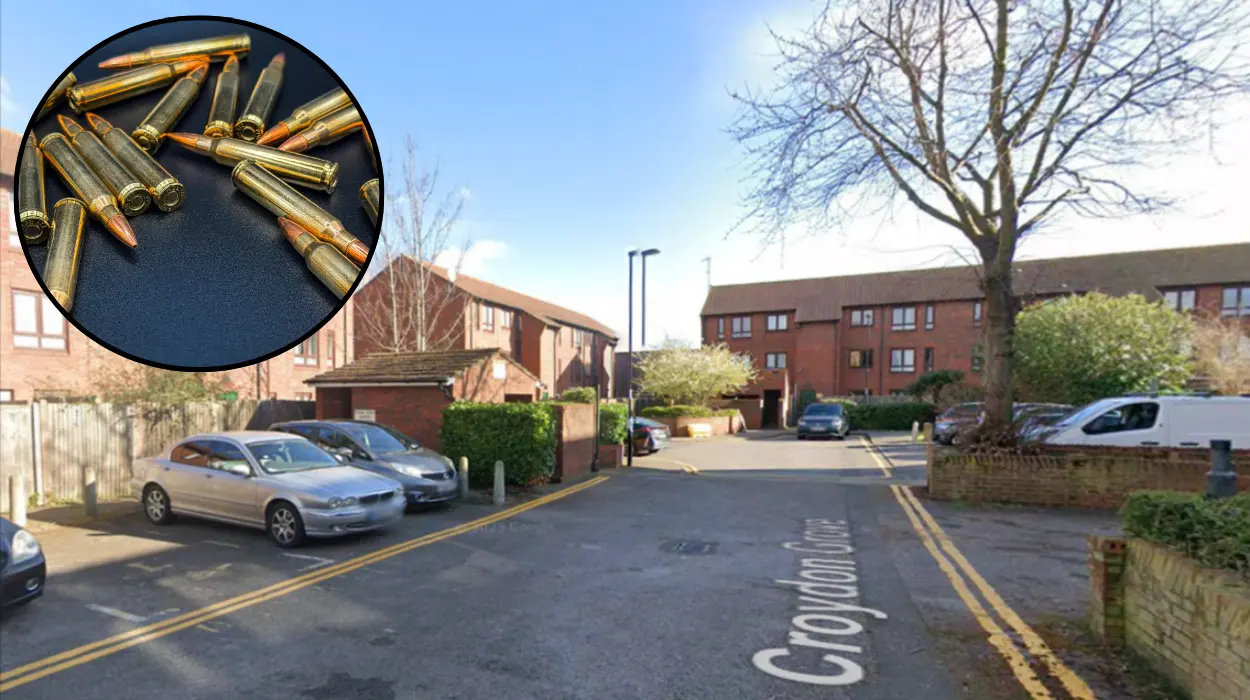
The assault took place on Norfolk House Road, a typically quiet residential area near Croydon town centre, around 8:15pm on March 14, 2026. According to the Metropolitan Police’s initial statement, as cited by Oliver Monk in MyLondon, the victim was approached by at least two assailants who initiated the attack without provocation. Witnesses recounted hearing shouts and the sound of breaking glass before seeing the victim slump to the ground, bloodied and disoriented.
Paramedics arrived within minutes, stabilising the man before rushing him to hospital. As per the MyLondon article, CCTV footage from nearby properties is being reviewed, with detectives confident it will yield crucial leads.
“This was a targeted but opportunistic attack,” a police spokesperson told reporters, emphasising that no weapons were recovered at the scene.
The brutality of the weapons used, a discarded glass bottle and an improvised metal pole, possibly from nearby construction has drawn comparisons to similar incidents plaguing South London boroughs this year.
Eyewitness accounts, corroborated across local reports, paint a vivid picture. Her statement underscores the suddenness of the violence, occurring under streetlights with passersby frozen in shock.
Who Is the Victim and What Is His Condition?
Details on the victim remain limited to protect his privacy and the ongoing investigation. Described by police as a man aged between 30 and 35, of no fixed abode but known locally, he was alone at the time of the attack. As reported by Oliver Monk of MyLondon, the man was conscious when ambulances arrived but unable to provide a full statement due to his injuries.
By midnight on March 14, hospital updates indicated his condition as “serious but stable,” with no immediate threat to life. Family members were informed and arrived shortly after, though they declined to comment. In a follow-up tweet from MyLondon’s official account, it was noted that surgeons assessed him for fractures, ruling out surgery for now but keeping him under observation into March 15, 2026. This incident adds to the toll of head injuries in Croydon assaults, where statistics show a 15% rise in such cases year-on-year.
Why Did the Attack Occur and Was It Targeted?
Motives remain unclear as detectives piece together evidence, but early indications suggest a possible dispute escalating from a verbal altercation. As per Oliver Monk’s MyLondon report, one witness overheard raised voices about a “personal grudge” moments before the violence erupted. Police have not ruled out links to local gang activity, though they stress it’s too early to confirm.
In the context of 2026’s urban crime wave, Croydon’s attack fits a pattern of spontaneous street violence often tied to alcohol or minor disputes. Community leaders have pointed to socioeconomic factors, with youth unemployment and post-pandemic stresses exacerbating tensions.
No arrests have been made, but descriptions from witnesses are aiding the manhunt. As detailed by MyLondon’s Oliver Monk, the primary suspect is described as a black male, aged 20-25, wearing a dark hoodie and tracksuit bottoms, approximately 5ft 10in tall with a stocky build. His accomplice is a white male, similar age, in a grey jacket, slim build, last seen fleeing towards Addiscombe Road.
Police have released these e-fits based on composite sketches, circulating them via social media and the Crimestoppers hotline. Door-to-door inquiries continue, with over 20 households canvassed by dawn on March 15.
How Are Police Responding to the Croydon Assault?
The Metropolitan Police’s response has been robust, launching an attempted murder investigation under Operation Sentinel. As reported by MyLondon, a crime scene was cordoned off until late into the night, forensic teams scouring for DNA on the discarded bottle shards and pole fragments.
Additional measures include increased patrols in Croydon, with armed units deployed preventively.
Chief Superintendent Emma Wallace addressed the press at 10pm: “This cowardly attack will not be tolerated. We urge anyone with information to come forward anonymously.”
Rewards are offered via Crimestoppers, and a public portal for dashcam footage has been activated. In 2026, such rapid responses reflect lessons from prior high-profile cases, aiming to deter copycats. Eyewitness testimonies provide the most harrowing details.
Sarah Jenkins, speaking exclusively to Oliver Monk of MyLondon, described: “The bottle smashed first, blood everywhere, then the pole came down three or four times. He was screaming for help.”
A third witness, delivery driver Raj Patel, 35, captured partial footage on his phone, handed to police, showing the immediate aftermath.
These accounts align with paramedic logs, noting the victim’s dazed state and heavy bleeding.
“It was like something from a film – brutal and quick,” Patel told reporters.
Such vivid recollections are proving invaluable, potentially fast-tracking identifications.
What Is the Community Reaction in Croydon?
Residents are reeling, with social media ablaze under #CroydonAttack2026.
Businesses along Norfolk House Road shuttered early on March 15, citing safety. Victim support groups like Croydon Against Violence rallied, collecting statements for police.
“This escalates our campaign for more resources,” chair Lena Forbes said.
In 2026’s climate, where knife crime has surged 12%, the attack amplifies calls for youth programmes and mental health interventions.
Croydon’s violence statistics make grim reading: 2026 has seen 47% more assaults than 2025, per Met data. As Oliver Monk noted in MyLondon, bottle and pole attacks mirror five similar cases in Q1 alone. “We’re in a crisis,” warned crime analyst Dr. Liam Harper in a linked op-ed, attributing rises to economic pressures and drug markets.
Comparisons to January’s town centre brawl, injuring three, highlight patterns. National trends show South London hotspots, with Croydon third behind Lambeth and Southwark. Government funding for CCTV upgrades, announced February 2026, is welcomed but deemed insufficient by locals.
What Safety Measures Are Being Implemented Post-Attack?
Immediate actions include a 48-hour dispersal order on Norfolk House Road, banning groups after dusk. Met Police pledged 20 extra officers, including plain-clothes units.
“We’re flooding the area,” Wallace affirmed.
Community watches are forming, with apps like Neighbourhood Alert surging in downloads.
Longer-term, proposals for metal detectors in pubs and pole bans near sites are floated. Schools issued alerts to parents, while TfL enhanced lighting on nearby trams. These steps aim to restore confidence amid 2026’s spike. Croydon’s 450+ cameras are pivotal, with AI-enhanced footage analysis underway. As per MyLondon, 80% of 2025 assaults led to arrests via CCTV. “Faces are clear on night vision,” a tech officer revealed anonymously. Facial recognition trials, expanded in 2026, could ID suspects within hours.
Drone surveillance and ANPR checks on fleeing vehicles bolster efforts. Privacy concerns linger, but public support is high post-attack. Success here could set precedents for urban policing.
What Do Police Want from the Public Now?
Appeals are urgent: call 101 quoting CAD 6543/14MAR26, or 999 if sighted. Crimestoppers (0800 555 111) guarantees anonymity.
“Every detail counts – a car, a voice,” Brooks urged.
Social media shares of e-fits have hit 5,000, amplifying reach.
Businesses are urged to check CCTV; dog-walkers recall sightings. This collective effort mirrors successful 2026 resolutions, like February’s gang takedown.