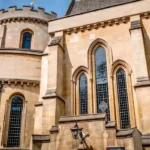
London’s Inns of Court preserve one of the most complete surviving legal and medieval landscapes in Britain. These districts contain historic churches, courtyards, libraries, gardens, and halls connected to the development of English common law, the Knights Templar, and the education of barristers across more than 700 years.
- What makes a walking route through the Inns of Court historically important?
- How did the Knights Templar shape the origins of the Temple District?
- Why is Temple Church one of London’s most significant medieval buildings?
- How did the Inns of Court become centres of legal education?
- What architectural styles define the Inns of Court today?
- How did the Inns of Court influence British political and constitutional history?
- Why do the Inns of Court remain important heritage sites in modern London?
The Inns of Court occupy a historic corridor between Westminster and the City of London. The four surviving Inns are Inner Temple, Middle Temple, Lincoln’s Inn, and Gray’s Inn. Together, these institutions formed the professional and educational centre of the English bar.
The districts developed during the medieval period when lawyers established residential communities close to the royal courts at Westminster. Barristers required proximity to judges, Parliament, and government offices while remaining outside the authority of the City of London guild system. This geographical position shaped the distinct institutional identity of the Inns.
The Inns of Court remain architecturally unusual because they evolved as enclosed professional societies rather than commercial neighbourhoods. Gates, passageways, courtyards, and gardens separated the legal districts from surrounding streets. Many areas still restrict vehicle access, preserving the quiet atmosphere historically associated with legal study and professional discipline.
These districts also preserve major examples of English architectural history. Medieval chapels stand beside Tudor halls, Georgian terraces, Victorian libraries, and post-war reconstruction projects. Several buildings hold Grade I or Grade II listed status because of their historical and architectural significance.
The Inns additionally influenced legal systems across the world. English common law traditions developed within these institutions spread throughout the British Empire and continue influencing judicial systems in countries including Canada, Australia, India, Pakistan, and the United States.
Today, the Inns remain active legal institutions while functioning as heritage landscapes visited by historians, students, architects, genealogists, and cultural tourists.
What makes a walking route through the Inns of Court historically important?
A walking route through the Inns of Court reveals the evolution of medieval London, English legal education, and institutional architecture within a compact urban area. The route connects crusader history, Tudor governance, Georgian planning, Victorian expansion, and modern conservation across interconnected courtyards and historic streets.
The walking route through the Inns traditionally begins near the River Thames at Temple and proceeds north toward Holborn. This historical alignment reflects the relationship between the legal profession and Westminster’s royal courts.
Temple district streets preserve some of London’s oldest surviving institutional geography. Narrow alleys connect hidden courtyards, cloisters, terraces, and gardens developed gradually over centuries. Unlike commercial streets rebuilt repeatedly for retail expansion, the Inns retained stable ownership structures that protected historic layouts.
The route also demonstrates how London survived multiple destructive events. The Great Fire of 1666 destroyed much of the City of London, while bombing during the Second World War devastated surrounding districts. Despite this destruction, substantial portions of the Inns survived or were carefully restored according to original plans.
Walking through the Inns reveals changing architectural styles linked to specific historical periods. Medieval stone churches coexist with Tudor timber halls, Georgian brick chambers, and Victorian Gothic libraries. Post-war reconstruction introduced modern engineering while preserving historic façades and street alignments.
Gardens form another distinctive feature of the route. Landscaped green spaces historically provided areas for legal study, recreation, and ceremonial gatherings. Several gardens survive today as protected heritage environments within densely developed central London.
The Inns additionally preserve legal traditions rarely visible in other historic districts. Barristers continue working within chambers located inside historic buildings. Ceremonial dinners, chapel services, and professional events still occur within medieval and Tudor halls.
To experience this historic legal quarter in person today, consult our comprehensive [London Inns of Court Walking Guide] for itineraries and visiting parameters.
How did the Knights Templar shape the origins of the Temple District?
The Knights Templar established the original Temple complex during the twelfth century as their English headquarters. Their church, residences, financial offices, and riverside estate created the foundation later transformed into the Inner Temple and Middle Temple legal districts.
The Knights Templar formed around 1119 during the Crusader period. The order combined military, religious, and financial functions under papal authority. Templar estates across Europe generated revenue supporting Christian military campaigns in the eastern Mediterranean.
The Templars established their London headquarters beside the Thames after 1160. This location provided strategic access to Westminster, royal government institutions, and river transportation networks. The complex included residences, gardens, storage facilities, chapels, and administrative offices.
The centrepiece of the estate became Temple Church. The church’s circular nave reflected architectural inspiration from the Church of the Holy Sepulchre in Jerusalem. Circular churches remained uncommon in England, making Temple Church architecturally distinctive.
The Templars also became important financial administrators. Kings, nobles, and merchants deposited money within Templar systems because the order operated an international network protected by papal authority. Historians frequently identify the Templars as innovators in medieval banking administration.
The order collapsed during the early fourteenth century after political conflict with Philip IV of France. French authorities arrested Templars across France in 1307. The papacy formally dissolved the order in 1312.
After the suppression of the Templars, the Temple estate eventually passed to the Knights Hospitaller. Legal professionals later leased buildings and chambers within the district because the area provided convenient access to Westminster courts. Over time, these legal communities evolved into the Inner Temple and Middle Temple.
The History of Temple Church: London’s Knights Templar Legacy remains central to understanding how crusader institutions influenced the development of London’s legal geography. The transition from military-religious headquarters to legal district created one of Britain’s most historically layered urban environments.
Why is Temple Church one of London’s most significant medieval buildings?
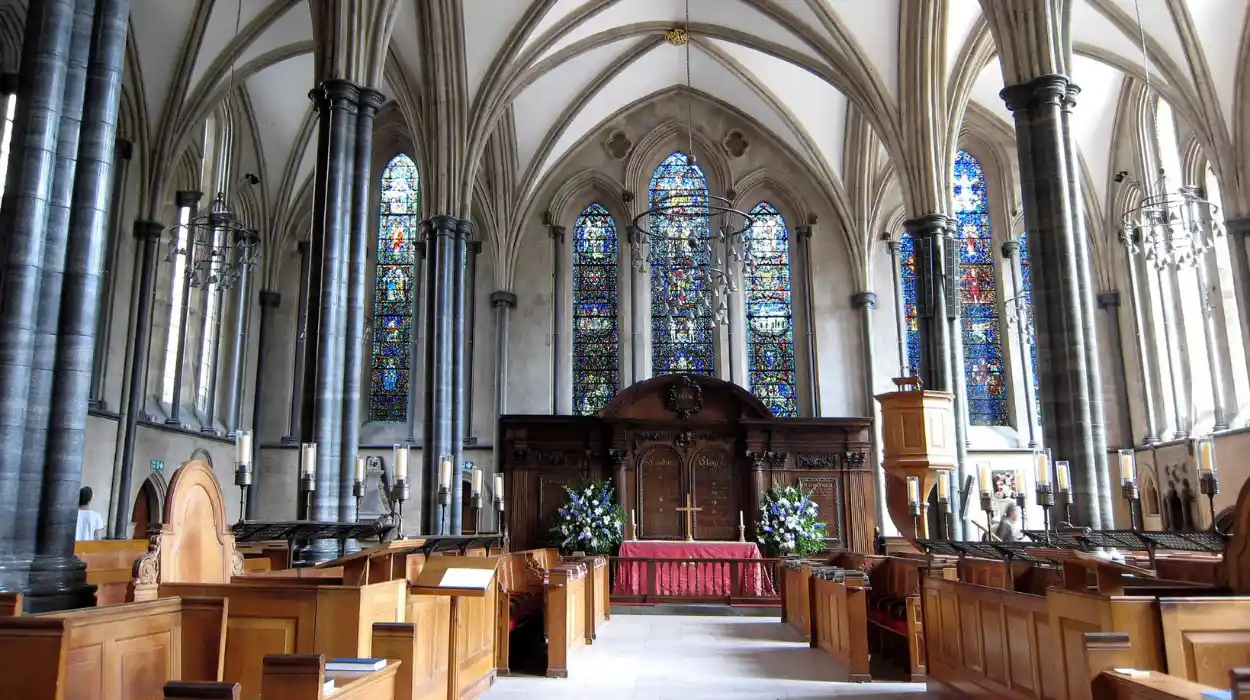
Temple Church remains one of London’s most important medieval monuments because it preserves crusader architecture, knightly tombs, royal associations, and legal traditions within a single surviving structure. The church also demonstrates the continuity of institutional history from the twelfth century to the present day.
Temple Church was consecrated in 1185 by Heraclius. The church became a major religious and political landmark because of its association with the Knights Templar and the Crusades.
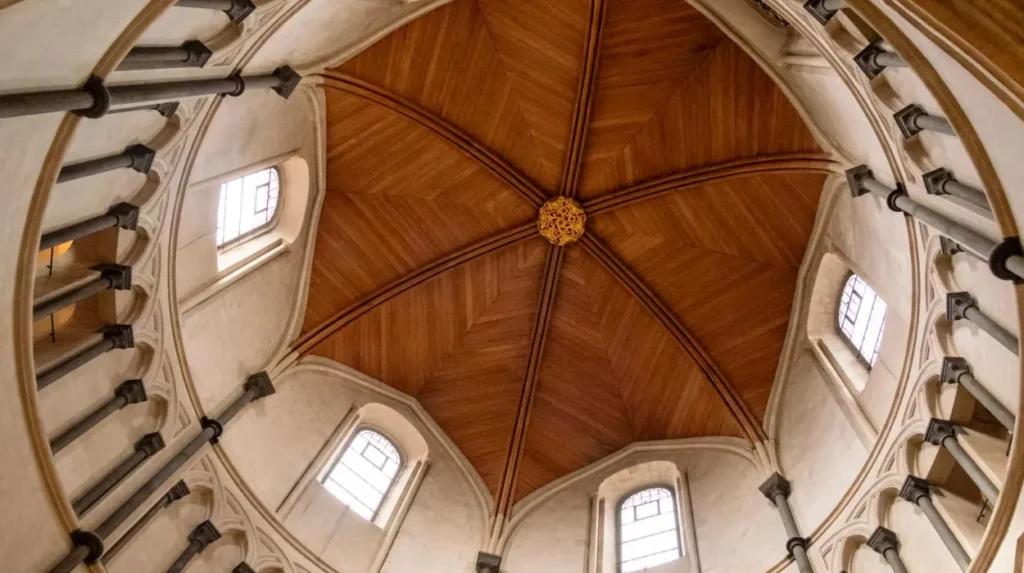
The round nave represented direct architectural symbolism connected with Jerusalem. This design distinguished the church from most English parish churches, which followed rectangular layouts. During the thirteenth century, the Templars expanded the building by adding a rectangular chancel reflecting increasing wealth and institutional influence.
Temple Church contains several important medieval effigies. The most famous monument is associated with William Marshal, one of medieval England’s most influential nobles. Marshal served multiple monarchs and played a critical role during the political instability following the death of King John.
The church later developed strong links with the legal profession after the Inns of Court established permanent residency nearby. Barristers from Inner Temple and Middle Temple jointly maintained the church for worship and ceremonial events. This shared arrangement survives today.
Temple Church escaped destruction during the Great Fire of 1666 because wind conditions redirected flames away from the Temple district. However, German bombing during the Blitz caused severe damage in 1941. Fire destroyed sections of the roof, interior fittings, and decorative features.
Post-war restoration programmes reconstructed damaged sections using surviving architectural drawings, photographs, and archaeological evidence. Conservation architects attempted to preserve medieval stonework while stabilising the structure for long-term use.
The church also possesses literary importance. William Shakespeare referenced the Temple gardens in Henry VI, Part 1 during the fictionalised origin scene of the Wars of the Roses. This literary association strengthened the cultural visibility of the Temple district within English historical imagination.
Temple Church remains active as both a place of worship and heritage site. Visitors continue studying its architecture, music traditions, effigies, and wartime restoration history.
How did the Inns of Court become centres of legal education?
The Inns of Court became centres of legal education during the medieval and Tudor periods when professional lawyers developed independent systems of training based on lectures, debates, apprenticeships, and ceremonial dining. These institutions eventually regulated entry into the English legal profession.
English legal administration expanded significantly during the fourteenth century. Royal courts required trained advocates capable of interpreting statutes, managing property disputes, and navigating procedural law.
Universities such as Oxford and Cambridge focused mainly on theology, canon law, and Roman civil law. Practical training in English common law therefore developed separately within professional legal communities located near Westminster.
The Inns created educational systems based on direct observation and participation. Students attended “readings,” which involved lectures delivered by senior barristers. “Moots” provided opportunities for debating hypothetical legal cases. Dining requirements reinforced institutional discipline and professional hierarchy.
Communal dining held educational importance because students interacted directly with experienced practitioners during formal meals. Attendance rules ensured regular participation in institutional life. These traditions continue within modern barrister training systems.
The Inns also accumulated large libraries and manuscript collections. Early legal reports circulated through handwritten compilations preserved by barristers and judges. These materials contributed to the development of precedent-based common law systems.
By the sixteenth century, legal education within the Inns attracted aristocrats, politicians, and royal administrators. Many individuals trained in law even when they did not pursue courtroom careers. This broader participation strengthened the relationship between law and governance in Tudor and Stuart England.
Architectural expansion accompanied institutional growth. New halls, gardens, staircases, libraries, and residential chambers appeared across the Inns. Georgian rebuilding campaigns introduced brick terraces and symmetrical courtyards while preserving medieval street patterns.
The Inns remain responsible for “calling” barristers to the Bar in England and Wales today. This ceremony formally authorises advocates to practise within higher courts.
What architectural styles define the Inns of Court today?
The Inns of Court contain architectural layers spanning medieval, Tudor, Georgian, Victorian, and post-war reconstruction periods. Their buildings demonstrate how centuries of institutional continuity preserved historic urban design within central London despite repeated episodes of destruction and redevelopment.
The most recognisable features of the Inns are their enclosed courtyards and gated entrances. These boundaries historically regulated access to residential and professional areas occupied by barristers and students.
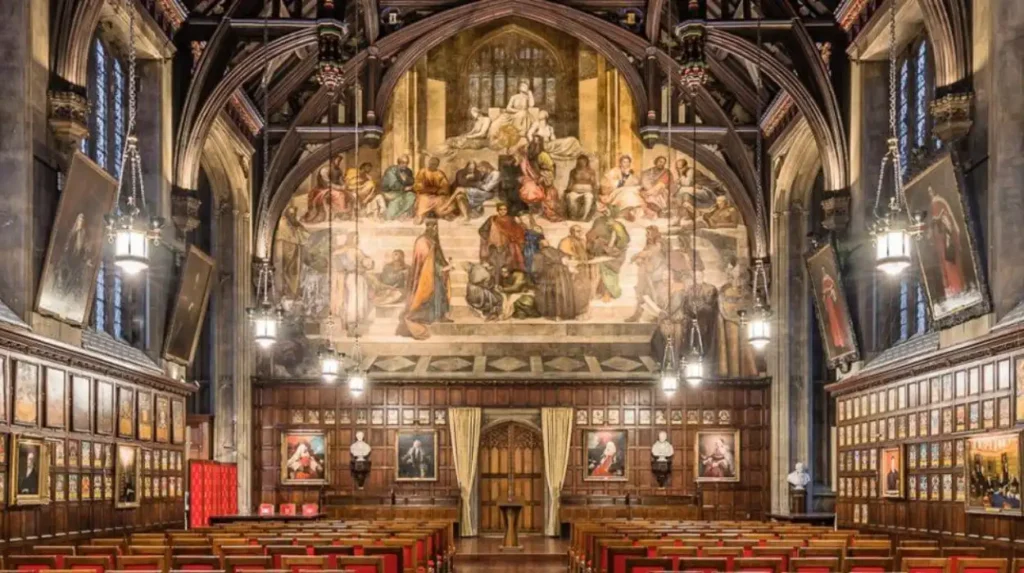
Lincoln’s Inn preserves some of London’s finest medieval institutional architecture. Lincoln’s Inn Hall, completed during the fifteenth century, contains a hammerbeam roof and stained-glass windows associated with elite late medieval construction techniques.
The chapel at Lincoln’s Inn reflects Tudor and early classical architectural influence. Elements associated with Inigo Jones demonstrate the gradual transition from Gothic to Renaissance-inspired design in seventeenth-century England.
Gray’s Inn remains especially notable for its gardens. Landscaped green spaces became important during the Renaissance because educated elites associated gardens with intellectual reflection and social order.
Victorian expansion introduced Gothic Revival architecture across several Inns. Decorative brick façades, pointed arches, carved stonework, and ornate libraries reflected nineteenth-century enthusiasm for medieval institutional design.
Bombing during the Second World War caused extensive destruction throughout the Temple and Holborn districts. Reconstruction programmes after 1945 attempted to preserve historic street patterns while integrating modern structural systems. Conservation architects relied heavily on archival documentation and surviving fragments.
Modern preservation policies regulate alterations within the Inns. Listed-building protections, conservation guidelines, and institutional review committees maintain architectural continuity across the districts.
How did the Inns of Court influence British political and constitutional history?
The Inns of Court trained generations of barristers, judges, parliamentarians, and administrators who shaped British constitutional development and international common law traditions. Their institutional culture influenced parliamentary governance, judicial independence, and legal education across multiple continents.
English common law developed through judicial decisions and precedent rather than a single written legal code. Barristers trained within the Inns argued cases that established rules governing contracts, criminal procedure, property rights, and constitutional authority.
Many major political figures received legal training through the Inns. Lawyers frequently entered Parliament, royal administration, and colonial government service. This overlap strengthened connections between legal expertise and political power.
The Inns played significant roles during constitutional conflicts of the seventeenth century. Barristers debated issues involving parliamentary sovereignty, taxation, royal authority, and civil liberties during periods including the English Civil War and the Glorious Revolution.
Legal traditions associated with the Inns later spread throughout the British Empire. Common law systems introduced in colonies incorporated adversarial trials, judicial precedent, and independent advocacy. These structures continue influencing legal systems in numerous countries today.
The Inns additionally trained colonial judges and administrators responsible for establishing courts overseas. English legal procedures adapted to local conditions while retaining institutional frameworks originating in London.
Educational reforms during the nineteenth century introduced formal examinations and standardised professional qualifications. However, ceremonial traditions and institutional governance structures remained deeply rooted in medieval precedent.
The continuing authority of the Inns demonstrates the endurance of historical legal institutions within modern democratic systems.
Why do the Inns of Court remain important heritage sites in modern London?
The Inns of Court remain important heritage sites because they preserve active legal institutions, medieval architecture, historic archives, and ceremonial traditions within a modern global city. Their buildings and records provide essential evidence for understanding Britain’s legal, political, and urban history.
The heritage importance of the Inns extends beyond architecture alone. Institutional continuity remains historically significant because few organisations in Britain maintain uninterrupted operational histories stretching back to the medieval period.
Archival collections stored within the Inns contain legal manuscripts, admission registers, maps, portraits, parliamentary materials, and estate records. These collections support research in genealogy, urban history, constitutional studies, and architectural conservation.
Ceremonial traditions also survive within the Inns. Formal dinners, chapel services, and “call to the Bar” ceremonies preserve practices established centuries ago. These rituals reinforce institutional identity while connecting modern barristers with historical legal culture.
Tourism increasingly contributes to the visibility of the Inns. Walking tours, heritage open days, exhibitions, and educational programmes introduce visitors to areas often overlooked by mainstream London tourism focused on Westminster, Buckingham Palace, or the Tower of London.
Conservation challenges nevertheless remain significant. Historic masonry, timber roofs, stained glass, and archival materials require continuous maintenance. Urban development pressures surrounding Fleet Street and Holborn also threaten the quiet character historically associated with the Inns.
Climate change presents additional risks. Increased rainfall, pollution, and fluctuating temperatures affect historic buildings and manuscript collections. Preservation strategies now include environmental monitoring and digital archiving initiatives.
The Inns continue balancing professional privacy with public accessibility. Barristers still work inside historic chambers, while selected gardens, churches, and halls increasingly welcome visitors interested in legal and architectural history.
For historians, educators, cultural tourists, genealogists, and legal researchers, the Inns of Court provide one of London’s clearest surviving examples of institutional continuity across eight centuries. Medieval crusader foundations, Tudor legal education, Georgian rebuilding, Victorian expansion, wartime reconstruction, and modern conservation coexist within a compact urban landscape that continues functioning as part of Britain’s active legal system.
What are the Inns of Court?
The Inns of Court are four historic legal institutions in London responsible for the education, training, and professional membership of barristers in England and Wales.