Key Points
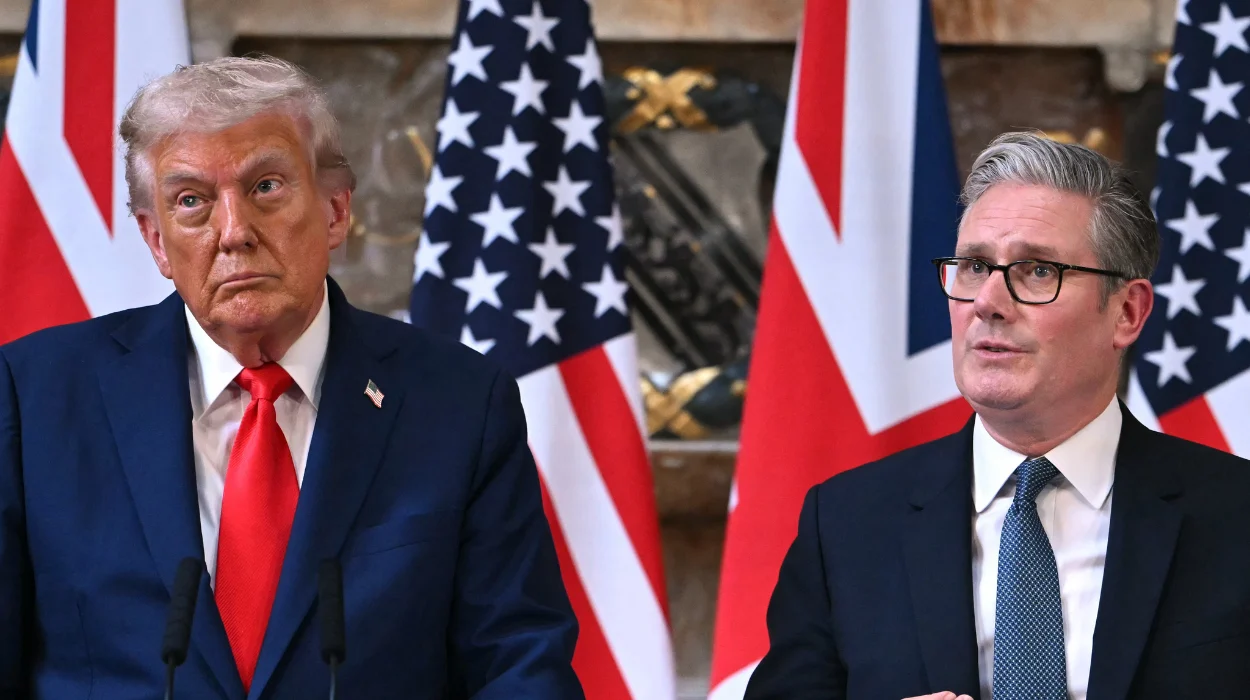
- Transatlantic Tension: The United Kingdom government is prepared to defy direct warnings from United States President Donald Trump’s administration regarding potential blanket bans or severe restrictions on social media use for children under the age of 16.
- White House Intervention: The US Embassy in London submitted an official response to the UK’s regulatory consultation, explicitly warning against “blunt regulatory instruments” and “broad social media bans,” arguing instead for targeted adult content restrictions and enhanced parental controls.
- Protection Over Politics: UK Technology Secretary Liz Kendall stated she would not be swayed “in any way, shape or form” by American diplomatic objections, asserting that her primary obligation is to British families and parents who responded to the consultation.
- Massive Public Mobilisation: The UK government’s online safety consultation received approximately 120,000 responses, establishing it as the second-largest public consultation in British political history, surpassed only by the equal marriage consultation in 2012.
- Corporate and Ideological Friction: The White House expressed concern that such prohibitions place a “disproportionate compliance burden” on American technology firms and jeopardise free speech, following recent public criticism from US Vice-President JD Vance regarding the UK’s regulatory direction.
- Impending Legislative Action: Prime Minister Sir Keir Starmer confirmed that the government plans to announce a “radical safety overhaul” within weeks, which may include targeted app bans, restrictions on algorithmic features like infinite scrolling, and curbs on minor-to-adult interactions on gaming platforms.
What Is the Immediate Update on the Transatlantic Dispute?
London (Extra London News) June 9, 2026 – The United Kingdom government is poised to defy explicit warnings from United States President Donald Trump over young people’s digital autonomy, moving forward with plans for rigorous social media restrictions despite formal American diplomatic interventions. The diplomatic friction intensified following a submission by the US Embassy in London to a major British public consultation, which cautioned Downing Street against enacting a blanket ban or severe regulatory curbs for children under the age of 16. British ministers have swiftly rebuffed the stance of the White House, insisting that domestic policy on child safety will be dictated by the welfare of British citizens rather than the commercial interests of Silicon Valley or the political ideology of Washington.
- Key Points
- What Is the Immediate Update on the Transatlantic Dispute?
- What Exactly Did the United States Government Object To?
- How Has the British Cabinet Responded to Washington’s Warnings?
- Why Has This Consultation Achieved Historical Significance?
- What Specific Safety Measures Are Being Considered by Downing Street?
- What Do Bereaved Families and Campaigners Say About the Measures?
- What Legal and Geopolitical Challenges Lie Ahead for the UK?
The escalating dispute marks a significant geopolitical flashpoint between Sir Keir Starmer’s administration and the newly re-elected Trump administration. While the White House advocates for an open-by-default internet model supported by parental tools, the UK Cabinet is moving rapidly toward a legislative overhaul that could see certain high-risk applications banned entirely and fundamental functionalities heavily restricted for minors. This decisive policy direction signals that the UK is willing to risk a substantial trade and diplomatic row with its closest Western ally to address what it characterises as a national crisis in youth mental health and digital safety.
As reported by political correspondents across mainstream broadsheets, Science, Innovation and Technology Secretary Liz Kendall has firmly established the government’s refusal to compromise. Speaking to journalists on Tuesday morning, Kendall underlined that the sheer volume of public participation from British citizens carries far greater weight than the diplomatic representations of a foreign power. The row develops at a critical juncture, as British tech regulators prepare to implement the next phases of the Online Safety Act alongside fresh legislative measures designed to fundamentally alter how tech companies operate within the British market.
What Exactly Did the United States Government Object To?
As reported by Dan Sabbagh and media correspondents at The Guardian, the official submission from the US Embassy in London detailed a deep-seated institutional resistance to “prescribed one-size-fits-all government restrictions.” The diplomatic correspondence explicitly outlined the White House’s preference for “narrowly targeted requirements” aimed at isolating adult content, “rather than broad social media bans.”
According to the text of the US submission published by The Guardian, the Trump administration stated:
“We believe an open internet is essential to the preservation of free speech and most content should be accessible by default unless the provider knows or has reason to know the user is a child.”
The American government further argued that existing age-verification technologies are not sufficiently mature to reliably differentiate between older minors and adults without creating significant privacy vulnerabilities. As documented in the embassy’s brief, the US administration cautioned that establishing hard 13-to-16 age gates could “impose disproportionate compliance burdens on American companies” and warned against regulatory frameworks that inherently single out US tech platforms while leaving alternative digital services unmonitored.
Instead of legislative blocks, the White House has urged the United Kingdom to mandate that platforms provide “robust tools” directly to parents, allowing families to independently manage account controls, privacy matrices, and algorithm exposure. This philosophy directly mirrors the broader deregulation strategy favored by the current administration in Washington, which views state-enforced digital lockouts as an infringement on corporate freedom and individual liberty.
Explore more Politics News:
SNP Urges Rachel Reeves to Lower Fuel Tax: London 2026
Green Party Launches High-Stakes Council Campaign: London 2026
How Has the British Cabinet Responded to Washington’s Warnings?
As reported by the PA News Agency and distributed via regional titles including the Barrhead News, senior figures within the British government have reacted with definitive non-compliance. In a direct broadcast interview with Sky News, Technology Secretary Liz Kendall rejected the notion that American diplomatic pressure could alter Downing Street’s legislative timeline or policy scope.
As reported by PA journalists, Liz Kendall explicitly declared:
“I will not be swayed in any way, shape or form from doing what I believe is right for children in this country.”
Kendall clarified that while her department would read the American submission “carefully,” her ultimate accountability remained local. She added that she was
“much more bothered about the parents who have replied to the consultation”
than the complaints of overseas trade offices.
Simultaneously, Prime Minister Sir Keir Starmer backed his Technology Secretary during a crucial Cabinet assembly. As reported by the Prime Minister’s official spokesperson to Westminster journalists, Starmer told his Cabinet that the scale of the public feedback “showed the strength of feeling about the issue” across the nation. The spokesperson confirmed that the Prime Minister remains entirely
“focused on what’s right for families here and now, and into the future,”
effectively dismissing the White House’s warnings regarding corporate compliance costs.
Why Has This Consultation Achieved Historical Significance?
The scale of public engagement with this regulatory process has transformed it into a landmark political event. As reported by the House of Commons Library in a comprehensive research briefing, the government consultation titled “Growing up in the online world” officially registered 116,211 valid responses by the time it concluded. This makes it the second-largest public consultation in the legislative history of the United Kingdom, trailing only the historic 2012 consultation regarding equal marriage.
The massive influx of testimonies came primarily from parents, educational institutions, mental health practitioners, and young people themselves. According to data compiled by Westminster researchers, the driving force behind this public mobilization is a profound, widespread anxiety regarding the unchecked impact of smartphone addiction and unregulated algorithms on the development of adolescents.
The social momentum has cut across traditional party lines. Conservative Party Leader Kemi Badenoch has repeatedly and publicly demanded a decisive, statutory ban on social media for children under 16, ensuring that the opposition benches continue to apply immense pressure on the Labour government to deliver a radical package rather than a watered-down compromise.
What Specific Safety Measures Are Being Considered by Downing Street?
Rather than an unstructured, absolute lockout which some charities warn could unpick vital support networks, the UK government is preparing what insiders describe as a sophisticated “layered approach.” As detailed by home affairs editor Dan Sabagh, the impending policy announcement—expected within days—will likely stop short of an outright, scorched-earth ban on every digital platform but will instead introduce a “radical safety overhaul” targeting specific application architectures.
According to ministerial briefings highlighted by The Guardian, the core components of the proposed legislation include:
- Targeted App Prohibitions: Full operational bans on platforms deemed intrinsically hazardous or non-compliant with age-assurance mandates, with probable carve-outs for educational resources and dedicated platforms like YouTube Kids.
- Algorithmic Disablement: Statutory blocks preventing under-16s from accessing hyper-addictive features, including infinite scrolling feeds, predictive algorithms, and automated push notifications.
- Interactivity Curbs: Direct restrictions on multiplayer gaming ecosystems, such as Roblox, to prevent unmonitored communication between adults and children.
- AI Chatbot Governance: The implementation of strict age ratings and content filters governing how minors interact with generative artificial intelligence systems, which Ofcom data indicates have achieved rapid, mainstream adoption among teenagers.
What Do Bereaved Families and Campaigners Say About the Measures?
The human cost driving this legislative push was underscored during an emotional meeting at 10 Downing Street on Tuesday afternoon. As reported by ITV News correspondents, Sir Keir Starmer met privately with a delegation of bereaved parents whose children died as a direct consequence of online harms, including cyber-bullying, algorithmic radicalisation, and viral online stunts.
Speaking to broadcasters immediately following the Downing Street summit, Lisa Kenevan—whose son Isaac tragically lost his life after participating in an online phenomenon known as the “blackout challenge”—expressed the collective desperation of the families. As reported by ITV News, Kenevan stated:
“We do not want this group to grow any further.”
Other attendees revealed that the Prime Minister had given explicit, binding assurances regarding the timeline for state action. As reported by Ellen Roome, whose 14-year-old son Jools Sweeney died in 2022, Starmer committed to a rapid implementation cycle. Roome told reporters:
“He also said to us it would be a case of weeks that we hear something rather than months.”
Concurrently, safety campaigners remain divided on the efficacy of a total lockout. As reported in The Guardian’s briefing, online safety advocates Ros and Mark Dowey—who are currently suing tech giant Meta over the wrongful death of their 16-year-old son Murray following an Instagram sextortion plot—have expressed deep skepticism regarding a blunt, universal ban. The Doweys argue that an abrupt cliff-edge fail-safe fails to equip young people with the digital literacy required for adulthood and removes the legal responsibility from social media conglomerates. They instead advocate for structural feature blocks over total exclusion.
What Legal and Geopolitical Challenges Lie Ahead for the UK?
The determination of the British government to enforce these rules sets it on a direct collision course with both global corporate powers and international judicial systems. As reported by The Guardian, Mark Zuckerberg’s Meta is already engaged in an active judicial review challenge against the UK’s media regulator, Ofcom, contesting the financial fee and fine structures levied under the initial Online Safety Act.
Legal analysts warn that any rushed, poorly drafted legislation extending past the boundaries of the original act could face immediate paralysis via further judicial reviews launched by multi-billion-dollar tech consortiums. Furthermore, the political rhetoric emerging from Washington suggests that this domestic safety policy could damage broader UK-US relations. US Vice-President JD Vance has previously admonished the UK’s approach, publicly declaring that free speech in Great Britain is “in retreat,” while senior Republican lawmakers have openly designated the UK’s safety standards as an “online censorship law.”
Despite the looming threats of retaliatory trade pressures or protracted corporate litigation, the political consensus within Westminster indicates that the British state is prepared to absorb the cost. Backed by an overwhelming mandate from the public consultation and the moral imperative presented by bereaved families, Sir Keir Starmer’s administration appears fully resolved to establish the United Kingdom as a highly regulated jurisdiction for consumer tech, effectively drawing a line in the sand against the wishes of the White House.