Key Points
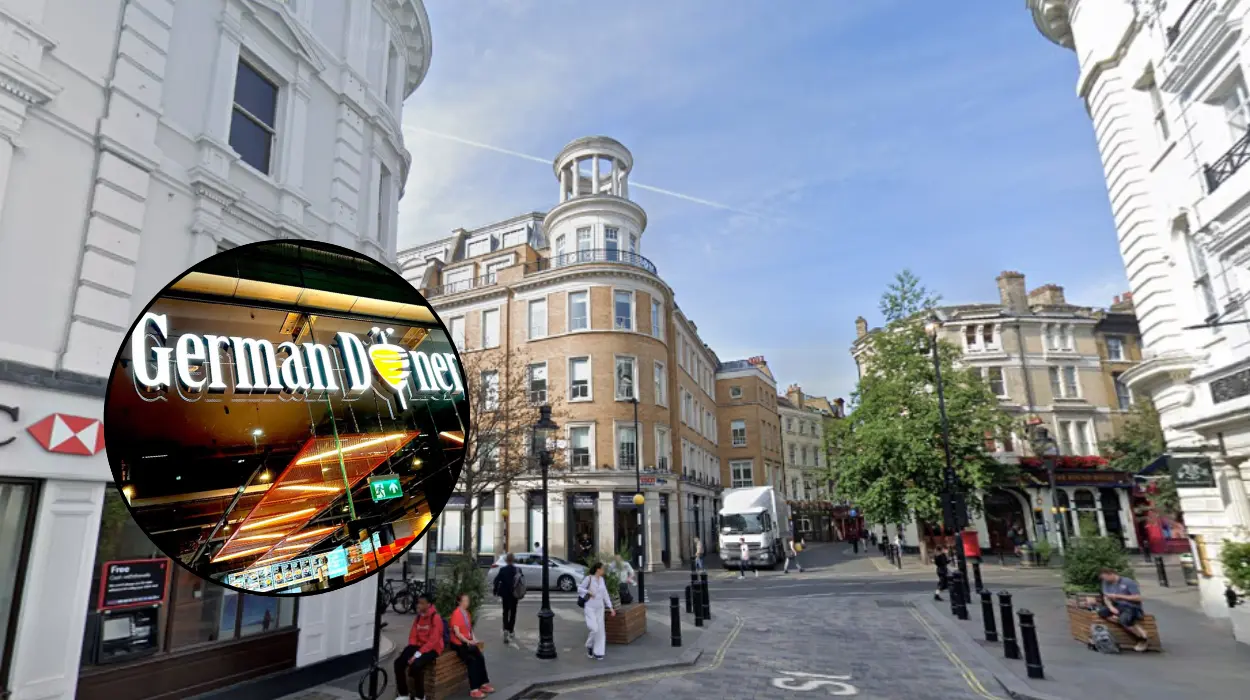
- Licensing Application: A central London branch of the fast-food chain German Doner Kebab, situated in the Covent Garden area, has submitted a formal application to extend its operating hours, seeking permission to keep its doors open until 3:00 am.
- Proposed Extension Details: Under the newly proposed terms, the establishment intends to serve late-night takeaway food until 1:00 am from Sunday to Wednesday, and until 2:00 am from Thursday to Saturday, with ultimate premises closure set for 3:00 am.
- Metropolitan Police Opposition: The Metropolitan Police Service has formally objected to the licensing extension, warning that longer hours could significantly exacerbate local issues surrounding public safety and anti-social behaviour.
- Crime Concerns Elevated: Law enforcement officials have expressed deep anxieties that the availability of late-night hot food will encourage intoxicated individuals to linger, potentially escalating local rates of robberies and thefts.
- Cumulative Impact Zone Pressures: The restaurant operates directly within Westminster City Council’s designated Cumulative Impact Zone, a regulatory area already heavily saturated with licensed premises and highly prone to noise, drinking, and litter.
- Statistical Evidence of Threat: Official crime data reveals that a staggering 70 percent of robberies and more than half of all thefts in the wider West End district occur during the nocturnal window between 6:00 pm and 6:00 am.
Covent Garden (Extra London News) June 15, 2026 – A prominent fast-food establishment in Central London has triggered a significant public safety debate after submitting an application to extend its licensing hours until the early hours of the morning, drawing sharp resistance from law enforcement. The popular culinary chain German Doner Kebab, located in the heart of Covent Garden, has formally requested permission to prolong its late-night takeaway service, a move that the Metropolitan Police Service has heavily opposed. Police authorities have officially warned that allowing the venue to remain operational deep into the night could actively contribute to an increase in crime and disorder in a commercial district already heavily burdened by evening robberies and opportunistic thefts.
- Key Points
- Why Is the Metropolitan Police Service Opposing the 3am Extension?
- What Is a Cumulative Impact Zone and How Does It Affect the Application?
- What Do the Local Crime Statistics Reveal About the West End?
- How Do Late-Night Takeaways Impact Local Street Dispersal?
- What Are the Next Legal and Regulatory Steps for the Licence?
The application seeks to allow the restaurant to serve late-night refreshments until 1:00 am from Sunday to Wednesday and until 2:00 am from Thursday to Saturday, with the physical premises remaining open to the public until 3:00 am. Currently, the German Doner Kebab branch holds permissions to provide late-night refreshments until midnight from Sunday to Thursday, and until 1:00 am on Fridays and Saturdays. This existing operational framework already exceeds the standard temporal thresholds set out by local regulatory bodies, meaning the new proposal represents a substantial expansion of late-night commercial activity within one of the capital’s busiest entertainment hubs.
As reported by journalist Katherine Gray of MyLondon, the Metropolitan Police Service has positioned itself firmly against the expansion, mounting a detailed case based on urban crime patterns and public order management. In a written objection submitted to the local authority, Police Constable Adam Deweltz specified that the venue operates as a fast-food restaurant inside an area that is already highly saturated with late-night licensed premises. He observed that the applicant already benefits from a premises licence that exceeds Westminster’s Core Hours Policy, which further intensifies statutory concerns regarding the cumulative impact of late-night venues on the local community.
The core of the police objection relies on the behavioural patterns of late-night revellers who frequent the West End’s numerous bars and night clubs. Law enforcement officials argue that fast-food hubs act as a natural magnet for individuals who have consumed high quantities of alcohol throughout the evening. PC Adam Deweltz of the Metropolitan Police Service stated that “the provision of late-night refreshment is particularly appealing to individuals who have consumed alcohol over the course of the evening.” He added that “as a result, extending late-night refreshment hours would likely encourage patrons to remain in the area for longer periods rather than dispersing, thereby prolonging activity and increasing the potential for crime and disorder.”
Why Is the Metropolitan Police Service Opposing the 3am Extension?
The Metropolitan Police Service’s primary objection rests upon the direct correlation between late-night fast-food outlets and the delayed dispersal of intoxicated crowds. According to police filings, when a venue serves hot food until 2:00 am or 3:00 am, it effectively prevents the natural clearance of the streets after nightclubs and bars shut their doors. Instead of heading directly to tube stations, taxi ranks, or night buses, patrons gather outside and inside takeaway shops.
This gathering of vulnerable, heavily intoxicated individuals provides a target-rich environment for criminal networks specializing in street robberies, phone snatching, and physical assaults. The police maintain that the local infrastructure is already under immense strain during these specific hours, and adding another commercial anchor that prolongs street activity will directly undermine efforts to lower crime rates in the West End.
What Is a Cumulative Impact Zone and How Does It Affect the Application?
The Covent Garden branch of German Doner Kebab is situated within the boundaries of Westminster City Council’s Cumulative Impact Zone (CIZ). A Cumulative Impact Zone is a specialized planning and licensing designation used by local authorities in areas where the sheer density of licensed premises—such as bars, pubs, clubs, and takeaway restaurants—has reached a tipping point. In these zones, the combined presence of these businesses is recognized as having a demonstrably negative impact on the surrounding area, manifesting as elevated ambient noise, public intoxication, anti-social behaviour, and excessive litter.
Under Westminster City Council’s strict Cumulative Impact Assessment policies, there is effectively a rebuttable presumption against granting new licences or extending existing ones within a CIZ. Applicants must prove that their proposed changes will not add to the existing problems of the area. The Metropolitan Police have explicitly noted that German Doner Kebab’s current operating hours are already a deviation from Westminster’s standard Core Hours Policy. By pushing the closing time to 3:00 am, the business is seen by authorities as attempting to increase the cumulative strain on an area that local administrators have already declared to be oversaturated.
Explore more Police News:
Epstein Housed Abuse Victims in Kensington Flats After Police Declined Probe, 2026
Teen Charged Over Synagogue Arson Attack in London, 2026
What Do the Local Crime Statistics Reveal About the West End?
The push for extended hours comes against a backdrop of crime statistics within the City of Westminster, particularly concerning offences committed under the cover of darkness. Data extracted from Westminster’s Cumulative Impact Assessment highlights that criminal offenses, specifically thefts and personal robberies, are highly concentrated within the West End zone.
The statistics reveal the following patterns regarding nocturnal crime:
| Offence Type | Percentage Occurring Between 6:00 pm and 6:00 am | Primary Environmental Factors |
| Personal Robberies | 70% | High density of intoxicated pedestrians, crowded footpaths, and prolonged street loitering. |
| Thefts & Pickpocketing | Just over 50% | Saturated entertainment venues, transport hubs, and late-night fast-food queues. |
These figures demonstrate that the hours German Doner Kebab wishes to exploit for commercial growth are the exact hours when members of the public are at the highest statistical risk of becoming victims of violent or opportunistic crime. Law enforcement argues that extending the hours of a fast-food outlet directly feeds into the environmental conditions that allow these percentages to remain high.
How Do Late-Night Takeaways Impact Local Street Dispersal?
The mechanics of urban dispersal are a critical component of night-time economy management for both Westminster City Council and the Metropolitan Police. When bars and theatres close, the objective of emergency services and council wardens is to facilitate a rapid, peaceful exit of thousands of visitors from the city centre.
As detailed in the police objection, the presence of operational late-night takeaways disrupts this flow. By offering a venue to sit, wait, and eat, the restaurant serves as an artificial barrier to dispersal. This creates localized crowds on the pavements of Covent Garden well into the early hours, generating prolonged noise disturbances for local residents and extending the window of time during which alcohol-fueled arguments and street crime can occur.
What Are the Next Legal and Regulatory Steps for the Licence?
The ultimate fate of German Doner Kebab’s late-night ambitions rests with the Westminster City Council Licensing Sub-Committee. Following the formal submission of the application and the subsequent written objection from the Metropolitan Police Service, a public licensing hearing will be scheduled.
During this upcoming regulatory session, representatives for the kebab chain will have the opportunity to present mitigation strategies—such as the potential deployment of private SIA-licensed security guards, enhanced closed-circuit television (CCTV) coverage, or strict crowd-control measures. The sub-committee will weigh the commercial arguments of the business against the statutory evidence of the Metropolitan Police and the overarching guidelines of the Cumulative Impact Zone before issuing a final verdict to grant, modify, or reject the extended licence.
Data Insights on Local Night-Time Economy Crime
According to data from Westminster’s Cumulative Impact Assessment, personal robberies are heavily skewed toward the night-time economy, with 70 percent of all incidents occurring in the 12-hour window between 6:00 pm and 6:00 am. This underscores the basis of police concerns regarding late-night crowd retention.