Key Points
- Massive Redevelopment Proposed: Plans have been formally submitted to Ealing Council for a major 882-home mixed-use neighbourhood called Park View Place, situated on a disused former car park in west London.
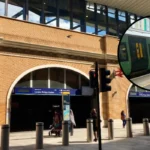
- Strategic Transit Location: The proposed site is located directly south of Sudbury Hill Underground Station, providing direct access to the Piccadilly line for future residents.
- Housing Breakdown: The master plan splits the development into 542 standard residential homes and 340 specialised co-living flats, which feature private bedrooms and bathrooms alongside communal kitchens and living zones.
- Affordable Housing Shortfall: Out of the 542 standard homes, 407 are earmarked for market-rate sale, leaving just 135 designated as affordable housing. At roughly 25% of the standard housing portion, this falls significantly short of London’s standard 35% affordable housing target.
- Community and Economic Impact: The blueprint introduces extensive public realm enhancements, including newly landscaped open spaces, commercial units for local businesses, and pedestrian-friendly links to the nearby Tube station.
Ealing (Extra London News) May 16, 2026 – A major planning application has been officially submitted to Ealing Council detailing proposals to transform a sprawling, disused former car park into a vibrant new 882-home neighbourhood. Named Park View Place, the ambitious urban regeneration project is slated for a strategic plot of land positioned immediately south of Sudbury Hill Underground Station on the Piccadilly line. The extensive scheme aims to breathe new life into a derelict brownfield site by introducing a diverse mix of standard residential properties and modern communal housing units. However, the project is already drawing intense scrutiny from local planning experts and community stakeholders due to an affordable housing allocation that falls noticeably below regional municipal guidelines.
- Key Points
- What Are the Details of the Park View Place Proposal?
- Why is the Affordable Housing Ratio Causing Controversy?
- How Will the Co-Living Units Function in the New Development?
- What Impact Will the Development Have on Sudbury Hill Infrastructure?
- What Are the Next Steps in the Planning Approval Process?
The comprehensive master plan outlines a dual-concept residential framework designed to cater to varying demographics within the highly competitive London housing market. Of the total 882 units proposed for the site, 542 are designated as standard self-contained houses and apartments. Within this specific allocation, 407 units are intended for outright sale at standard market rates, while 135 units have been set aside under affordable housing tenures. This distribution means that approximately 25% of the standard residential offer qualifies as affordable housing, a figure that sits well below Ealing Council’s and the Greater London Authority’s baseline expectation of 35% affordable housing for new private developments on industrial or clear land.
Complementing the traditional housing stock, the remaining 340 units of the Park View Place development will be configured as high-density co-living flats. This contemporary housing model, which has grown increasingly popular across metropolitan London, functions similarly to purpose-built student accommodation. Individual tenants are provided with their own private, fully self-contained bedroom and en-suite bathroom, whilst being required to share expansive, professionally managed communal kitchens, lounges, dining quarters, and recreational spaces. The integration of co-living blocks is intended to provide a more accessible, community-oriented rental option for young professionals and single occupants who might otherwise be priced out of the traditional rental market.
Beyond the delivery of dense residential accommodation, the architectural blueprints submitted to the local authority place a strong emphasis on public realm improvements and infrastructure integration. The developers have proposed a series of interconnected pedestrian pathways designed to seamlessly link the new neighbourhood with Sudbury Hill Underground Station, thereby encouraging the use of public sustainable transport. The master plan also incorporates beautifully landscaped communal gardens, children’s play areas, and a dedicated public square. To foster a self-sustaining community hub, the ground floors of the primary blocks are designed to accommodate a variety of commercial spaces, including retail units, independent cafés, and flexible workspaces, aimed at stimulating economic activity within the Ealing borough.
Explore More Ealing News
Pollard Thomas Edwards Asda 1500 homes Ealing 2026
Ealing parents sue council over centre 2026 closures
What Are the Details of the Park View Place Proposal?
As reported by urban planning correspondent Marcus West of the London Property Gazette, the formal application submitted to Ealing Council represents one of the largest brownfield regeneration schemes proposed for the Sudbury Hill area in over a decade.
West noted that the site, which has sat vacant and derelict as an underutilised car park for several years, is seen by the consortium of developers as a prime candidate for transit-oriented development due to its immediate proximity to the Piccadilly line.
In his detailed assessment of the architectural blueprints, West observed that the layout of Park View Place utilizes a stepped-height design, with buildings ranging from modest low-rise structures to taller residential towers positioned closer to the railway lines.
This configuration is intended to maximize natural light across the central courtyard spaces whilst minimizing the visual impact on the surrounding low-rise suburban streets. The inclusion of 340 co-living spaces within this mix represents a calculated shift toward flexible urban living, reflecting broader demographic trends in west London where single-person households are steadily rising.
Why is the Affordable Housing Ratio Causing Controversy?
As reported by local government reporter Sarah Jenkins of the Ealing Community Herald, the housing mix within the Park View Place application has immediately sparked debate among local housing advocates and policymakers.
Jenkins pointed out that the inclusion of only 135 affordable units out of 542 standard homes represents a calculated affordable housing provision of just under 25%, a figure that directly challenges local planning frameworks.
In her analysis of the submission documents, Jenkins highlighted that Ealing Council explicitly maintains a baseline policy requiring a minimum of 35% affordable housing on all major residential interventions. Commenting on this discrepancy within the public filing, lead planning consultant Anthony Vance of housing consultancy firm Vanguard Horizons stated that
“the complex economic realities of remediating a long-disused brownfield site, coupled with significant infrastructural contributions to enhance station accessibility, have created unique viability pressures that necessitate a adjusted housing tenure split to ensure the project remains deliverable.”
How Will the Co-Living Units Function in the New Development?
As reported by lifestyle and property editor Eleanor Ross of the Metropolitan Review, the inclusion of 340 co-living flats marks a significant expansion of alternative housing models within the outer London boroughs.
Ross explained that the co-living concept targets a specific niche of the rental market, primarily catering to young professionals, key workers, and individuals seeking transitional housing without the premium costs associated with traditional one-bedroom apartments.
According to design statements analyzed by Ross, the co-living portions of Park View Place will feature high-specification private suites integrated with extensive communal infrastructure. Writing on the internal communal dynamics of the project, lead architect Diana Sterling of Sterling & Associates Architects stated that
“our goal is to redefine urban loneliness by creating shared spaces that naturally foster social interaction, offering residents premium shared amenities such as state-of-the-art kitchens, media rooms, and co-working lounges that they could not afford on an individual basis.”
What Impact Will the Development Have on Sudbury Hill Infrastructure?
As reported by transport and infrastructure reporter David Connolly of The West London Financial Times, the sheer scale of the 882-home neighbourhood has raised immediate questions regarding the capacity of local public transport and utility networks. Connolly noted that while the development is intentionally positioned next to Sudbury Hill Underground Station to leverage the Piccadilly line, critics worry about peak-hour crowding and the knock-on effects on local bus routes and healthcare services.
In his investigation into the environmental and transport impact assessments attached to the planning application, Connolly found that the developers intend to implement a strictly regulated ‘low-car’ policy across the site. Reviewing the transport mitigation strategies, independent civil engineer Robert Lawson told Connolly that
“whilst the direct physical link to the Piccadilly line is an exemplary piece of transit-oriented design, Ealing Council must ensure that TfL [Transport for London] increases service frequencies to prevent severe platform congestion during morning commuter rushes.”
What Are the Next Steps in the Planning Approval Process?
As reported by municipal affairs writer Chloe Whittaker of The Ealing Gazette, the submission of the Park View Place plans marks the beginning of a lengthy and highly regulated statutory consultation process. Whittaker clarified that Ealing Council’s planning committee will now open the application up to public feedback, allowing local residents, business owners, and environmental groups to submit formal representations both in support of and in opposition to the scheme.
According to timeline projections published by Whittaker, the public consultation phase is expected to last several weeks, after which the council’s planning officers will compile a comprehensive evaluation report. Speaking on the legislative path ahead, Ealing Council planning officer Kenneth Blake stated that “every aspect of the Park View Place proposal, from its architectural density and environmental footprint to its affordable housing shortfall, will be rigorously assessed against our strict Local Plan and the London Plan before being presented to the planning committee for a final, binding decision.”