Key Points
- Incident Overview: A passenger train struck a fallen tree blocking the tracks at Eridge, completely halting rail operations between major West Sussex and East Sussex transit routes early in the morning.
- Timing of Disruptions: Southern Rail formally alerted the public to the travel chaos at 6:00 am on Monday, 8 June 2026, forcing immediate schedule alterations during the peak morning commute.
- Impacted Routes: Rail services operating to and from Uckfield faced widespread cancellations and severe route revisions, effectively cutting off direct rail connections between Uckfield and Hurst Green.
- Passenger Delays: Disrupted commuters were warned to expect an absolute minimum of 30 additional minutes of travel time, with station boards and digital transit planners showing significant rolling delays.
- Line Reopening: Following urgent clearance operations by Network Rail engineers, Southern Rail confirmed at 8:05 am that the obstructing tree had been safely cut back and removed, allowing lines to officially reopen.
- Residual Delays: Despite the clearing of the tracks, transit officials maintained that ongoing cancellations and scheduling backlogs would continue to impact passengers well into the late morning as displaced train crews and rolling stock were repositioned.
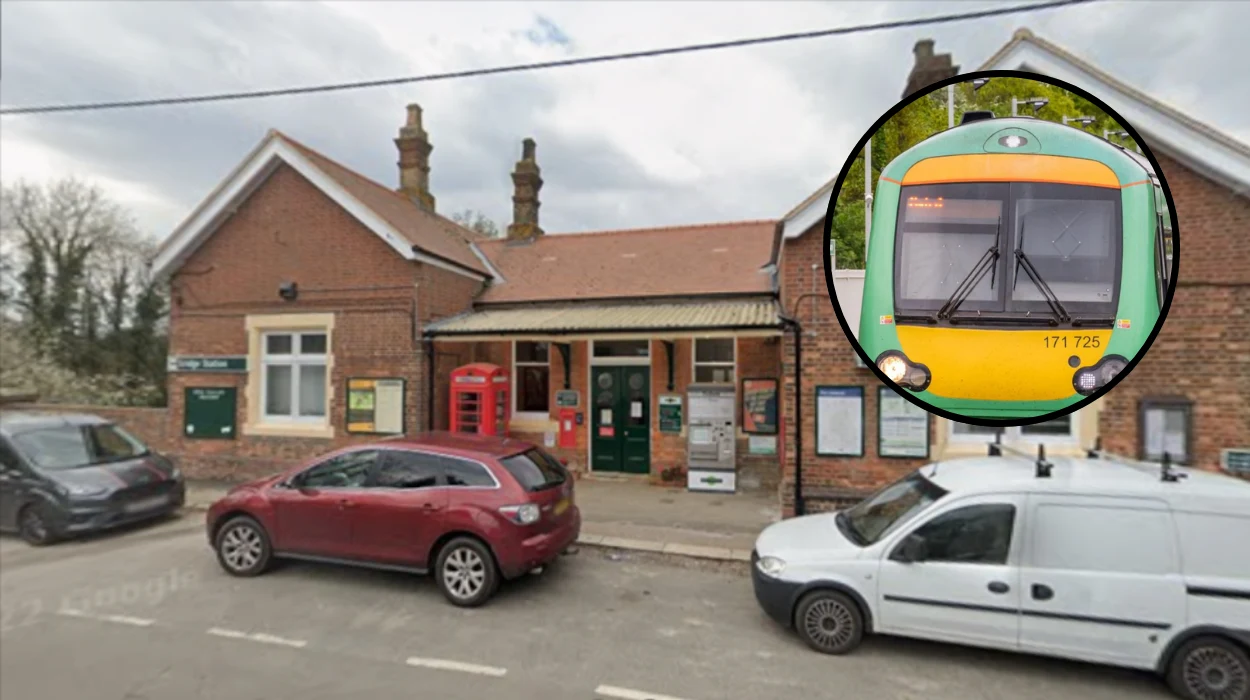
Eridge (Extra London News) June 8, 2026 – Rail services across the South East experienced severe travel disruptions early Monday morning after a passenger train struck a fallen tree blocking the tracks at Eridge. The operational incident, which occurred during the peak commuter rush, forced transport operators to completely suspend or heavily amend all rail services travelling between Uckfield and Hurst Green. Network Rail emergency teams were dispatched to the rural location to clear the substantial timber obstruction from the track bed, prompting a multi-hour recovery operation that left hundreds of morning passengers stranded or facing extensive diversions.
As reported by transport correspondent Joseph Blakely of The Argus, Southern Rail issued an initial crisis alert at precisely 6:00 am on Monday, June 8, stating that immediate route changes had been implemented across the regional network. The rail operator confirmed that because of the structural blockage on the live line at Eridge, trains running to and from Uckfield were being systematically cancelled or shortened to prevent congestion. A designated Southern Rail spokesperson issued an official statement via the company’s media bureau, warning commuters:
“Trains running to/from Uckfield may be cancelled or revised to not run between Uckfield and Hurst Green.”
The immediate consequence of the line closure was a severe bottleneck for those attempting to travel toward London Bridge and alternative metropolitan transport hubs. Passengers arriving at rural stations along the line were met with blank or rapidly altering departure screens, as control rooms scrambled to handle the logistics of the unexpected track isolation. To mitigate the rising frustration of commuters, the Southern Rail spokesperson added:
“You should leave an additional 30 minutes to complete your journey. You should check station screens, listen to announcements, and check online journey planners for the latest information.”
Following approximately two hours of intensive cutting and clearing operations by lineside maintenance crews, the physical blockage was successfully resolved. In an official operational update distributed at 8:05 am, Southern Rail management confirmed that the fallen tree had been cleared from the permanent way and that the affected lines had safely reopened to commercial traffic. However, the clearance did not signal an immediate return to normal operations, as the operator highlighted that moving rolling stock and train crews back to their correct geographic assignments would take considerable time.
The knock-on effects of the morning’s tree strike continued to ripple across regional timetables throughout the morning. Even with the tracks clear, passenger schedules remained highly volatile due to displaced carriages. A Southern Rail spokesperson addressed the continuing logistical challenge, stating:
“As services recover, some trains running to/from Uckfield may still be cancelled.”
The operator further clarified that the system would take hours to balance, concluding:
“There may be some residual disruption whilst service returns to a booked timetable. Please ensure to check before you travel using online journey planners and live departure boards for the latest information.”
What Caused the Southern Rail Service Suspension at Eridge?
According to standard operational logs compiled by regional transport tracking data from National Rail, the root cause of the widespread network failure was an external environmental obstruction. A train traversing the section of the line near Eridge collided directly with a tree that had fallen from the surrounding embankment onto the running rails. Because the Uckfield line relies heavily on sections of track flanked by mature trees and dense vegetation, structural tree failures during weather transitions frequently pose a high risk to moving trains, resulting in immediate safety trip protocols that cut power or isolate tracking blocks.
The collision, while not resulting in any reported passenger injuries or catastrophic train derailments, caused an immediate and total block of the single-line sections that dominate portions of the route. When a train strikes an object of significant mass, standard UK rail safety regulations dictate that all movement must cease until an engineering assessment proves the track has not suffered structural misalignment or electrical fault. This mandatory safety procedure forms the basis for the prolonged line closures seen across the morning.
Explore More London Local News
Southern Trains Delayed Between East Croydon and Oxted: 2026
Southern Train Disruptions and Cancellations in Croydon 2026
How Were Commuters Impacted Along the Uckfield Route?
As outlined in the rolling coverage provided by The Argus, the impact on commuters was immediate, widespread, and highly concentrated around the morning rush hour. Passengers intending to travel from key regional hubs like Crowborough, Eridge, and Uckfield found themselves unable to board northbound services. The sudden truncation of services at Hurst Green meant that the typical direct flow of commuter traffic into London Bridge was completely broken, forcing passengers to seek alternative bus routes or regional highways.
To manage the volume of displaced travellers, Southern Rail enacted emergency ticketing agreements, though the physical lack of operating trains on the line meant that delays quickly exceeded the initially estimated 30-minute window. Commuters were forced to wait in station environments while local announcers provided manual updates on the progress of the clearance crews working down the line.
When Did the Lines Reopen and What Is the Recovery Status?
As detailed in the engineering logs published by National Rail updates, the incident was officially logged as starting at 5:52 am, with the formal clearance and declaration of safe track status occurring at 8:36 am after a series of test runs. Southern Rail’s internal public relations branch updated the public slightly earlier at 8:05 am to signal the physical completion of the tree removal. The gap between the tree being removed and the full resumption of service represents the time needed to check the electrical integrity of the signalling equipment in the Eridge sector.
The process of returning a disrupted railway to its standard operating schedule is a complex mathematical puzzle. Trains that were stuck behind the obstruction were out of position for their next scheduled journeys, meaning that even though the track was entirely clear by mid-morning, the train crews required to operate subsequent services were physically located at different stations. This resource misalignment is what causes the “residual disruption” noted by transit officials.
What Alternative Travel Advice Has Been Issued to Passengers?
For the remainder of the day, transit watchdogs and Southern Rail customer service managers have advised all passengers to refrain from relying blindly on standard printed timetables. Because trains are operating under modified or “revised” schedules, live digital indicators are the only accurate source of truth for platform arrivals. Customers have been strongly directed to utilise smartphone applications, Web-based journey planners, and real-time station departure boards before starting their journeys to the station.
Furthermore, passengers who experienced delays of 15 minutes or more as a consequence of this tree obstruction are legally eligible to claim financial compensation under the national “Delay Repay” scheme. Commuters are being advised to retain their physical tickets or digital booking receipts to submit claims through the operator’s online portal, which handles compensation tiers based on the exact duration of the transit delay experienced.