Key Points
- Public Art Launch: A free public art trail named ‘Pride in the Quarter’ has officially launched across Westminster, featuring 17 near-life-sized sculptures of lions and lionesses.
- Football Festivities: The temporary exhibition is designed to celebrate England’s football story, culture, and communities, aligning directly with the upcoming summer of international football and the FIFA World Cup.
- Star-Studded Unveiling: The trail was officially opened by legendary former football manager Harry Redknapp and Fara Williams MBE, the most-capped player in the history of the England women’s national team (the Lionesses).
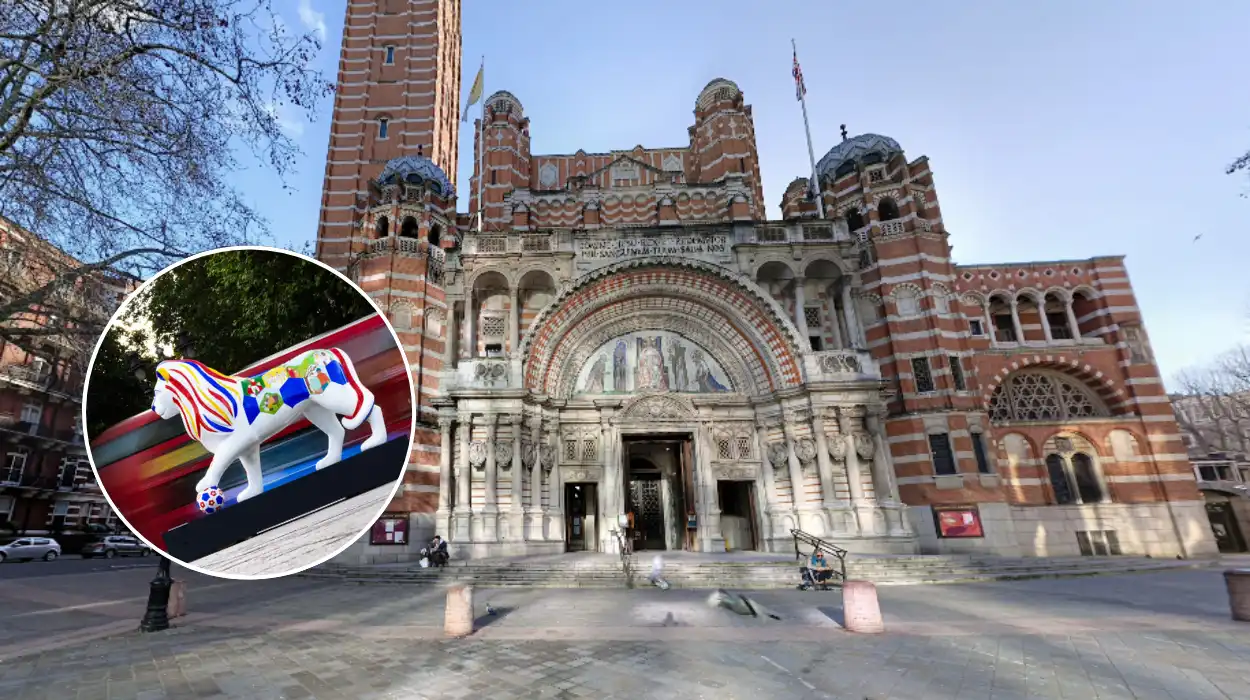
- Iconic Trail Route: Spanning a 1.945-square-kilometre stretch of central London, the self-guided trail connects landmark sites including Buckingham Palace, Trafalgar Square, Westminster Cathedral, and the Houses of Parliament.
- Diverse Artist Motifs: Each sculpture features a unique design by a different artist, incorporating cultural themes ranging from the London Underground and the River Thames to the Blitz spirit, LGBTQ+ Pride, and domestic football club heatmaps.
- Charitable Finale: The installation will remain open to the public until 10 August, after which all 17 statues will be auctioned off to raise vital funds for The Passage, a Westminster-based homelessness charity.
London (Extra London News) June 19, 2026 – A pride of 17 giant, near-life-sized lion and lioness sculptures has officially taken up positions across the heart of Westminster to celebrate a momentous summer of international football, public culture, and community spirit. The free, self-guided walking installation, officially titled ‘Pride in the Quarter’, was commissioned by the London Heritage Quarter to rally national support behind England’s football teams ahead of the highly anticipated FIFA World Cup tournament. Strategically scattered across a 1.945-square-kilometre geographic corridor, the public art trail directly connects some of the capital’s most globally recognised historic monuments, including Buckingham Palace, Trafalgar Square, Westminster Cathedral, and the Houses of Parliament. The creative initiative is designed to offer locals and international visitors an interactive, accessible window into the nation’s sporting heritage, with each distinct feline figure sculpted with its left paw perched firmly atop a football and painted by an independent contemporary artist.
- Key Points
- What Is the Core Concept Behind the Westminster Lion Trail?
- Who Officially Launched the ‘Pride in the Quarter’ Art Trail?
- What Statements Were Made by Football Icons Harry Redknapp and Fara Williams MBE?
- Where Exactly Are the 17 Lion Sculptures Located Across London?
- What Cultural Themes Are Represented in the Individual Lion Designs?
- How Does the ‘Diamond Lion’ Exhibit Highlight Local Westminster Architecture?
- What Statements Were Issued by the London Heritage Quarter Leadership?
- How Can the Public Navigate the Self-Guided Walking Route?
- Which Charity Benefits From the Final Auction of the Sculptures?
To ensure high-profile media visibility and cultural resonance, the public trail was officially inaugurated by former Premier League football manager and television personality Harry Redknapp alongside Fara Williams MBE, the most-capped player in the history of the England women’s national team. The installations will remain interactive and open to the public until 10 August, creating a major cultural footprint during peak summer tourism. Upon the official conclusion of the outdoor exhibition, all 17 bespoke statues will be prepared for a high-profile public auction, with 100 per cent of the proceeds being donated directly to The Passage, a prominent homelessness charity operational within the City of Westminster.
What Is the Core Concept Behind the Westminster Lion Trail?
As reported by staff writer Sam Barker of Secret London, the ‘Pride in the Quarter’ installation is fundamentally a multi-layered celebration of community, culture, and creativity, timed precisely to coincide with a packed summer of major international sporting events and cultural milestones. The free public trail introduces a striking, visible presence across Central London, serving as a physical manifestation of fan fervor and civic pride.
According to official editorial reports published by London Now, the temporary exhibition is structured to capture the imagination of the public during the group stages of the FIFA World Cup while simultaneously paying homage to the historical triumphs of English sport, notably the Lionesses’ historic international cup achievements. The choice of the lion and lioness form functions as a direct, three-dimensional translation of the iconic ‘Three Lions’ emblem traditionally associated with the England national football teams, transforming a historic heraldic badge into a tangible, modern public experience.
Who Officially Launched the ‘Pride in the Quarter’ Art Trail?
The public launch featured prominent figures from both the men’s and women’s professional eras of English football. As detailed in official media coverages from the London Heritage Quarter (LHQ) press bureau, legendary former manager Harry Redknapp joined forces with former midfielder Fara Williams MBE to unveil the first wave of sculptures against the historic architectural backdrops of central London.
The inclusion of Williams—who achieved a record-breaking 172 caps during her illustrative international career—directly underscores the exhibition’s dual focus on honoring both the men’s national squad and the transformational legacy of the Lionesses in modern sports culture. The launch events, documented comprehensively via official photographic press pools by Ben Stevens of PinPep and distributed globally through Getty Images, showcased the sports stars interacting with the public alongside the newly installed creative fixtures.
What Statements Were Made by Football Icons Harry Redknapp and Fara Williams MBE?
The architects and ambassadors of the trail expressed a shared conviction that public art possesses a unique capacity to unify communities ahead of major athletic tournaments. Writing for London Now, journalists recorded extensive direct commentary from the launch ambassadors outlining their motivations for backing the Westminster trail.
As reported by London Now, former football manager Harry Redknapp stated that:
“When England is heading into a big summer, every little bit helps in uniting the nation and building that sense of belief. The trail is a great way to get everyone behind the team, create a real buzz in the capital and hopefully play a small part in making this the summer we finally bring the trophy home.”
In a parallel statement focusing on the broader cultural footprint of the sport outside stadium walls, Fara Williams MBE emphasised the accessibility of the public initiative. As recorded by the London Heritage Quarter media team, Williams stated that:
“Football isn’t solely about what happens on the pitch, it’s a part of culture, and people want to be involved in different ways. For me, this is about giving fans, families and anyone exploring the city a chance to connect with the game in a more meaningful way especially with such a big summer ahead for England.”
Where Exactly Are the 17 Lion Sculptures Located Across London?
The physical layout of the public exhibition has been carefully mapped to ensure maximum foot traffic and civic engagement. According to official geographic data published within the London Heritage Quarter’s event database, the trail covers a specific perimeter linking Trafalgar Square, St James’s Park, and Victoria Tower Gardens.
The public can encounter these life-sized big cats resting in high-profile pedestrian zones, including the immediate vicinities of Buckingham Palace, Victoria Embankment Gardens, Westminster Cathedral, and the Houses of Parliament. A particularly notable installation has been positioned directly at the base of Nelson’s Column in Trafalgar Square. This specific placement allows the modern, artist-designed lion to sit in immediate visual dialogue with the four world-famous monumental bronze lions sculpted by Sir Edwin Landseer in the nineteenth century, effectively linking classical Victorian civic architecture with modern street art.
What Cultural Themes Are Represented in the Individual Lion Designs?
Rather than presenting uniform corporate replicas, the organisers ensured that every single one of the 17 sculptures was handed over to a different independent artist to serve as a blank canvas for structural and visual storytelling. Editorial insights compiled by Secret London and London Heritage Quarter reveal that the visual motifs reflect a deeply multicultural, historical, and modern interpretation of British life.
What Specific Artistic Motifs Can Visitors Discover on the Trail?
- Football Mapping and Domestic Leagues: Multiple sculptures feature complex, heat-mapped data visualisations across their coats, mapping the precise physical locations and communities of domestic football clubs spanning the entire English football pyramid.
- Capital Infrastructure: Prominent designs pay homage to the structural lifelines of London, incorporating artistic abstractions of the River Thames and the iconic graphic maps of the London Underground transit network.
- Historical Resilience: Several pieces draw direct inspiration from the historical endurance of Londoners, utilising visual narratives that reference the community spirit and resilience observed during the Blitz of the Second World War.
- Diversity and Inclusion: Positioned deliberately near the official Pride in London parade route by Victoria Embankment Gardens, a striking lioness sculpture incorporates vibrant, rainbow-infused styling. This piece is dedicated specifically to celebrating individuality, LGBTQ+ visibility, and the diverse supporter groups rewriting modern football culture.
- The Crest Tribute: The statue positioned at Trafalgar Square draws direct visual inspiration from the official Lionesses’ crest, serving as a permanent nod to the pioneering female athletes who transformed the domestic perception of the women’s game.
How Does the ‘Diamond Lion’ Exhibit Highlight Local Westminster Architecture?
A prime example of the hyper-local focus integrated into the trail is the ‘Diamond Lion’ sculpture, which has been positioned in a prominent public space near St James’s Park. According to documented artist profiles maintained by the London Heritage Quarter event curators, this specific piece was designed by Karc, a highly respected mural artist and city decorator known internationally for large-scale public art commissions in Paris, Athens, and Berlin.
Sponsored directly by local mixed-use development The Broadway, the ‘Diamond Lion’ utilises a structured, geometric composition defined by sharp lines and bold colour blocking. The artistic intent behind the piece, as outlined in the exhibition’s official guide, is to use abstract art as a universal visual language that transcends generational, linguistic, and cultural barriers. The inclusion of subtle gold accents across the geometric facets acts as a direct historical nod to the royal heritage, sovereign institutions, and classical architectural preservation zones that define the surrounding Westminster district.
Explore more Westminster News:
Westminster Abbey Hidden History Revealed: London 2026
Romeo Beckham Fined Over Porsche Mobile Phone Offence: Westminster 2026
What Statements Were Issued by the London Heritage Quarter Leadership?
The organizational vision behind launching a multi-kilometre public art trail amidst a bustling commercial and political district was highlighted by executive leadership during the opening press conference.
As reported by the corporate communications division of the London Heritage Quarter, Ruth Duston OBE, the Chief Executive Officer of the organization, stated that:
“Today’s launch of Pride in the Quarter is a moment of real celebration for London, and we’re proud to bring together art, community and culture in a way that everyone can enjoy. We want these installations to offer a moment for people to pause and share a sense of joy together, and we’re looking forward to welcoming visitors from across the UK and beyond to explore the trail, discover the stories behind each piece, and experience the area in a new and inspiring way.”
Duston further explained that the summer-long installation is part of a broader, comprehensive street activation campaign managed by the business improvement districts, which also includes the deployment of community street banners and public flags along major thoroughfares like the Strand and Victoria Street to honour local workers, educators, and charity partners.
How Can the Public Navigate the Self-Guided Walking Route?
For individuals and families looking to explore the installation, the trail has been explicitly designed with public accessibility and casual leisure in mind. Logistical guidelines published by Secret London note that the full walking circuit extends just under two kilometres in length.
Organisers estimate that a complete, unbroken journey to locate all 17 sculptures takes approximately 60 to 90 minutes to complete, depending heavily on the pace of the walkers, photographic stops, and interactions with local businesses along the way. Because it is a decentralized outdoor exhibition, there is no formal ticketing checkpoint or mandatory starting point; visitors are encouraged to download a digital trail map from the official London Heritage Quarter portal and begin their self-guided tour at any sculpture location that suits their travel plans. Furthermore, the event route utilizes step-free public spaces across the Westminster district to ensure full accessibility for pram users and individuals with restricted mobility.
Which Charity Benefits From the Final Auction of the Sculptures?
The long-term legacy of the ‘Pride in the Quarter’ trail extends far beyond its summer display window. Both Secret London and London Now have verified that once the public trail officially closes on 10 August, the 17 custom-painted statues will be carefully decommissioned from their street locations and prepared for a formal philanthropic auction.
All revenue generated from the final sales will be handed over to The Passage, a highly respected charity operating within Westminster that provides essential resources, temporary accommodation, and long-term rehabilitation pathways for individuals experiencing homelessness in the capital. By aligning a celebration of national sporting pride with a direct fundraising drive for local social support systems, the organizers aim to address critical socio-economic challenges within the very borough where the public art trail is staged.