Key Points
- Official Opening Date Confirmed: The London Museum will formally welcome the public to its highly anticipated new home in Smithfield, East London, on 28 November 2026.
- Architectural Collaboration: The new cultural institution is designed by acclaimed architects Asif Khan and Stanton Williams, working alongside specialist conservation architects Julian Harrap.
- Historic Restoration Project: The move represents the culmination of a massive £437 million project to restore and repurpose the Victorian General Market, marking the first time the disused historic structure has been open to the public in over 30 years.
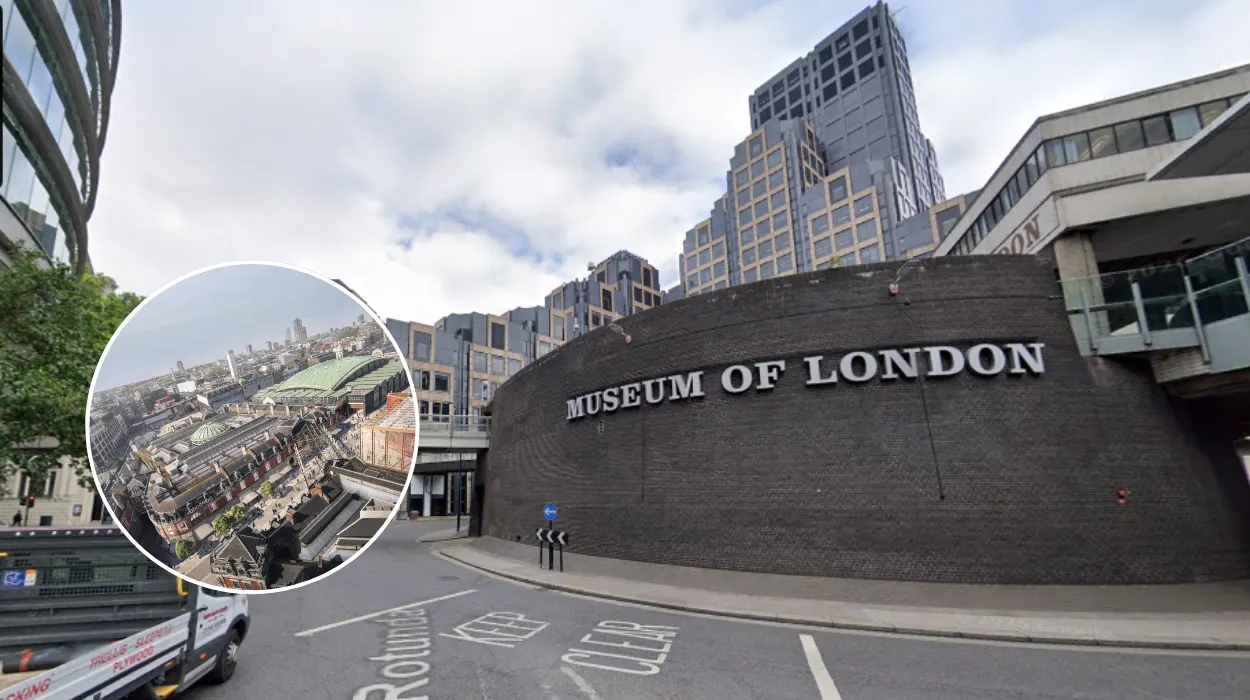
- Closure of Previous Location: To facilitate this grand relocation, the original Museum of London shut its doors at the London Wall site back in December 2022.
- Three Interconnected Spaces: The new location features a trio of distinct zones: ‘Real Time’ for live civic data, ‘Our Time’ under the grand dome for events and installations, and ‘Past Time’ in the sprawling subterranean galleries for permanent exhibits.
- High-Profile Historical Displays: Items spanning London’s complex history will include King Charles I’s execution vest, Emmeline Pankhurst’s hunger strike medal, and Banksy’s ‘Piranhas’ artwork.
- Collaborative Social Hub: The museum intends to act as a community canvas, establishing interactive programming alongside prominent cultural partners such as Fabric nightclub, Punchdrunk Enrichment, and Hive Curates.
- Joint Funding Structure: Financial backing is delivered through an unprecedented capital partnership between the City of London Corporation and the Mayor of London, Sadiq Khan, augmented by major institutional and philanthropic benefactors.
Smithfield (Extra London News) June 19, 2026 – The London Museum has officially announced that its world-class new cultural site inside the historic Smithfield Market complex in East London will open its doors to the public on 28 November 2026. Moving from its former premises at London Wall, the institution’s relocation represents the completion of a monumental £437 million restoration project. Designed by the visionary architecture team of Asif Khan and Stanton Williams alongside conservation specialist Julian Harrap, the revitalised Victorian General Market will function not only as a repository for the capital’s sprawling history but also as an active, living social space for residents and global tourists alike.
- When will the new London Museum open to the public?
- Why did the Museum of London change its name and location?
- Who designed the transformation of Smithfield Market?
- What historic items will be on permanent display?
- How will the museum layout utilize the historic Victorian buildings?
- Which cultural partners are collaborating with the London Museum?
- What did Director Sharon Ament say about the Smithfield project?
- How is the £437 million Smithfield relocation project being funded?
The highly anticipated launch will mark the first time this disused architectural landmark has been accessible to the public in more than three decades. Spanning three seamlessly interconnected exhibition spaces, the museum will juxtapose ancient historical artefacts against contemporary community projects. Visitors will be able to view rare historical items, including the delicate vest worn by King Charles I during his 1649 execution, suffragette leader Emmeline Pankhurst’s hunger strike medal, and a preserved street art installation of Banksy’s Piranhas. Funded via a historic municipal alliance between the City of London Corporation and the Mayor of London, Sadiq Khan, the project merges heritage conservation with interactive urban design.
When will the new London Museum open to the public?
As reported by the editorial staff of CLADglobal, the London Museum has definitively locked in its official launch for 28 November 2026. This date serves as a major milestone for the city’s cultural landscape, marking the completion of a complex, multi-year construction and curation phase. The announcement brings clarity to eager history enthusiasts, domestic tourists, and international visitors who have been awaiting the return of the collection since the original museum facility phased out operations nearly four years ago.
By timing the grand opening for late November, the museum positions itself as a prime indoor destination ahead of the bustling winter holiday season. According to institutional statements released to the press, the opening weeks will feature tailored public events designed to showcase the immense spatial scale of the new venue. Curatorial teams are currently working around the clock to transport, secure, and mount thousands of delicate artefacts into custom-built, climate-controlled environments ahead of the autumn deadline.
Why did the Museum of London change its name and location?
According to architectural journalists reporting for CLADglobal, the institution underwent a strategic rebrand and structural relocation, vacating its long-term home at London Wall in December 2022. The physical transition was mandated by the limitations of the old post-war concrete complex, which restricted modern exhibition layouts and struggled to accommodate growing annual visitor numbers. The ambitious move into the City of London’s historic Smithfield site required an outright investment of £437 million, combining state-of-the-art museum infrastructure with delicate archaeological preservation.
The move also prompted a shift from its traditional title, the “Museum of London,” to the streamlined “London Museum,” signaling a modern era of public accessibility and community integration. Journalists tracking the development have noted that by positioning itself within a historic marketplace rather than an isolated concrete roundabout, the museum seeks to weave its physical presence directly into the active daily rhythm of modern London life.
Who designed the transformation of Smithfield Market?
As detailed by the architectural desk at CLADglobal, the physical transformation of the sprawling site was overseen by a high-profile consortium of spatial designers. The modern structural layout and visitor flow were conceptualised by the award-winning contemporary practices of Asif Khan and Stanton Williams. These firms worked in close, continuous alignment with Julian Harrap Architects, a practice renowned for its precise expertise in historic conservation and the sensitive restoration of decaying urban fabric.
The design team faced the immense challenge of retrofitting modern climate controls, heavy load-bearing display infrastructure, and comprehensive accessibility features into a fragile, protected 19th-century iron-and-brick framework. The resulting design celebrates the industrial heritage of the Victorian General Market, leaving historic brickwork, weathered columns, and vast iron rafters exposed to view, while inserting sleek, geometric glass and steel galleries to house sensitive historical collections safely.
What historic items will be on permanent display?
Writing for the international design chronicle CLADglobal, industry reporters have highlighted that the permanent galleries will contain some of the UK’s most politically charged and culturally significant historical items. Chief among these permanent exhibits is the authentic silk knit vest worn by King Charles I during his public execution outside Whitehall in 1649. The garment, which features visible stains and historical wear, stands as one of the most significant tangible remnants of the English Civil War.
In addition to royal history, the collections will explicitly showcase the history of radical social reform and contemporary British art. Visitors will be able to view the authentic hunger strike medal awarded to legendary suffragette leader Emmeline Pankhurst, commemorating her militant fight for women’s democratic voting rights. Representing modern street culture, the museum will also put on permanent display the famous ‘Piranhas’ artwork created by the elusive Bristolian street artist Banksy, which was originally painted directly onto a London architectural canvas.
Explore more Local London News:
Heathrow and London Paddington Trains Disruptions: Ealing Broadway Chaos 2026
Empty London Homes Surge 81 Percent: City Hall Pressed to Act (London 2026)
How will the museum layout utilize the historic Victorian buildings?
As outlined in the technical project blueprints compiled by CLADglobal, the new museum structure will distribute its vast contents across three distinctly defined, interconnected physical zones mapped across the footprint of the Victorian General Market:
1. Real Time
This zone serves as the primary entrance to the institution, taking over a beautifully restored, former covered commercial street. Instead of a traditional, sterile museum lobby, ‘Real Time’ is designed to operate as a dynamic civic portal. It will incorporate live electronic installations displaying real-time data streams, social media pulses, transport feeds, and atmospheric captures that collectively mirror London’s active, living status in the exact present moment.
2. Our Time
Situated directly beneath the market’s spectacular, soaring central domed roof, ‘Our Time’ functions as the core social hub of the entire complex. This zone is dedicated to public interaction, containing 13 major bespoke installations consisting of an eclectic mix of everyday objects drawn from London’s living memory. Rather than keeping history behind glass, this space is engineered for live performances, workshops, and communal gatherings.
3. Past Time
Located deep within the massive subterranean brick vaults beneath the market floor, ‘Past Time’ will hold the core historical archive of the permanent collection. The underground galleries will take visitors on a chronological journey through London’s evolution, spanning from its prehistoric and Roman roots through the medieval era, the industrial revolution, and up into the late 20th century. The ambient, atmospheric cellar spaces provide a natural backdrop for reflective historical learning.
Which cultural partners are collaborating with the London Museum?
Reporting on the civic outreach of the project, CLADglobal highlights that the London Museum has purposefully bypassed traditional institutional isolation by signing formal programming agreements with legendary local cultural organisations. The museum has partnered directly with the nearby Fabric nightclub, an iconic pillar of London’s electronic music scene, to help document and celebrate the city’s rich late-night subcultures and musical evolution.
Furthermore, experiential programming will be driven by collaborations with the renowned immersive theatre company Punchdrunk Enrichment and the community-focused arts organisation Hive Curates. These partnerships are explicitly designed to ensure the museum remains a fluid, evolving social space rather than a static warehouse of the past. By bringing performance artists and community curators directly into the exhibition spaces, the venue intends to constantly redefine how social history is told.
What did Director Sharon Ament say about the Smithfield project?
As recorded in official interviews by the reporting team at CLADglobal, London Museum Director Sharon Ament emphasized that the overarching philosophical goal of the relocation was to break down the traditional barriers that separate a museum from the city it represents. Sharon Ament directly articulated the institutional vision, stating:
“At the beginning we asked ourselves how to be the best museum for London, the answer is, to be London itself, in all its grit and glitter. I hope our museum is a place where people can come together, feel at home, and find themselves grounded in the lives, treasures, challenges and innovations of this city’s vast history.”
These remarks reinforce the museum’s commitment to portraying an honest, unvarnished look at London’s complex trajectory. By intentionally highlighting both the “grit” and the “glitter,” the leadership team ensures that working-class histories, historic urban struggles, and structural social inequities will be given equal weight alongside the traditional celebrations of royal wealth, architectural triumphs, and imperial power.
How is the £437 million Smithfield relocation project being funded?
According to financial breakdowns verified by a museum spokesperson and published by CLADglobal, the staggering capital requirements for the site were successfully raised through an innovative public-private funding network. The core foundational investment was delivered via a unique civic partnership uniting the City of London Corporation with the Greater London Authority under the administration of the Mayor of London, Sadiq Khan. This municipal backing highlights the local government’s belief that the project will act as a major catalyst for economic regeneration across East London.
| Primary Funding and Philanthropic Partners |
| City of London Corporation |
| Greater London Authority (Mayor Sadiq Khan) |
| Bloomberg Philanthropies |
| The Goldsmiths’ Foundation |
| The Linbury Trust |
| The National Lottery Heritage Fund |
Beyond statutory state funding, the spokesperson confirmed that the budget was finalized through substantial capital injections from prominent philanthropic trusts. Major corporate and private support was secured from Bloomberg Philanthropies, alongside substantial grants from the Goldsmiths’ Foundation, The Linbury Trust, and the National Lottery Heritage Fund. This combined financial strategy has effectively insulated the historic restoration work from shifting economic climates, ensuring the preservation project reaches full completion ahead of its late 2026 opening date.