Key Points
- Labour Victory: The Labour Party has successfully retaken the Regent’s Park ward seat on Camden Council during a local by-election.
- Winning Candidate: Nanouche Umeadi, a former councillor for the Kilburn ward who lost her seat in May, secured victory with 576 votes (32% of the vote share).
- Runner-Up Performance: Alice Brown of the Green Party finished in second place with 482 votes (27%), losing by a narrow margin of 94 votes.
- Other Candidates: Independent candidate Mohammad Junayd Khan achieved a strong third place with 407 votes (23%), followed by Vladimir Chorniy for the Conservatives (137 votes / 8%), Beverley Martin for Reform UK (123 votes / 7%), and Henry William Windle Potts for the Liberal Democrats (51 votes / 3%).
- Electoral Turnout: The total turnout for the micro-election was recorded at 21.93 per cent.
- By-Election Trigger: The vote was prompted by the rapid resignation of victorious Green Party candidate Mohammed Abu Naser, a teacher who was found to be legally ineligible to hold office immediately after the May local elections.
- Council Balance of Power: Labour’s victory increases its cohort to 31 councillors, reinforcing its slim majority. The Greens and the Camden People’s Alliance remain the largest opposition block with 11 members, just ahead of the Liberal Democrats who hold 10 seats.
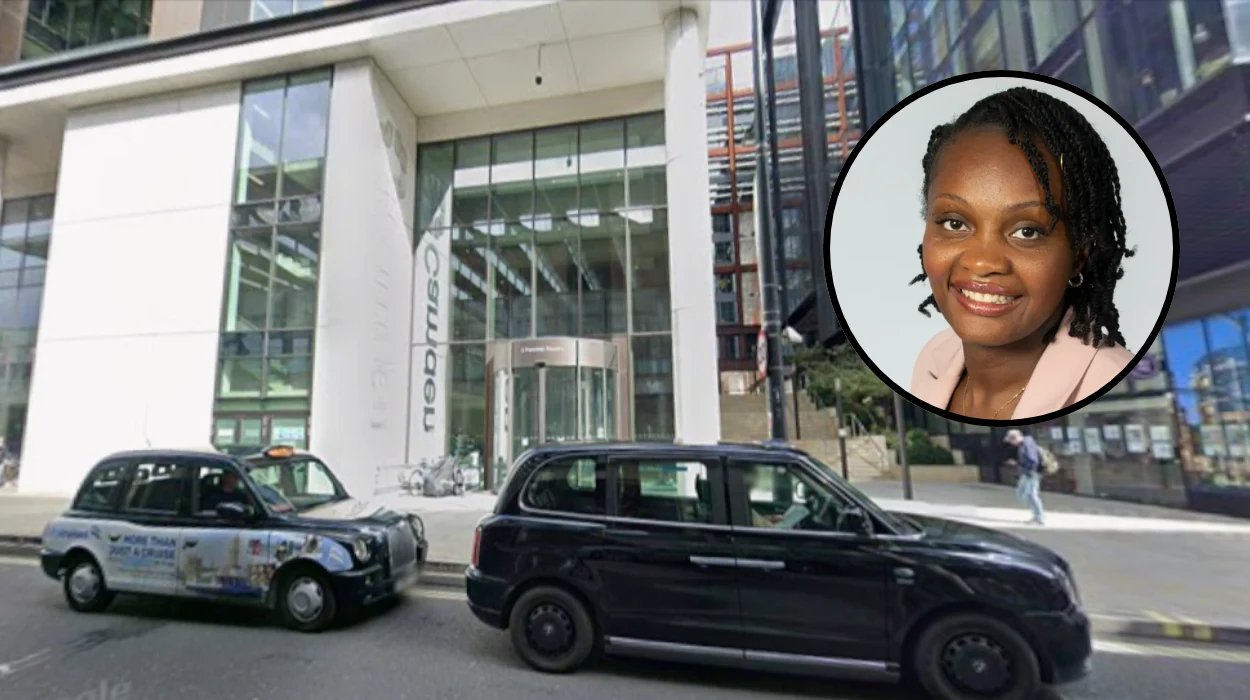
Camden (Extra London News) July 11, 2026 – The Labour Party has successfully reclaimed a pivotal seat on Camden Council following a fiercely contested by-election in the Regent’s Park ward on Thursday 9 July. The local poll, which saw Labour candidate Nanouche Umeadi secure victory with 576 votes (32%), was triggered just weeks after the May local elections, when newly elected Green Party councillor Mohammed Abu Naser was forced to resign due to structural eligibility breaches. Umeadi’s narrow victory over Green Party candidate Alice Brown, who finished second with 482 votes (27%), brings stability back to the Labour-led executive by expanding their council cohort to 31 seats, slightly padding out what had become an incredibly slim working majority.
- Key Points
- Why was the Regent’s Park ward by-election called?
- Who won the election and how did the candidates perform?
- What did the winning candidate say about her victory?
- How did local infrastructure issues influence the voters?
- What are the new councillor’s main policy pledges?
- How does this result alter the balance of power on Camden Council?
Why was the Regent’s Park ward by-election called?
The sudden return to the ballot box for residents of the Regent’s Park ward came as a direct consequence of an administrative oversight by the local Green Party during the main local government elections in May. In that election, the Green Party achieved an unprecedented sweep of the ward, ousting three sitting Labour representatives. However, the celebrations were short-lived.
As reported by the editorial staff of Fitzrovia News, the newly elected Green candidate, Mohammed Abu Naser, a local educator, was forced to step down almost immediately after the declaration of the results. It was discovered that his primary employment as a teacher meant his candidacy breached strict local government electoral rules regarding public sector employment compatibility with holding civic office.
According to reports published by Camden Labour in their political updates, the opposition party openly criticized the situation, stating that “The Camden Green Party has caused chaos by standing an ineligible candidate in Regent’s Park.” This legislative disqualification left the seat vacant before the council could even convene its first standard post-election session, incurring an estimated public cost of £30,000 to stage the emergency by-election.
Who won the election and how did the candidates perform?
The voting, which took place across Thursday 9 July, concluded with a tight three-way race at the top of the ballot, though overall civic participation remained low. Data published officially by the Camden Council Newsroom confirmed a final voter turnout of 21.93 per cent, with 13 ballots rejected at the count for structural issues like voting for multiple candidates or leaving the paper unmarked.
The results represented a significant defensive save for the Labour Party, which had been reeling from their extensive losses to the Greens in the same geographic area only two months prior. For the Green Party, their candidate Alice Brown—an architect and building retrofit specialist who had previously contested the Highgate ward—failed to retain the exceptional momentum generated by her colleague Mohammed Abu Naser in May, missing out on the seat by a margin of 94 votes.
Concurrently, independent candidate Mohammad Junayd Khan disrupted the traditional party structures by siphoning off nearly a quarter of the active electorate, establishing a firm third-place finish that heavily impacted the margins of the two frontrunners.
Explore More Camden News
Labour Reclaims Camden Council Seat From Greens: Regent’s Park 2026
Salman Rushdie Defends Free Speech at Liberatum Award Ceremony: London 2026
What did the winning candidate say about her victory?
For the newly elected Councillor Nanouche Umeadi, the victory marks a personal and political redemption. Umeadi had previously served as a member of Camden Council representing the Kilburn ward since 2022, but she lost her seat in the May cyclical elections after finishing a disappointing fifth in that boundary’s tally.
Speaking directly to the Local Democracy Reporting Service (LDRS) in the immediate aftermath of the declaration, Cllr Umeadi admitted that the compressed campaign period had taken an intense physical and emotional toll. She stated that the campaign had been a “very hard fight” as she constantly sought to balance the grueling demands of local door-knocking with her ongoing daily family responsibilities.
Reflecting on the collaborative effort required to flip the ward back to red, Cllr Umeadi told the LDRS:
“I can’t believe that we’ve done it, and I genuinely could not have done it without the incredible team — I call it the ‘village’ — of Labour councillors, the local constituency party and my family.”
How did local infrastructure issues influence the voters?
According to the candidate’s post-election analysis, national political shifts were less influential on the doorstep than direct, hyper-local grievances. Cllr Umeadi chalked up her narrow victory to her complete candour and a deeply personal ability to connect genuinely with local residents over long-standing structural disruptions, most notably the ongoing High Speed 2 (HS2) railway development.
The massive rail infrastructure project has long been a source of intense community friction within the borough, particularly near its targeted terminus. As recorded by the LDRS, Cllr Umeadi explained that the railway line’s massive construction footprint in the Euston area had directly impacted her own inner circle, revealing that the project had displaced her aunt and cousins after their home, alongside hundreds of other family properties, was completely demolished to clear space for the tracks.
Addressing how this shared history helped alter the trajectory of the election, Cllr Umeadi noted to the LDRS reporters:
“A lot of undecided voters or those who were leaning Green said they were considering me because I could relate to them on these issues. I wasn’t afraid to answer difficult questions about the party, and when I didn’t know the answer, I said so.”
What are the new councillor’s main policy pledges?
Having spent her formative years within the immediate community, Umeadi’s platform focused heavily on localized structural accountability. Having arrived in the London Borough of Camden as a vulnerable four-year-old asylum seeker fleeing conflict in the Democratic Republic of Congo, she grew up in the Mornington Crescent area, giving her a deep, long-term connection to the changing urban landscape of the district.
Looking forward to her renewed tenure within the council chamber, Cllr Umeadi explicitly pledged to use her platform to firmly hold HS2 delivery bodies to account. Furthermore, she committed to lobbying intensely to ensure that the broader, highly controversial regeneration schemes around Euston station deliver explicitly on historical promises to construct the “quality, affordable homes needed in Regent’s Park.”
How does this result alter the balance of power on Camden Council?
While a singular by-election rarely upends a major metropolitan borough, this specific result provides vital breathing room for the ruling Labour group. Following a rough set of local election results in May, which saw the resignation of former council leader Richard Olszewski after he lost his seat, the party has been operating under a newly selected leadership team headed by Councillor Sagal Abdi-Wali.
As detailed in archival data from Camden Council, Labour’s successful capture of this vacant seat expands their active councillor cohort back up to 31 members. This padding insulates the Labour leadership against internal policy rebellions or attendance issues, solidifying their thin majority over a fragmented but assertive opposition.
Despite failing to capture the seat, the Green Party, working in loose alignment with the localized Camden People’s Alliance, maintains its historic position as the official largest formal opposition block within the civic centre, boasting 11 active members. They sit just one seat ahead of a resilient Liberal Democrat contingent, who currently command 10 seats, ensuring that the legislative chamber will remain a highly competitive environment for the newly installed Labour executive.