Key Points
- Green School Runs, a parent‑led community group based in Hampstead and Camden, has launched a new “Cargo Bike Collective” aimed at making school‑run journeys safer, greener, and more sociable.
- The Cargo Collective is designed to help families who own or are considering buying electric cargo bikes to share rides, cycle “scoots” (rotas), and jointly transport children to school.
- The initiative is framed as a response to heavy traffic, air‑pollution concerns, and road‑safety risks around school gates, particularly in NW3 and Camden wards.
- Green School Runs is coordinating the Collective with existing “Cargos & Cakes” events where parents can see and test different cargo‑bike models, often with electric assist, and discuss practicalities such as carrying children and shopping.
- The Collective is being promoted alongside Camden Council’s wider OurBike e‑cargo‑bike hire network, which has expanded to 12 docking points across the borough, offering cheap, short‑term access to three‑wheeled cargo bikes for school runs and deliveries.
- According to Green School Runs organisers, the project seeks to reduce reliance on cars by creating peer‑to‑peer networks, ride‑sharing groups, and “feeder” rides into larger cycling events such as Kidical Mass London.
- The group has also highlighted health‑sector and air‑quality data indicating that active school‑run travel improves children’s physical and mental wellbeing while cutting local emissions and congestion.
Camden, north London (Extra London News) May 4, 2026 – Green School Runs, a community‑led initiative working across Hampstead and Camden, has formally launched a cargo bike Collective aimed at transforming the school run into a less congested, cleaner, and more social experience for families. The project is being rolled out in parallel with the expansion of Camden Council’s OurBike electric‑cargo‑bike hire scheme, which now offers a dozen docking points across the borough. Green School Runs says the Cargo Collective will enable parents to share rides, swap bikes, and organise group “scoots” so that children can travel to school without relying on private cars.
- Key Points
- What is the cargo bike collective?
- Focus on electric‑cargo models and safety
- How does it fit into Camden’s wider cycling plans?
- Role of local partners and air‑quality goals
- How are parents responding to the initiative?
- Concerns and practical questions raised
- What impact could the collective have on school‑run traffic?
- H3: Influence on council policy and infrastructure
- What comes next for the collective?
- Monitoring and sharing results
What is the cargo bike collective?
As reported by Green School Runs on its official website and social channels, the Cargo Bike Collective is a membership‑style network of families who own or are interested in using cargo bikes for school journeys.
Organisers describe the group as a “practical toolkit” that helps parents plan shared routes, agree on responsibilities for loading and unloading children, and coordinate drop‑off and pick‑up times around school gates.
In a blog‑style announcement, the group notes that the Collective is open to both existing cargo‑bike owners and those considering purchase, with an emphasis on “peer‑to‑peer” support rather than top‑down instruction.
According to Alessandra Giuliani, writing for the NW3 Green School Runs blog, the initiative emerged from repeated conversations among parents worried about traffic gridlock and the “toxic” atmosphere near school entrances.
Focus on electric‑cargo models and safety
The Collective is particularly geared towards electric‑assist cargo bikes, which organisers argue can help people with longer commutes, steep hills, or multiple children in one trip.
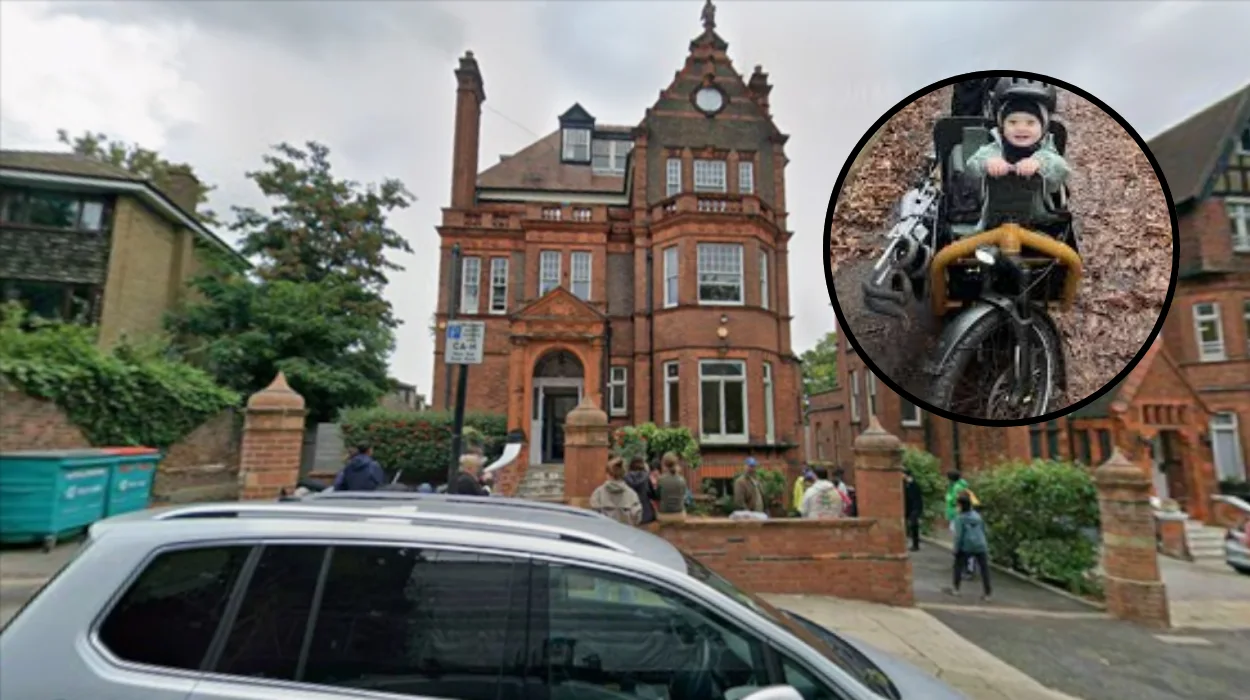
As described by Green School Runs in its “Cargo Bikes” section, the group arranges events such as “Cargos & Cakes” on Hampstead Heath, where families can test different configurations, see how children are seated, and ask about storage, insurance, and all‑weather riding.
At a June 2025 “Cargos & Cakes” event, organisers noted that participants were able to compare several models, including front‑box three‑wheelers and long‑tail bikes, and that many parents reported feeling “more confident” about ditching the car after a short supervised ride.
Commenting on safety, the group stresses low‑speed travel, planned routes away from major junctions, and the use of helmets and child‑safety harnesses, echoing broader guidance from Camden’s road‑safety and cycling partners.
How does it fit into Camden’s wider cycling plans?
The Green School Runs Collective is being promoted alongside Camden Council’s OurBike project, an app‑based hire scheme run by social enterprise Peddle My Wheels that allows residents and businesses to rent electric cargo bikes by the hour.
According to a Camden Council press release dated October 2025, the OurBike network has expanded from four stations to 12 across the borough, with three‑wheeled bikes parked near host businesses that manage charging and access.
In a statement published by Fitzrovia News, council officers say OurBike e‑cargo bikes have already been used for over 230 round trips, covering more than 2,200 km for school runs, deliveries, and recycling hauls since the scheme began in September 2024. Councillor Adam Harrison, quoted in the same release, said the expansion makes Camden
“home to the largest fleet of community cargo bikes in any London borough,”
and he added that the bikes are intended to help people who cannot afford or store a private cargo bike but occasionally need one.
Role of local partners and air‑quality goals
Green School Runs has also highlighted partnerships with public‑health and environmental bodies, including Camden’s Healthwatch organisation, which helped publish a guest blog by Alessandra Giuliani on the benefits of walking and cycling to school.
The blog notes that active travel is linked to improved physical fitness, better concentration in class, and lower exposure to air‑pollution peaks around 8–9 am.
As pointed out by Camden Council’s own cycling‑and‑incentives page, the borough has introduced multiple schemes—including cycle‑to‑work offers, e‑bike trials, and cargo‑bike loans—to support the “mini‑Holland” and ultra‑low‑emission‑zone (ULEZ) agendas.
Officers stress that cargo bikes and shared‑ride groups can reduce short‑trip car use, cut nitrogen‑dioxide levels near schools, and ease congestion around busy junctions such as those near Haverstock Hill and Regents Park Road.
How are parents responding to the initiative?
Green School Runs reports that participation in “Cargos & Cakes” and similar events has risen steadily since the concept was first piloted in 2024. A Facebook post by the group, later shared via its NW3‑focused blog, describes the spring‑term 2025 launch of a “brand new” cargo‑bike collective as a “natural next step” from earlier trial days and informal meet‑ups.
In social‑media posts attributed to the Green School Runs account, organisers say that many parents have already agreed to join “feeder rides” that link Hampstead and Camden neighbourhoods into larger cycling rallies such as Kidical Mass London, a family‑orientated event held in central London.
Those posts emphasise that the Collective is designed to be “low‑pressure” and “non‑judgmental,” welcoming families who still use cars on some days but want to try cargo‑bike commuting on others.
Concerns and practical questions raised
At the same time, Green School Runs acknowledges that some parents have raised concerns about safety on busy streets, the weight and stability of loaded cargo bikes, and the logistics of sharing bikes between households.
In a follow‑up blog entry, the group cites feedback from participants who asked about weather‑proofing, battery range, and the need for designated parking spots near school gates.
In response, organisers say they are working with local schools and Camden Council officers to identify safer routes, trial “school‑run corridors” with temporary low‑traffic measures, and explore the possibility of school‑adjacent charging and docking points for shared bikes.
They also note that the OurBike scheme already offers free training sessions for first‑time cargo‑bike users, which they encourage Collective members to attend.
What impact could the collective have on school‑run traffic?
According to Green School Runs’ own framing, the Cargo Bike Collective is intended to shift, even marginally, the balance away from short‑trip car journeys to active‑travel options. In a blog‑style update, the group cites Camden Council data showing that the OurBike fleet has already been used for hundreds of school‑run trips in the first year, and it suggests that community‑led collectives could accelerate this trend.
The group also draws on broader air‑quality research promoted by Camden’s environment and cycling teams, which links diesel‑powered school‑run traffic to spikes in particulate‑matter and nitrogen‑dioxide readings near primary‑school entrances. By contrast, the organisers argue, cargo‑bike runs can cut both emissions and noise, while creating “calmer” streets where children can cross more safely on foot or by bike.
H3: Influence on council policy and infrastructure
Green School Runs and the Cargo Collective are also positioning themselves as advocates for more permanent infrastructure changes, such as additional cycle lanes, safer crossings, and more cargo‑bike parking, around Camden schools.
In a statement quoted on the group’s social‑media channels, organisers say that the Collective is “a test case” that could be replicated in other boroughs if families report sustained reductions in car use.
Camden Council officers have yet to issue a formal evaluation of the Cargo Bike Collective specifically, but they have described the wider OurBike network as a “demonstration project” that could inform future investment in low‑emission transport.
In a separate interview with local media, transport‑strategy staff noted that parent‑led initiatives like Green School Runs often help councils identify “real‑world” barriers—such as lack of secure storage or route‑planning support—that are not evident from high‑level policy documents alone.
What comes next for the collective?
Green School Runs has signalled that the Cargo Bike Collective may be expanded to other neighbourhoods and boroughs if early pilots prove successful. In a recent Instagram post attributed to the group, organisers said they are already in talks with counterparts in Hackney and Islington about sharing best‑practice models for cargo‑bike‑based school‑run schemes.
The group also plans to run more “Cargos & Cakes” sessions during the 2026–27 school year, specifically targeting families new to cycling and those who previously relied almost entirely on cars for school journeys.
They emphasise that the Collective will remain voluntary and informal, with no expectation that members must stop using cars entirely, but rather that they gradually shift a portion of their weekly trips to cargo‑bike runs.
Monitoring and sharing results
In parallel, Green School Runs and Camden Council say they intend to monitor participation, emissions, and congestion around selected schools over the coming academic year. As reported by Fitzrovia News and Camden Council’s own channels, this will include tracking OurBike usage data, counting vehicles at school gates during peak hours, and gathering anonymised feedback from families in the Cargo Collective.
The organisers hope that robust data will help justify further investment in cargo‑bike infrastructure, influence Transport for London’s school‑travel guidance, and offer a template for other London boroughs seeking to tackle the “school‑run crisis” without relying solely on car‑restriction measures. In the meantime, the Green School Runs Cargo Bike Collective is being presented as both a practical solution and a community experiment in how families can reshape one of the most entrenched patterns of urban travel: the school run.