London developed into one of the world’s leading art capitals through centuries of royal patronage, international trade, institutional growth, artistic migration, and public investment. From medieval illuminated manuscripts to contemporary galleries, the city continuously expanded its artistic influence while preserving its cultural heritage. Today, London remains one of the largest global centres for fine art, museums, auctions, education, and creative industries.
- Why did London become a global art capital?
- How did medieval London establish its artistic foundations?
- How did the Renaissance transform London’s artistic identity?
- What role did royal patronage play in London’s artistic growth?
- How did London’s art institutions shape artistic excellence?
- How did immigration influence London’s artistic development?
- How did the Industrial Revolution reshape London’s artistic landscape?
- How did London’s museums and galleries become internationally influential?
- What role did London’s art market play in global influence?
- How does London preserve its artistic heritage today?
- Why does London’s artistic history remain globally significant?
Why did London become a global art capital?
London became a global art capital through sustained royal patronage, expanding international commerce, influential art institutions, immigrant artistic communities, public museums, and a competitive art market. These interconnected developments transformed the city into an internationally recognised centre of artistic production, education, collecting, and cultural preservation.
London’s artistic prominence did not emerge from a single event. It evolved over nearly one thousand years through political stability, economic expansion, cultural exchange, and institutional development.
The city’s strategic position along the River Thames supported international trade from the medieval period onward. Merchants imported paintings, sculptures, textiles, pigments, manuscripts, and luxury goods from continental Europe. Artistic techniques travelled alongside commercial goods.
Royal households became significant patrons of painters, sculptors, architects, metalworkers, and manuscript illustrators. Monarchs commissioned portraits, religious decoration, royal residences, and ceremonial objects that stimulated artistic production.
The growth of London’s population accelerated artistic demand. Around 50,000 residents lived in medieval London during the thirteenth century. By 1700 the population exceeded 575,000. By 1801 it reached approximately 959,000, making London Europe’s largest city.
Economic prosperity encouraged wealthy merchants, lawyers, bankers, and politicians to commission portraits, decorate residences, and collect artworks.
Educational institutions trained generations of artists while museums preserved national collections. Auction houses connected buyers and sellers across international markets.
Today London’s creative industries contribute billions of pounds annually to the United Kingdom economy, while millions of visitors explore its museums and galleries every year.
How did medieval London establish its artistic foundations?
Medieval London established artistic foundations through religious institutions, illuminated manuscripts, stone carving, stained glass production, guild regulation, and royal commissions. Churches, monasteries, and civic organisations preserved artistic knowledge while encouraging specialised craftsmanship across multiple creative disciplines.
Before the Norman Conquest in 1066, Anglo-Saxon artistic traditions included manuscript illumination, metalworking, embroidery, and religious sculpture.
Following the Norman conquest, monumental Romanesque architecture reshaped London’s appearance.
Religious patronage
Churches became London’s principal artistic patrons.
Examples include:
- Westminster Abbey
- St Paul’s Cathedral (Old St Paul’s)
- Priories
- Monastic houses
These institutions commissioned murals, altarpieces, stained glass, carved capitals, illuminated religious texts, and ceremonial objects.
Illuminated manuscripts represented one of medieval London’s highest artistic achievements. Skilled scribes combined handwritten Latin texts with elaborate decorative initials, gold leaf, and miniature paintings.
Guilds and artistic regulation
Craft guilds regulated artistic professions.
Examples include:
- Painters
- Sculptors
- Goldsmiths
Guild membership controlled apprenticeships, professional standards, pricing, and quality.
The Worshipful Company of Painter-Stainers, formally incorporated during the sixteenth century, built upon earlier medieval traditions of regulating decorative painters.
Imported artistic influence
London maintained close artistic links with:
- France
- Flanders
- Italy
Foreign craftsmen introduced Gothic architectural forms, improved stained glass techniques, and sophisticated panel painting.
These international exchanges established London’s long-term reputation as an artistic crossroads.
How did the Renaissance transform London’s artistic identity?
The Renaissance transformed London’s artistic identity through humanist learning, royal collecting, portrait painting, architectural innovation, and European artistic influence. Tudor and early Stuart monarchs attracted internationally recognised artists who elevated London’s cultural status across Europe.
The English Renaissance unfolded differently from its Italian counterpart.
Instead of city-state patronage, royal courts became the principal artistic centres.
Henry VIII and royal patronage
King Henry VIII dramatically expanded royal artistic commissions.
He imported distinguished European artists to strengthen England’s international prestige.
The most famous was Hans Holbein the Younger, whose portraits combined extraordinary realism with political symbolism.
Holbein documented members of the Tudor court through technically sophisticated paintings that remain among Britain’s greatest artistic treasures.
Elizabethan artistic culture
Queen Elizabeth I encouraged portraiture that reinforced monarchical authority.
Official portraits projected stability, wealth, Protestant identity, and imperial ambition.
Symbolic imagery became increasingly sophisticated.
Objects such as globes, pearls, crowns, celestial symbols, and embroidered gowns communicated political messages.
Growth of collecting
Elite London households began assembling private collections containing:
- Paintings
- Sculptures
- Coins
- Classical antiquities
These collections reflected expanding intellectual interest in classical civilisation and European culture.
London increasingly participated in continental artistic networks.
What role did royal patronage play in London’s artistic growth?
Royal patronage accelerated London’s artistic growth by financing painters, architects, sculptors, decorative craftsmen, and collectors. Successive monarchs commissioned major artistic projects that strengthened cultural institutions, encouraged innovation, and enhanced London’s international artistic reputation for several centuries.
Royal patronage created stable employment for artists.
Commissioned works included:
- Portraits
- Palaces
- State apartments
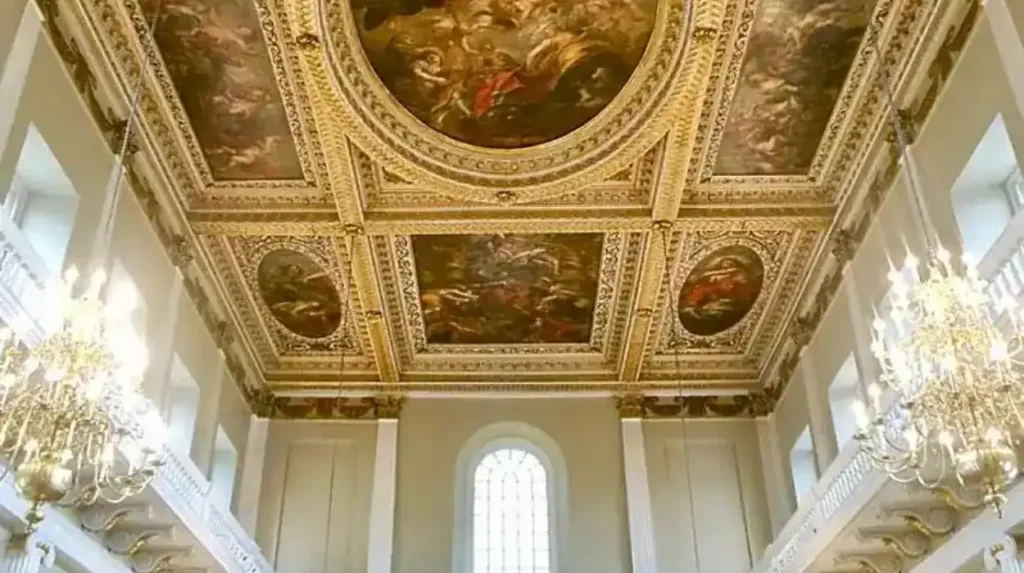
- Decorative ceilings
- Tapestries
- Sculptures
King Charles I became one of Europe’s greatest collectors.
His collection included masterpieces by:
- Titian
- Raphael
- Rubens
- Van Dyck
Anthony van Dyck served as Principal Painter in Ordinary to Charles I.
His elegant portraits redefined aristocratic portraiture throughout Britain.
Although much of Charles I’s collection dispersed following the English Civil War, many surviving works eventually entered Britain’s national collections.
Royal commissions also influenced architecture.
Examples include:
- Banqueting House
- Whitehall Palace
- Greenwich developments
These projects integrated painting, sculpture, and architectural design.
How did London’s art institutions shape artistic excellence?
London’s art institutions created professional standards through education, exhibitions, collections, conservation, and public access. Museums, academies, libraries, and galleries transformed artistic practice while expanding opportunities for artists, researchers, educators, and visitors from around the world.
Institutional development distinguished London from many competing cities.
Royal Academy of Arts
Founded in 1768, the Royal Academy established formal artistic education.
Students studied:
- Drawing
- Anatomy
- Perspective
- Sculpture
- Composition
Its Summer Exhibition became one of the world’s longest-running annual art exhibitions.
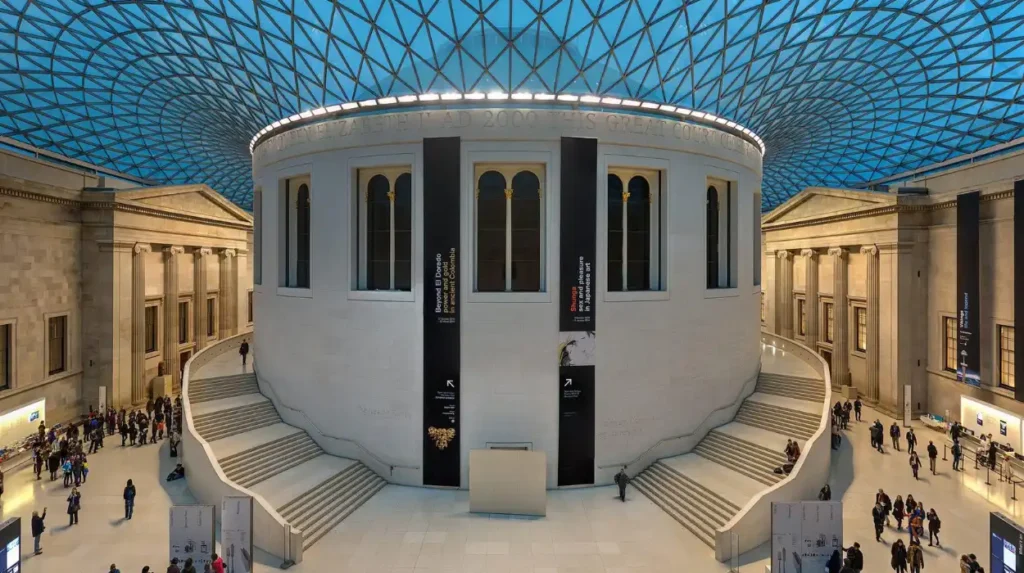
British Museum
Established in 1753 and opened to the public in 1759, the British Museum transformed public access to historical art and archaeology.
Collections expanded through exploration, scholarship, excavation, and acquisition.
Visitors encountered artworks from multiple civilisations in one institution.
National Gallery
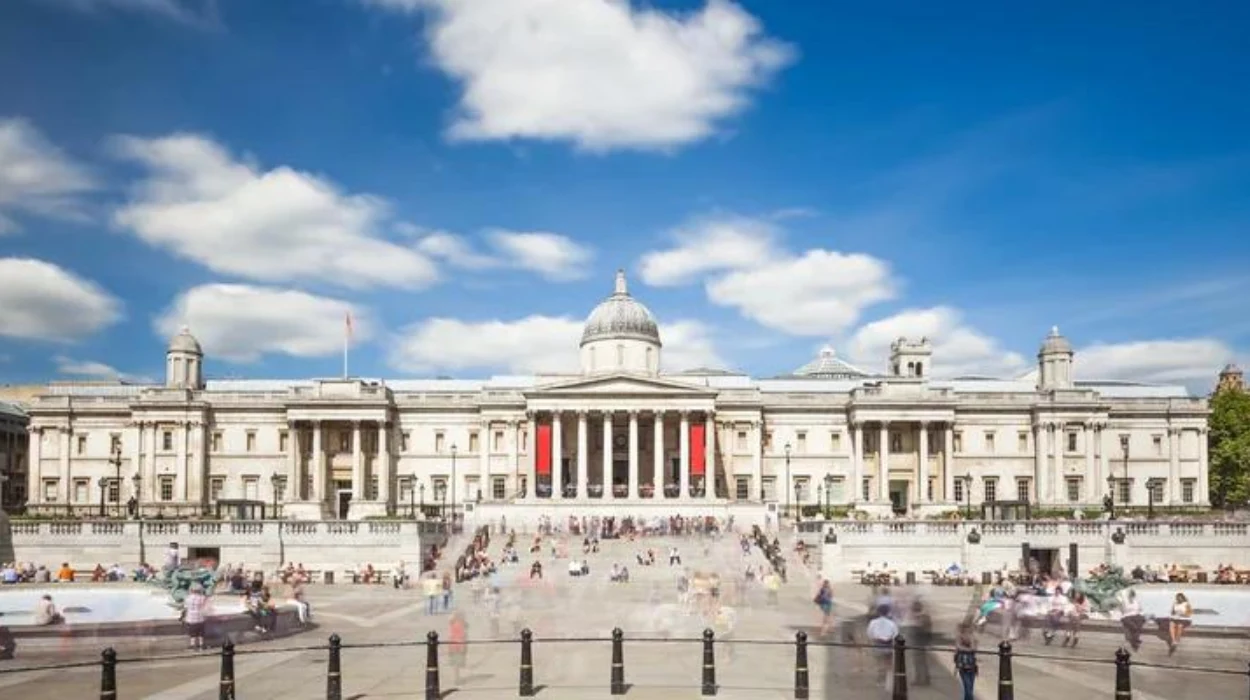
The National Gallery opened in 1824.
Its purpose centred upon preserving European paintings while making them accessible without charge.
Today it contains more than 2,300 paintings dating from the thirteenth century onward.
Victoria and Albert Museum
Established in 1852, the Victoria and Albert Museum specialised in decorative arts and design.
Collections include:
- Furniture
- Ceramics
- Fashion
- Jewellery
- Sculpture
- Photography
Together these institutions positioned London as a global educational centre for art history.
How did immigration influence London’s artistic development?
Immigration enriched London’s artistic development by introducing new techniques, styles, materials, and cultural traditions. Artists arriving from continental Europe and later from across the world expanded London’s creative diversity while strengthening its international artistic reputation across multiple centuries.
London consistently attracted skilled artists seeking opportunity.
During the seventeenth century, Flemish and Dutch painters expanded portraiture and landscape traditions.
French Huguenot refugees introduced advanced textile design and decorative craftsmanship after religious persecution.
Italian architects influenced urban planning and classical architecture.
Jewish communities contributed to London’s commercial art networks.
During the twentieth century, artists from:
- India
- Nigeria
- Pakistan
- Jamaica
- China
- Poland
enriched London’s multicultural artistic landscape.
Modern London reflects artistic traditions from every inhabited continent.
This diversity distinguishes London’s galleries, festivals, public art, and educational institutions.
How did the Industrial Revolution reshape London’s artistic landscape?
The Industrial Revolution reshaped London’s artistic landscape through urban expansion, technological innovation, increased wealth, improved transport, commercial galleries, and broader public participation. Industrial prosperity supported museums, collectors, publishers, educators, and expanding creative industries throughout the nineteenth century.
Industrialisation transformed both artistic production and consumption.
Steam-powered printing increased access to illustrated books and newspapers.
Photography emerged during the nineteenth century, fundamentally changing visual documentation.
New pigments expanded artists’ colour palettes.
Railways enabled artworks and exhibitions to travel more efficiently.
Growing middle-class prosperity increased demand for paintings and decorative interiors.
Commercial galleries multiplied throughout London’s West End.
Art criticism flourished in newspapers and journals.
Public museums welcomed millions of visitors.
The Great Exhibition of 1851 showcased international artistic and industrial achievement inside the Crystal Palace.
The exhibition attracted more than six million visitors.
Its success encouraged permanent investment in museums and educational institutions within South Kensington.
How did London’s museums and galleries become internationally influential?
London’s museums and galleries achieved international influence through exceptional collections, public accessibility, conservation expertise, scholarly research, educational outreach, and global partnerships. These institutions preserve artistic heritage while supporting historical research, tourism, and international cultural exchange.
London’s museums collectively house millions of objects.
Collections represent thousands of years of artistic achievement.
Curators combine conservation science with historical scholarship.
Museums collaborate internationally on exhibitions, research projects, and archaeological investigations.
Digitisation initiatives increase global access to collections.
Educational programmes support schools, universities, researchers, and lifelong learners.
Annual visitor numbers regularly rank London’s museums among the world’s most visited cultural institutions.
To experience these historic collections in person today, consult our comprehensive [Best Art Galleries to Visit in London for Culture, Creativity, and Inspiration Year-Round] for itineraries and visiting parameters.
These institutions continue preserving London’s artistic legacy for future generations.
What role did London’s art market play in global influence?
London’s internationally connected art market established the city as a leading centre for collecting, auctions, valuation, and cultural investment. Dealers, auction houses, collectors, museums, and private galleries created one of the world’s most influential artistic economies.
Commercial infrastructure strengthened London’s artistic ecosystem.
Auction houses connected global buyers with significant artworks.
International collectors travelled to London seeking rare paintings, manuscripts, sculptures, and decorative arts.
Private galleries promoted emerging artists alongside established masters.
Professional conservation laboratories supported preservation.
Insurance, transport, authentication, and specialist legal services developed alongside the expanding market.
The concentration of expertise attracted scholars, museums, universities, and collectors from across the globe.
London remains among the world’s largest art market centres alongside New York and Hong Kong.
How does London preserve its artistic heritage today?
London preserves its artistic heritage through conservation programmes, heritage legislation, museum research, digital archives, restoration projects, educational initiatives, and protected historic buildings. Public investment and charitable organisations ensure significant artworks remain accessible for future generations.
Conservation combines science with traditional craftsmanship.
Specialists stabilise paintings, sculptures, manuscripts, textiles, and architectural decoration.
Historic districts continue protecting artistic environments.
Examples include:
- Bloomsbury
- Westminster
- South Kensington
- Greenwich
Historic England records nationally significant heritage assets.
Conservation professionals carefully document every restoration intervention.
Digital imaging allows researchers to examine paintings without physical handling.
Museums increasingly publish high-resolution images and scholarly catalogues online.
Universities collaborate with museums on technical analysis using microscopy, infrared imaging, X-radiography, and pigment identification.
These techniques improve understanding of artistic processes while supporting long-term preservation.
Why does London’s artistic history remain globally significant?
London’s artistic history remains globally significant because it combines continuous cultural development, institutional leadership, international exchange, artistic innovation, and public accessibility. Centuries of preservation transformed London into one of humanity’s most influential centres for artistic education, research, collecting, and cultural heritage.
London’s artistic evolution reflects broader historical developments.
Political stability supported institutional continuity.
Global trade introduced artistic diversity.
Education strengthened professional standards.
Museums preserved national collections.
International migration expanded creativity.
Public investment improved accessibility.
Today London’s artistic influence extends beyond gallery walls.
Researchers study its archives.
Students train within its academies.
Conservators protect internationally significant collections.
Millions of visitors engage directly with artistic heritage every year.
The city’s artistic legacy also contributes substantially to Britain’s economy through tourism, education, publishing, conservation, exhibitions, and the wider creative industries.
London demonstrates how sustained cultural investment across successive centuries can create enduring international influence. Its artistic institutions preserve evidence of medieval craftsmanship, Renaissance innovation, royal collecting, industrial expansion, and contemporary multicultural creativity within one interconnected urban landscape. This continuity explains why London continues to rank among the world’s foremost centres for art, history, scholarship, and cultural preservation.
Why is London considered a global art capital?
London is considered a global art capital because of its centuries of royal patronage, internationally renowned museums, prestigious art schools, thriving galleries, major auction houses, and diverse artistic communities. These factors have established the city as one of the world’s leading centres for art and culture.