London’s religious history is deeply connected to the evolution of its churches. A church in London represents more than a religious building. It functions as a historical record of communities, rulers, architects, artists, and ordinary residents who shaped the capital.
- How Did Medieval London Churches Shape Society and Urban Development?
- How Did the Reformation Transform London’s Churches?
- What Happened to London Churches During the Great Fire of 1666?
- How Did London Churches Reflect Victorian Religious and Social Change?
- How Did Wars and Modern Development Affect London Churches?
- Why Are London Churches Still Culturally Important Today?
- How Are London Churches Preserved for Future Generations?
London churches became central to the city’s religious history because they served as places of worship, political influence, social organisation, education, burial, and architectural expression from the Roman period to the modern era. These buildings recorded changes in Christianity, monarchy, migration, and urban development across nearly two millennia.
The earliest Christian presence in London developed during the Roman period when Londinium became a major settlement after its foundation around AD 43. Archaeological evidence confirms Christian activity in Roman Britain, including discoveries of religious objects and possible early Christian sites across the former Roman city.
Christianity became officially established within the Roman Empire after Emperor Constantine issued the Edict of Milan in AD 313, which allowed Christians to worship openly. By the late Roman period, Christian communities existed in Britain, although detailed records of London’s early churches remain limited.
Following the withdrawal of Roman authority in the fifth century, organised Christianity declined in many areas. The arrival of the Anglo-Saxon kingdoms brought renewed Christian expansion. In AD 597, Saint Augustine of Canterbury began the mission that reintroduced Roman Christianity to England under the support of King Æthelberht of Kent.
London developed as an important ecclesiastical centre during the medieval period. Churches appeared throughout the growing city, serving expanding populations of merchants, craftsmen, nobles, and religious communities. The construction of religious buildings reflected London’s increasing economic and political importance.
The medieval church system shaped everyday life. Parish churches managed baptisms, marriages, burials, charity, education, and community gatherings. Before modern government services existed, churches provided many essential social functions.
How Did Medieval London Churches Shape Society and Urban Development?
Medieval London churches shaped society by organising neighbourhood life, supporting charitable activities, preserving records, and influencing the city’s physical growth. Parish churches created local identities and connected religious practice with trade, politics, education, and community responsibility throughout the medieval period.
The medieval period produced some of London’s most significant religious foundations. The city contained hundreds of churches before the major destruction events of later centuries. These churches were concentrated within the medieval walls and surrounding settlements.
The establishment of St Paul’s Cathedral became a defining moment in London’s religious development. The cathedral’s origins date back to a Roman temple site area, while the first known cathedral structure was founded in the seventh century. The medieval cathedral was rebuilt several times before its destruction in the Great Fire of London in 1666.
Medieval parish churches acted as centres of local administration. Each parish maintained registers documenting baptisms, marriages, and burials. These records became important sources for genealogical researchers tracing London family histories.
Religious institutions also controlled significant land ownership. Monasteries, priories, and religious houses managed estates, supported agriculture, and influenced economic activity. The wealth of religious institutions reflected the central role of Christianity in medieval England.
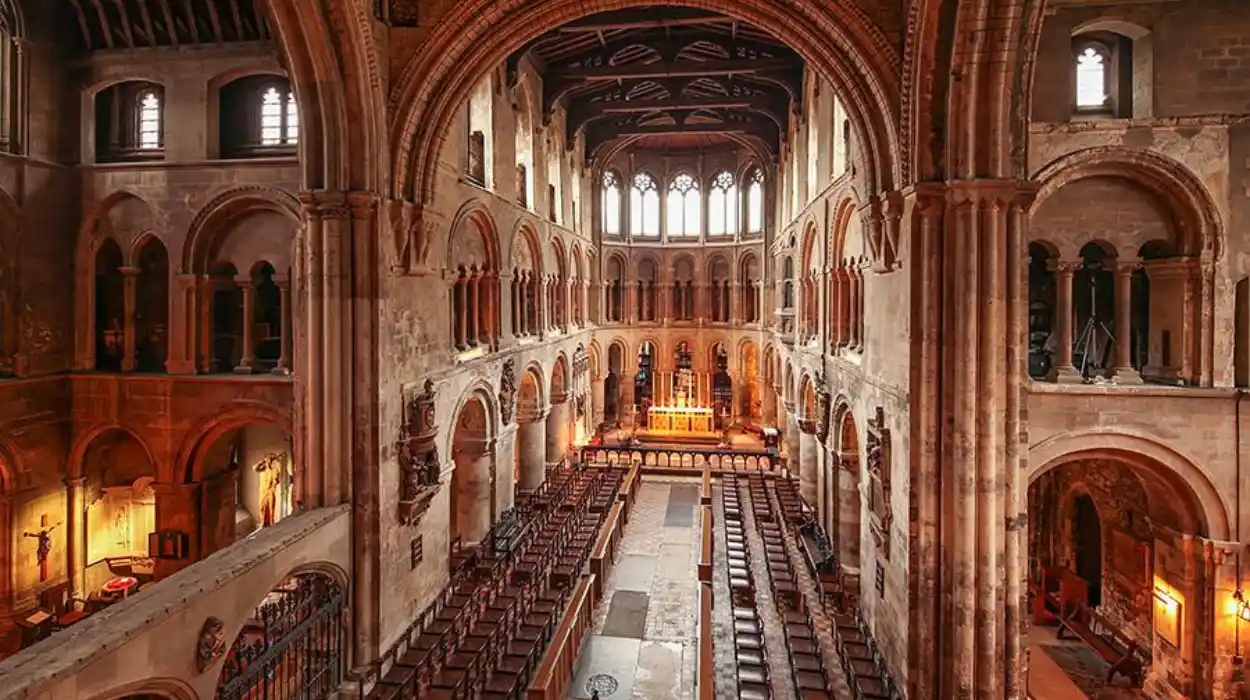
Architectural styles changed throughout the medieval period. Norman churches after the Norman Conquest of 1066 featured thick stone walls, rounded arches, and substantial construction techniques. Gothic architecture later introduced pointed arches, larger windows, and vertical designs that symbolised religious ambition.
The City of London became filled with churches positioned near markets, streets, and commercial districts. Buildings such as churches near Cheapside connected religious life with trade networks and civic activity.
The medieval church also influenced education. Monastic schools and cathedral institutions preserved manuscripts and trained clergy. These centres contributed to literacy development before the creation of modern universities and public education systems.
How Did the Reformation Transform London’s Churches?
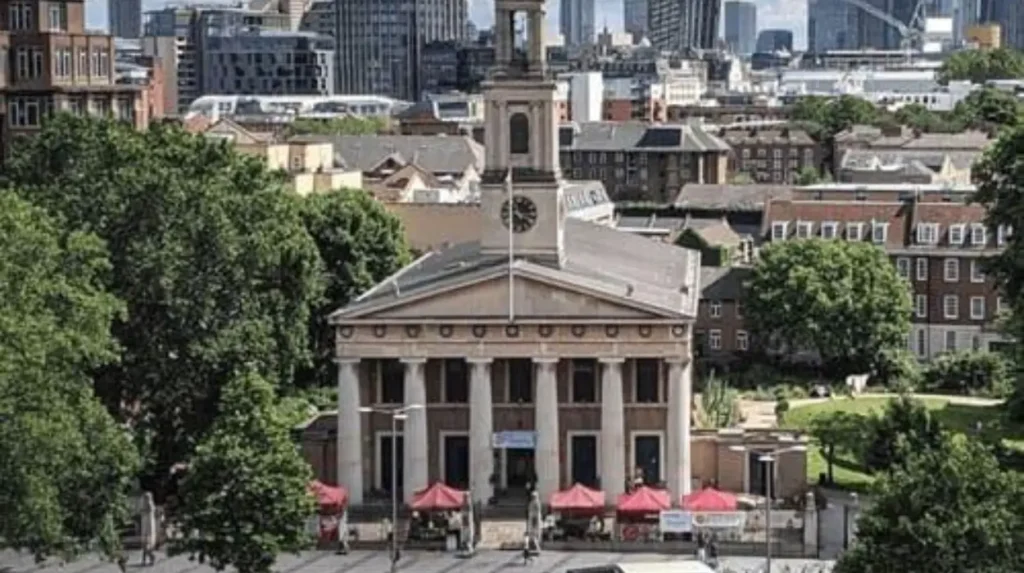
The English Reformation transformed London churches by ending papal authority, dissolving monasteries, changing worship practices, and transferring religious property to the Crown and private owners. These changes reshaped church architecture, community life, and England’s relationship between religion and government.
The English Reformation began during the reign of Henry VIII when political conflict with the papacy resulted in the establishment of the Church of England.
The Act of Supremacy of 1534 declared the monarch the Supreme Head of the Church of England. This law separated English religious authority from the Roman Catholic Church.
London experienced major religious changes during this period because it contained many monasteries and religious houses. Between 1536 and 1541, the Dissolution of the Monasteries transferred ownership of religious properties to the Crown.
Monastic buildings were closed, demolished, or converted into other uses. Wealthy landowners acquired former religious estates, changing patterns of ownership across London.
Church interiors also changed. Images, shrines, and religious decorations associated with Catholic worship were removed during Protestant reforms. Services increasingly focused on scripture and preaching in English rather than Latin.
The religious changes continued through later monarchs. The reign of Edward VI introduced stronger Protestant reforms, while Mary I restored Catholic practices temporarily between 1553 and 1558. Elizabeth I established a more permanent Anglican settlement through the Elizabethan Religious Settlement of 1559.
London churches became important symbols of national identity during this period. Their architecture and worship practices reflected the changing relationship between monarchy, religion, and society.
What Happened to London Churches During the Great Fire of 1666?
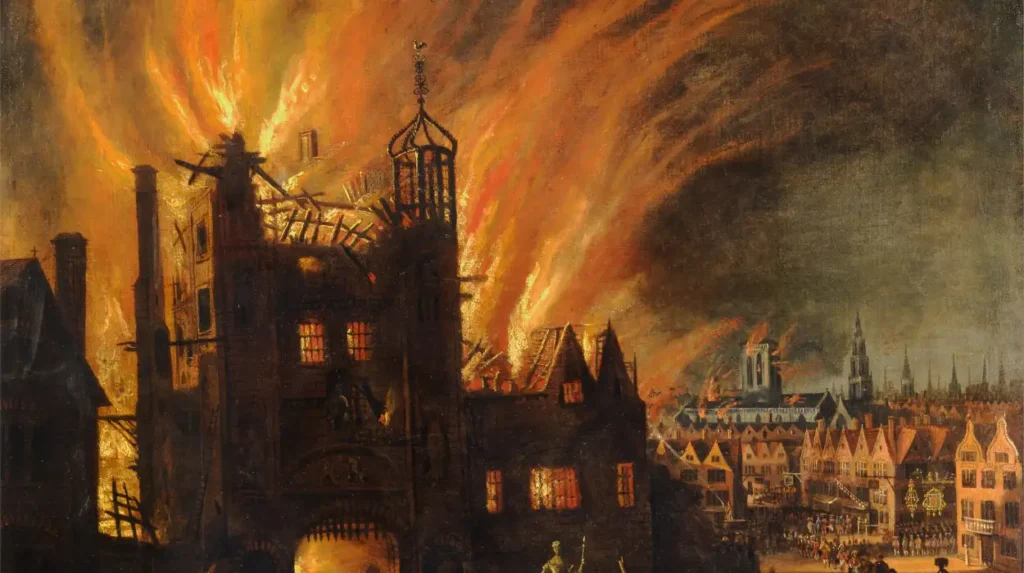
The Great Fire of London destroyed large sections of the medieval city, including many churches, but it also created an opportunity for architectural rebuilding. Christopher Wren redesigned dozens of churches, introducing Baroque influences that transformed London’s religious landscape.
The Great Fire of London began on 2 September 1666 in a bakery on Pudding Lane. The fire burned for four days and destroyed approximately 13,200 houses, 87 parish churches, and major civic buildings.
The destruction affected the medieval religious landscape of London. Many historic churches within the City of London required complete reconstruction.
The rebuilding programme was led by Christopher Wren, an architect and scientist appointed as Surveyor of the King’s Works in 1669. Wren designed the new St Paul’s Cathedral and 51 replacement parish churches.
Wren’s church designs combined classical architecture with English traditions. Features included domes, towers, symmetrical layouts, and decorative stonework.
The new St Paul’s Cathedral was completed between 1675 and 1710. Its dome became one of London’s most recognisable architectural features and influenced church design internationally.
Not every destroyed church was rebuilt. Population changes, financial limitations, and urban redevelopment reduced the number of parish churches. The rebuilding process reflected a new approach to city planning.
The Wren churches remain important examples of post-fire reconstruction. Buildings such as St Mary-le-Bow, St Bride’s Church, and St Martin Ludgate preserve the architectural legacy of seventeenth-century London.
How Did London Churches Reflect Victorian Religious and Social Change?
Victorian London churches reflected industrial expansion, population growth, social reform, and changing religious movements. New churches, restoration projects, and charitable organisations responded to overcrowded neighbourhoods and the spiritual needs of rapidly growing urban communities.
The Victorian period transformed London into one of the world’s largest cities. The population increased from approximately 2.3 million people in 1851 to more than 6.5 million by 1901.
Rapid industrialisation created new urban districts requiring religious and social infrastructure. Anglican churches expanded into growing suburbs, while nonconformist communities established chapels and meeting houses.
Victorian church architecture included Gothic Revival designs influenced by medieval forms. Architects such as Augustus Pugin promoted Gothic architecture as a suitable expression of Christian tradition.
The Oxford Movement, beginning in the 1830s, encouraged renewed interest in Anglican traditions, church decoration, and historic worship practices. This movement influenced church restoration projects throughout London.
Churches also became centres of social reform. Religious organisations operated schools, hospitals, food programmes, and support networks for working-class communities.
The East End of London became an important area for church-based social work. Figures such as William Booth established religious organisations addressing poverty and homelessness.
Victorian churches therefore represented both religious buildings and social institutions responding to the challenges of modern urban life.
How Did Wars and Modern Development Affect London Churches?
Wars and modern development changed London churches through destruction, restoration, adaptation, and preservation. The Second World War damaged many historic buildings, while later conservation programmes protected surviving churches as cultural and architectural landmarks.
The twentieth century brought major challenges for London churches. The First World War affected many congregations, while the Second World War caused extensive damage during the Blitz between 1940 and 1941.
Bombing destroyed or severely damaged hundreds of historic buildings across London. Several churches designed by Christopher Wren suffered damage but were later restored.
The restoration of churches after the war became part of wider heritage preservation efforts. Architects and conservation specialists repaired structures while maintaining historical features.
Urban redevelopment also changed religious buildings. Declining church attendance, population movement, and changing land use resulted in some churches closing or receiving alternative uses.
Some former churches became cultural venues, community centres, museums, and performance spaces. These adaptations preserved historic structures while meeting modern urban needs.
Preservation organisations, including Historic England, support the protection of historic religious buildings through research, listing systems, and conservation guidance.
Today, London’s churches exist within a broader heritage network connecting religion, architecture, tourism, and local identity.
Why Are London Churches Still Culturally Important Today?
London churches remain culturally important because they preserve architectural heritage, historical records, artistic collections, community traditions, and evidence of changing religious beliefs. They provide researchers and visitors with direct connections to London’s social and cultural development.
Modern London churches continue serving religious communities while functioning as heritage landmarks. Their importance extends beyond worship because they preserve evidence of centuries of human activity.
Many churches contain historic monuments, memorials, stained glass, paintings, and architectural details. These features provide information about artistic traditions and social values from different historical periods.
Church burial records remain valuable resources for genealogical research. Parish registers contain information about births, marriages, and deaths dating back hundreds of years.
Academic researchers study London churches to understand urban history, migration patterns, architecture, and religious change. Churches provide physical evidence of how communities developed.
Cultural tourism has also increased interest in London’s religious heritage. Visitors explore historic churches as part of wider journeys through the capital’s architecture and history.
To experience these historic landmarks in person today, consult our comprehensive [London’s Most Beautiful Historic Churches Every Tourist Should Visit for Architecture and Heritage] for itineraries and visiting parameters.
London churches also contribute to education. Schools, universities, and heritage groups use these buildings to examine topics including medieval society, the Reformation, architecture, and conservation.
How Are London Churches Preserved for Future Generations?
London churches are preserved through heritage protection, conservation projects, community involvement, and adaptive reuse programmes. These methods maintain historic buildings while allowing them to continue serving modern cultural, educational, and social purposes.
Historic churches require continuous maintenance because many structures are centuries old. Conservation specialists examine stonework, timber, stained glass, and architectural details to prevent deterioration.
Listed building protection provides legal safeguards for significant historic structures. Many London churches receive protection because of their architectural and historical importance.
Community organisations play an essential role in preservation. Local groups raise funds, organise events, and support restoration projects.
Digital technology has also improved historical research. Online archives, digital photography, and heritage databases allow researchers worldwide to study church records and architecture.
The future importance of London churches depends on balancing preservation with modern use. These buildings remain active examples of how historic spaces adapt to changing societies.
London’s churches represent nearly two thousand years of religious development. Their architecture, records, and community roles continue to provide evidence of the capital’s transformation from Roman settlement to global city.
The religious history of London churches is therefore not limited to the past. It remains visible in the city’s streets, neighbourhoods, cultural institutions, and continuing heritage practices today.
What is the history of London churches?
London churches have a history stretching back to the Roman period, with Christianity developing across the city after the fourth century. Medieval churches became centres of worship, education, charity, and community life before major transformations during the Reformation, the Great Fire of London, and modern preservation movements.