Mayfair is one of London’s most historically significant West End districts. It combines Georgian urban planning, aristocratic estates, international luxury retail, fine dining, art institutions, private clubs, public parks, and surviving architectural landmarks. Its modern reputation for wealth developed from a carefully planned eighteenth-century estate landscape.
- Why is Mayfair one of London’s most important historic districts?
- How did Mayfair get its name and develop into an elite neighbourhood?
- Where should visitors begin sightseeing in historic Mayfair?
- What makes Bond Street important for luxury shopping and London fashion history?
- How does Savile Row represent the history of British tailoring?
- Which historic squares and streets reveal Mayfair’s Georgian character?
- Why should visitors explore Mayfair’s art and cultural institutions?
- What historic attractions near Mayfair explain London’s political and military history?
- Why is Green Park an essential part of a Mayfair sightseeing visit?
- How did Mayfair become a major destination for fine dining?
- What is the historical importance of Shepherd Market?
- How can visitors understand Mayfair through architecture and urban planning?
- What does Mayfair reveal about the relationship between wealth and London’s development?
- Why does Mayfair remain historically relevant in modern London?
- What is the best way to experience Mayfair’s luxury, dining, and sightseeing heritage?
- How does Mayfair connect London’s past with its present?
- Frequently Asked Question
The district takes its name from the historic May Fair, a major annual event associated with the area before aristocratic development transformed the neighbourhood. The fair moved to the vicinity of present-day Curzon Street and Shepherd Market in 1686 and was later suppressed as elite residential development expanded.
Today, the best things to do in Mayfair extend beyond luxury shopping. The area provides evidence of how London changed from a largely rural landscape into a planned metropolitan district. Its streets record the growth of the Georgian West End, while its galleries, parks, museums, restaurants, and historic buildings connect eighteenth-century urban development with contemporary global culture.
For history enthusiasts, cultural tourists, educators, and students, Mayfair offers a concentrated study area. Visitors can examine architecture, landownership, fashion history, diplomatic history, art collecting, and the relationship between aristocratic estates and modern commercial London.
Why is Mayfair one of London’s most important historic districts?
Mayfair became historically important because eighteenth-century estate development transformed former open land into a planned aristocratic neighbourhood whose streets, squares, houses, parks, and institutions continue to shape London’s luxury, cultural, residential, and commercial identity in the twenty-first century.
Mayfair developed during a period of major expansion in London. The eighteenth century brought population growth, commercial wealth, imperial connections, and increasing demand for fashionable residential districts outside the older and denser City of London.
The area benefited from its position near the Court of St James and the Royal Parks. Wealthy residents wanted large houses, access to political institutions, and proximity to royal and social life. Estate development provided the physical framework for this demand.
The Grosvenor family played a central role in shaping the district. Grosvenor development began in the 1720s, creating a grid of wide streets and establishing Grosvenor Square as a major centre of the new neighbourhood. Much of this underlying urban pattern survives.
Mayfair therefore represents a specific form of London urbanisation. Unlike districts that developed through unplanned industrial expansion, much of Mayfair was organised through estate management. Landowners controlled leases, building standards, street layouts, and the character of development.
This system produced a recognisable physical hierarchy. Grand squares provided prestigious residential addresses. Broad streets connected important areas. Smaller streets accommodated supporting commercial and service activity. Mews provided accommodation and facilities for horses, carriages, and household staff.
The historical importance of Mayfair lies partly in this survival. Visitors can still read the eighteenth-century structure of the district through its streets and squares even though the functions of many buildings have changed.
Modern Mayfair is therefore not simply a luxury destination. It is an active historic landscape where commercial activity operates within an urban framework established during London’s Georgian expansion.
How did Mayfair get its name and develop into an elite neighbourhood?
Mayfair received its name from the annual May Fair, while its transformation into an elite neighbourhood followed the suppression of the fair and the eighteenth-century development of planned streets, squares, and residences for Britain’s wealthy political and social classes.
The name “Mayfair” preserves the memory of a much older use of the landscape. Before large-scale residential construction, the area contained more open land and hosted the annual fair from which the district eventually took its name.
The May Fair had earlier connections with the Haymarket area before moving in 1686 to land around present-day Curzon Street and Shepherd Market. The event became associated with entertainment and commercial activity, but aristocratic residents increasingly regarded it as incompatible with the residential environment they wanted to establish.
The removal of the fair created conditions for a different form of development. Land that had supported temporary public entertainment became part of a permanent residential district.
This transition illustrates an important process in London history. Urban land frequently changed function as the city expanded. Rural land became residential land. Residential districts later developed commercial functions. Service buildings became offices, shops, restaurants, galleries, and hotels.
Mayfair’s eighteenth-century transformation was particularly influential because it established an enduring model of elite West End development.
How did estate ownership shape Mayfair?
Estate ownership allowed landowners to influence the physical and social character of the neighbourhood over long periods. The Grosvenor Estate became especially important because its development strategy established streets, squares, building standards, and long-term patterns of property management.
The development of Mayfair began during a wider rebuilding and expansion of London following the seventeenth-century crises of plague and fire. Economic growth, expanding trade, and political stability increased demand for new districts in the West End.
Grosvenor Square became one of the defining features of the new district. Its presence demonstrated the importance of the garden square in Georgian urban planning. Houses faced a central landscaped space, while the square itself created a prestigious address and a controlled residential environment.
The estate pattern also explains why Mayfair retains strong visual coherence. Individual buildings have changed, but the larger street system and spatial organisation remain identifiable.
Where should visitors begin sightseeing in historic Mayfair?
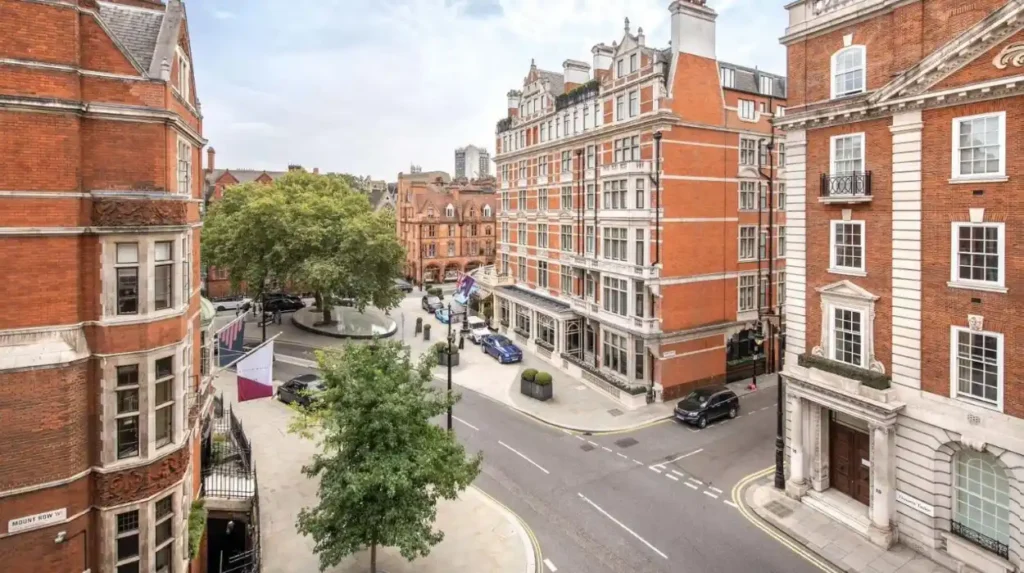
Visitors should begin in the central Mayfair street network around Grosvenor Square, Berkeley Square, Bond Street, Shepherd Market, Piccadilly, and Green Park because these locations reveal the district’s Georgian planning, aristocratic history, commercial transformation, and continuing relationship with central London landmarks.
A productive visit to Mayfair begins by understanding its geography. The district sits within the West End between major cultural, commercial, and royal areas.
Grosvenor Square provides an important starting point because it represents the eighteenth-century planning principles that shaped the neighbourhood. The square formed part of a prestigious residential landscape designed for wealthy households.
Berkeley Square provides another major historic point of reference. The surrounding streets demonstrate the continuing relationship between high-value property, architectural preservation, offices, hospitality, and cultural institutions.
Walking through these areas allows visitors to compare different stages of Mayfair’s development. Georgian planning remains visible beneath Victorian, twentieth-century, and contemporary alterations.
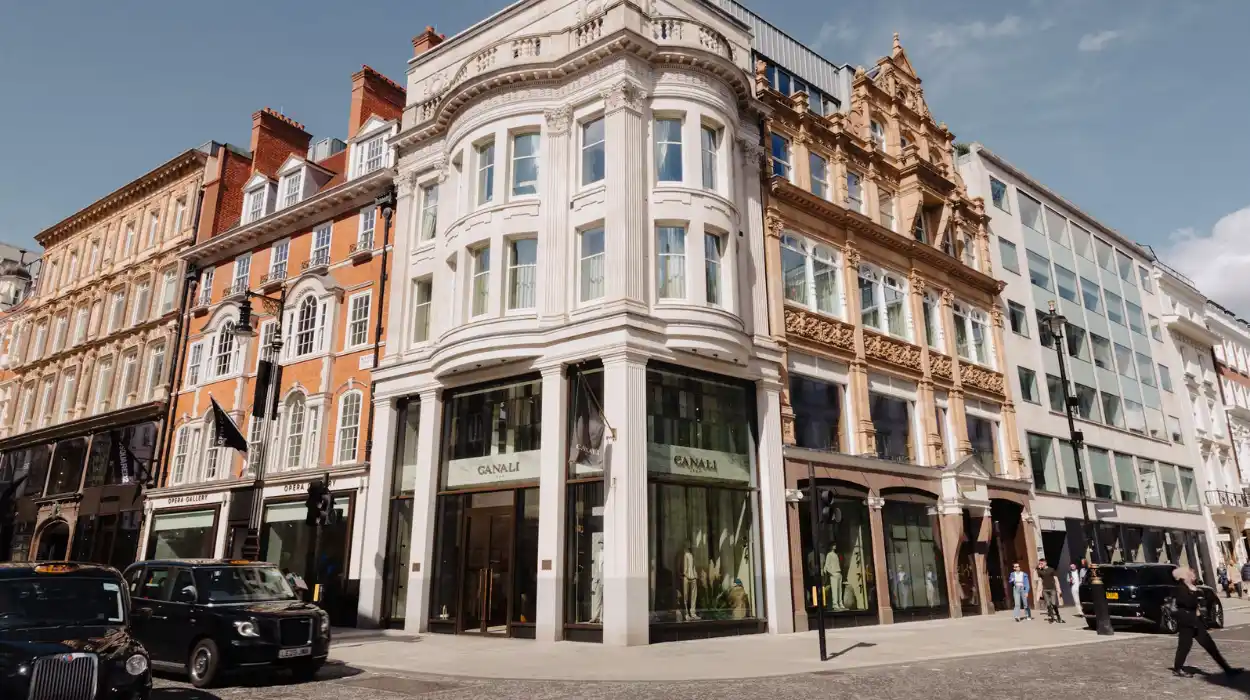
Bond Street demonstrates a different historical process. The street became associated with high-end commerce and eventually developed into one of London’s internationally recognised luxury shopping locations.
Piccadilly connects Mayfair with major historic routes, royal spaces, and Hyde Park Corner. This relationship between residential districts and ceremonial routes was essential to the development of the West End.
Shepherd Market preserves the memory of the older May Fair landscape. Its smaller scale contrasts with the grand squares and broad streets of the planned aristocratic district.
The most effective sightseeing approach is therefore geographical and historical. Visitors should move through the district while identifying how each area served a different purpose within the larger urban system.
To experience the district’s historic landmarks in person today, consult our comprehensive [The Rich History Behind Mayfair’s Elegant Streets and Prestigious Reputation] for itineraries and visiting parameters.
What makes Bond Street important for luxury shopping and London fashion history?
Bond Street is important because its development connected Mayfair’s wealthy residential population with specialist retailers, jewellers, fashion houses, art dealers, and luxury businesses, creating a commercial environment that became internationally associated with prestige and high-value consumption.
Luxury shopping in Mayfair has a historical foundation. The district’s commercial success developed from its proximity to wealthy residents and visitors.
Elite residential areas created demand for specialist goods and services. Tailors, jewellers, art dealers, furniture suppliers, and luxury retailers benefited from being located close to affluent customers.
New Bond Street and Old Bond Street became central to this commercial identity. Their international reputation reflects a long process in which London developed as a centre for fashion, jewellery, art, finance, and luxury consumption.
The streets also demonstrate the relationship between architecture and commerce. Many historic façades survive while the buildings behind them have adapted to changing economic uses.
This adaptability is an important feature of heritage preservation. A historic district remains economically active when buildings can accommodate new functions without destroying the wider character of the streetscape.
Visitors interested in fashion history should also understand the importance of nearby Savile Row. The street became internationally associated with bespoke tailoring, a form of clothing production based on individual measurement, skilled cutting, and hand-finished construction.
Mayfair’s fashion landscape therefore includes several connected traditions: bespoke tailoring, jewellery, luxury retail, antiques, and specialist art dealing.
How does Savile Row represent the history of British tailoring?
Savile Row represents British tailoring history through its concentration of specialist bespoke tailors, whose work established international standards for individually measured garments and connected Mayfair with craftsmanship, elite dress, professional identity, and the global history of fashion.
Savile Row is one of the most recognisable names in British fashion history. Its importance comes from the concentration of tailoring businesses that developed specialist skills for producing garments for individual clients.
Bespoke tailoring differs from mass-produced clothing. The process involves personal measurements, pattern construction, fittings, cutting, and detailed finishing.
The location of Savile Row within the Mayfair area was historically significant. Tailors operated close to wealthy customers, political figures, military officers, and members of elite social networks.
This proximity supported a specialist economy. Customers could access related services within a relatively compact area of the West End.
The street also demonstrates the survival of skilled urban trades. Modern London contains global fashion companies and large retail businesses, but Savile Row preserves the identity of a district associated with individual craftsmanship.
For educators and students, the area provides a useful example of economic geography. A specialist industry developed a strong location-based identity. That identity became internationally valuable and continues to influence the commercial reputation of the street.
The history of Savile Row also connects fashion with wider social history. Clothing communicated occupation, status, wealth, gender conventions, and participation in public life.
A walk through the area therefore provides more than a shopping experience. It provides evidence of how craftsmanship and place can create a long-lasting cultural institution.
Which historic squares and streets reveal Mayfair’s Georgian character?
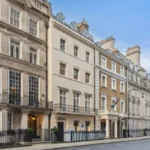
Grosvenor Square, Berkeley Square, Curzon Street, Mount Street, and surrounding residential streets reveal Mayfair’s Georgian character because their planned layouts preserve the relationship between aristocratic housing, estate management, garden squares, service infrastructure, and London’s eighteenth-century expansion.
Georgian London developed through a combination of private landownership and planned construction. Mayfair became one of the clearest examples of this system.
Grosvenor Square demonstrates the importance of the residential square. Large houses faced a central open space, creating a prestigious environment for elite households.
Berkeley Square developed within the same wider culture of West End expansion. Its setting remains significant because the square and surrounding streets retain the scale and urban form associated with historic residential London.
Curzon Street records another layer of the district’s history because of its connection with the landscape of the former May Fair and later aristocratic development.
Mount Street demonstrates the evolution of Mayfair beyond its earliest residential phase. Buildings and businesses have changed over time, but the street remains part of the wider historic fabric of the estate.
Visitors should also look for mews streets. Mews were originally service areas connected with large houses. They accommodated stables, carriages, horses, and staff facilities.
The conversion of many mews buildings illustrates changing urban technology. The decline of horse-drawn transport reduced their original function, while their structures were later adapted for housing and other uses.
This process makes Mayfair valuable for architectural study. The district contains evidence of both formal prestige and the service infrastructure required to support elite households.
Why should visitors explore Mayfair’s art and cultural institutions?
Mayfair’s art and cultural institutions are important because the district developed alongside London’s elite collecting traditions, allowing galleries, auction houses, historic collections, and exhibition spaces to connect commercial wealth with artistic patronage, scholarship, preservation, and public cultural access.
Art collecting has long formed part of Mayfair’s cultural identity. Wealthy residents, aristocratic families, diplomats, and international visitors created demand for paintings, sculpture, decorative arts, and specialist dealers.
The district remains associated with galleries and the art market. Auction houses and commercial galleries operate within the wider Mayfair environment, continuing a relationship between wealth, collecting, and cultural commerce.
This relationship has historical importance. Art markets require networks of artists, collectors, dealers, scholars, conservators, and institutions.
Visitors should distinguish between public museums and commercial galleries. Museums generally preserve collections for public education and research, while commercial galleries and auction houses operate within the art market.
Both forms contribute to Mayfair’s cultural geography.
Nearby Burlington House and the Royal Academy tradition also connect the area with the institutional history of British art. The broader Mayfair and Piccadilly environment became an important setting for artistic education, exhibitions, collecting, and public debate.
For students, this makes the district a useful place for studying cultural infrastructure. Art does not exist separately from the city. Institutions depend on buildings, patrons, visitors, markets, and professional networks.
Mayfair provides evidence of all these relationships within a concentrated central London area.
What historic attractions near Mayfair explain London’s political and military history?
Apsley House, Hyde Park Corner, Wellington Arch, Constitution Hill, and surrounding royal landscapes explain London’s political and military history by preserving monuments, ceremonial routes, aristocratic residences, and public spaces associated with national government, royal power, and Britain’s Napoleonic-era commemoration.
The western edge of Mayfair provides access to one of London’s most important historic landscapes.
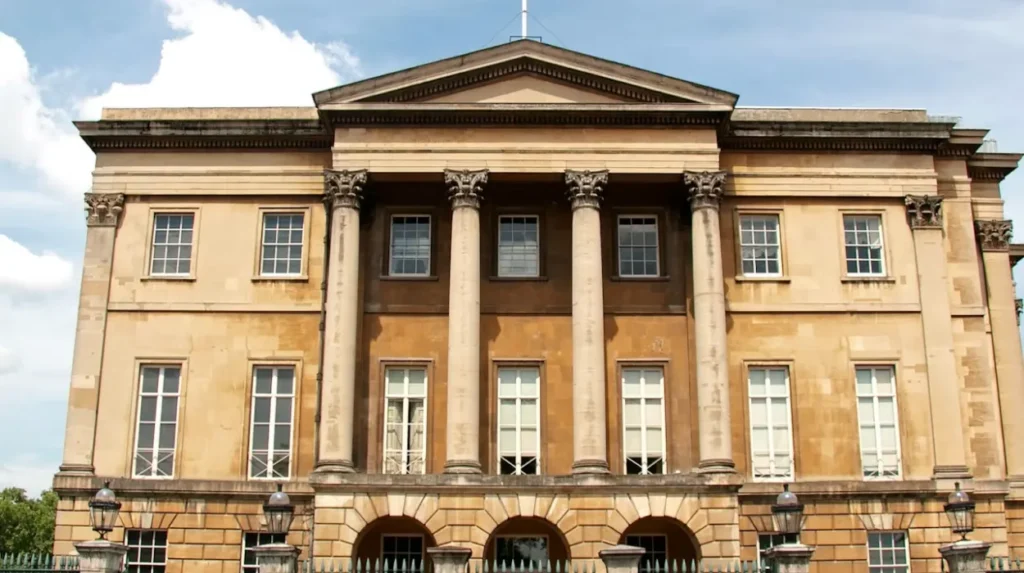
Apsley House stands at Hyde Park Corner and is closely associated with Arthur Wellesley, the 1st Duke of Wellington. The building was designed by Robert Adam and constructed between 1771 and 1778 before Wellington acquired it in 1817.
Wellington transformed the house into a major London residence. Benjamin Dean Wyatt oversaw significant alterations from 1819, including new formal interiors and the Waterloo Gallery.
The house became associated with Wellington’s political career, military reputation, and art collection. It also functioned as a site of national commemoration after the defeat of Napoleon.
The surrounding landscape reinforces this historical meaning. Wellington Arch and Hyde Park Corner formed part of a monumental environment associated with British military victory and royal ceremonial routes.
Apsley House is also known historically as “Number 1, London” because of its position at the entrance to the capital from the west.
Its modern preservation demonstrates the importance of legislation and public stewardship. The Wellington Museum Act was signed in 1947, and the house opened to the public as a museum in 1952, marking the centenary of Wellington’s death.
The site therefore connects architecture, military history, politics, collecting, and heritage preservation.
Why is Green Park an essential part of a Mayfair sightseeing visit?
Green Park is essential because its forty-acre historic landscape links Mayfair with St James’s Park, Hyde Park, Buckingham Palace, and Constitution Hill while preserving evidence of royal ownership, seventeenth-century planning, eighteenth-century events, and nineteenth-century public access.
Green Park forms an important geographical and historical boundary for the Mayfair experience.
The park links major royal landscapes. Its position demonstrates how the West End developed in close relationship with Crown land and royal residences.
The area was enclosed by Charles II during the seventeenth century and became known as Upper St James’s Park. Royal use shaped its development before the landscape became more accessible to the public.
Green Park covers approximately 40 acres according to The Royal Parks, although current site information also describes the park as approximately 19 hectares.
The park’s history includes royal festivities and major public events. In 1749, the Temple of Peace was destroyed during fireworks celebrations when thousands of fireworks ignited, resulting in three deaths. In 1814, the Temple of Concord also burned during celebrations for the Prince Regent.
The park opened to the general public in 1826. During the 1820s, John Nash reshaped the landscape as part of wider changes to the royal parks and ceremonial routes. Constitution Hill was straightened to support movement toward The Mall and Buckingham Palace.
Green Park therefore provides essential historical context for Mayfair. The luxury district developed beside a landscape controlled for centuries by the Crown and connected with royal movement through central London.
How did Mayfair become a major destination for fine dining?
Mayfair became a major fine-dining destination because its concentration of wealth, international visitors, luxury hotels, private institutions, and high-value commercial property created sustained demand for specialist restaurants, formal hospitality, skilled chefs, and globally influenced culinary businesses.
Dining in Mayfair reflects the district’s economic and social history.
Elite residential neighbourhoods historically required networks of suppliers and service workers. Food, wine, household goods, domestic labour, and hospitality all supported the lifestyles of wealthy residents.
As London’s economy changed, formal private entertaining increasingly existed alongside commercial restaurants and hotels.
The modern restaurant sector developed within this environment of high purchasing power and international connections.
Mayfair’s location also supports its dining economy. The district is close to theatres, galleries, luxury shops, hotels, government institutions, and major transport routes.
Visitors can therefore combine dining with cultural and architectural exploration.
The historical significance of Mayfair dining lies in the broader transition from private aristocratic hospitality to commercial hospitality.
Large Georgian and Victorian households depended on domestic kitchens and staff. Modern central London restaurants serve a wider international customer base through commercial businesses.
This change demonstrates a larger transformation in urban life. Functions once performed inside private houses increasingly moved into specialised public establishments.
For cultural tourists, dining in Mayfair therefore forms part of understanding the district’s continuing economic identity.
What is the historical importance of Shepherd Market?
Shepherd Market is historically important because it occupies part of the area associated with the former May Fair and preserves a smaller-scale urban environment that contrasts with Mayfair’s grand Georgian squares, demonstrating how entertainment, commerce, housing, and estate development shaped the district.
Shepherd Market occupies a distinctive position within Mayfair history.
The area connects directly with the origins of the district’s name. The May Fair moved to the vicinity of present-day Curzon Street and Shepherd Market in 1686 before later aristocratic development changed the character of the neighbourhood.
Its smaller streets provide an important contrast with Grosvenor Square and other grand planned spaces.
This contrast helps visitors understand that historic Mayfair was never physically uniform. Large residences required service areas, shops, markets, workers, and smaller buildings.
Urban history depends on these functional relationships.
A district cannot be understood only through its grandest architecture. The supporting commercial and service environments are equally important for explaining how elite neighbourhoods operated.
Shepherd Market therefore provides useful evidence of the transition between the older fairground landscape and the later planned residential district.
Its continuing commercial activity also demonstrates adaptive urban continuity. Historic areas survive when their buildings and streets continue to support active economic and social functions.
How can visitors understand Mayfair through architecture and urban planning?
Visitors can understand Mayfair through architecture and urban planning by examining its grid of streets, formal squares, Georgian façades, mews, ceremonial routes, and later commercial adaptations, which collectively show how private estates organised London’s expansion and preserved long-term spatial identity.
Architecture provides direct evidence of Mayfair’s development.
The first level of analysis is the street plan. The eighteenth-century grid established by estate development remains one of the most important surviving features of the district.
The second level is the square. Garden squares organised prestigious housing around controlled open spaces.
The third level is the building. Georgian architecture often used proportion, symmetry, brick construction, and carefully organised façades to establish visual order.
The fourth level is the service infrastructure. Mews demonstrate how transport and domestic labour supported the main houses.
The fifth level is adaptation. Many buildings have changed from private residences into offices, embassies, hotels, shops, galleries, and restaurants.
This layered approach is valuable for heritage education.
Visitors should not evaluate historic districts only by identifying famous landmarks. The relationship between ordinary streets, major buildings, service areas, and public spaces explains how the historic city functioned.
Mayfair is especially suitable for this approach because its urban framework remains highly legible.
What does Mayfair reveal about the relationship between wealth and London’s development?
Mayfair reveals that wealth influenced London’s development through landownership, residential planning, craftsmanship, retail concentration, art patronage, and service economies, while the district’s surviving physical form demonstrates how elite demand produced long-lasting commercial and architectural consequences.
Mayfair developed through the interaction of property ownership and social demand.
Landowners possessed the land. Builders constructed streets and houses. Wealthy residents provided demand for prestigious addresses. Specialist businesses supplied goods and services.
This system created an interconnected urban economy.
Luxury retail developed near wealthy customers. Tailors established specialist reputations. Art dealers and auction houses served collectors. Restaurants and hospitality businesses served residents and visitors.
The district therefore demonstrates how economic geography operates.
Businesses benefit from concentration. When related activities operate near one another, the location develops a recognisable identity.
Mayfair’s international luxury identity is the modern result of this long historical process.
The district also demonstrates inequality in urban history. Elite architecture depended on extensive systems of labour, including domestic servants, tradespeople, builders, carriage workers, and suppliers.
Historic preservation should therefore consider the full social structure of the neighbourhood.
The grand house is one source of evidence. The mews, service streets, workshops, and commercial premises provide additional evidence.
For genealogical researchers, these layers are particularly relevant. London lineages often connect individuals to specific occupations, addresses, estates, households, and service networks.
Mayfair can therefore be studied through both famous residents and the wider population that maintained the district.
Why does Mayfair remain historically relevant in modern London?
Mayfair remains historically relevant because its eighteenth-century estate structure continues to influence property, commerce, architecture, tourism, fashion, art, and public space, making the district a living example of how historic urban planning shapes contemporary London.
The historical relevance of Mayfair comes from continuity.
Its street system continues to organise movement. Its squares remain important urban spaces. Its association with luxury retail continues. Its relationship with art and fashion remains internationally recognised.
At the same time, the district has changed significantly.
Private aristocratic houses have often acquired new functions. Modern businesses operate within historic streets. International tourism has expanded the audience for the area.
This combination of continuity and adaptation is central to urban heritage.
Historic preservation does not mean freezing a district in one period. It means managing change while retaining the physical and cultural evidence that explains the past.
Apsley House provides one example of formal preservation through museum stewardship. English Heritage maintains the building and its collections as evidence of Wellington’s life and the political history of the Napoleonic period.
Green Park provides another example. A historic royal landscape continues to function as public open space while retaining connections to centuries of royal and national history.
The wider Mayfair streetscape provides a third example. Historic planning patterns continue to support contemporary economic activity.
What is the best way to experience Mayfair’s luxury, dining, and sightseeing heritage?
The best way to experience Mayfair is to combine historic walking, architectural observation, luxury shopping streets, cultural institutions, dining destinations, Shepherd Market, Green Park, and Hyde Park Corner, allowing visitors to understand how the district’s Georgian origins shaped its modern identity.
A complete Mayfair experience should begin with historical orientation.
Start by identifying the district’s eighteenth-century structure around Grosvenor Square and Berkeley Square. Observe the relationship between streets, squares, and surviving historic architecture.
Continue toward Bond Street to examine the commercial evolution of the area. Luxury shopping is not separate from history. It developed from the concentration of wealth and specialist services within the West End.
Explore the Savile Row area to understand the relationship between place and craftsmanship.
Visit Shepherd Market to examine the older landscape associated with the May Fair and the smaller-scale urban environment that contrasts with grand aristocratic planning.
Move toward Piccadilly and Hyde Park Corner to connect Mayfair with national political and military history.
Apsley House provides direct access to the history of the Duke of Wellington and Britain’s commemoration of the Napoleonic Wars. The building contains surviving architectural elements from Robert Adam’s original design and later transformations created for Wellington.
Finish in Green Park or along the surrounding royal landscape to understand the relationship between Mayfair, Crown land, Buckingham Palace, and London’s ceremonial geography.
This route creates a complete historical framework. Shopping represents commercial history. Dining represents changing service economies. Architecture represents estate planning. Parks represent royal land use. Museums represent preservation and public education.
Mayfair’s greatest significance lies in the way these elements connect.
How does Mayfair connect London’s past with its present?
Mayfair connects London’s past with its present by preserving an eighteenth-century urban framework while supporting contemporary luxury retail, international dining, art, tourism, and cultural institutions, demonstrating that historic places remain economically and socially active through adaptation.
Mayfair began as a changing landscape on the edge of historic London. The May Fair gave the district its name. Aristocratic estate development transformed the area during the eighteenth century.
The Grosvenor development programme created streets and squares that still structure the district. Proximity to the Court of St James and the Royal Parks strengthened its appeal to wealthy residents.
Commercial activity then developed around this concentration of wealth.
Bond Street became associated with luxury retail. Savile Row developed an international identity in bespoke tailoring. Galleries and art businesses strengthened Mayfair’s cultural importance.
Historic landmarks at Hyde Park Corner connected the district with Wellington, national commemoration, and the transformation of London’s ceremonial landscape.
Green Park preserved the relationship between Mayfair and royal land.
These elements explain why Mayfair remains one of London’s most significant districts for luxury shopping, dining, and sightseeing.
For visitors, the area offers a practical cultural experience.
For historians, it provides evidence of Georgian planning and estate management.
For educators, it offers a concentrated urban case study.
For students, it demonstrates how architecture, economics, politics, and culture interact.
For heritage preservationists, it shows the importance of managing change within historic urban landscapes.
For genealogical researchers, its streets and buildings provide geographical context for the lives of residents, workers, tradespeople, and households connected with the West End.
The best things to do in Mayfair therefore form part of a larger historical understanding.
Luxury shopping reflects the district’s commercial evolution. Fine dining reflects changing systems of hospitality. Sightseeing reveals the architecture and institutions created across several centuries. Parks and monuments connect Mayfair with royal and national history.
Mayfair remains a living historic district because its past continues to organise its present. Its streets retain the structure of eighteenth-century planning. Its businesses continue traditions of specialist craftsmanship and luxury commerce. Its landmarks preserve national history. Its public spaces maintain connections with London’s royal landscape.
That combination gives Mayfair enduring importance within London and ensures its relevance for future generations studying the development of the British capital.
Frequently Asked Question
What are the best things to do in Mayfair?
The best things to do in Mayfair include exploring Bond Street, visiting Savile Row, walking around Berkeley Square and Grosvenor Square, discovering Shepherd Market, enjoying fine dining, visiting art galleries, and exploring nearby Green Park and Hyde Park Corner.