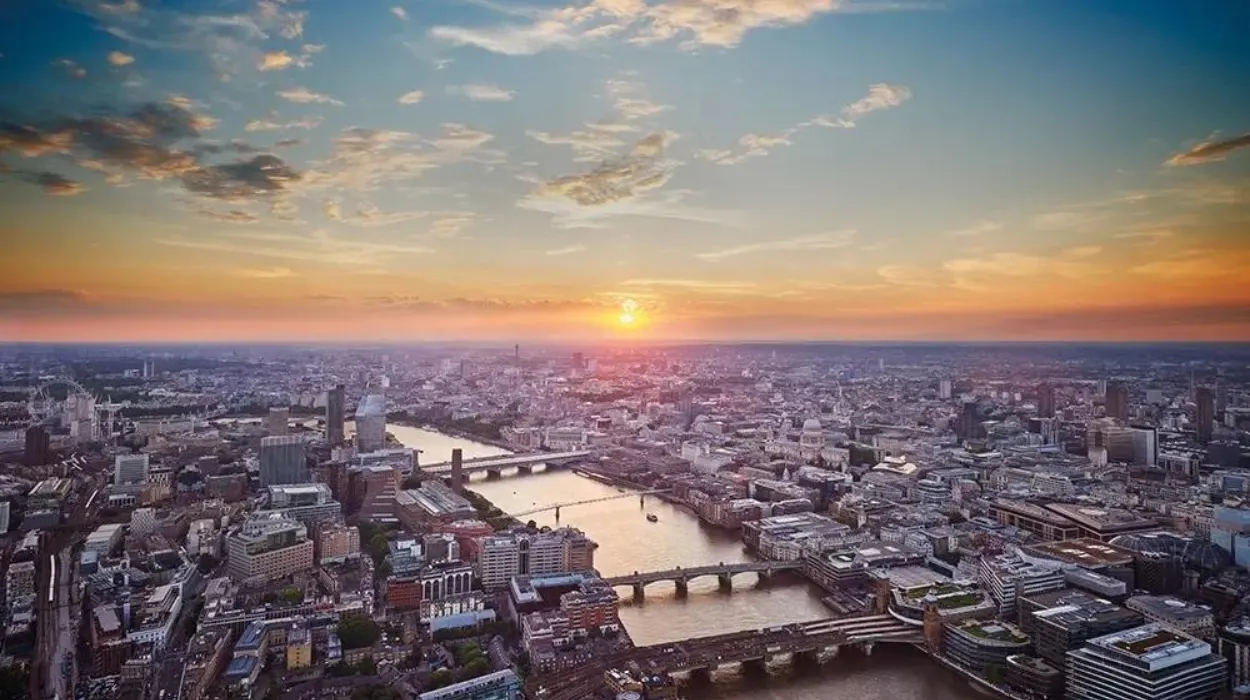
London’s skyline tells the story of more than 2,000 years of urban development. From the surviving dome of St Paul’s Cathedral to the modern glass towers of the City of London and Canary Wharf, rooftop venues provide a unique perspective on the capital’s architectural evolution. Unlike traditional viewpoints, rooftop terraces, observation decks, rooftop gardens, and elevated dining venues combine panoramic scenery with culture, hospitality, and history.
- Why are rooftop experiences among the best ways to explore London’s skyline?
- Which rooftop observation decks provide the most spectacular panoramic views?
- How have London’s rooftops evolved throughout history?
- Roman London
- Medieval London
- After the Great Fire of London
- Victorian London
- Twentieth Century
- Twenty-First Century
- Which rooftop gardens showcase London’s commitment to green urban spaces?
- Which rooftop restaurants combine exceptional dining with skyline views?
- Which rooftop bars offer the most memorable evening atmosphere?
- Which famous landmarks are visible from London’s highest rooftops?
- How does the River Thames shape London’s rooftop views?
- How has modern architecture transformed London’s skyline?
- Why do rooftop experiences remain important to London’s tourism industry?
London’s rooftops have evolved from practical spaces used for maintenance, storage, and wartime observation into some of Britain’s most sought-after visitor attractions. They now attract millions of visitors annually while showcasing landmarks that represent Roman Britain, medieval London, Victorian engineering, twentieth-century reconstruction, and twenty-first-century skyscraper design.
This guide explores London’s finest rooftop experiences while explaining how each location reflects the city’s changing skyline, engineering achievements, architectural heritage, and cultural significance.
Why are rooftop experiences among the best ways to explore London’s skyline?
Rooftop experiences provide uninterrupted panoramic views that reveal London’s historic development, architectural diversity, and modern transformation. Elevated perspectives allow visitors to understand how Roman foundations, medieval districts, Victorian landmarks, and contemporary skyscrapers coexist within one of Europe’s most historically significant urban landscapes.
Unlike street-level sightseeing, rooftops reveal London’s layered geography. Visitors can simultaneously observe historic monuments, financial districts, royal parks, and residential neighbourhoods spread across approximately 1,572 square kilometres.
The River Thames becomes easier to understand from above. The river shaped London’s commercial growth, defensive planning, and transport infrastructure for nearly two millennia. Elevated viewpoints demonstrate how bridges connected expanding districts while encouraging economic development.
Modern rooftop venues combine sightseeing with hospitality. Restaurants, cocktail bars, observation decks, rooftop gardens, and hotels have transformed previously inaccessible upper levels into public attractions.
The city’s skyline constantly evolves. New developments continue to reshape London’s silhouette while preserving internationally recognised heritage landmarks protected through planning legislation and conservation policies.
Which rooftop observation decks provide the most spectacular panoramic views?
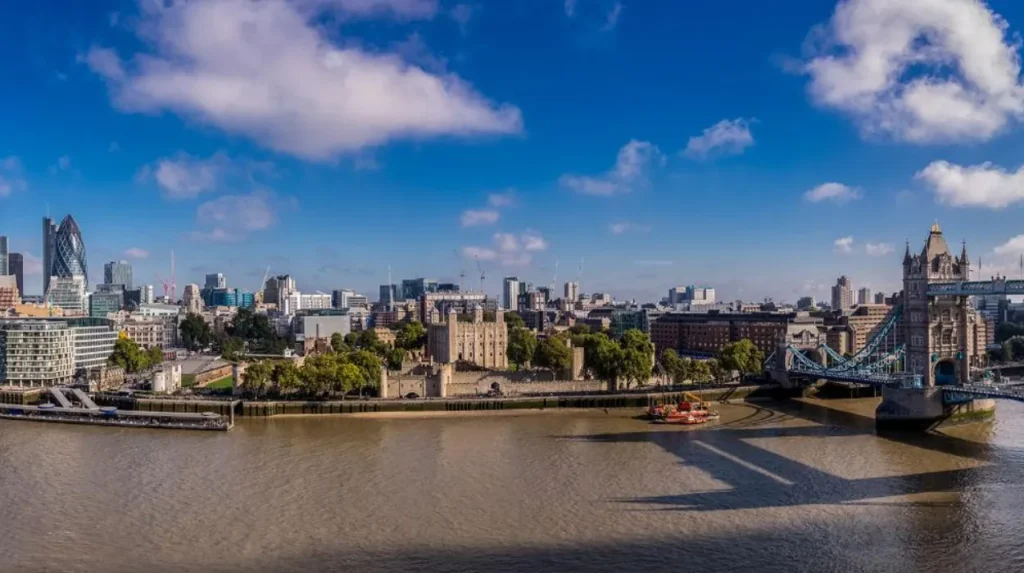
London’s observation decks combine engineering innovation with exceptional visibility across the capital. Elevated public platforms allow visitors to identify historic landmarks, understand London’s urban layout, and appreciate architectural contrasts extending across several boroughs from central vantage points.
The View from The Shard
Standing approximately 310 metres tall, The Shard remains one of Western Europe’s tallest buildings.
Designed by Italian architect Renzo Piano, the skyscraper opened in 2012 near London Bridge Station. The public observation levels occupy floors 68, 69, and 72, providing views extending approximately 64 kilometres during clear weather.
Visitors overlook landmarks including:
- Tower Bridge
- St Paul’s Cathedral
- Westminster Abbey
- Houses of Parliament
- Canary Wharf
- Wembley Stadium
- Greenwich
- The Thames Estuary
The building symbolises London’s modern architectural ambitions while complementing the surrounding historic cityscape.
Sky Garden
Located atop 20 Fenchurch Street, Sky Garden combines public gardens, restaurants, and observation areas within a distinctive glass structure.
Unlike traditional observation platforms, Sky Garden incorporates landscaped planting inspired by Mediterranean and South African species. The elevated garden demonstrates London’s integration of architecture and public green space.
Visitors enjoy views across the Tower of London, the City of London, the Thames, and South Bank.
Horizon 22
Opened in 2023, Horizon 22 occupies the upper floors of 22 Bishopsgate.
At approximately 254 metres above street level, it has become one of London’s highest free public viewing galleries. Large glass walls maximise visibility across Greater London.
The observation space demonstrates how contemporary commercial developments increasingly include public-access facilities.
How have London’s rooftops evolved throughout history?
London’s rooftops evolved from defensive structures and practical workspaces into cultural attractions reflecting changing architecture, engineering, tourism, and urban planning. Their transformation mirrors London’s broader economic development from Roman settlement to global financial capital over nearly twenty centuries.
Roman London
Roman Londinium featured tiled roofs constructed using imported engineering techniques.
Roofs primarily served protective and structural purposes rather than recreation.
Medieval London
During the medieval period, steep timber roofs dominated the city.
Church towers provided elevated observation points used for religious ceremonies, civic announcements, and fire detection.
After the Great Fire of London
The Great Fire of 1666 destroyed approximately 13,200 houses, 87 parish churches, and numerous civic buildings.
Reconstruction under new building regulations encouraged brick and stone construction.
Architect Sir Christopher Wren redesigned many churches, including St Paul’s Cathedral, creating one of London’s defining skyline features.
Victorian London
Industrialisation transformed London’s skyline.
Railway stations, warehouses, bridges, factories, and commercial buildings introduced larger rooftops supported by iron and steel engineering.
Observation became increasingly associated with tourism rather than defence.
Twentieth Century
The Second World War reshaped London’s skyline through bombing damage and post-war reconstruction.
Office towers gradually introduced rooftop restaurants and viewing terraces.
Twenty-First Century
Modern skyscrapers incorporate rooftop attractions as integral design features.
Developers increasingly combine hospitality, environmental sustainability, and public accessibility within elevated spaces.
Which rooftop gardens showcase London’s commitment to green urban spaces?
London’s rooftop gardens demonstrate how contemporary architecture integrates biodiversity, environmental sustainability, and public recreation. Elevated green spaces improve urban ecology while providing visitors with relaxing environments overlooking one of Europe’s largest metropolitan skylines.
Sky Garden
Sky Garden remains London’s most famous elevated indoor garden.
Its carefully designed planting softens the surrounding commercial architecture while encouraging biodiversity.
Queen Elizabeth Hall Roof Garden
Situated on the South Bank, this rooftop garden operates as a community-managed space featuring wildflowers, vegetables, and seating areas.
The garden illustrates sustainable urban regeneration within one of London’s busiest cultural districts.
Crossrail Place Roof Garden
Located in Canary Wharf, this enclosed botanical garden celebrates global plant species historically connected to maritime trade routes.
Its design references London’s international trading history through vegetation originating from Asia, Europe, Africa, Oceania, and the Americas.

Which rooftop restaurants combine exceptional dining with skyline views?
London’s rooftop restaurants unite culinary excellence with panoramic city scenery. Elevated dining experiences showcase iconic landmarks while reflecting London’s status as an international centre for hospitality, tourism, architecture, and contemporary urban culture.
Luxury hotels increasingly utilise rooftops for premium dining experiences.
Popular rooftop restaurants overlook historic landmarks including Tower Bridge, St Paul’s Cathedral, and the River Thames.
Several venues feature seasonal terraces that adapt throughout the year using retractable roofs and heated outdoor seating.
Fine dining menus frequently highlight British ingredients sourced from regional producers while offering international cuisine reflecting London’s multicultural population.
Sunset dining remains particularly popular because changing natural light transforms the appearance of the skyline.
Which rooftop bars offer the most memorable evening atmosphere?
London’s rooftop bars combine illuminated skyline views with contemporary social culture. Evening perspectives highlight historic monuments, modern skyscrapers, bridges, and riverside districts while demonstrating London’s transition from daytime commercial activity to vibrant nighttime entertainment.
The City of London becomes especially dramatic after sunset.
Illuminated office towers contrast with centuries-old landmarks including St Paul’s Cathedral and the Tower of London.
West End rooftops provide views over theatres, entertainment districts, and historic streets.
Seasonal rooftop bars often incorporate temporary installations including winter lodges, botanical themes, and outdoor cinemas.
Many venues schedule live music performances and cultural events throughout the year.
Which famous landmarks are visible from London’s highest rooftops?
London’s highest rooftops reveal numerous nationally important landmarks representing Britain’s political, religious, commercial, engineering, and cultural history. Their visibility illustrates the city’s remarkable concentration of internationally recognised heritage sites within a relatively compact urban core.
Visible landmarks include:
St Paul’s Cathedral remains one of Britain’s greatest architectural achievements and dominated London’s skyline for more than 250 years.
Tower Bridge, completed in 1894, combines Victorian engineering with Gothic Revival architecture.
The Palace of Westminster houses the Parliament of the United Kingdom and includes the internationally recognised Elizabeth Tower.
The Tower of London preserves nearly 1,000 years of royal, military, and judicial history.
Buckingham Palace continues serving as the official London residence of the British monarch.
Canary Wharf represents London’s emergence as one of the world’s leading international financial centres.
The London Eye demonstrates modern engineering while complementing the South Bank cultural district.
To experience these iconic landmarks in person today, consult our comprehensive [How London’s Skyline Reached New Heights Through Modern Architectural Development Projects] for itineraries and visiting parameters.
How does the River Thames shape London’s rooftop views?
The River Thames defines London’s skyline by connecting historic districts, modern developments, bridges, royal landmarks, and commercial centres. Rooftop perspectives clearly demonstrate how the river influenced settlement, trade, transport, defence, and urban expansion across two millennia.
The Thames stretches approximately 346 kilometres from Gloucestershire to the North Sea.
London developed around its navigable lower reaches.
From rooftops, visitors observe how riverside development evolved through successive historical periods.
Medieval docks expanded into Victorian port infrastructure.
Former industrial waterfronts transformed into residential districts and cultural attractions during late twentieth-century regeneration.
Modern developments including Canary Wharf demonstrate the river’s continuing economic importance.
Bridges remain defining skyline features.
Tower Bridge, Westminster Bridge, Blackfriars Bridge, Millennium Bridge, Waterloo Bridge, and London Bridge illustrate different engineering eras.
How has modern architecture transformed London’s skyline?
Modern architecture transformed London’s skyline through innovative engineering, sustainable design, and mixed-use developments while preserving nationally significant heritage buildings. Contemporary skyscrapers reflect London’s continuing role as a leading global financial, cultural, and commercial centre.
Height restrictions historically protected views of St Paul’s Cathedral.
Planning authorities continue safeguarding strategic sightlines through designated viewing corridors.
Since the late twentieth century, skyscrapers have increasingly concentrated within the City of London and Canary Wharf.
Distinctive buildings include:
The Gherkin introduced environmentally responsive office design.
The Leadenhall Building became known for its wedge-shaped profile.
22 Bishopsgate represents the latest generation of mixed-use skyscrapers.
The Cheesegrater, Walkie Talkie, Scalpel, and other commercial towers contribute unique architectural identities.
Modern construction increasingly incorporates energy efficiency, biodiversity, and public accessibility.
These developments demonstrate how London balances conservation with economic growth.
Why do rooftop experiences remain important to London’s tourism industry?
Rooftop attractions strengthen London’s tourism economy by combining heritage appreciation, hospitality, photography, dining, and cultural experiences. Elevated venues attract domestic and international visitors while encouraging longer stays and increased spending across multiple sectors of the visitor economy.
London consistently ranks among the world’s most visited cities.
Millions of tourists seek panoramic viewpoints that provide orientation before exploring individual neighbourhoods.
Observation decks support nearby restaurants, hotels, retail businesses, and cultural institutions.
Photography has significantly increased rooftop popularity through digital media and social platforms.
Visitors increasingly prioritise experiential tourism rather than conventional sightseeing.
Rooftop venues satisfy this demand by combining entertainment with education.
They also encourage appreciation of London’s protected historic skyline.
From elevated positions, visitors better understand relationships between royal landmarks, commercial districts, religious monuments, public parks, transport infrastructure, and residential communities.
As London’s skyline continues evolving through carefully managed development, rooftop experiences remain among the most effective ways to appreciate the capital’s remarkable blend of ancient history and contemporary architecture.
They provide a comprehensive visual introduction to one of the world’s most historically significant cities while supporting sustainable tourism, heritage awareness, and cultural engagement for future generations.
What is the best rooftop experience in London?
The best rooftop experience depends on your interests. The View from The Shard offers London’s highest public viewing platform, while Sky Garden combines panoramic city views with landscaped gardens, restaurants, and free public access through advance booking.