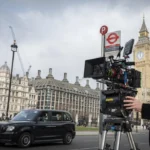
London has served as one of the world’s most recognisable filming locations for more than a century. The city’s historic streets, royal landmarks, Victorian architecture, modern skyscrapers, riverside settings, and diverse neighbourhoods have appeared in thousands of films and television productions. From blockbuster franchises including Harry Potter, James Bond, and Mission: Impossible to globally successful television series such as The Crown, Sherlock, and Doctor Who, London’s built environment has become an integral part of cinematic storytelling.
- Why has London become one of the world’s most filmed cities?
- Which historic landmarks in London appear most frequently in films?
- How did the Harry Potter films transform London’s tourism?
- Which James Bond locations showcase London’s political and military history?
- What television series have made London’s neighbourhoods internationally famous?
- How has Covent Garden become a favourite filming destination?
- Why does Notting Hill remain one of London’s most recognisable film locations?
- How has the River Thames shaped cinematic portrayals of London?
- Which historic markets have appeared in famous productions?
- How do London’s royal locations contribute to historical filmmaking?
- What is the long-term cultural significance of London’s film locations?
The British Film Institute estimates that thousands of productions have used London as a filming location since the early twentieth century. The city’s international transport links, extensive studio infrastructure, skilled production workforce, and centuries of preserved architecture continue to attract filmmakers from around the world. Many locations remain accessible to visitors, allowing audiences to experience famous scenes while appreciating London’s cultural and historical heritage.
Why has London become one of the world’s most filmed cities?
London combines nearly 2,000 years of continuous urban history with exceptional architectural diversity, world-famous landmarks, modern infrastructure, preserved historic districts, internationally recognised film studios, and strong government support for the creative industries, making it one of the world’s leading destinations for film and television production.
London’s filming history began during the earliest decades of cinema. Silent films recorded busy streets and royal ceremonies before feature productions expanded throughout the twentieth century.
The city’s unique advantage lies in its architectural variety. Roman remains, medieval churches, Tudor buildings, Georgian squares, Victorian railway stations, Edwardian public buildings, Brutalist developments, and contemporary skyscrapers exist within relatively short distances. Production designers can recreate numerous historical periods without leaving Greater London.
The United Kingdom’s film industry also benefits from established production facilities including Pinewood Studios, Shepperton Studios, Elstree Studios, and Ealing Studios. These facilities complement London’s real-world locations by providing controlled studio environments for interior filming.
Government-backed tax incentives introduced during the twenty-first century strengthened Britain’s position as an international production hub. Combined with experienced crews and world-class post-production companies, London remains highly competitive within the global entertainment industry.
Which historic landmarks in London appear most frequently in films?
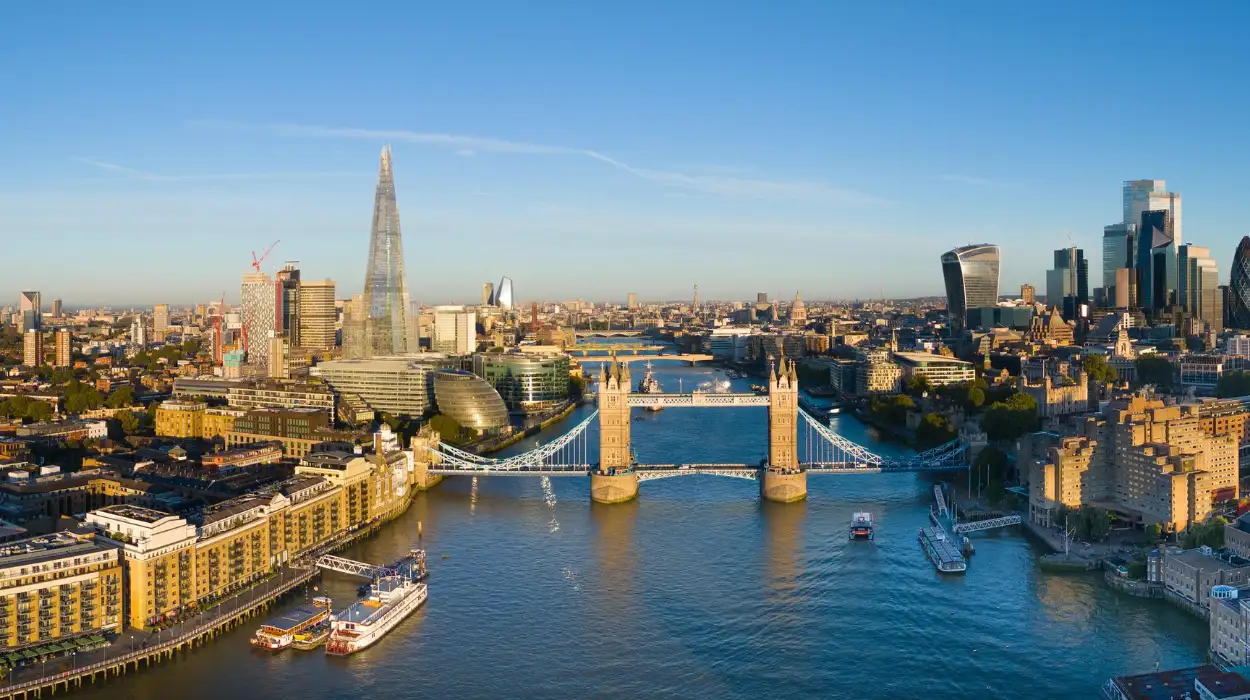
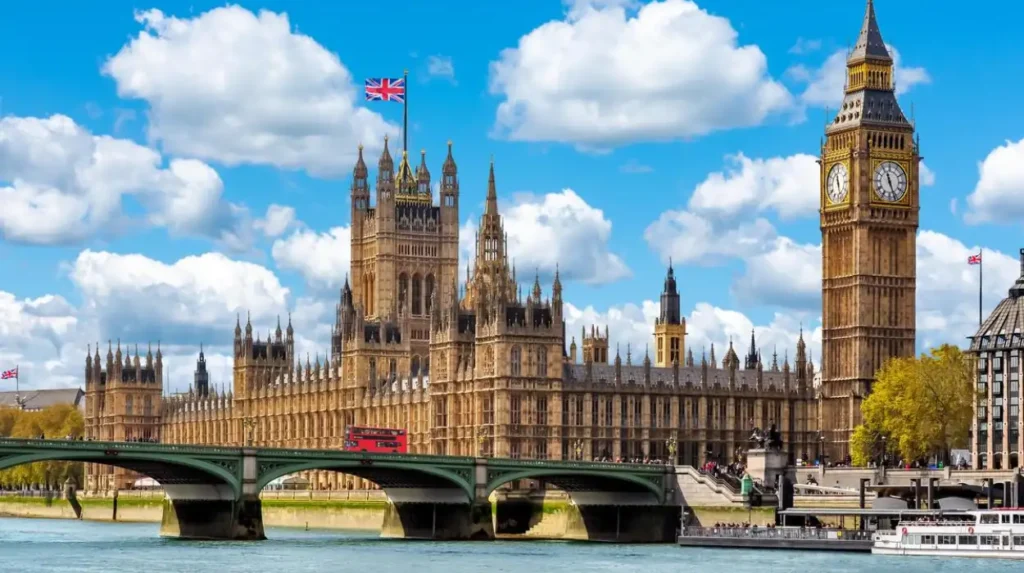
London’s most recognisable filming landmarks include Tower Bridge, Westminster Palace, Big Ben, Trafalgar Square, St Paul’s Cathedral, Somerset House, Greenwich, Piccadilly Circus, and the River Thames. Their historical significance and distinctive architecture provide instantly recognisable settings for international audiences.
These landmarks represent different periods of London’s development while functioning as visual symbols of Britain.
Tower Bridge
Completed in 1894, Tower Bridge appears in action films, romantic comedies, historical dramas, and disaster movies. Productions including Spider-Man: Far From Home, Sherlock Holmes, and numerous James Bond films feature the bridge.
Its combination of Victorian Gothic architecture and engineering innovation creates dramatic cinematic compositions.
Westminster Palace and Big Ben
The Palace of Westminster, rebuilt after the 1834 fire under architect Charles Barry with Augustus Pugin’s Gothic Revival designs, frequently represents British government.
Films regularly establish London through exterior shots featuring Big Ben and Parliament before moving into fictional narratives.
St Paul’s Cathedral
Completed by Sir Christopher Wren in 1710 following the Great Fire of London, St Paul’s Cathedral has appeared in historical dramas, superhero films, and documentaries.
Its famous dome dominates London’s skyline and symbolises resilience following the Second World War.
Greenwich
Maritime Greenwich contains the Old Royal Naval College, Royal Observatory, and extensive Georgian architecture.
Because of its preserved eighteenth-century streets, Greenwich often doubles as European cities or historical London during period productions.
To experience these historic landmarks in person today, consult our comprehensive [London’s Role in Global Film History and Its Iconic Cinematic Locations Today] for itineraries and visiting parameters.
How did the Harry Potter films transform London’s tourism?
The Harry Potter film series introduced millions of international visitors to London’s railway stations, markets, bridges, government buildings, and historic streets, creating long-term tourism growth centred on real filming locations connected with the fictional Wizarding World.
The eight Harry Potter films, released between 2001 and 2011, used numerous London locations alongside studio sets at Leavesden.
King’s Cross Station
King’s Cross Station became internationally famous through Platform 9¾.
Although the fictional platform exists between Platforms 9 and 10 in the novels, the visitor attraction today sits near the western concourse. The station itself opened in 1852 and remains one of Britain’s most important railway terminals.
Leadenhall Market
Built upon the site of a Roman marketplace, Leadenhall Market dates largely from the nineteenth century.
Its ornate Victorian architecture became Diagon Alley in Harry Potter and the Philosopher’s Stone. The market continues operating with shops, restaurants, and businesses.
Millennium Bridge
Opened in 2000, the Millennium Bridge features dramatically in Harry Potter and the Half-Blood Prince, where Death Eaters destroy the bridge using visual effects.
The pedestrian crossing connects St Paul’s Cathedral with Bankside.
Australia House
Constructed between 1913 and 1918, Australia House served as Gringotts Wizarding Bank’s interior during the first film.
The building remains the Australian High Commission.
Which James Bond locations showcase London’s political and military history?
James Bond productions present London as Britain’s political, intelligence, and diplomatic centre by featuring Whitehall, Westminster, the River Thames, MI6 headquarters, and historic government districts that reflect the city’s national and international influence.
Since Dr. No premiered in 1962, London’s government institutions have formed an essential backdrop for the James Bond franchise.
SIS Building
The Secret Intelligence Service headquarters, commonly called the MI6 Building, stands beside the River Thames at Vauxhall.
Completed in 1994, the building became synonymous with Bond after appearing repeatedly throughout the Pierce Brosnan and Daniel Craig eras.
Whitehall
Whitehall houses numerous government departments.
The street developed around the former Palace of Whitehall, once England’s principal royal residence before its destruction by fire in 1698.
Westminster Bridge
Westminster Bridge connects Parliament with London’s South Bank.
The bridge frequently appears during action sequences establishing London’s political centre.
James Bond films often combine these genuine locations with fictional intelligence operations, reinforcing London’s image as a centre of diplomacy and national security.
What television series have made London’s neighbourhoods internationally famous?
Television dramas including Sherlock, The Crown, Doctor Who, Call the Midwife, Killing Eve, and Luther transformed ordinary London neighbourhoods into internationally recognised destinations by showcasing authentic streets, public buildings, parks, and residential architecture.
Television production differs from feature filmmaking because recurring locations establish familiarity across multiple seasons.
Baker Street
Although Sherlock Holmes originated in Victorian literature by Sir Arthur Conan Doyle, modern adaptations continue using Baker Street and surrounding Marylebone locations.
The Sherlock Holmes Museum also attracts international visitors interested in literary history.
Greenwich in The Crown
Netflix’s The Crown extensively filmed within Greenwich’s historic architecture.
The Old Royal Naval College frequently represented Buckingham Palace and other royal settings because of its Baroque design.
East End in Call the Midwife
The BBC series recreated post-war East London through historic docklands and preserved streets.
The programme highlighted social housing, healthcare reforms, and community life during Britain’s reconstruction following the Second World War.
South Bank in Doctor Who
The South Bank repeatedly appears throughout Doctor Who, combining contemporary architecture with historic riverside settings.
The area’s cultural institutions provide visually distinctive backdrops for science fiction storytelling.
How has Covent Garden become a favourite filming destination?
Covent Garden combines eighteenth-century market architecture, pedestrian streets, theatres, boutique shops, and historic public spaces that accommodate period dramas, romantic films, detective stories, and contemporary television productions throughout the year.
Originally London’s principal fruit and vegetable market, Covent Garden evolved into one of the capital’s most visited cultural districts.
The market building completed in 1830 remains a major architectural landmark.
Its arcades, piazzas, and surrounding Georgian streets create flexible filming environments requiring minimal visual alteration.
Films including My Fair Lady, Last Christmas, Notting Hill, and numerous British television programmes have incorporated Covent Garden into their narratives.
Street performers, historic shopfronts, and nearby West End theatres contribute additional visual authenticity.
Why does Notting Hill remain one of London’s most recognisable film locations?
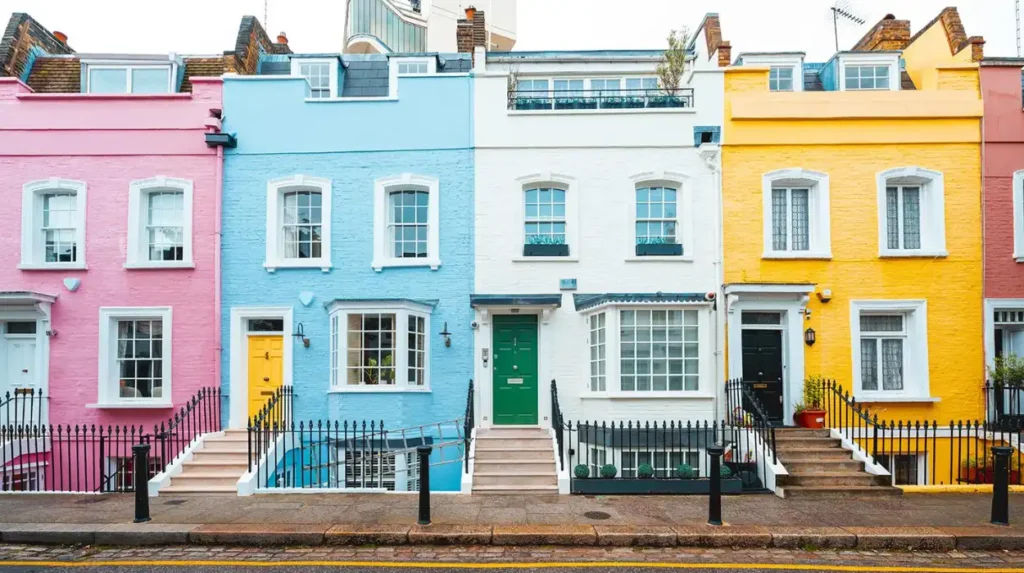
Notting Hill combines colourful Victorian terraces, independent bookshops, Portobello Road Market, garden squares, and multicultural heritage that gained worldwide recognition through romantic films while preserving significant aspects of nineteenth-century urban development.
The district developed primarily during the Victorian era as London expanded westwards.
Its architectural character includes stucco-fronted terraces, communal garden squares, and vibrant shopping streets.
The 1999 film Notting Hill, starring Hugh Grant and Julia Roberts, permanently associated the neighbourhood with romantic cinema.
Portobello Road Market, established during the nineteenth century, continues operating across several market days each week.
The annual Notting Hill Carnival, established in 1966, also reflects the area’s Caribbean cultural heritage and frequently appears in documentaries and television productions.
How has the River Thames shaped cinematic portrayals of London?
The River Thames provides London’s defining geographical feature by connecting royal palaces, financial districts, bridges, historic docks, cultural institutions, and residential neighbourhoods within continuous panoramic views frequently used across films and television productions.
For nearly two thousand years, the Thames has supported London’s commercial, political, and cultural development.
Filmmakers use the river to establish geographical orientation quickly.
Historic bridges including Tower Bridge, Westminster Bridge, Waterloo Bridge, and Blackfriars Bridge appear repeatedly in establishing shots.
Modern productions also feature the London Eye, Tate Modern, The Shard, City Hall, and Canary Wharf.
River transport offers unique camera perspectives unavailable from street level.
Boat chases, aerial sequences, and skyline panoramas consistently highlight London’s historical continuity alongside contemporary development.
Which historic markets have appeared in famous productions?
London’s historic markets preserve centuries of commercial history while offering authentic architecture, narrow passages, Victorian ironwork, and distinctive retail environments that continue attracting filmmakers seeking visually rich urban settings.
Markets illustrate London’s economic development across multiple centuries.
Borough Market
Dating back at least to the twelfth century, Borough Market remains one of Britain’s oldest food markets.
Films including Bridget Jones’s Diary and Harry Potter and the Prisoner of Azkaban used the surrounding streets.
Leadenhall Market
Victorian ironwork, glass roofing, and decorative detailing create one of London’s finest preserved covered markets.
Its Roman origins add archaeological significance.
Smithfield Market
Established during the medieval period, Smithfield has long served London’s meat trade.
Its Victorian market buildings regularly appear in crime dramas and historical productions.
These markets preserve commercial traditions while functioning as active business districts rather than museum exhibits.
How do London’s royal locations contribute to historical filmmaking?
Royal palaces, ceremonial routes, public parks, and official residences enable filmmakers to portray Britain’s constitutional monarchy accurately while preserving internationally recognised symbols of royal tradition, state ceremonies, and national identity.
London contains multiple royal sites spanning several centuries.
Buckingham Palace remains the monarch’s official London residence.
Although interior filming rarely occurs, exterior scenes establish royal narratives immediately.
St James’s Park, The Mall, Horse Guards Parade, and Constitution Hill regularly feature during ceremonial sequences.
Kensington Palace represents another significant royal location associated with numerous historical documentaries and dramatic productions.
These settings preserve constitutional traditions while remaining accessible public spaces.
What is the long-term cultural significance of London’s film locations?
London’s film locations preserve historical memory, strengthen cultural tourism, support heritage conservation, promote architectural appreciation, generate economic activity, and connect global audiences with Britain’s urban history through accessible, recognisable public spaces that remain active parts of everyday city life.
Film tourism has become a significant component of London’s visitor economy.
International travellers increasingly combine heritage tourism with visits to recognisable filming locations.
This trend encourages preservation of historic streets, markets, railway stations, bridges, and public buildings because their cultural value extends beyond architecture alone.
Educational institutions also use famous filming locations to explain London’s urban development, architectural history, transport evolution, and cultural geography.
Researchers studying heritage interpretation recognise cinema as an important tool for introducing global audiences to historical environments.
Future productions will continue documenting London’s changing skyline while preserving visual records of neighbourhoods undergoing regeneration.
As architecture evolves, today’s filming locations become tomorrow’s historical evidence, creating an enduring archive that connects London’s past, present, and future through cinema and television.
What are the most famous film locations in London?
Some of London’s most famous filming locations include Tower Bridge, King’s Cross Station, Leadenhall Market, Westminster Palace, St Paul’s Cathedral, Covent Garden, Borough Market, Notting Hill, Greenwich, and the River Thames.