Key Points
- Approval of Retrospective Permission: Croydon Council has officially approved retrospective planning permission for a block of eight flats located at 25 The Grove, Coulsdon, following deviations from the original blueprint.
- Initial Authorization: The development project was originally greenlit back in 2022, transforming what was formerly a single, two-storey detached family home into a larger self-contained residential block.
- Severe Deviations Claimed: Local critics, neighbours, and councillors argue that the current building bears almost no resemblance to the initial plans, dominating the surrounding neighbourhood and severely compromising local privacy.
- Privacy and Overlooking Concerns: Residents highlight that the inclusion of unshielded first-floor balconies and increased building height results in direct overlooking into neighbouring private rooms and gardens.
- Unfulfilled Commitments: According to local councillor Luke Shortland, the developer failed to construct vital privacy screening measures and boundary protections that were explicitly promised under the 2022 application.
- Parking Provision Deficit: The final scheme features one fewer parking space than initially authorized, leaving a total of just five designated bays for the eight flats in an area already deemed severely overcrowded.
- Strict Conditions Imposed: Despite committee members heavily criticizing the deviations, planning permission was granted subject to strict retrospective conditions, including opaque balcony screens, obscured glazing, and proper boundary fencing.
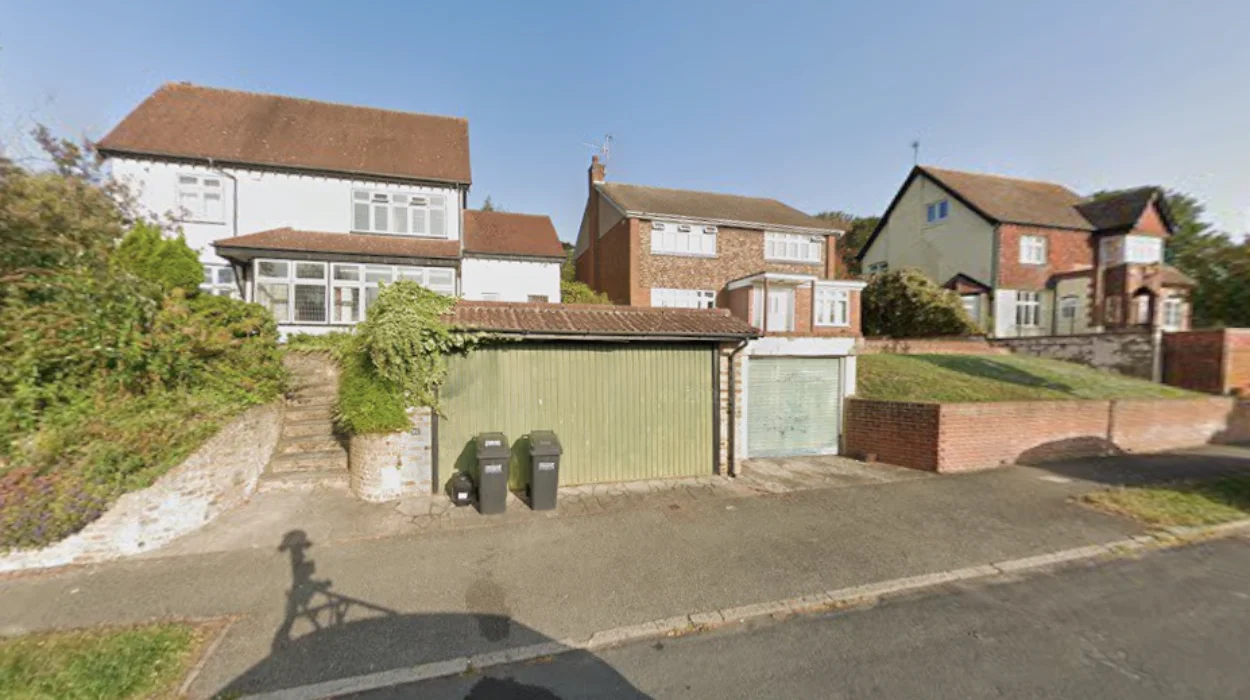
London (Extra London News) July 29, 2026 – Croydon Council has greenlit retrospective planning permission for a controversial block of flats in South London that local critics have branded an “absolute monstrosity” due to major departures from its initial design. The residential development, situated at 25 The Grove near Coulsdon Town, was originally authorised as an eight-flat scheme in 2022 after the demolition of an existing two-storey detached family home. However, subsequent alterations carried out during construction have generated substantial backlash, with local residents and public officials asserting that the finished structure is fundamentally unrecognisable compared to the approved blueprints.
- Key Points
- Why are local residents calling the Coulsdon development an “absolute monstrosity”?
- What did local councillors say about the unfulfilled planning promises?
- How did the developer defend the changes to the flats?
- Why did Croydon Council approve the retrospective planning application?
- What conditions must the developer fulfill following the approval?
As reported by Harrison Galliven, Local Democracy Reporter for MyLondon, the contentious development came under intense scrutiny during a Croydon Council planning committee meeting on July 23. Addressing the local chamber regarding the extensive variations, Coulsdon Town councillor Luke Shortland questioned the integrity of the process, asking:
“It does kind of beg the question: what part of the application was in fact built to plan?”
Why are local residents calling the Coulsdon development an “absolute monstrosity”?
The core of the local outrage stems from the stark visual and structural differences between what was permitted in 2022 and what has materialized on the high north bank of The Grove.
According to reports by Harrison Galliven of MyLondon, neighbours argue that the scale of the building aggressively dominates the streetscape and introduces severe privacy infringements for surrounding properties, most notably affecting the adjacent home at 25A The Grove.
Detailing the daily impact of these modifications during the planning committee session, local resident David Boyd-Bell raised serious concerns regarding line-of-sight privacy. As reported by Harrison Galliven of MyLondon, David Boyd-Bell asked committee members:
“How would you feel opening your curtains and finding people looking directly into your dining room? This is now our reality.”
David Boyd-Bell further elaborated on the architectural oversights that aggravate these privacy invasions. As documented by Harrison Galliven of MyLondon, David Boyd-Bell explained to the committee that the privacy issues were severely exacerbated by an increase in the overall height of the building alongside the unauthorized introduction of first-floor balconies lacking any protective screening. As noted in the report by Harrison Galliven of MyLondon, David Boyd-Bell stated:
“Without these measures, people on the balconies would be able to look us in the eye from only a few metres away.”
Furthermore, residents drew attention to hazardous infrastructural omissions around the site perimeter. As highlighted by Harrison Galliven of MyLondon, David Boyd-Bell pointed out to the committee that the newly constructed development currently lacks proper boundary fencing, exposing neighbours to a dangerous drop surrounding the perimeter of the plot.
What did local councillors say about the unfulfilled planning promises?
Elected officials echoed the grievances of local residents, emphasizing that the developer failed to implement essential mitigating features outlined in the original 2022 proposal. Speaking to the Local Democracy Reporting Service and as quoted by Harrison Galliven of MyLondon, Councillor Luke Shortland stated:
“Since being built, neighbours have suffered because the application was not built to plan, for example, not building the promised vital balcony screening which would have lessened the impact of overlooking.”
In addition to privacy shielding omissions, the project also fell short on localized parking capacity provisions. As reported by Harrison Galliven of MyLondon, the completed scheme features one fewer parking space than originally mandated, leaving a meager total of five parking bays to service the eight individual flats.
Residents cautioned that this deficit exacerbates existing pressures in an area already deemed severely overcrowded with vehicles utilizing unrestricted street parking near Coulsdon Town.
Explore More Croydon News
Croydon Tram Service Changes and Closures 2026
London Tram Reverse Trial in Croydon Town Centre 2026
How did the developer defend the changes to the flats?
Despite the fierce opposition mounted by community members and local representatives, arguments in favour of regularization were presented to the planning committee. Presenting the applicant’s perspective, Emily Munro spoke in support of the scheme during the hearing. As reported by Harrison Galliven of MyLondon, Emily Munro told councillors that
“the alterations are minor and will not substantially alter the approved scheme.”
Additionally, emphasizing the broader socio-economic objectives of the project, Emily Munro added that the residential block continues to offer
“a positive contribution to the housing needs of the borough.”
Why did Croydon Council approve the retrospective planning application?
Faced with a complex administrative dilemma, committee members voiced heavy discontent while ultimately acknowledging the legal constraints governing their decision-making powers.
Because the developer submitted a formal application seeking retrospective rectification for the building as it currently stands, councillors were legally bound to evaluate the amendments presented before them rather than purely penalising the deviation from the historic 2022 permissions.
Summarising the tricky legal position of the local authority panel, Labour councillor Rowenna Davis explained the scope of their remit during the session. As reported by Harrison Galliven of MyLondon, Councillor Rowenna Davis stated:
“We are not here to decide whether this planning application is as close as we’d like it to be to the old application, because if we were here to decide that, I think we would all agree it would fail.”
What conditions must the developer fulfill following the approval?
To counter the severe complaints regarding privacy loss and environmental degradation, Croydon Council resolved to pass the retrospective application only under a strict framework of binding stipulations.
As detailed by Harrison Galliven of MyLondon, the newly imposed conditions mandate that the developer must rectify critical oversights by installing opaque privacy screens on all offending balconies alongside obscured glazing for side-facing windows.
Furthermore, the developer is legally required to install secure boundary fencing around the perimeter to mitigate safety drop hazards, alongside integrating sustainability and ecological enhancements such as solar panels and wildlife-friendly exterior lighting systems.