Key Points
- Funding Agreement Secured: Croydon Council, Network Rail, and developer Menta Regeneration have officially signed a long-awaited funding agreement to unlock the final delivery phase of the East Croydon pedestrian bridge.
- Fifteen-Year Delay: First proposed in 2012, the infrastructure project is now projected to achieve full public completion by spring 2027, marking a total delay of fifteen years from its initial design parameters.
- Missing Ticket Barriers: Passengers using the upcoming eastern link on Cherry Orchard Road will face unexpected logistical friction, as the entrance will launch without automated ticket barriers, requiring travellers to ascend the bridge and queue at the western gates before returning to platforms.
- Political Fallout: Local opposition leaders and independent community journals have launched sharp criticisms against Executive Mayor Jason Perry, alleging that a “botched” historic legal framework dating back to 2011 fundamentally stalled public access.
- Regeneration Strategy: The bridge’s completion represents a cornerstone within Croydon Council’s wider £40 million town centre connectivity master plan, intended to structurally unify Addiscombe with the municipal core.
Croydon (Extra London News) July 13, 2026 – The long-delayed East Croydon pedestrian bridge has cleared what municipal authorities have characterised as its final administrative obstacle, following the formal execution of a tri-party funding agreement designed to pave the way for the development’s ultimate phase. The signing of the deal ensures that structural engineering works on the final section of the public walkway—intended to connect the residential enclave of Addiscombe directly to East Croydon station and the primary town centre—are scheduled to get underway this summer. However, despite this concrete administrative progress, the public infrastructure network remains profoundly behind its initial timeline, with full operational completion now pushed back until spring 2027, representing a fifteen-year delay since the project was first introduced to the public in 2012.
- Key Points
- Why Has the East Croydon Bridge Project Taken Fifteen Years to Complete?
- What Do the Terms of the New Funding Deal Specify?
- How Will Commuters Be Affected by the Missing Ticket Barriers?
- What Are Political Leaders and Developers Saying About the Milestone?
- What Local Community Frustrations Still Remain Unresolved?
Why Has the East Croydon Bridge Project Taken Fifteen Years to Complete?
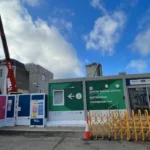
The extensive delays plaguing the £22 million pedestrian link stem from protracted, multi-year negotiations regarding ownership, financial liability, and long-term asset maintenance. While the western portion of the footbridge has been fully open and accessible from the Ruskin Road entrance for several years, progress on the eastern link has remained entirely frozen behind construction hoardings on Cherry Orchard Road.
As reported by Harrison Galliven of MyLondon, progress has been structurally stalled by lengthy, complex negotiations between Croydon Council, Network Rail, and the private developer Menta Regeneration over funding mechanisms, the physical completion of the bridge’s eastern entrance, and the precise legal arrangements for its future maintenance.
The underlying issues date back to the early conceptualisation of the site. According to investigative reporting published by Inside Croydon, the roots of the impasse can be traced to a “botched legal agreement” established around 2011. The publication states that the flawed historical compact allowed Menta Regeneration to legally deny public bodies the essential physical access required to complete the bridge, effectively decoupling the public infrastructure project from the surrounding private residential builds. Consequently, although Menta completed its adjacent “The Blossoms” housing development along the London-to-Brighton railway tracks in 2023, the public bridge remained non-functional at its eastern boundary.
What Do the Terms of the New Funding Deal Specify?
The newly synchronised agreement legally formalises the operational responsibilities of each individual stakeholder to ensure that the infrastructure can finally be brought into public service safely.
As reported by the editorial board of the East Croydon Community Organisation (ECCO), once the bridge is formally opened, Croydon Council will assume sole responsibility for day-to-day cleaning and custodial maintenance, Network Rail will oversee long-term structural maintenance of the railway-spanning elements, and Menta Regeneration will manage the associated structures they have physically constructed within the development footprint.
The finalisation of these funding protocols, combined with the granting of necessary planning approvals, means that Network Rail’s engineering contractors are legally authorised to enter the site this summer to commence the physical linkage.
How Will Commuters Be Affected by the Missing Ticket Barriers?
While the completion of the physical structure will provide a continuous pedestrian walkway between the east and west sides of the railway lines, passengers intending to board trains from the new Cherry Orchard Road entrance will experience substantial operational hurdles due to a lack of platform access infrastructure.
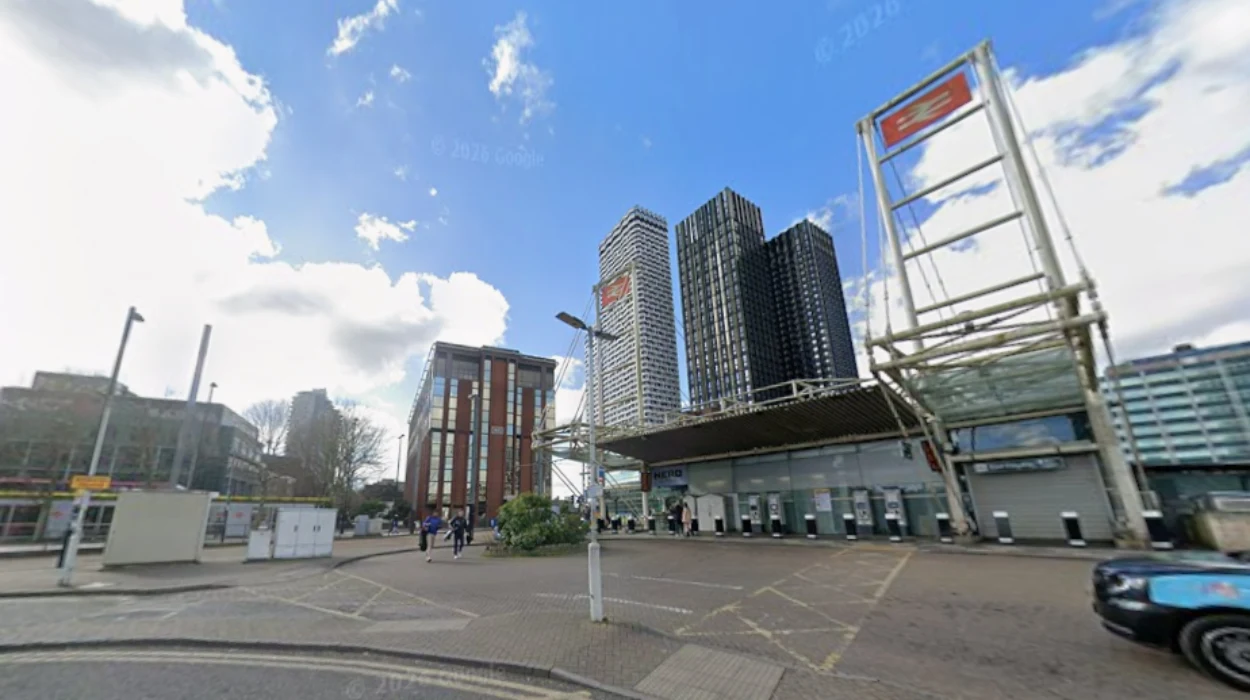
As reported by Harrison Galliven of MyLondon, the bridge will completely lack ticket barriers on the Cherry Orchard Road side, meaning passengers will need to climb the stairs, pass through a narrow entrance, cross the bridge, queue at the west-side gates, and then walk back across the structure to reach platforms 5 and 6.
According to the official minutes compiled by the East Croydon Community Organisation (ECCO), National Rail is intentionally withholding the immediate installation of eastern ticket infrastructure, noting that the agency is “waiting to see if there is a demand for their use before planning their installation.” This operational setup has drawn immediate concern from local rail user groups, who point out that the configuration forces an unnecessary, circular walking pattern on commuters utilizing the eastern entrance.
Explore more Croydon News:
Croydon Rejects 24-Hour Gambling Centre: Norbury 2026
Construction Worker Dies in Fatal Mayfair Site Fall: London 2026
What Are Political Leaders and Developers Saying About the Milestone?
The announcement has triggered sharply contrasting reactions from local politicians, corporate executives, and civic organizations, highlighting deep political fractures within the borough.
As reported via an official municipal statement from Croydon Council, Executive Mayor Jason Perry stated that:
“This is a major milestone for East Croydon and for our wider town centre. Residents have waited a long time to see this route opened, so I am pleased that we have now reached the point where delivery can move forward. Opening the bridge will make it easier for residents, commuters, visitors, and businesses to move between Addiscombe, East Croydon Station, and the town centre.”
Mayor Perry added that the bridge forms a key part of his administration’s wider £40 million town centre regeneration project, which includes ten major infrastructure shifts such as the street-level pedestrian crossing on Wellesley Road, the decommissioning of local pedestrian subways, and pavement upgrades along Dingwall Road.
However, political opponents have strongly disputed this narrative, pointing to the structural timeline shifts that have occurred under the current mayoral administration. As reported by Inside Croydon, critics have noted that in 2024, Mayor Perry explicitly promised the bridge would open in 2025 by claiming there was a “clear pathway to delivery,” only to revise that timeline in 2025 to a 2026 opening, before arriving at the current spring 2027 projection.
Furthermore, local political opposition representatives have targeted the efficiency of the negotiation process. As reported by Harrison Galliven of MyLondon, an opposition spokesperson stated that:
“It is shocking that surrounding building works were completed in 2023, and it took Mayor Perry three years to get the agreement signed off by all parties – doesn’t say much for his negotiation skills.”
From the corporate delivery side, the developers responsible for the adjacent high-density housing blocks expressed a more optimistic outlook regarding the area’s urban connectivity. As reported by the press office of Menta Regeneration, Craig Marks, the Chief Executive Officer of Menta Regeneration, stated:
“We are delighted that the new pedestrian bridge will soon open to the public. We have delivered over 850 new and affordable homes and transformed Cherry Orchard Road into a tree-lined boulevard, which will complement our new public square when it’s open to the public later this year.“
Mr Marks added that the firm remains “thankful to the residents of Addiscombe for their patience whilst this major investment and commitment to the wider community is finally completed.”
From the transport infrastructure side, Network Rail acknowledged that the prolonged execution of the project fell short of public expectations. As reported by the media relations department of Network Rail, Sussex Route Director Lucy McAuliffe stated:
“Reaching this point has taken longer than we would have liked, and we appreciate the continued patience of residents and passengers throughout. I’m really pleased that collectively, we are now able to proceed into the delivery phase ahead of completion in 2027.”
What Local Community Frustrations Still Remain Unresolved?
Beyond the completion date of the bridge structure itself, local neighborhood groups continue to express significant frustration regarding peripheral construction blight that has restricted public space usage for years.
According to reporting from the East Croydon Community Organisation’s (ECCO) Annual General Meeting on Thursday, 9 July, residents raised formal queries with council officials regarding why extensive security fencing outside the Menta construction site remains firmly in place. Civic advocates pointed out that the physical hoardings continue to block the sidewalk and obstruct access to a completed public square that was physically finished more than two years ago.
Additionally, the community organisation confirmed its intention to challenge the structural oversight of the project moving forward. The East Croydon Community Organisation (ECCO) announced that it will be formally submitting a Freedom of Information (FOI) Act request to obtain the full text of the project’s Diversity Impact Assessment, which is currently undergoing administrative processing to redact personal information in accordance with standing Data Protection guidelines.
The upcoming construction phase, commencing this summer, will be closely monitored by local commuter cohorts and municipal watchdogs to determine whether Network Rail’s contractors can maintain the newly established 2027 delivery target, or if the project will succumb to further logistical disruptions.