London’s Royal Parks are historic landscapes shaped by monarchy, political change, urban growth, public access, landscape design, wartime use, and modern conservation. The eight Royal Parks preserve more than 5,000 acres of historic parkland, connecting Tudor hunting grounds with contemporary public recreation, biodiversity protection, heritage management, and national events.
- What are London’s Royal Parks and why were they created?
- When did London’s Royal Parks begin?
- How did Tudor monarchs shape the first major Royal Parks?
- How did the Stuart monarchy change the Royal Parks?
- How did Georgian landscape design transform London’s Royal Parks?
- When did the Royal Parks become public spaces for Londoners?
- Why were the Royal Parks important during the Victorian era?
- How did wars and national crises affect London’s Royal Parks?
- How were the Royal Parks protected as historic landscapes?
- What historical evidence survives in London’s Royal Parks today?
- How does modern conservation preserve the Royal Parks for the future?
- Why do London’s Royal Parks remain historically important?
What are London’s Royal Parks and why were they created?
London’s Royal Parks are historic green spaces originally associated with the Crown, royal residences, hunting, leisure, landscape design, and national ceremonies. Their creation began with medieval royal landholding and expanded through Tudor, Stuart, Georgian, Victorian, and modern public policy.
The Royal Parks are a distinct group of historic landscapes in Greater London. The current collection includes Bushy Park, The Green Park, Greenwich Park, Hyde Park, Kensington Gardens, The Regent’s Park and Primrose Hill, Richmond Park, and St. James’s Park. The Royal Parks organisation also manages additional historic spaces, including Brompton Cemetery and Victoria Tower Gardens.
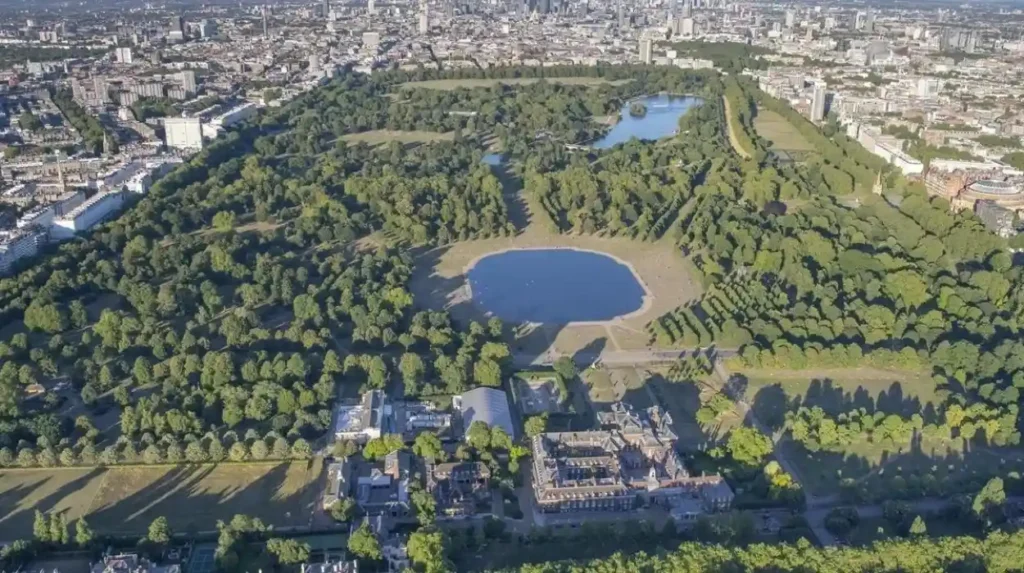
Their original purpose was not public recreation. Many began as royal estates, hunting grounds, private gardens, or land associated with royal palaces. The relationship between palace and park was central to their development. St. James’s Park stands beside St. James’s Palace and Buckingham Palace. Kensington Gardens developed beside Kensington Palace. Bushy Park lies beside Hampton Court Palace.
The parks therefore preserve a physical record of British political and social history. Their boundaries reflect royal land acquisition. Their avenues reflect changing ideas about landscape design. Their monuments reflect imperial, military, scientific, political, and social history. Their public uses reflect the gradual transformation of royal land into civic space.
The modern Royal Parks cover more than 5,000 acres and contain 170,000 trees and shrubs, habitats supporting more than 7,000 wildlife species, approximately 100 acres of ponds and lakes, and 197 historic monuments and buildings. These figures demonstrate that preservation now combines landscape conservation, biodiversity protection, historic building management, public access, and education.
When did London’s Royal Parks begin?
The origins of London’s Royal Parks stretch from medieval royal estates to the Tudor period, when Henry VIII expanded royal hunting grounds. Greenwich Park, Richmond Park, Hyde Park, St. James’s Park, and later Regent’s Park developed through successive royal land decisions.
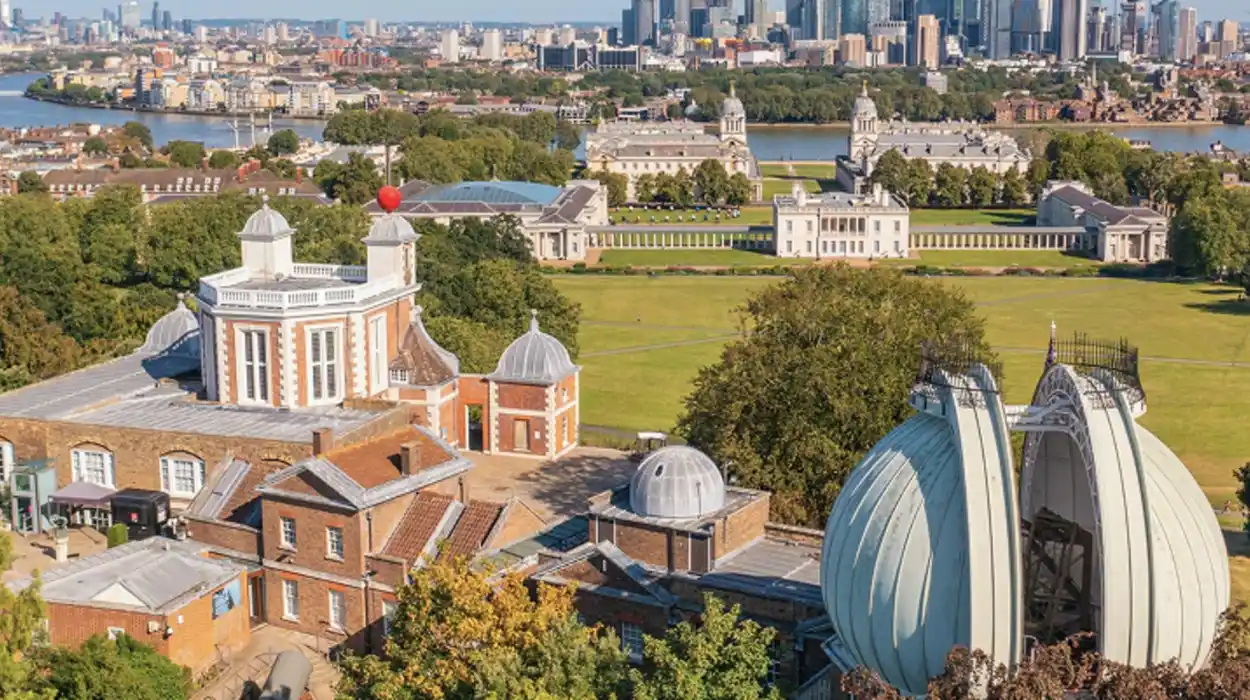
The oldest historical layers predate the modern idea of a Royal Park. Greenwich Park contains evidence of Roman settlement, including the remains of a Roman temple excavated in 1999. The landscape also contains more than 30 Anglo-Saxon burial mounds, showing that the area held cultural and ceremonial importance long before its modern royal identity.
Royal ownership became more important during the late medieval period. In 1427, Humphrey, Duke of Gloucester, brother of Henry V, inherited land at Greenwich. The estate later became closely associated with the monarchy and developed into one of the most important royal landscapes south of the River Thames.
The Tudor period created the foundation for several major Royal Parks. Henry VIII was an active sportsman and used royal estates for hunting and recreation. He acquired land that became Hyde Park in 1536 after taking it from Westminster Abbey. He also used Greenwich and Richmond as royal hunting grounds and expanded the Crown’s control over other landscapes.
This period connected royal power with land ownership. The dissolution of the monasteries under Henry VIII transferred extensive church lands to the Crown. That political and religious transformation provided the monarchy with land that could be incorporated into royal estates, including areas later associated with Hyde Park, Kensington Gardens, and The Regent’s Park.
The early Royal Parks were therefore products of land ownership, royal authority, hunting culture, and proximity to royal residences. Their later public character developed through a separate historical process.
How did Tudor monarchs shape the first major Royal Parks?
Tudor monarchs transformed London’s rural and semi-rural landscapes into controlled royal estates. Henry VIII expanded hunting grounds, enclosed land, and connected royal residences with managed landscapes that later became Hyde Park, Richmond Park, Greenwich Park, St. James’s Park, and Regent’s Park.
Hunting was a major factor in the creation of royal parks. Medieval and Tudor monarchs used enclosed land to protect deer and maintain controlled hunting environments. A royal hunting park required boundaries, management, keepers, and restrictions on access.
Richmond Park became particularly important as a royal deer park. Its landscape retains ancient trees, open grassland, and large herds of deer. The park today covers approximately 2,500 acres and remains one of London’s most significant historic landscapes.
Hyde Park entered the royal collection in 1536. Henry VIII acquired the land from Westminster Abbey and used it as a hunting ground. The park’s later history changed dramatically, but the Tudor foundation remained central to its identity. Rotten Row also preserves a historical connection with royal movement and equestrian culture.
The land that became The Regent’s Park also entered royal ownership during the Tudor period. Henry VIII seized 554 acres of Marylebone Park, a wooded landscape containing deer. The area remained part of the royal estate, although the Civil War period caused extensive tree felling and land sales. Later, tenant farming continued for approximately 150 years before the landscape was redesigned in the nineteenth century.
St. James’s Park had a different beginning. The area was once a marshy water meadow associated with a hospital for women suffering from leprosy. Its transformation into a royal landscape followed the development of nearby royal palaces and the growth of Westminster as a centre of political power.
The Tudor period therefore established a recurring pattern. Royal land acquisition created the physical foundation. Later monarchs then altered the landscape according to changing political priorities, architectural fashions, and ideas about public access.
How did the Stuart monarchy change the Royal Parks?
The Stuart monarchy changed the Royal Parks from primarily private hunting and palace landscapes into more formal and publicly visible spaces. Charles I opened Hyde Park to the public in 1637, while Charles II redesigned St. James’s Park and expanded royal landscape connections.
The seventeenth century brought major changes to royal landscapes. The monarchy remained the principal authority over the parks, but the relationship between royal space and the public began to change.
Hyde Park opened to the public in 1637 under Charles I. This decision established an important precedent. A royal park could retain its association with the Crown while also becoming accessible to Londoners. The public use of Hyde Park expanded over subsequent centuries and eventually made the park one of Britain’s most important spaces for public gatherings and free speech.
Charles II also transformed St. James’s Park after the Restoration of the monarchy in 1660. Influenced by formal French garden design, he commissioned André Mollet, a French landscape designer, to redesign the park. The new layout included a tree-lined canal approximately half a mile long.
Charles II also sought to create a continuous royal route between Hyde Park and St. James’s Park. The Green Park was acquired and enclosed in 1660, originally becoming known as Upper St James’s Park. Its position created a link between two major royal landscapes. The park covers approximately 40 acres today.
These developments reveal the political geography of Restoration London. Royal parks were not isolated gardens. They formed part of a connected landscape around royal residences and ceremonial routes.
The Stuart period also demonstrated that the Royal Parks could change rapidly according to political circumstances. During the English Civil War and Commonwealth period, parts of the future Regent’s Park landscape suffered extensive tree felling and land sales. The landscape was later reassembled and redesigned under a different political and architectural vision.
How did Georgian landscape design transform London’s Royal Parks?
Georgian landscape design replaced several formal royal layouts with naturalistic gardens, lakes, avenues, and planned views. Queen Caroline reshaped Kensington Gardens and Hyde Park, while John Nash later transformed St. James’s Park and Regent’s Park.
The eighteenth and early nineteenth centuries created many of the landscapes recognised today. Landscape design moved away from rigid formal geometry in several important parks and adopted naturalistic principles involving curved lakes, open lawns, planted avenues, and carefully planned views.
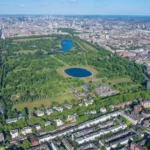
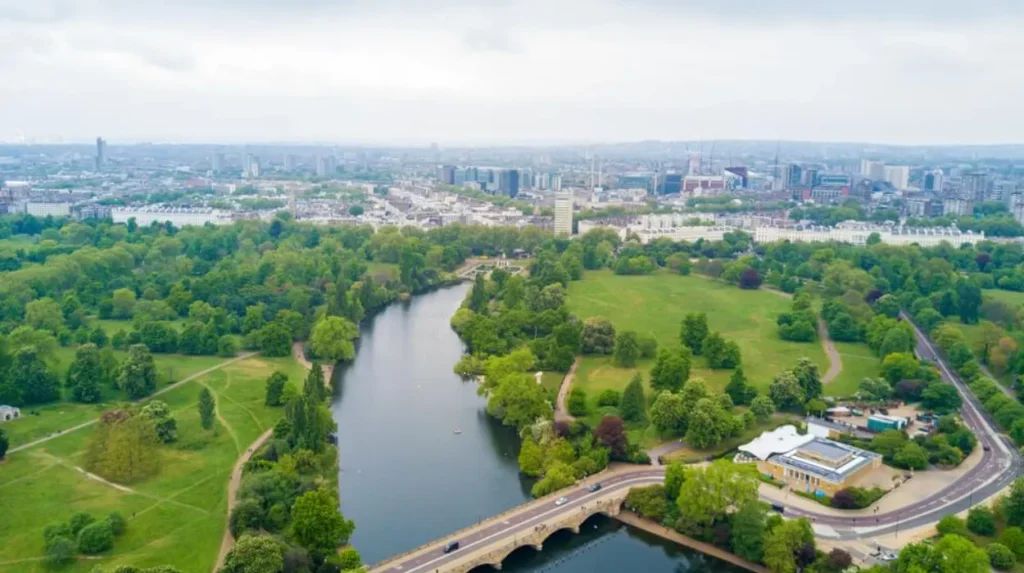
Queen Caroline, wife of George II, played a major role in the transformation of Hyde Park and Kensington Gardens. She annexed almost 300 acres from Hyde Park to create Kensington Gardens as a separate landscape. A long ditch, known as a ha-ha, divided the two areas while preserving visual continuity.
Queen Caroline also created the Serpentine by damming the Westbourne Stream. The lake was designed with a naturalistic appearance rather than the straight geometry associated with earlier artificial water features. This approach influenced landscape design beyond London.
Greenwich Park also received a major seventeenth-century redesign under Charles II. The French landscape architect André Le Nôtre was associated with the park’s formal landscape design, creating the avenues and structured views that remain central to its character. The park combines formal design with archaeological evidence from earlier periods.
The Regent’s Park experienced its most important transformation in the early nineteenth century. John Nash, architect and planner, designed a landscape surrounded by Regency villas and connected to a wider urban development scheme. His planned processional route became Regent Street. Although the proposed summer palace was never built and only eight villas were completed under the original scheme, Nash’s urban planning shaped the surrounding area.
John Nash also redesigned St. James’s Park in the 1820s for the Prince Regent, later George IV. The earlier canal was replaced by a curving lake, while formal avenues became more naturalistic paths. The transformation linked the park with the wider Regency redesign of central London.
These changes established a major principle of Royal Park preservation. Preservation did not always mean freezing a landscape in its original form. Historic parks were repeatedly redesigned while retaining important layers of earlier history.
Explore More History Of London
London’s Royal Parks: History, Creation and Preservation in London
London’s Architectural Evolution Through Iconic Buildings | London
When did the Royal Parks become public spaces for Londoners?
The Royal Parks became public spaces gradually rather than through one single law. Hyde Park opened in 1637, St. James’s Park followed under Charles II, and nineteenth-century reforms expanded public access as London’s population grew and public recreation became a national concern.
Public access developed over several centuries. The early opening of Hyde Park created an important precedent, but access remained shaped by royal control, social expectations, policing, and specific park rules.
St. James’s Park became accessible to the public after Charles II’s return to the throne. Its location near royal palaces and government institutions gave it a special role in public life. Its landscape later became one of the most recognisable public spaces in central London.
The nineteenth century accelerated the transformation. London experienced rapid population growth, industrialisation, urban expansion, and social change. Open spaces became increasingly important for recreation, public health, civic events, and political expression.
The Regent’s Park illustrates this transition. The east side of the park opened to the public in 1835. The landscape then developed additional cultural and scientific functions. The Royal Botanic Society established gardens around the Inner Circle in 1838, while London Zoo became an important scientific institution within the park.
The public character of the parks also created new responsibilities. Historic landscapes required paths, planting, drainage, security, monuments, water management, and visitor facilities. The parks became public institutions as well as royal estates.
To experience this historic landscape heritage in person today, consult our comprehensive [Best Gardens and Green Spaces in London for Relaxation and Scenic Outdoor Walks] for itineraries and visiting parameters.
Why were the Royal Parks important during the Victorian era?
The Victorian era transformed the Royal Parks into major spaces for national exhibitions, political demonstrations, public recreation, social reform, and civic identity. Hyde Park hosted the Great Exhibition in 1851 and later became a major venue for campaigns and public gatherings.
The Victorian period expanded the national importance of the Royal Parks. They were no longer simply royal landscapes opened to the public. They became stages for major events connected with Britain’s industrial power, political reform, social movements, and national identity.
Hyde Park hosted the Great Exhibition of 1851. The exhibition presented industrial, scientific, artistic, and technological achievements from Britain and other countries. The Crystal Palace structure became one of the most important symbols of Victorian exhibition culture, although the building was later relocated to south London.
Hyde Park also became a major space for political demonstration. Reformers used the park for public gatherings during the nineteenth century. The park’s connection with free speech became a defining part of its historical identity.
The twentieth-century suffrage movement further strengthened this role. In 1908, approximately 300,000 suffragettes gathered in Hyde Park to demand votes for women. The event demonstrated the capacity of a Royal Park to function as a national political forum.
The Victorian period also brought new approaches to public landscape management. The parks were expected to provide beauty, recreation, public access, and national ceremonial space. Their historic importance therefore expanded beyond royal history.
This period created a lasting connection between the Royal Parks and public participation. The same landscapes that once restricted access for hunting became spaces where large numbers of people gathered to debate political rights and national issues.
How did wars and national crises affect London’s Royal Parks?
The Royal Parks served practical national purposes during the First and Second World Wars. Their landscapes supported allotments, air-raid shelters, military activities, camouflage training, wartime administration, and strategic planning connected with major military operations.
War changed the physical and social use of London’s parks. Open land became strategically important during periods of national emergency.
During the First World War, parts of the Royal Parks were used for allotments. Food production became a national priority, and public landscapes contributed to wartime supply. Air-raid shelters were also dug beneath parkland during periods when London faced aerial bombardment.
Kensington Gardens hosted a camouflage school during the First World War. This use reflected the development of modern military technology and the need to conceal military equipment and positions.
During the Second World War, Bushy Park became associated with Allied military planning. An American base was established there, and planning for the D-Day landings took place from the park. The site therefore became part of the logistical and strategic infrastructure of the Allied war effort.
These wartime uses created a new layer of heritage. The Royal Parks preserve not only palaces, statues, gardens, and ancient trees but also evidence of twentieth-century military history.
Modern preservation increasingly recognises these layers. A park’s historical significance includes its original creation, later redesign, public use, wartime functions, and surviving physical remains.
How were the Royal Parks protected as historic landscapes?
Protection developed through changing systems of royal administration, public management, heritage designation, conservation practice, and statutory responsibilities. Modern preservation combines historic landscape care with biodiversity, public access, education, and protection of monuments and buildings.
The preservation of the Royal Parks depends on managing living landscapes. Trees grow, lakes change, paths wear down, buildings deteriorate, and visitor pressure increases. Historic preservation therefore requires continuous management rather than a single act of protection.
The modern Royal Parks organisation manages eight Royal Parks and additional historic green spaces on behalf of the government. Its responsibilities include protecting historic landmarks, maintaining landscapes, conserving wildlife, supporting education, and ensuring public access.
The parks contain 197 listed buildings, statues, and monuments. These structures require specialist conservation and maintenance. Their preservation also requires historical interpretation so visitors understand the political, cultural, scientific, and social contexts behind them.
Victoria Tower Gardens demonstrates how preservation can result from civic intervention. The northern part of the gardens was acquired by the government in 1867 partly to reduce fire risk to the Palace of Westminster. A proposal to preserve the land as open space gained support after William Henry Smith donated £1,000, which the government matched. The space was subsequently maintained for recreation, particularly for children in Westminster.
This example shows that historic green-space preservation was not always imposed solely by the Crown. Public campaigns, private donations, government decisions, and civic priorities also shaped the survival of important landscapes.
What historical evidence survives in London’s Royal Parks today?
Modern Royal Parks preserve archaeological remains, ancient trees, historic boundaries, designed landscapes, monuments, palaces, military traces, and surviving spatial patterns. These physical features allow researchers to study London’s changing society across Roman, Anglo-Saxon, medieval, Tudor, Georgian, Victorian, and modern periods.
Greenwich Park contains some of the clearest archaeological evidence. The Roman temple remains and Anglo-Saxon burial mounds demonstrate occupation and ceremonial use before the park became a royal landscape. More than 30 circular burial mounds remain visible in the park.
Richmond Park preserves ancient woodland and historic deer-park characteristics. Its open grasslands, mature trees, and deer herds reflect the historical relationship between royal hunting landscapes and modern conservation. The park covers approximately 2,500 acres.
The Regent’s Park preserves the physical legacy of John Nash’s planning. The surrounding villas, road connections, landscape geometry, and Inner Circle continue to express the Regency vision. The park also retains scientific heritage through London Zoo and botanical history.
Kensington Gardens preserves the relationship between royal residence and designed landscape. Its history connects Henry VIII’s hunting park, the creation of Kensington Palace under William III and Mary II, Queen Caroline’s landscape changes, and later cultural associations.
St. James’s Park preserves multiple layers of royal and national history. Its landscape has changed from marshland to royal garden, formal French-style park, Regency landscape, and modern public space beside major royal and governmental buildings.
The survival of these features allows historians, archaeologists, landscape specialists, and genealogical researchers to study how London’s physical environment changed over time.
How does modern conservation preserve the Royal Parks for the future?
Modern conservation protects the Royal Parks through integrated management of historic landscapes, biodiversity, water, trees, wildlife, monuments, buildings, public access, education, and climate resilience. The objective is long-term protection without removing the parks from everyday public life.
The modern preservation challenge is complex. The parks are historic landscapes, wildlife habitats, public recreational spaces, national event venues, and important urban infrastructure at the same time.
The Royal Parks organisation manages more than 170,000 trees and shrubs and approximately 100 acres of ponds and lakes. These landscapes support more than 7,000 wildlife species, including rare and protected species such as bats, stag beetles, kingfishers, and great crested newts.
Conservation also includes formally protected habitats. The Royal Parks contain a National Nature Reserve, a Special Area of Conservation, Sites of Special Scientific Interest, and other endangered habitats. These designations connect historical preservation with modern environmental law and ecological management.
Climate resilience has become an important part of long-term park management. Historic landscapes face pressure from extreme weather, changing rainfall patterns, heat, disease, invasive species, and increasing visitor numbers. Modern conservation therefore requires active planning for future environmental conditions.
The Royal Parks charity was formed in 2017 to manage London’s eight Royal Parks on behalf of the government. Its work includes conservation, heritage management, education, public access, and biodiversity protection.
The modern system reflects a major historical change. The parks began as spaces controlled for royal purposes. They now function as public heritage landscapes managed for present and future generations.
Why do London’s Royal Parks remain historically important?
London’s Royal Parks remain historically important because they preserve continuous evidence of British monarchy, urban growth, landscape design, political protest, scientific development, wartime history, public recreation, and environmental conservation within accessible landscapes across the capital.
The historical importance of the Royal Parks comes from their continuity. London changed dramatically around them, but the parks retained large areas of open land within the expanding capital.
Their boundaries preserve the geography of royal power. Their avenues preserve landscape design traditions. Their lakes preserve engineering and horticultural decisions. Their monuments preserve national memory. Their archaeological remains preserve evidence from periods before the parks became royal estates.
Their public history is equally significant. Hyde Park became a major space for political speech and national gatherings. The Great Exhibition connected the park with Victorian industrial culture. The 1908 suffrage demonstration connected the landscape with the campaign for women’s voting rights.
Their scientific importance also continues. The Regent’s Park contains the historic development of London Zoo and botanical activity. Greenwich Park connects archaeological research with astronomy through the Royal Observatory and the park’s long history of scientific observation.
Their environmental significance is now central to their future. The parks provide habitats, water systems, mature trees, and protected ecological areas within one of the world’s largest urban regions.
The history of London’s Royal Parks is therefore not a single story of royal gardens. It is a history of land ownership, monarchy, architecture, public rights, urban development, national crisis, archaeology, conservation, and environmental responsibility.
From Tudor hunting grounds to modern public landscapes, the Royal Parks survived because each generation adapted their purpose while retaining important historical evidence. Their future preservation depends on maintaining that balance: protecting historic character, conserving biodiversity, supporting public access, and ensuring that London’s most significant green spaces remain living parts of the capital’s history.
What are London’s Royal Parks?
London’s Royal Parks are historic green spaces originally connected with the Crown, royal residences, hunting, gardens, ceremonies, and public recreation. The main Royal Parks include Hyde Park, Kensington Gardens, St. James’s Park, The Green Park, Greenwich Park, Richmond Park, Bushy Park, and The Regent’s Park.