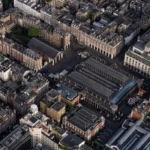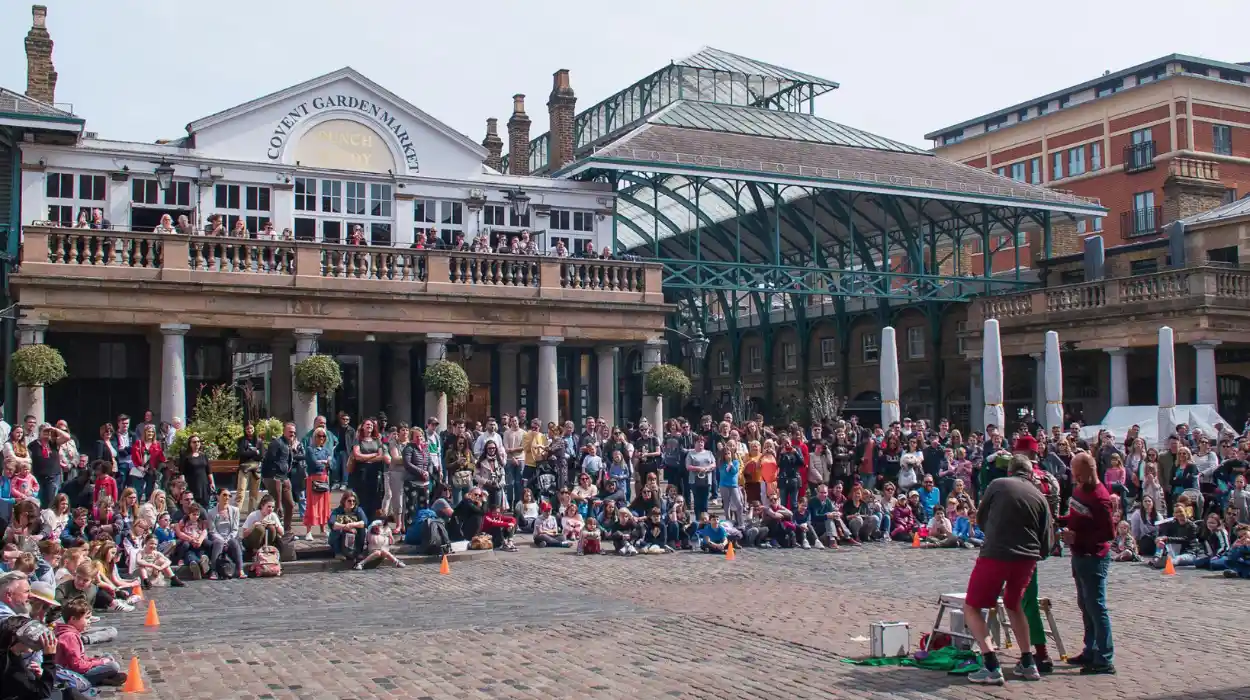
Covent Garden is one of London’s most visited cultural districts. Located in the heart of the West End, the area combines historic architecture, public entertainment, retail destinations, and a diverse dining scene. Its origins date to the seventeenth century, when the district evolved from monastic land into one of London’s most important market centres.
- Why is Covent Garden one of London’s most popular visitor destinations?
- What makes Covent Garden’s street performers famous?
- How did the historic Covent Garden Market shape the area?
- What shopping experiences can visitors find in Covent Garden?
- Which historic buildings and landmarks should visitors explore?
- What dining experiences define modern Covent Garden?
- How has Covent Garden preserved its historic character?
- What cultural role does Covent Garden play in London today?
- Why does Covent Garden remain relevant for future generations?
Today, Covent Garden attracts millions of visitors annually. The district is known for its historic piazza, street performers, luxury and independent shops, theatres, restaurants, and heritage landmarks. The area represents a rare example of a historic marketplace that successfully transitioned into a modern cultural and commercial destination while preserving its architectural identity.
Why is Covent Garden one of London’s most popular visitor destinations?
Covent Garden combines over 400 years of history with modern entertainment, shopping, and dining. Visitors experience historic public spaces, world-famous street performances, heritage architecture, retail destinations, and diverse restaurants within a compact and walkable district in central London.
The popularity of Covent Garden stems from its unique historical development. The district occupies land that once belonged to the Benedictine monks of Westminster Abbey. The name “Covent Garden” derives from “Convent Garden,” referring to the abbey’s kitchen garden.
The transformation began in the 1630s when architect Inigo Jones designed London’s first formal square, known as the Piazza. Inspired by Italian Renaissance urban planning, Jones created an open public space that became a model for future London developments.
By the eighteenth century, Covent Garden had become a major commercial and social centre. Markets, theatres, coffee houses, and public entertainment attracted people from across London. This mixture of commerce and culture remains central to the area’s identity.
Modern Covent Garden covers approximately 13 acres surrounding the historic Piazza. The district lies between the Strand, Long Acre, Drury Lane, and St Martin’s Lane. Its central location places it within walking distance of major landmarks including the West End theatre district, Trafalgar Square, and the River Thames.
The area’s enduring appeal comes from the preservation of its historic character alongside contemporary attractions. Visitors encounter centuries-old buildings functioning as modern retail, hospitality, and cultural venues.
What makes Covent Garden’s street performers famous?
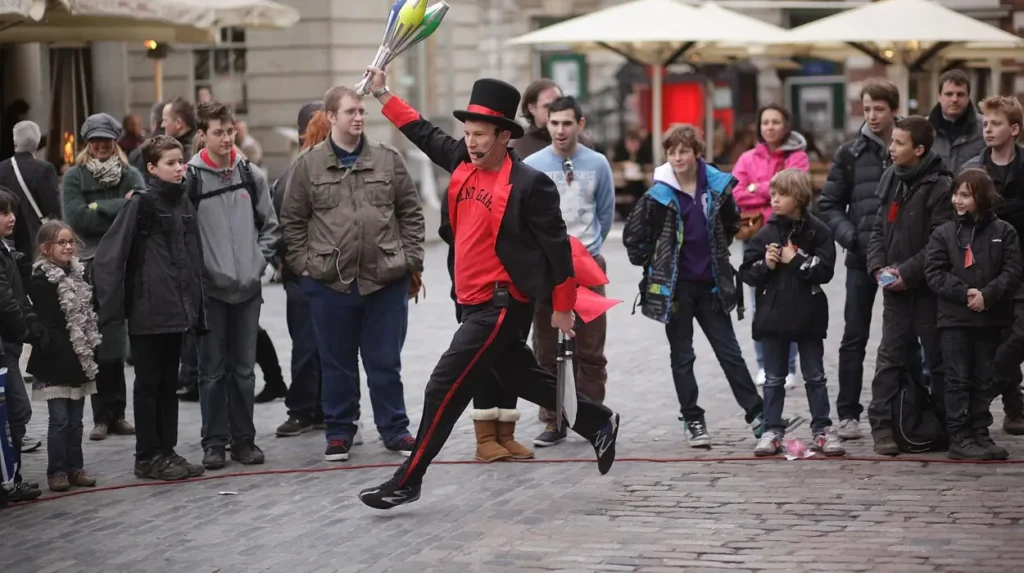
Covent Garden hosts some of the world’s most recognized street performers. The tradition dates back decades and includes magicians, musicians, acrobats, comedians, and specialty acts performing in regulated spaces that maintain professional entertainment standards throughout the year.
Street performance is among Covent Garden’s defining attractions. The Piazza functions as one of Europe’s best-known public entertainment spaces.
Modern performance regulations emerged during the late twentieth century following redevelopment efforts. Local authorities established designated performance pitches, audition requirements, and scheduling systems to ensure quality and safety.
Performers must meet professional standards before receiving permission to appear in designated locations. This system distinguishes Covent Garden from many informal street entertainment areas.
The principal performance spaces include the West Piazza and the South Hall area. These locations accommodate large audiences while preserving pedestrian access.
Common performance categories include:
- Magic acts, for example close-up illusionists and escapologists.
- Musical performances, for example classical violinists and jazz ensembles.
- Circus arts, for example jugglers and acrobats.
- Comedy performances, for example audience-interaction entertainers.
Many internationally recognized entertainers began their careers in Covent Garden. The district serves as an important training ground for performers seeking experience before large public audiences.
The performances contribute significantly to the area’s economic activity. Visitors frequently spend extended periods in the Piazza, increasing engagement with surrounding businesses, restaurants, and shops.
Street entertainment also preserves a historical tradition. Public performance has been associated with Covent Garden since the seventeenth and eighteenth centuries when markets and theatres generated vibrant street life throughout the district.
How did the historic Covent Garden Market shape the area?
The Covent Garden Market transformed the district into London’s primary fruit and vegetable trading centre. Operating for centuries, the market influenced urban development, employment, transportation networks, and commercial growth before relocating in 1974.
The history of Covent Garden Market began formally in 1670 when King Charles II granted a market charter to the Earl of Bedford.
Throughout the eighteenth and nineteenth centuries, the market expanded significantly. Produce arrived daily from farms across Britain and international suppliers through London’s growing transport networks.
By the Victorian era, Covent Garden had become the capital’s principal wholesale fruit and vegetable market. Thousands of workers participated in market operations, including traders, porters, transport operators, and merchants.
The market generated substantial economic activity. Historical records indicate that enormous quantities of produce passed through the district annually, supporting London’s rapidly growing population.
However, increasing congestion created operational challenges. Narrow streets struggled to accommodate modern delivery vehicles and rising trade volumes.
The solution emerged in the twentieth century. In 1974, wholesale operations relocated to the New Covent Garden Market in Nine Elms. The move marked a turning point in the district’s history.
Following relocation, the original market buildings faced potential demolition. Public campaigns and heritage advocates successfully argued for preservation, leading to extensive restoration projects.
Today, visitors can still see the iconic Market Building, which remains the architectural centrepiece of the Piazza.
To experience this historic landmark in person today, consult our comprehensive [Covent Garden’s History: From Monastery Grounds to Entertainment Hub] for itineraries and visiting parameters.
What shopping experiences can visitors find in Covent Garden?
Covent Garden offers a diverse retail environment featuring luxury brands, independent boutiques, beauty stores, heritage retailers, and artisan markets. The district blends historic shopping arcades with contemporary commercial spaces, creating one of London’s most distinctive retail destinations.
Retail activity has shaped Covent Garden for centuries. Market trading established a commercial culture that continues today.
The central shopping areas include the Market Building, Apple Market, East Colonnade Market, Seven Dials, and surrounding streets. Each area serves different retail segments.
The Apple Market occupies a historic section of the original market complex. Visitors encounter handmade crafts, artwork, jewellery, and specialist products. The market supports independent creators and small businesses.
Luxury retail has expanded significantly since the 1990s. International fashion brands established flagship locations within restored heritage buildings, contributing to the district’s economic revitalization.
Seven Dials, located adjacent to Covent Garden, provides a contrasting shopping environment. The area contains independent fashion labels, niche retailers, and specialist stores occupying historic eighteenth-century streets.
Architectural preservation plays an important role in the shopping experience. Many retail spaces occupy listed buildings dating from the eighteenth and nineteenth centuries.
The combination of heritage architecture and modern retail creates a distinctive environment not easily replicated by contemporary shopping centres.
Visitor research consistently identifies shopping as one of the primary motivations for visiting Covent Garden. The district’s retail diversity attracts both international tourists and London residents.
Which historic buildings and landmarks should visitors explore?
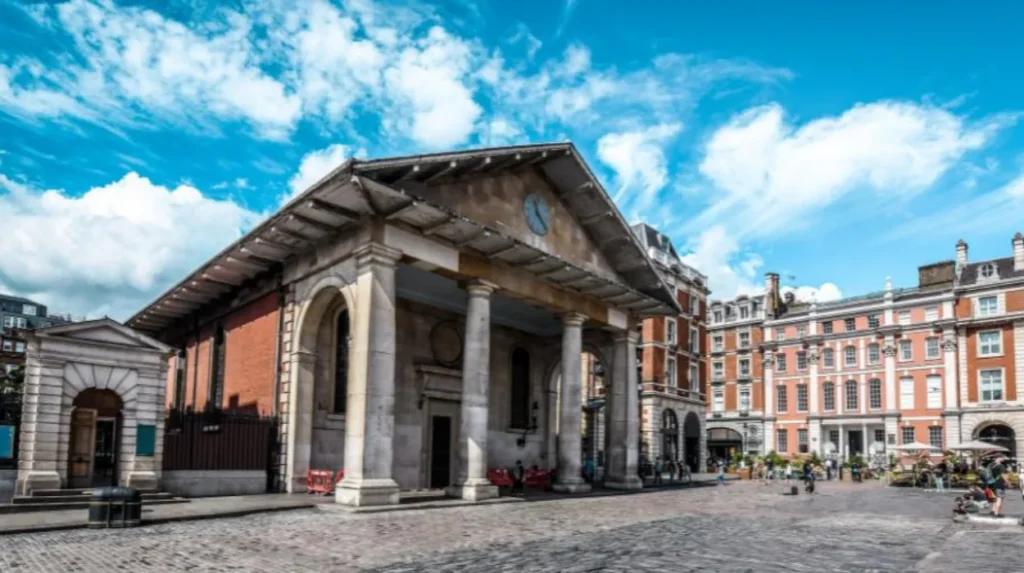
Covent Garden contains significant historic landmarks including the Market Building, St Paul’s Church, the Royal Opera House, and numerous listed structures. These sites illustrate the district’s architectural evolution from the seventeenth century through the modern era.
The area’s architectural significance extends beyond commercial attractions.
St Paul’s Church, completed in 1633 and designed by Inigo Jones, stands as one of the district’s most important landmarks. Often called the “Actors’ Church,” it maintains strong connections to London’s theatre community.
The church exemplifies early English classical architecture. Its design influenced subsequent public buildings throughout Britain.
The Royal Opera House occupies another prominent position in Covent Garden’s cultural landscape. The institution traces its origins to 1732 and serves as the home of the Royal Opera and Royal Ballet.
Several versions of the theatre have existed due to fires and reconstruction projects. The current structure combines historic and modern architectural elements.
The Market Building represents Victorian engineering and design. Constructed during the nineteenth century, it features iron-and-glass architecture characteristic of the period’s market halls.
Additional heritage assets include:
- Grade II listed buildings, for example historic commercial properties.
- Theatre buildings, for example venues associated with the West End.
- Historic streetscapes, for example Neal Street and Henrietta Street.
These structures collectively illustrate London’s urban development across multiple centuries.
What dining experiences define modern Covent Garden?
Covent Garden’s dining scene reflects London’s global culinary diversity. Restaurants, cafés, historic pubs, and specialty food venues occupy both heritage buildings and modern developments, making the district a major destination for food-focused visitors.
Food has always played a central role in Covent Garden’s identity. The area’s market history established longstanding connections with produce trading and hospitality.
Modern dining options encompass a wide range of cuisines and service styles. Visitors can find casual cafés, premium restaurants, traditional British establishments, and international culinary concepts.
Historic pubs preserve elements of London’s social history. Many occupy buildings with centuries of commercial and hospitality use.
The district’s proximity to the West End theatre industry has influenced restaurant development. Pre-theatre dining remains an important component of local hospitality activity.
Several streets have emerged as dining destinations. Henrietta Street, Maiden Lane, and Floral Street contain concentrations of restaurants serving local and international visitors.
The evolution of Covent Garden’s food culture reflects broader demographic and economic changes within London. Global migration, tourism growth, and changing consumer preferences contributed to increasingly diverse culinary offerings.
Dining venues also support heritage preservation. Adaptive reuse projects frequently convert historic commercial buildings into restaurants while retaining architectural features.
This approach allows visitors to experience historical environments through contemporary hospitality settings.
How has Covent Garden preserved its historic character?
Covent Garden preserved its historic character through conservation policies, listed building protections, adaptive reuse projects, and community advocacy. These measures prevented large-scale demolition and enabled the district’s transformation into a heritage-focused cultural destination.
The preservation of Covent Garden represents one of London’s most significant urban conservation successes.
During the 1960s and early 1970s, redevelopment proposals threatened substantial portions of the historic district. Many plans called for extensive demolition and modern construction.
Public opposition emerged from residents, historians, architects, and preservation organizations. Their efforts highlighted the architectural and cultural significance of the area.
Government authorities subsequently adopted conservation-focused planning policies. These measures prioritized restoration over wholesale redevelopment.
The Covent Garden Conservation Area became an important planning framework protecting historic streets, buildings, and public spaces.
Listed building status provides legal protection for numerous structures throughout the district. These protections regulate alterations and preserve architectural integrity.
Adaptive reuse became a key preservation strategy. Historic buildings gained new commercial functions while retaining important architectural elements.
Examples include former market facilities converted into retail and hospitality spaces and historic warehouses adapted for modern business use.
The preservation model demonstrated that economic development and heritage conservation can operate together successfully.
What cultural role does Covent Garden play in London today?
Covent Garden functions as a major cultural hub connecting performance, heritage, commerce, and tourism. The district supports London’s creative economy while preserving historic public spaces that remain accessible to residents and international visitors.
The cultural significance of Covent Garden extends beyond tourism.
The district serves as a gateway to the West End, one of the world’s leading theatre districts. Millions of visitors attend performances annually in nearby venues.
Street entertainment continues the area’s tradition of public cultural participation. Unlike ticketed events, performances remain accessible to diverse audiences.
Educational institutions frequently use Covent Garden as a case study in urban planning, heritage management, architecture, and cultural geography.
Researchers examine the district’s transformation from wholesale market to heritage destination. The area provides valuable evidence regarding sustainable urban regeneration.
Tourism data consistently places Covent Garden among London’s most visited districts. Millions of domestic and international visitors contribute to the local economy each year.
The area’s cultural ecosystem supports employment across hospitality, retail, entertainment, heritage management, and creative industries.
Most importantly, Covent Garden demonstrates how historic urban spaces can remain economically viable while preserving cultural identity.
Why does Covent Garden remain relevant for future generations?
Covent Garden remains relevant because it preserves centuries of London history while adapting to modern economic and cultural needs. Its successful balance of heritage conservation, public entertainment, retail activity, and hospitality provides a model for urban preservation worldwide.
Few districts illustrate London’s historical continuity as clearly as Covent Garden.
The area reflects multiple phases of urban development. Seventeenth-century planning, eighteenth-century commercial growth, nineteenth-century market expansion, and twentieth-century conservation efforts remain visible within a single district.
Researchers, educators, and heritage professionals continue to study Covent Garden because it demonstrates the long-term value of preserving historic environments.
The district also highlights changing patterns of public life. Markets, theatres, restaurants, shops, and street performances have shaped social interaction in the area for more than 350 years.
Modern visitors experience a living historic landscape rather than a static museum environment. Historic buildings continue serving active economic and cultural functions.
This combination of preservation and adaptation ensures that Covent Garden remains an important part of London’s identity. As cities worldwide confront questions about heritage conservation and sustainable development, Covent Garden provides a practical example of how historic districts can evolve without losing their historical character.
Its enduring success confirms the importance of protecting cultural heritage while allowing historic places to meet the needs of contemporary society. Through its street performers, shops, restaurants, public spaces, and architectural landmarks, Covent Garden continues to connect London’s past with its present and future.
Is Covent Garden worth visiting?
Yes, Covent Garden is worth visiting for its unique combination of history, architecture, shopping, dining, and live entertainment. Visitors can explore historic buildings, watch street performances, visit theatres, and enjoy the atmosphere of the district.