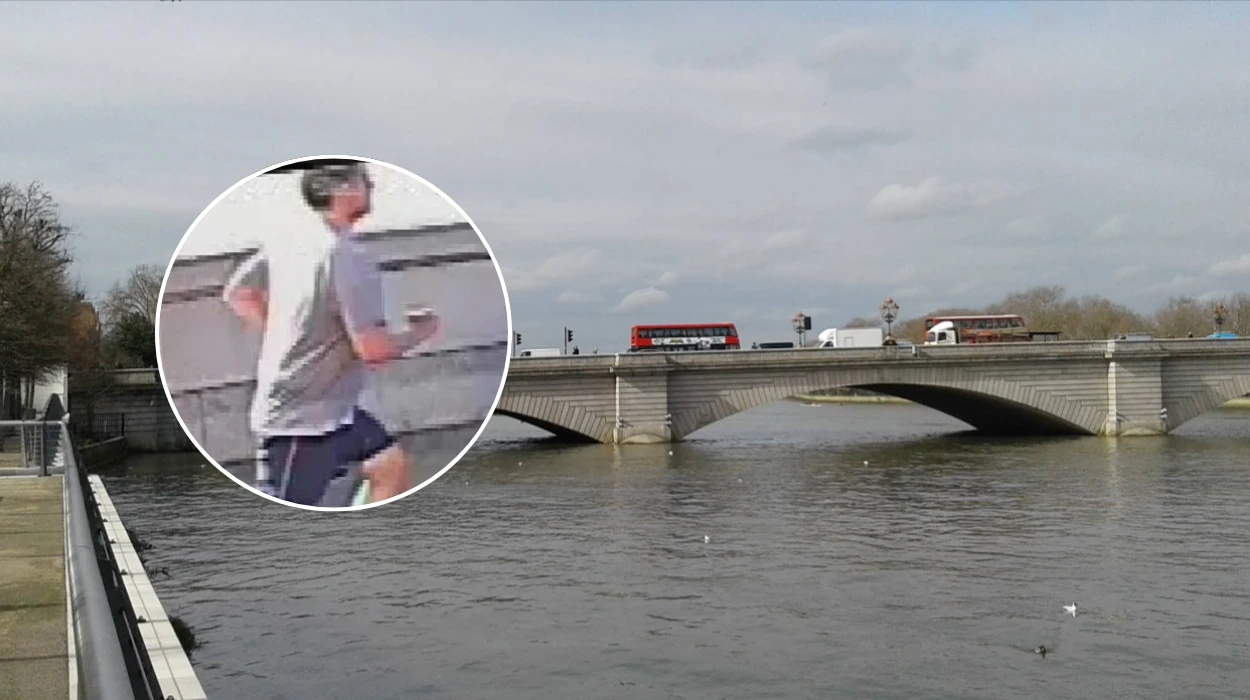
Key Points
- Dramatic Breakthrough: A 44-year-old multi-millionaire private banker and former British Army officer has been arrested at his £1.4 million west London home.
- The Incident: The arrest comes nine years after a mystery jogger forcefully shoved a 33-year-old female pedestrian into the path of an oncoming double-decker bus on Putney Bridge.
- The Charges: The Metropolitan Police confirmed the suspect has been detained on suspicion of attempted grievous bodily harm (GBH) and remains in custody.
- Miraculous Escape: The victim escaped catastrophic or fatal injury during the rush-hour assault because the alert driver of the Number 430 bus swerved at the absolute last second, missing her head by inches. The Guardian
- Cold Case Revived: The original investigation was closed by Scotland Yard in 2018 after detectives vetted 50 people of interest and arrested three suspects—including an American investment banker who proved he was in the United States—without charging anyone. Medium
- New Evidence: Operational inquiries were unexpectedly reactivated after fresh information came to light, leading to the dramatic dawn arrest nearly a decade after the assault.
London (Extra London News) June 15, 2026 – A multi-millionaire private banker and decorated former British Army officer has been arrested in London by detectives hunting the notorious “Putney Pusher”, bringing a dramatic turnaround to one of the United Kingdom’s most compelling unsolved modern crime mysteries. The 44-year-old suspect was detained during a dawn raid at his £1.4 million mansion in west London on suspicion of attempted grievous bodily harm.
- Key Points
- Why did police make an arrest nine years after the Putney Bridge attack?
- What happened during the original 2017 Putney Bridge incident?
- How did the victim survive the oncoming double-decker bus?
- Did the jogger return to the scene of the crime?
- Who is the suspect arrested by the Metropolitan Police?
- What do we know about the suspect’s background?
- What was the physical description of the ‘Putney Pusher’?
- Why did the original police investigation fail to find the attacker?
- How many people of interest did detectives interview?
- Who were the original suspects arrested in 2017?
- What are the legal implications of an attempted GBH arrest?
- How has the public reacted to the breakthrough?
The significant operational breakthrough occurs more than nine years after a jogger infamously shoved a 33-year-old female pedestrian directly into the path of an oncoming double-decker bus on Putney Bridge in southwest London. The shocking morning assault, which occurred during rush hour on Friday, May 5, 2017, was captured in vivid detail on the bus’s onboard closed-circuit television (CCTV) camera, sparking an international media frenzy and an extensive police manhunt that originally yielded no charges.
Why did police make an arrest nine years after the Putney Bridge attack?
The sudden re-opening and subsequent arrest in this high-profile cold case have stunned legal observers and the public alike. As reported by Kelly Williams, Content Editor at the Daily Star, the Metropolitan Police had previously closed the active investigation files in 2018 after concluding that “all lines of enquiry have been exhausted.” For nearly a decade, the identity of the aggressive jogger remained a complete mystery despite global news coverage of the harrowing CCTV footage.
However, the stagnant investigation was suddenly reactivated when critical new intelligence was delivered to Scotland Yard. According to breaking reports published by the MailOnline, the investigation was revived “before new information came to light that led to today’s dramatic development.” Armed with this fresh evidence, officers executed a targeted raid on Monday, June 15, 2026, targeting a high-earning financial director at his upscale residential property.
A formal statement issued by the Metropolitan Police corporate press bureau confirmed the active status of the detainee. As detailed by crime reporters Matt Watts and Nicholas Cecil of the Evening Standard, a Metropolitan Police spokesman stated that:
“On Monday, 15 June, a 44-year-old man was arrested on suspicion of attempted grievous bodily harm. He was taken to police custody, where he remains. The arrest relates to an incident on 5 May 2017, where a woman was pushed into the path of a bus on Putney Bridge in Putney. Inquiries continue.”
What happened during the original 2017 Putney Bridge incident?
To understand the gravity of the latest arrest, it is vital to revisit the terrifying events of May 5, 2017, which took place at approximately 7:40 am on the eastern pavement of Putney Bridge. As documented by Holly Evans of The Independent, a 33-year-old woman was walking across the bridge toward the Putney Bridge Underground station when a male jogger, running in the opposite direction, forcefully collided with her.
The onboard CCTV footage from the oncoming Number 430 double-decker bus captured the exact second of the assault. The video showed the runner deliberately extending his arms and shoving the pedestrian off the pavement and onto the active roadway. The victim fell backward, her upper body and head landing directly in the path of the heavy transit vehicle.
Explore more London Crime News:
Man Arrested Following Violent Rape in Charlton Park: Greenwich 2026
Anojan Gnaneswaran Murder Verdict: Dino Donaldson Guilty – West London, 2026
How did the victim survive the oncoming double-decker bus?
The pedestrian survived what could have easily been a fatal impact solely due to the exceptional reflexes of the public transit driver. Writing for The Independent, Holly Evans noted that the victim survived with remarkably few physical injuries because “the bus driver’s quick actions ensured he missed her head by inches.”
The vehicle stopped immediately following the near-miss. Passengers disembarked from the double-decker to provide emergency first aid and comfort to the visibly shaken pedestrian. While she escaped major trauma, the emotional shock and minor physical abrasions left her deeply traumatised.
Did the jogger return to the scene of the crime?
One of the most chilling details of the case involves the actions of the suspect immediately following the push. Approximately 15 minutes after throwing the woman into the road, the same jogger crossed back over Putney Bridge using the opposite pavement.
According to archival investigation details preserved by Global News, the victim, who was still receiving assistance from passersby, spotted her assailant and attempted to confront him. The police reports from the time noted that “the victim tried to speak to him but he did not acknowledge her and carried on jogging,” showing a total disregard for her safety or the near-fatal consequences of his earlier actions.
Who is the suspect arrested by the Metropolitan Police?
While the Metropolitan Police have legally withheld the name of the individual pending formal charges, extensive details regarding the suspect’s elite background have emerged across major British media outlets.
What do we know about the suspect’s background?
As disclosed by the Daily Star, the 44-year-old man is a highly successful multi-millionaire banker who serves as a high-level director at a prestigious private banking institution. Furthermore, media dispatches indicate the suspect has notable connections to high society and royalty.
In addition to his prominent corporate career in the City of London, the suspect is a decorated former British Army officer. Records indicate he served his country with distinction in multiple major overseas military conflicts before transitioning into the private financial sector. His arrest at his £1.4 million west London home marks a stunning fall from grace for a figure with such an impeccable institutional pedigree.
What was the physical description of the ‘Putney Pusher’?
The description of the “Putney Pusher” issued by Scotland Yard during the initial 2017 public appeal aligns closely with the age progression of the man currently in custody. At the time of the incident nine years ago, detectives described the suspect as a white man in his early to mid-30s with a stocky, athletic build, brown eyes, and short brown hair. During the assault, he was filmed wearing a grey T-shirt, dark blue running shorts, and trainers. The suspect arrested today is now 44 years old, perfectly matching the timeline of a man who was in his mid-30s in 2017.
Why did the original police investigation fail to find the attacker?
The initial hunt for the Putney Bridge jogger was one of the most exhaustive missing-suspect investigations conducted by the Metropolitan Police in the late 2010s, making its eventual closure in 2018 a major point of frustration for the force.
How many people of interest did detectives interview?
In the months following the release of the CCTV clip, Scotland Yard received a massive influx of tips from the public. As reported by The Telegraph, “detectives interviewed 50 men and arrested three suspects at the time” as they aggressively tried to put a name to the face in the video. Every single lead was meticulously reviewed, and dozens of amateur runners who regularly used the Putney Bridge route were systematically vetted and cleared by investigators.
Who were the original suspects arrested in 2017?
The intense pressure to solve the case led to three wrongful arrests during the summer of 2017. Most notably, police detained a high-flying American investment banker amid theories that an affluent financial worker living in the affluent areas of southwest London was responsible.
However, the high-profile American suspect was quickly eliminated from the inquiry after his legal team provided irrefutable alibi evidence. As reported by the Evening Standard, the American investment banker “was able to prove that he was in the US at the time” the assault occurred. Another 41-year-old man was arrested in the Chelsea area on August 10, 2017, but he too was released without charge after proving his innocence. With no sustainable forensic leads or reliable eyewitness identifications, the Metropolitan Police officially shelved the case, leaving it inactive until the sudden arrival of new information this week.
What are the legal implications of an attempted GBH arrest?
The decision by the Metropolitan Police to arrest the 44-year-old suspect on suspicion of “attempted grievous bodily harm” rather than a lesser assault charge reflects the severe danger the victim was subjected to when thrown into the path of a multi-ton moving vehicle.
What is the difference between GBH and common assault?
Under English criminal law, Grievous Bodily Harm (GBH) under Section 18 or Section 20 of the Offences Against the Person Act 1861 represents the most severe form of non-fatal assault. While common assault involves minor physical contact or causing the apprehension of immediate violence, GBH requires proof of “really serious bodily harm.”
By leveling an attempted GBH allegation, prosecutors are asserting that while the victim miraculously avoided severe physical trauma due to the bus driver’s evasive actions, the perpetrator’s intentional act of shoving her into active heavy traffic demonstrated an intent to cause catastrophic, life-altering injuries.
What happens next in the legal process?
The suspect remains in secure police custody at a London police station, where he is undergoing formal questioning by cold case detectives. Under UK law, police can generally hold a suspect for up to 24 hours before they must either charge them with a crime or release them, though this period can be extended to 36 or 96 hours for serious indictable offences with senior police or judicial authorization.
Legal experts suggest that given the international profile of the “Putney Pusher” case, Crown Prosecution Service (CPS) lawyers will be reviewing the freshly uncovered evidence side-by-side with the original 2017 CCTV recordings to determine if there is a realistic prospect of conviction and if it is in the public interest to bring formal charges to court.
How has the public reacted to the breakthrough?
The news of the arrest has sent shockwaves through the local Putney community and sparked intense discussion across the capital. For nearly a decade, the unsolved incident served as a frightening reminder of random urban violence, transforming how many pedestrians, particularly women, viewed their safety while walking on London’s historic bridges.
Local residents and regular commuters on Putney Bridge expressed relief that a concrete lead has finally been actioned. The quick-thinking bus driver, who was widely praised as a hero in 2017 for preventing a public tragedy, has long been commended by transit officials for his flawless safety record during that fateful rush hour.
As the Metropolitan Police continue their custodial interrogation of the multi-millionaire private banker, the transition of this case from an abandoned cold case into an active prosecution marks a monumental victory for persistent police work and serves as a warning that time does not shield criminals from justice in the United Kingdom.